albertshenjunjie@gmail.com
+85257163675

Industry News & Insights
Stay updated with the latest advancements in high-precision bearing manufacturing, engineering solutions, and global market trends.
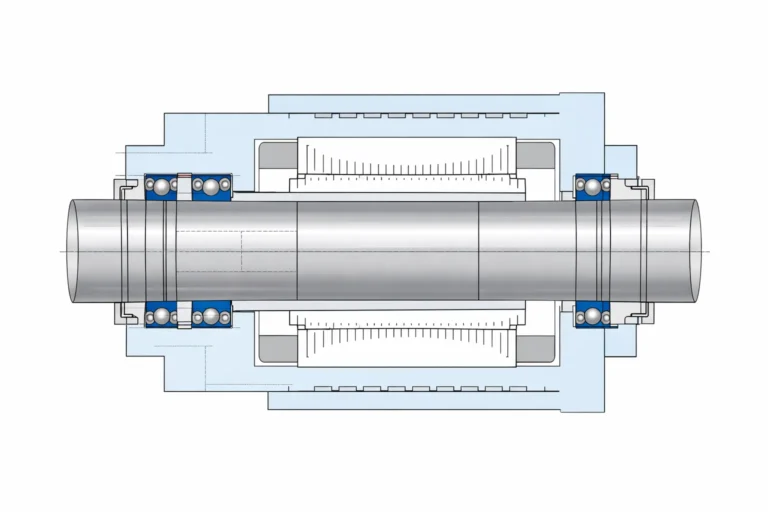
How to Select Bearings for High-Speed Applications
Selecting high speed bearings starts with real duty cycle, not only maximum RPM. Match speed, load, and thermal limits, then balance bearing type, cage, preload, lubrication, and mounting accuracy to control heat, vibration, and service life. What is high speed bearings? High speed bearings run at elevated speeds while controlling heat, vibration, and lubricant film […]
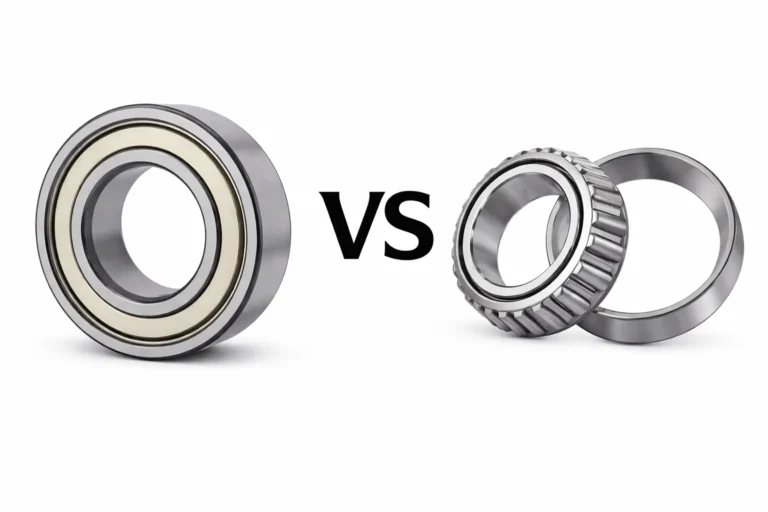
Tapered Roller Bearings vs. Cylindrical Roller Bearings: When to Use Each
Choosing tapered roller bearings vs cylindrical roller bearingsdepends on load direction, stiffness, speed, and assembly. Tapered designs handle combined radial/axial loads and preload, while cylindrical designs suit high radial loads, speed, and low friction. What is tapered roller bearings vs cylindrical roller bearings? Tapered roller bearings use conical rollers and raceways to carry combined radial […]

What Are Needle Roller Bearings Used For? Applications, Pros, and Limits
Needle roller bearings carry high radial loads in limited space. Their slim rollers provide large contact area, making them ideal for automotive drivetrains, gearboxes, and compact mechanisms. Haron Bearing helps you match the right type while considering load, speed, lubrication, and space limits. Video Guide: A clear general overview of needle roller bearing construction, purpose, […]

How to Choose the Right Bearing for Robotic Joints and Servo Systems
Selecting robotics bearings for joints and servo axes is a reliability decision as much as a performance one: stiffness, friction, runout, and lubrication directly affect positioning accuracy, servo tuning stability, and service life. The right choice starts by mapping loads (radial/axial/moment), motion profile, and environment, then matching a bearing type, preload, and sealing strategy that […]

Angular Contact Bearings for Robotics: Selection Guide for High-Precision Motion
Angular contact bearings are a foundational component in high-precision robotic joints, spindles, and gearboxes because they handle combined radial and axial loads while maintaining stiffness and positional accuracy. This guide explains how angular contact bearings for robotics work, how to select and maintain them, and what drives cost—so you can balance accuracy, speed, and service […]
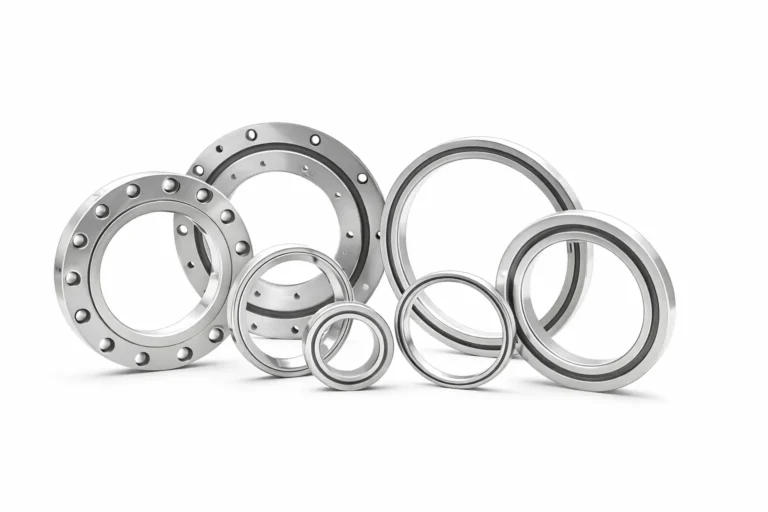
Thin Section Bearings vs. Crossed Roller Bearings: Key Differences
Choosing between thin section bearings and crossed roller bearings usually comes down to space, rigidity, and load direction. Thin section bearings prioritize minimal radial/axial envelope and low weight, while crossed roller bearings prioritize stiffness and moment capacity in compact rotary stages. Below is a practical, engineering-focused comparison to help you select confidently for your application […]
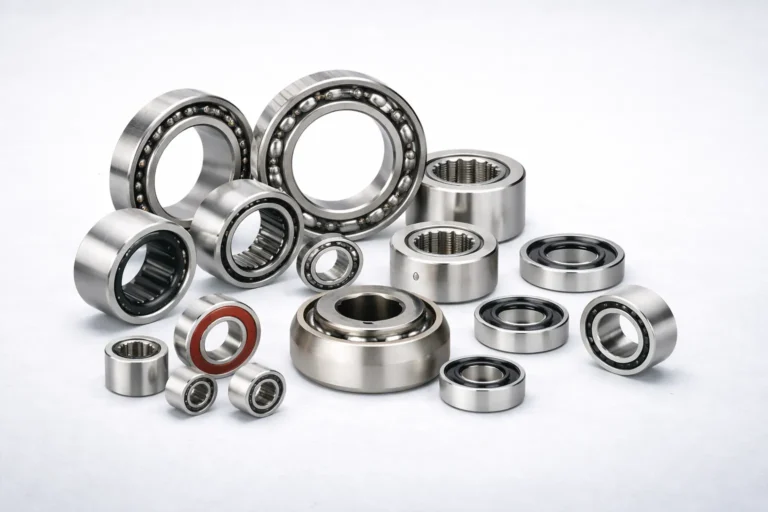
What Are Precision Bearings? A Practical Guide for Engineers and Buyers
Precision bearings are engineered rolling-element bearings built to tighter tolerances so machines can run with lower runout, better repeatability, and more stable performance under speed and load. This guide explains what they are, how they work, practical handling rules, common lubrication mistakes, and how to compare options so engineers and buyers can specify confidently for […]
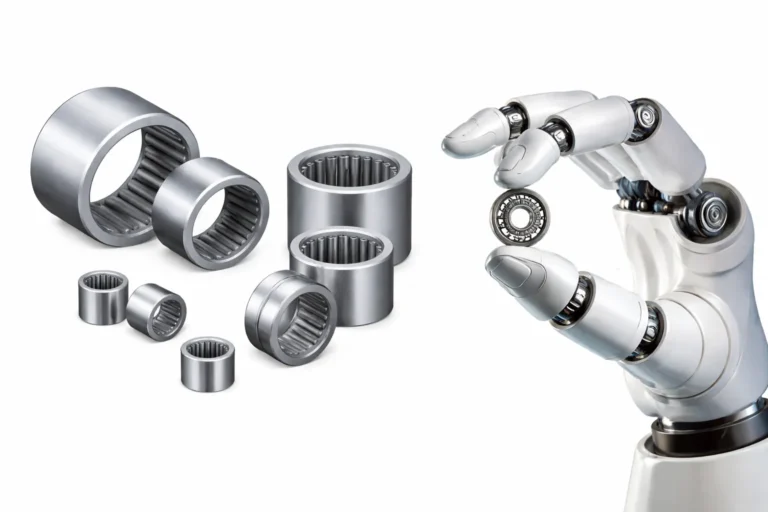
Needle Roller Bearings in Robotics: Why They Matter for Torque Density
Torque density in robotics is often limited by how much load you can support inside a tight joint envelope. Needle roller bearings in robotics address this by using long, thin rollers that deliver high radial load capacity with minimal cross-section. The result is more compact actuators, thinner joints, and better packaging without sacrificing stiffness and […]
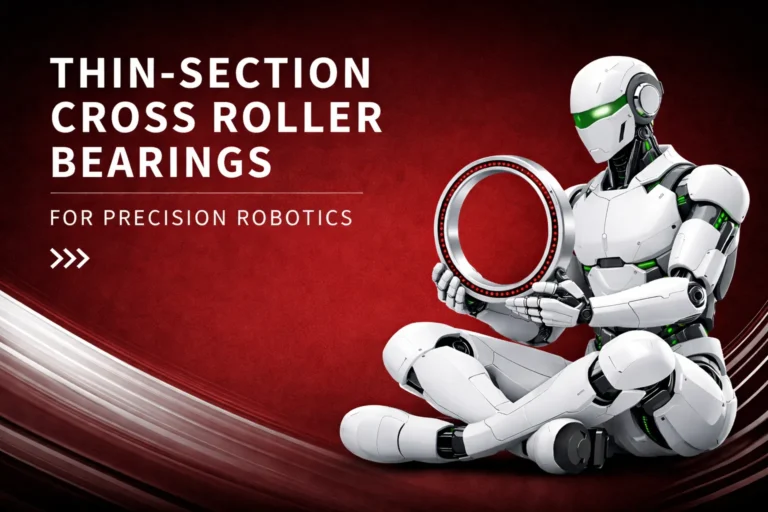
How to Choose Thin Section Bearings for Robotics and Compact Equipment
Choosing thin section bearings for robotics and compact equipment is mainly about balancing stiffness, accuracy, and life against extreme space and weight limits. The right robotic thin section bearings reduce joint deflection, improve repeatability, and simplify compact design packaging. This guide covers selection, how they work, benefits, maintenance, pricing, and what to request from Haron […]
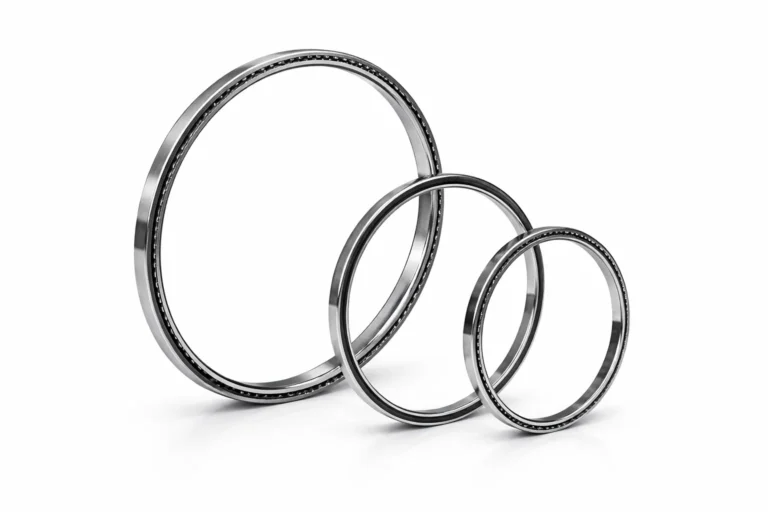
Thin Section Bearings Explained: Types, Advantages, and Applications
Thin-section bearings—also called thin wall bearings, slim bearings, or thin section ball bearings—solve a common engineering problem: how to support precise rotation when radial space is limited. By keeping the cross-section small while maintaining stiffness and accuracy, they enable compact bearing solutions across robotics, medical devices, aerospace, and semiconductor automation where space saving bearings are […]