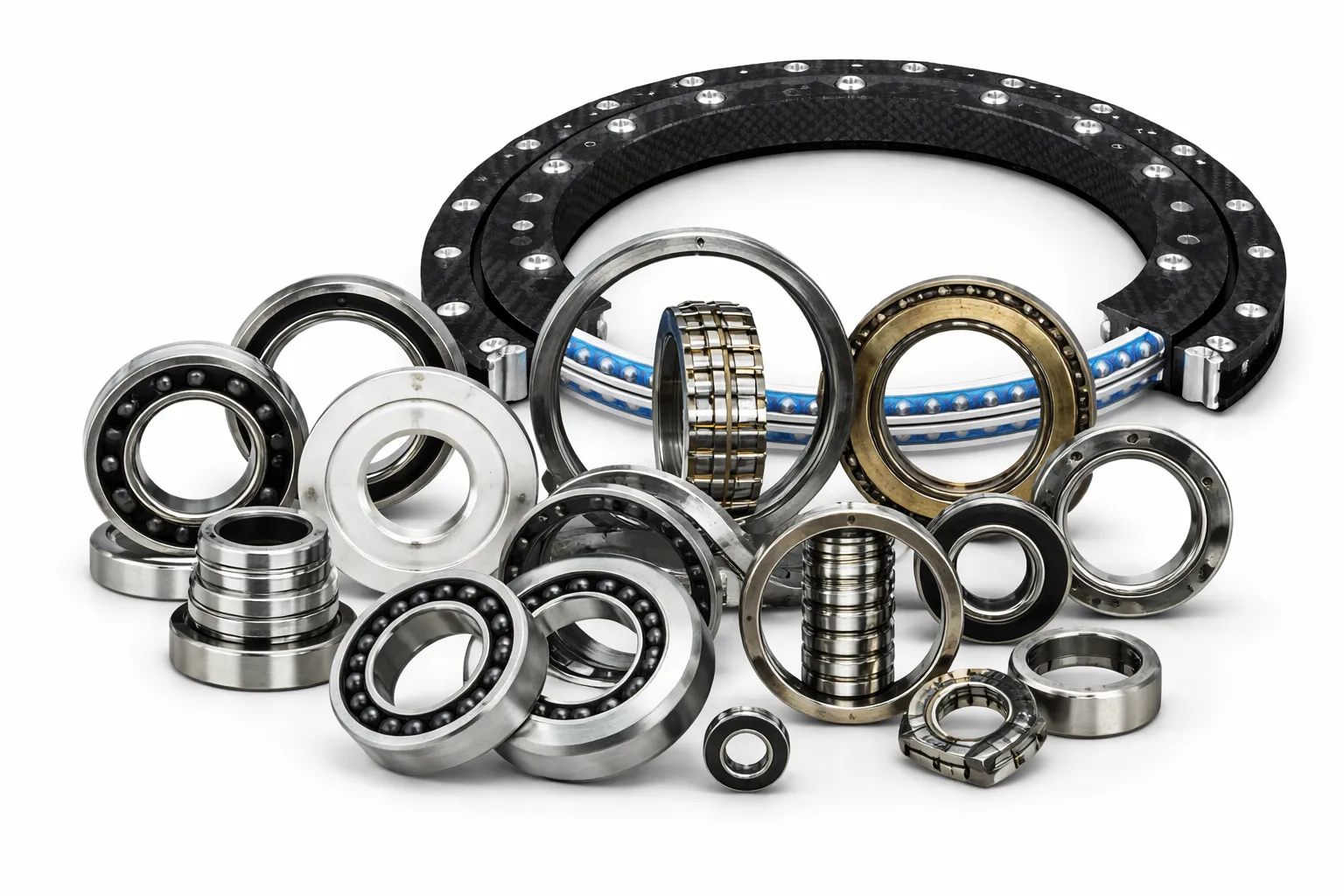
Custom robotics bearings solve issues standard parts can’t, such as backlash, wear, noise, or integration limits. Haron can tailor geometry, materials, seals, lubrication, and preload to match compact joints, special loads, cleaning conditions, and accuracy needs.
Video Guide: Use this overview to align bearing selection with robotics needs like repeatability, life, speed, and contamination control.
What is custom bearings for robotics?
Custom robotics bearings are designed around exact space, loads, speed, accuracy, and environment. By adjusting size, geometry, material, seals, lubrication, or preload, they reduce compromise and improve repeatability, life, and integration.
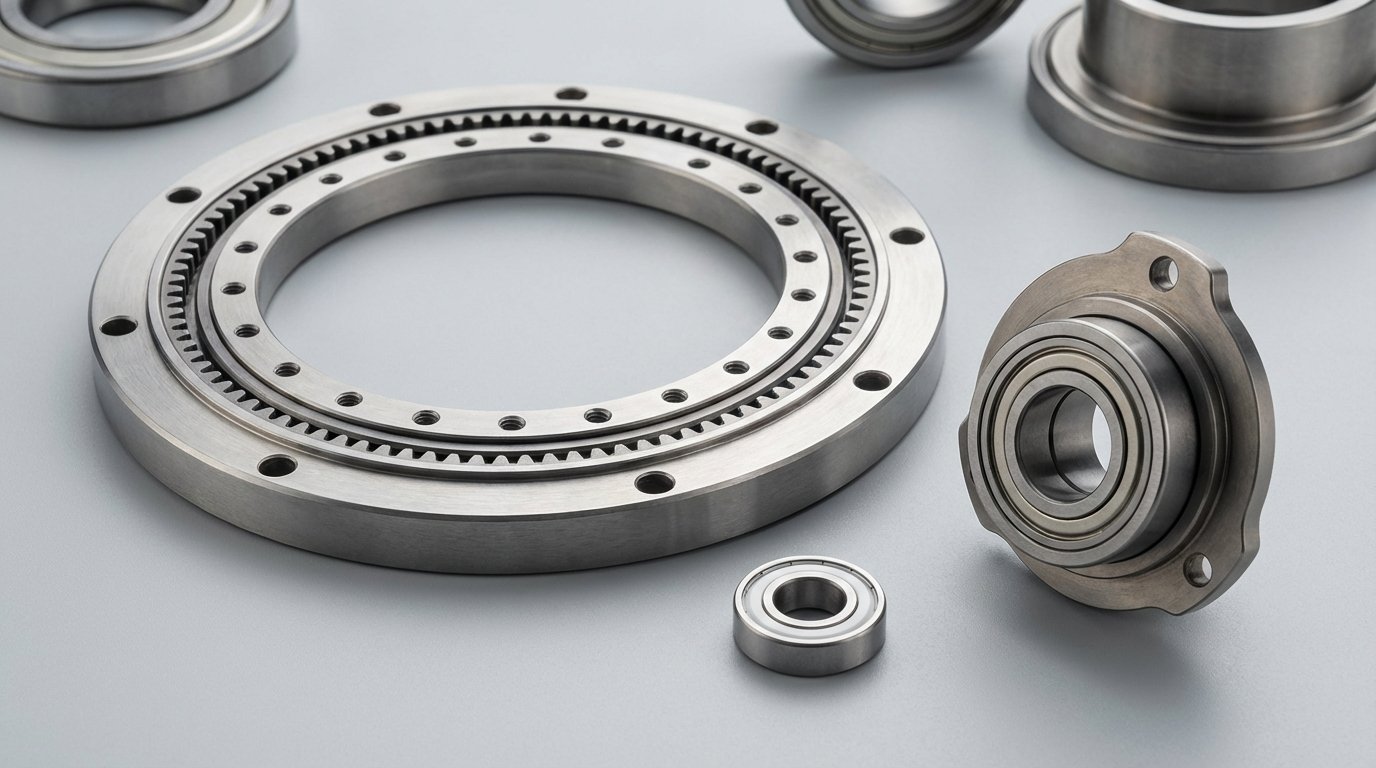
Typical customization scope in robotic mechanisms
Custom designs usually start from a known bearing family (ball, crossed roller, needle, sleeve, hybrid) and then adjust parameters to match the robot’s duty cycle and packaging.
- Geometry: OD/ID/width changes, thin-section profiles, integrated flanges/shoulders, custom fits
- Internal design: contact angle, ball size/count, cage type, raceway curvature, preload class
- Materials: stainless, through-hardened, case-hardened, ceramics/hybrid, corrosion-resistant coatings
- Sealing & lubrication: low-torque seals, labyrinths, cleanroom grease, food-grade, vacuum-compatible
- Integration: combined bearing + gear interface, encoder reference surfaces, anti-rotation features
- Compliance & quality: noise/vibration limits, cleanliness, traceability, validation testing
Haron Bearing Pro Tip: Share your torque budget, repeatability target, and contamination exposure first. These define whether we should optimize for low friction, higher preload stiffness, or stronger sealing.
How Does custom bearings for robotics Work?
Custom robotics bearings match geometry, fits, and lubrication to real loads and motion. Optimized preload, contact angle, and sealing keep contact stable, reducing heat and wear while delivering stiffness, low torque, and long life in tight spaces.
Video Guide: This mini-robot example helps visualize why tiny mechanisms often need non-standard bearing concepts and packaging-driven design choices.
Engineering levers that control performance
A custom bearing “works better” because it is tuned like a subsystem, not a commodity part.
- Load path definition: map combined radial/axial/moment loads at each joint position and acceleration peak.
- Internal geometry selection: choose contact angle and element size/count to prevent skidding and maximize stiffness.
- Preload and fits: set preload class and interference/clearance to control deflection and backlash.
- Lubrication regime: match grease/oil viscosity and thickener to speed, temperature, and cleanliness needs.
- Sealing strategy: balance contamination resistance with allowable starting/running torque.
- Validation: run torque, temperature rise, life, and contamination tests under representative duty cycles.
Haron Bearing Pro Tip: Robot speed is not just RPM. High acceleration and jerk can damage lubrication films, so preload and grease should be tuned for start-stop micro-cycles.
What are the three rules for bearings?
Three rules for robotics bearings: keep them clean, correctly lubricated, and properly aligned. Most early failures come from contamination, poor lubrication, and misalignment under high moments and frequent reversals.
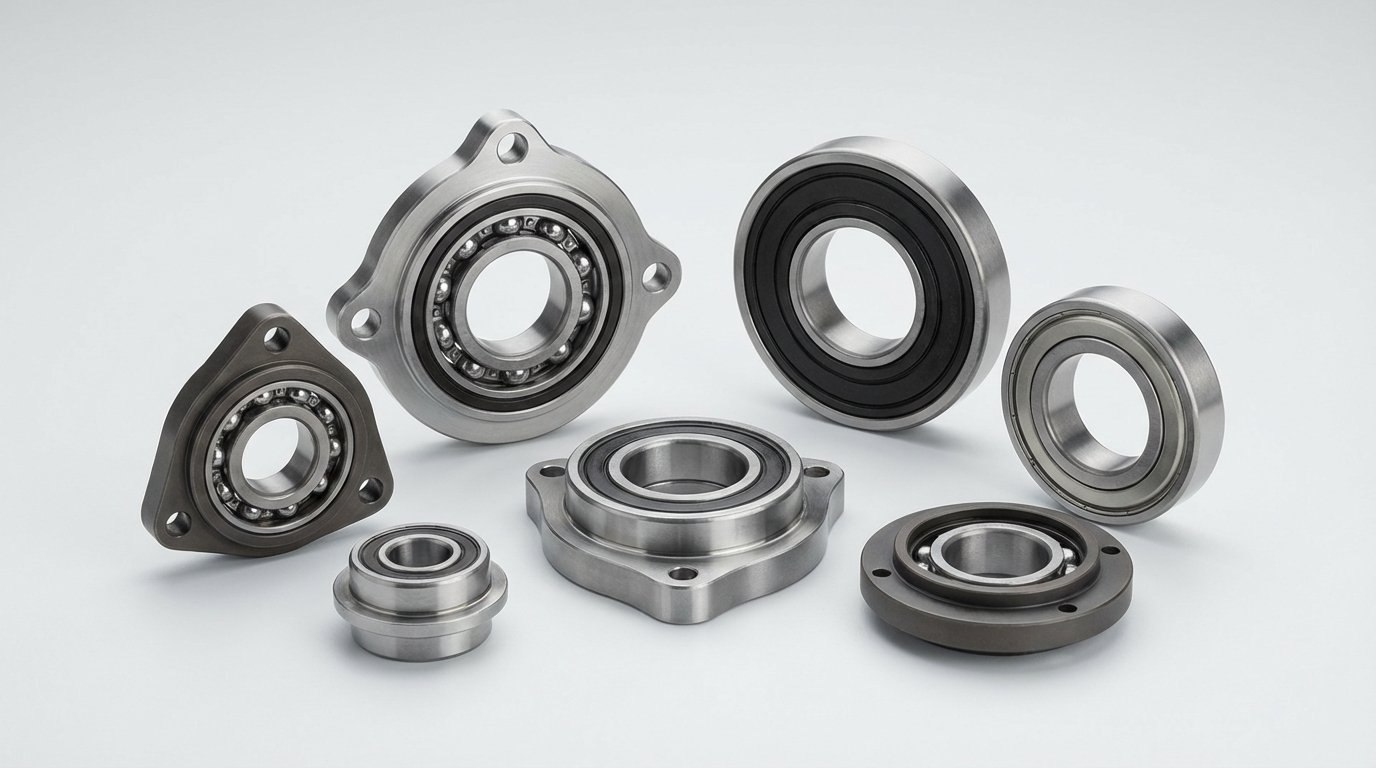
Field rules that prevent early failure
- Rule 1 — Cleanliness wins: control assembly cleanliness, add seals/shields where needed, and avoid abrasive ingress.
- Rule 2 — Correct lubrication, not “more”: choose the right grease/oil and fill ratio; over-greasing can increase torque and heat.
- Rule 3 — Respect alignment and fit: maintain coaxiality, avoid housing distortion, and apply proper shaft/housing fits to prevent creep.
Haron Bearing Pro Tip: I recommend documenting one “bearing handling SOP” for the whole robotics line—gloves, lint-free wipes, capped grease syringes, and a no-open-air rule cut contamination failures dramatically.
When would you need to use standard undersize bearings?
Undersize bearings help compensate for housing growth, coatings, AM variation, or press-fit control. In robotics, they manage tight torque budgets,thermal expansion mismatch, and distortion in lightweight aluminum housings.
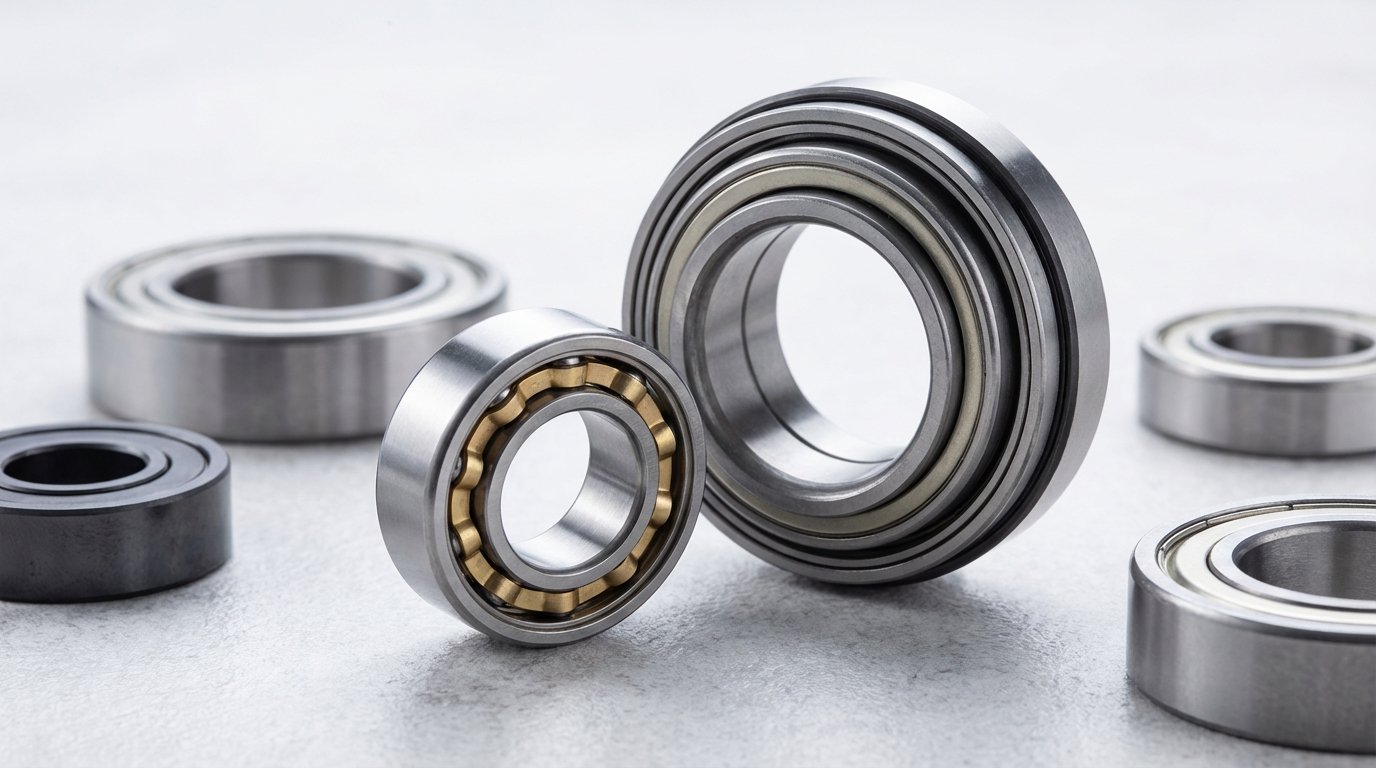
Common scenarios where undersize helps
- Thermal expansion mismatch: aluminum housings expanding faster than steel bearing rings.
- Coatings and surface treatments: hard anodize, nickel plating, or paint that reduces effective bore size.
- Thin-wall housings: press fits risk ovalizing the bore and increasing torque—undersize reduces assembly stress.
- 3D-printed or cast parts: larger tolerance bands require a controlled clearance strategy.
- Torque-sensitive joints: avoiding excessive interference that spikes drag torque.
Haron Bearing Pro Tip: I only specify undersize when we’ve modeled the worst-case stack-up (temperature + tolerance + coating). Otherwise, you can accidentally create too much clearance and lose stiffness and repeatability.
Why not use WD-40 on bearings?
WD-40 is not a true bearing lubricant. It can thin or wash out grease, weaken oil film, and cause long-term wear, noise, and corrosion risk, especially in sealed bearings and precision robot joints.
Practical risks in robotic joints
- Lubricant washout: dissolves or displaces grease, leaving metal-to-metal contact under load.
- Poor long-term film: inadequate viscosity and additives for rolling contact fatigue protection.
- Seal compatibility concerns: can affect some elastomers and reduce seal effectiveness over time.
- Contamination transport: can carry debris into raceways instead of keeping it trapped.
Haron Bearing Pro Tip: If a joint feels rough, I use a proper bearing-grade cleaner only during refurbishment—and then re-lubricate with a grease matched to speed factor, temperature, and seal drag targets, not a general-purpose spray.
Key Features & Comparison
Custom robotics bearings offer tailored stiffness, optimized torque, longer life, and better integration through custom preload, geometry, seals, materials, lubrication, and dimensions. They reduce compromises in compact, harsh, vacuum, or high-precision robot applications.
Comparison of bearing approaches for robotics selection
Based on our internal data and market analysis, here is the breakdown:
| Approach | Best Fit in Robotics | Advantages | Trade-Offs | Typical Use Cases |
|---|---|---|---|---|
| Standard catalog deep-groove ball bearing | General-purpose joints with moderate loads | Lowest cost, fast availability | Limited stiffness control, sealing may be generic | Simple rotary axes, small gear stages |
| Standard thin-section bearing | Tight envelope designs | Saves space, lower inertia | Sensitive to mounting distortion | Compact wrists, lightweight arms |
| Crossed roller bearing | High moment + high precision | Very high stiffness, good runout | Higher cost, careful sealing/lube needed | Robot bases, harmonic/strain-wave outputs |
| Hybrid ceramic (Si3N4 balls) | High speed, low lubrication tolerance | Lower heat, electrical insulation | Cost, needs correct preload/lube | High-speed spindles, sensitive sensors |
| Custom bearing (Haron Bearing program) | When catalog parts force compromises | Geometry + preload + seals + lube matched to duty | Longer lead time, engineering effort | Cobots, cleanroom robots, washdown automation, compact gear-integrated joints |
Haron Bearing Pro Tip: I use the “stiffness-per-torque” ratio as a quick comparator—if a standard bearing meets stiffness but blows the torque budget (or vice versa), that’s the strongest signal to go custom.
Cost & Buying Factors
Custom robotics bearing pricing depends on engineering scope, tooling, materials, seals, accuracy class, and testing. Balance unit cost with fewer failures, easier assembly, and higher uptime. Semi-custom designs often offer the best value.
What drives cost and how to buy smart
- Customization depth: minor dimensional changes cost less than new raceway geometry or integrated features.
- Materials & heat treatment: stainless, coatings, and hybrid elements add cost but can cut downtime in harsh environments.
- Accuracy requirements: tighter runout/noise specs increase grinding and inspection intensity.
- Seals and torque limits: low-drag sealing and specialized greases can be premium items.
- Volume & lead time: prototypes have higher NRE amortization; stable forecasts reduce unit price.
- Testing & documentation: life testing, cleanliness reports, and traceability raise upfront cost but reduce field risk.
Haron Bearing Pro Tip: I ask buyers to quote two paths in parallel—(1) a modified standard bearing and (2) a fully custom design—then decide using total cost of ownership (scrap, assembly time, warranty risk), not unit price alone.
Conclusion
Custom robotics bearings are needed when standard options cannot meet space, stiffness, torque, cleanliness, or environment demands. Haron tailors geometry, preload, materials, lubrication, and sealing to improve repeatability, reduce drag, and extend service life.