
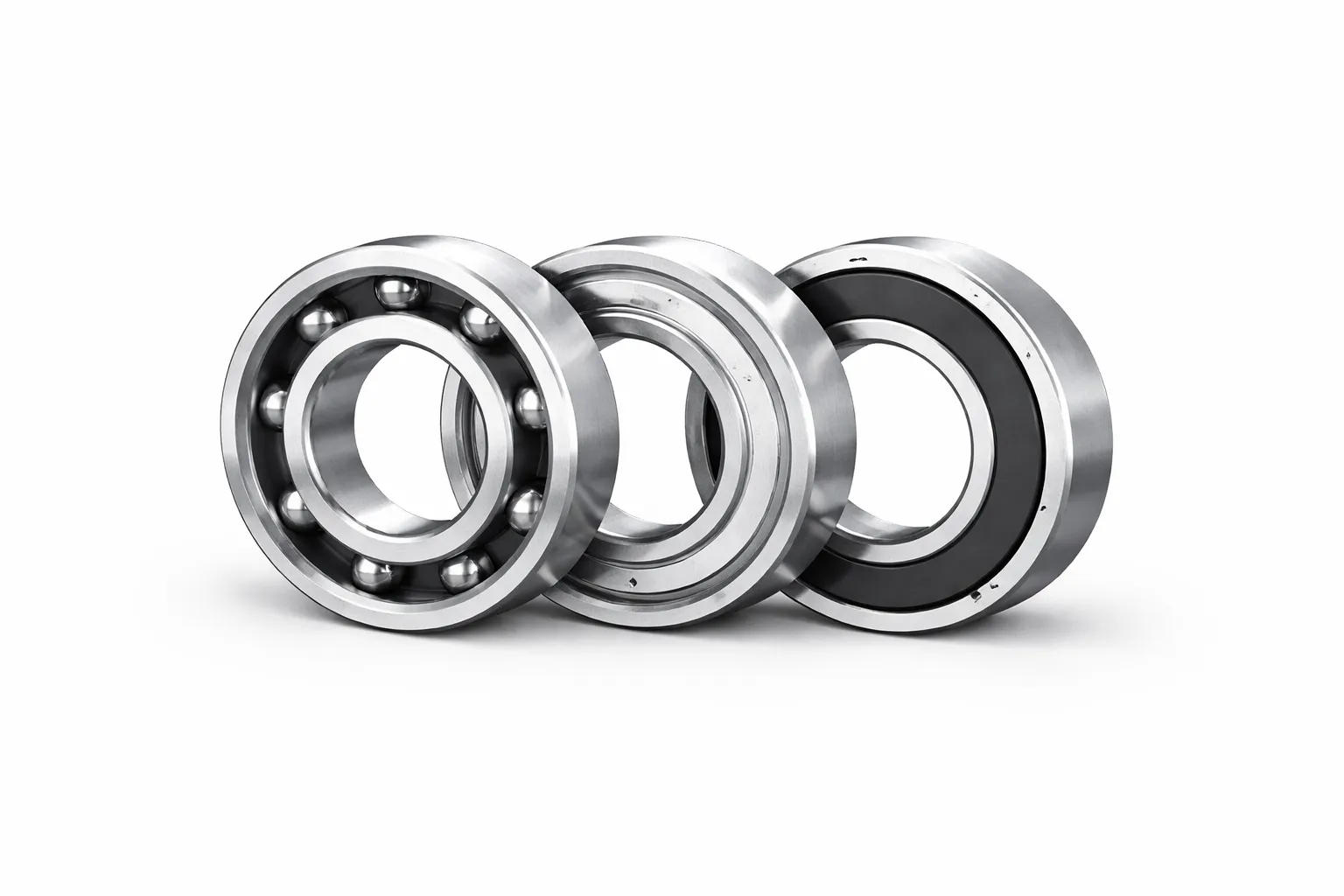
For robotics bearings, chrome steel offers strong load capacity and cost efficiency. Stainless steel improves corrosion resistance for humid or washdown use. Ceramic or hybrid bearings reduce friction and support high speed/electrical insulation but cost more and may be brittle under shock.
What is Steel (Chrome Steel) Bearing Material?
Steel, usually AISI 52100 chrome steel, is the standard robotics bearing material. It offers high hardness, strong load capacity, and excellent fatigue life when lubrication and sealing control moisture and contamination.
Core Material: High-carbon chromium alloy steel (commonly AISI 52100) heat-treated for high hardness and wear resistance.
Best-Fit Robotics Use: Joint bearings, gearboxes, and actuators in clean indoor cells where corrosion risk is low.
Performance Profile: High radial/axial load capacity and long rolling-contact fatigue life with proper lubrication.
Limits: Susceptible to rust and corrosion; contamination or washdown quickly shortens life without robust seals.
What is Stainless Steel Bearing Material?
Stainless steel bearings use corrosion-resistant alloys (commonly 440C) to survive humidity, splashes, and mild chemicals that would attack chrome steel. They’re a common robotics upgrade when uptime is threatened by corrosion, though they usually sacrifice some fatigue life and load capacity versus 52100.
Core Material: Martensitic stainless steel (often AISI 440C) hardened for bearing use with improved corrosion resistance.
Best-Fit Robotics Use: Food/packaging lines, outdoor robotics, humid environments, and applications with periodic washdowns.
Performance Profile: Better corrosion resistance than chrome steel; solid general-purpose choice when rust is the failure driver.
Limits: Typically lower fatigue strength than 52100; still needs lubrication and can corrode in aggressive chemistries.
Key Differences: Steel (Chrome) vs. Stainless Steel
| Dimension | Steel (Chrome / 52100) | Stainless Steel (e.g., 440C) |
|---|---|---|
| Corrosion resistance | Low (requires strong sealing/lube discipline) | Medium–High (better for humidity/washdown) |
| Load & fatigue life | Typically highest | Typically lower than chrome steel |
| Cost | Lowest | Higher than chrome steel |
| Typical robotics fit | Clean indoor automation cells | Humid, outdoor, washdown-prone cells |
ClearFilter Pro Tip: We choose chrome steel when contamination is controlled (good seals + stable lubrication), and we switch to stainless when corrosion is the primary failure mode—then we validate life via duty-cycle testing because stainless can derate fatigue life under the same loads.
Pros & Cons Comparison
| Feature | Steel (Chrome) | Stainless Steel |
|---|---|---|
| Load capacity | Strongest in most standard bearing grades | Good, usually lower than chrome steel |
| Corrosion resistance | Poor | Much better |
| Wear/fatigue life | Excellent in clean, lubricated conditions | Good, can be lower under high cyclic loads |
| Cost/value | Best cost-performance | Higher cost for corrosion protection |
| Best environment | Dry, clean, sealed systems | Humid, splash, mild washdown |
Conclusion
For bearing materials in robotics, choose chrome steel for maximum load capacity and lowest cost in controlled environments, and select stainless steel when humidity or washdown makes corrosion the dominant risk. If you also need ultra-low friction, high speed, or electrical insulation, consider ceramic bearings as a premium upgrade (often validated case-by-case).
FAQ
1. Which bearing material is best for robotics overall?
Chrome steel is best overall for controlled environments due to strength and fatigue life; stainless is best when corrosion risk is high.
2. When should we avoid chrome steel in robotic joints?
Avoid it when moisture, washdown, salt air, or frequent condensation can reach the bearing—rust will rapidly degrade performance.
3. Does stainless steel eliminate the need for seals and lubrication?
No. Stainless improves corrosion resistance, but seals and lubrication are still critical for wear life and contamination control.
4. Where do ceramic bearings fit into bearing materials for robotics?
Ceramics (often hybrid) fit high-speed, low-friction, corrosion-prone, or electrically sensitive applications, but they cost more and can be less tolerant of shock.