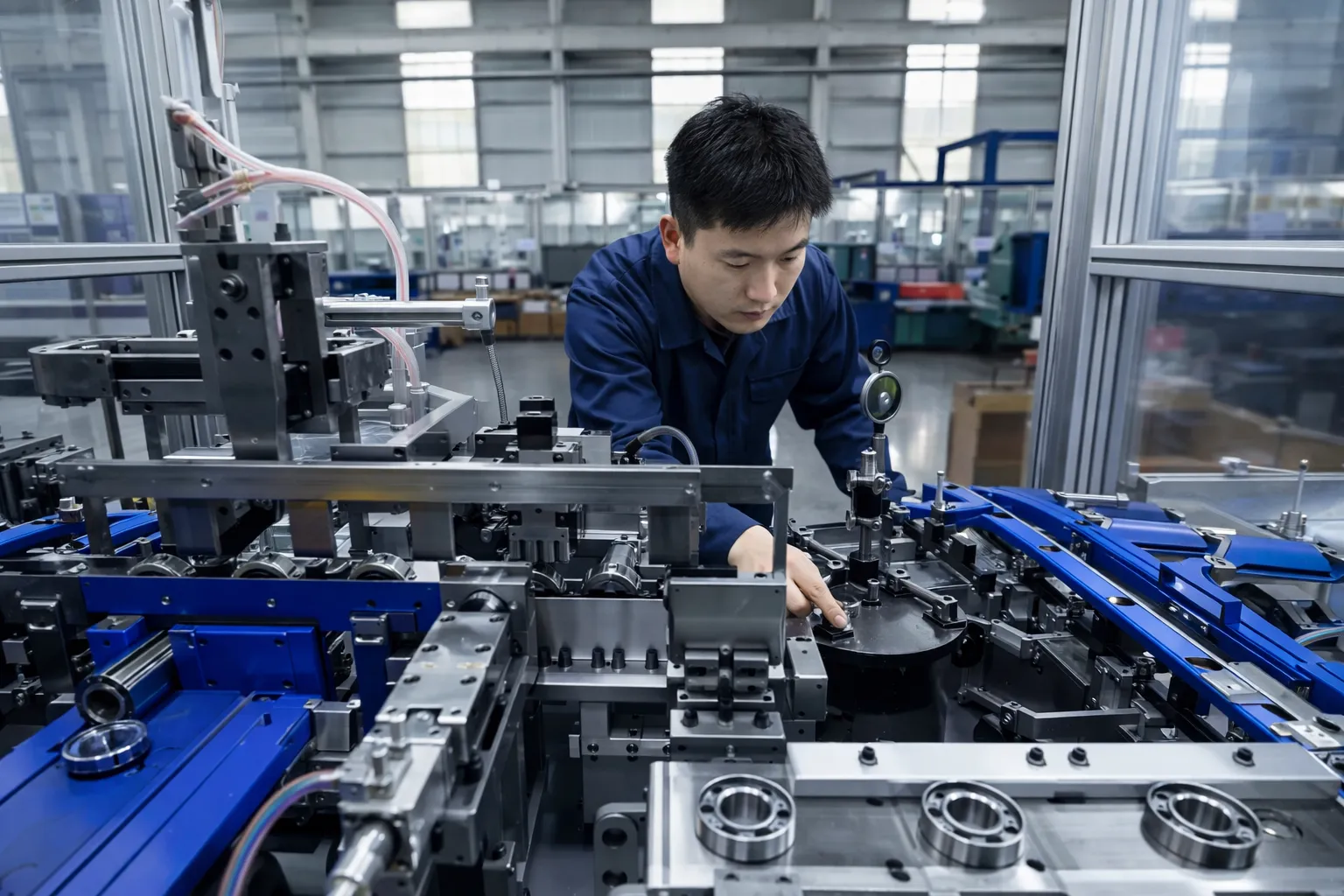
Tapered Roller Bearings
Precision tapered roller bearings engineered for combined radial and axial loads in wheel hubs, gearboxes, heavy machinery, agricultural equipment, mining systems, and industrial transmission applications.
Explore single row, double row, four row, matched sets, sealed, flanged, metric, inch, and thrust tapered roller bearing solutions designed for reliable load carrying, precise alignment, and long-term industrial performance.
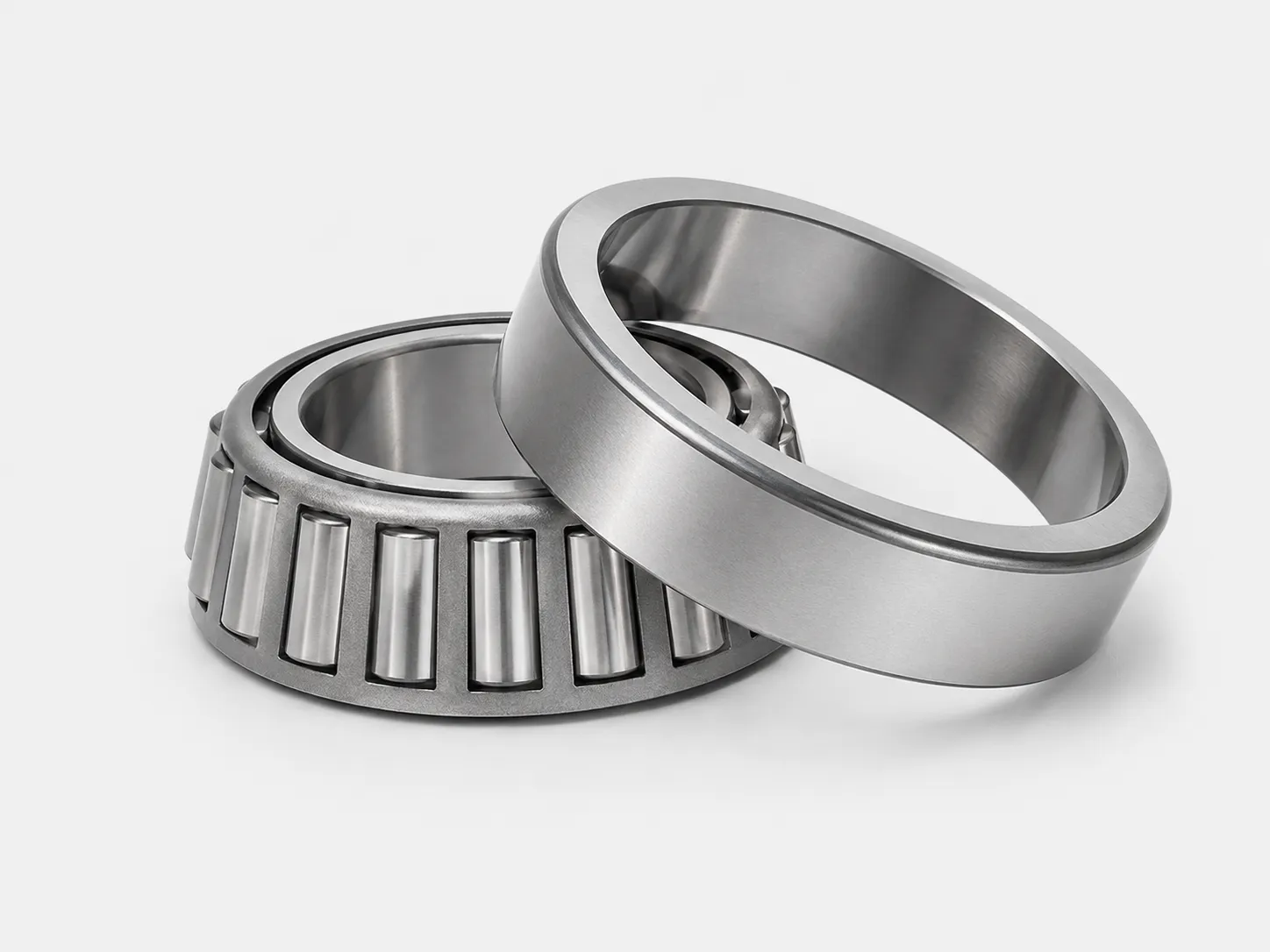
Combined Load
Radial & Axial Support
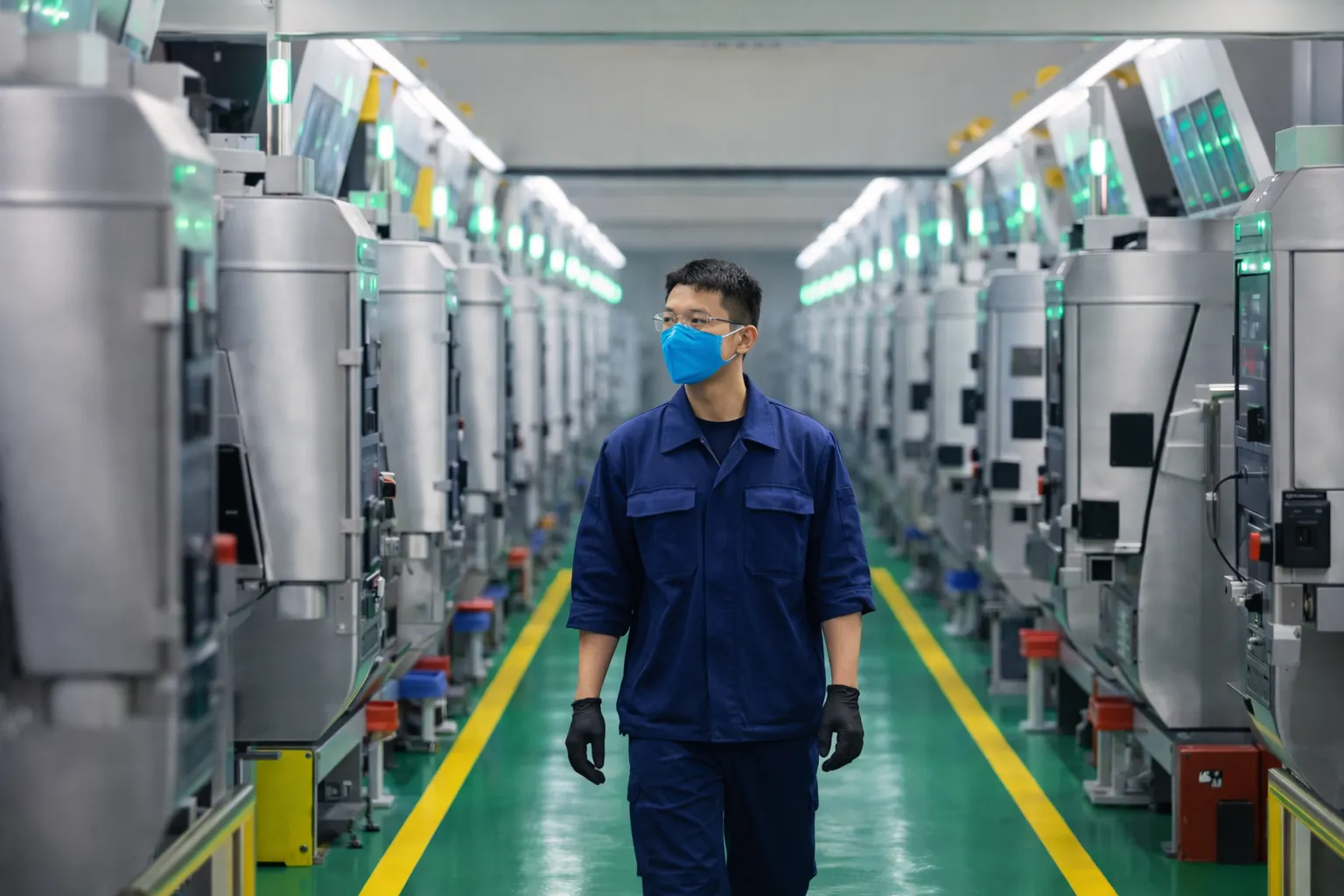
Active Production
Operating 100+ advanced automated lines to guarantee high-volume, precision manufacturing.
Precision Deep Groove Ball Bearing Manufacturing
Streamlined production and rigorous quality control engineered for high-performance motors, automotive, and industrial equipment.
Up to P2 Precision
Advanced grinding ensures exceptional contact accuracy, stable rotation, and long-term performance.
Strict QC Protocols
Dimensional accuracy, noise, vibration, and clearance are rigorously inspected from raw material to finish.
OEM / ODM Customization
Flexible manufacturing supporting non-standard designs, specific precision grades, and private labeling.
Stable Global Supply
Robust production capacity ensuring reliable, on-time delivery for large-scale industrial projects worldwide.
What Are Tapered Roller Bearings?
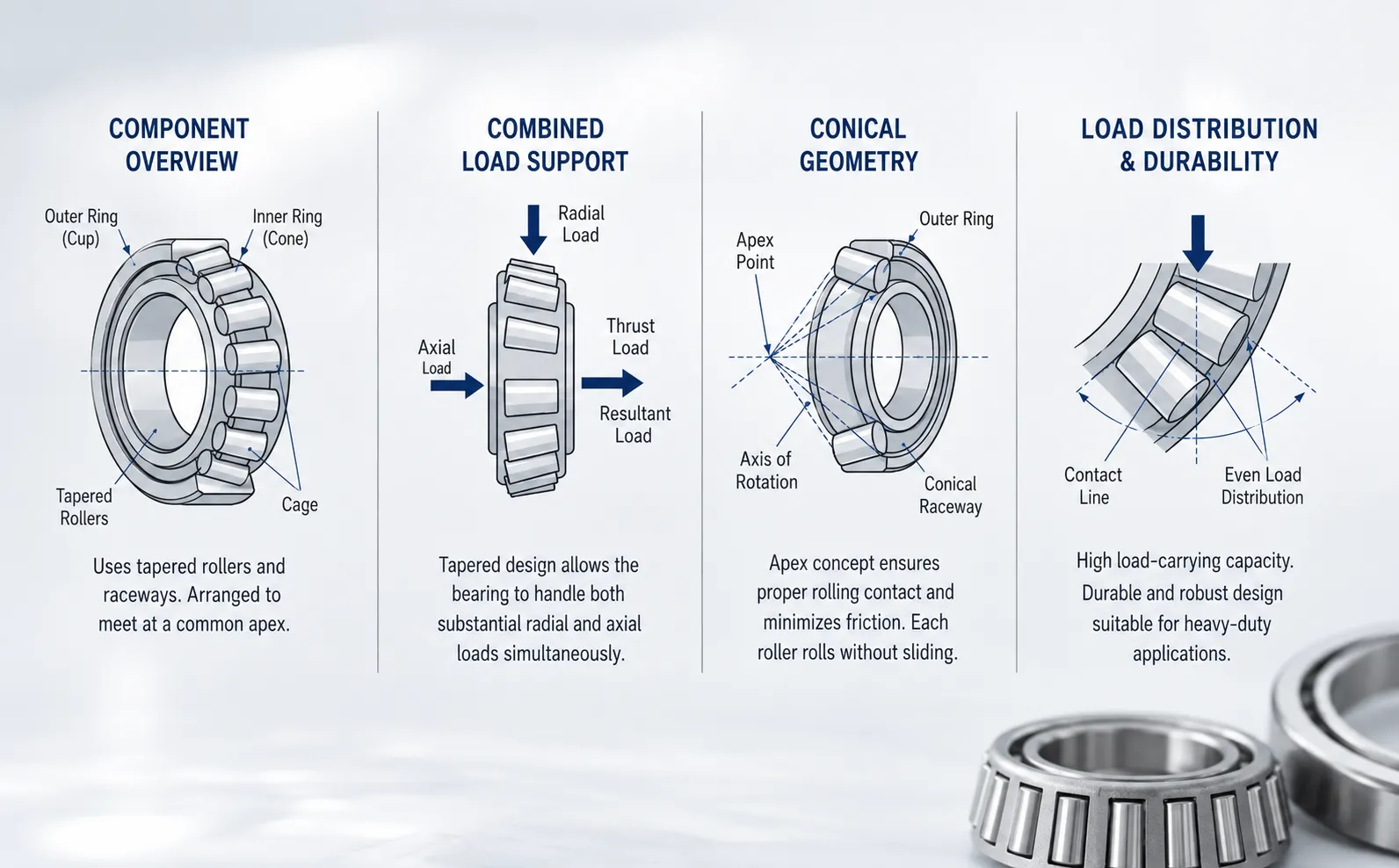
Tapered roller bearings are precision rolling bearings designed with tapered inner and outer raceways and tapered rollers. This unique geometric structure allows the bearing to carry radial loads and axial loads at the same time.
Because the contact angle can support thrust load in one direction, tapered roller bearings are widely used in wheel hubs, gearboxes, reducers, construction machinery, agricultural machinery, and heavy industrial equipment where combined forces are present.
- Cup / Outer Ring: Forms the outer raceway.
- Cone / Inner Ring: Guides the rollers.
- Tapered Rollers: Provide line contact for high load.
- Cage: Maintains roller spacing.
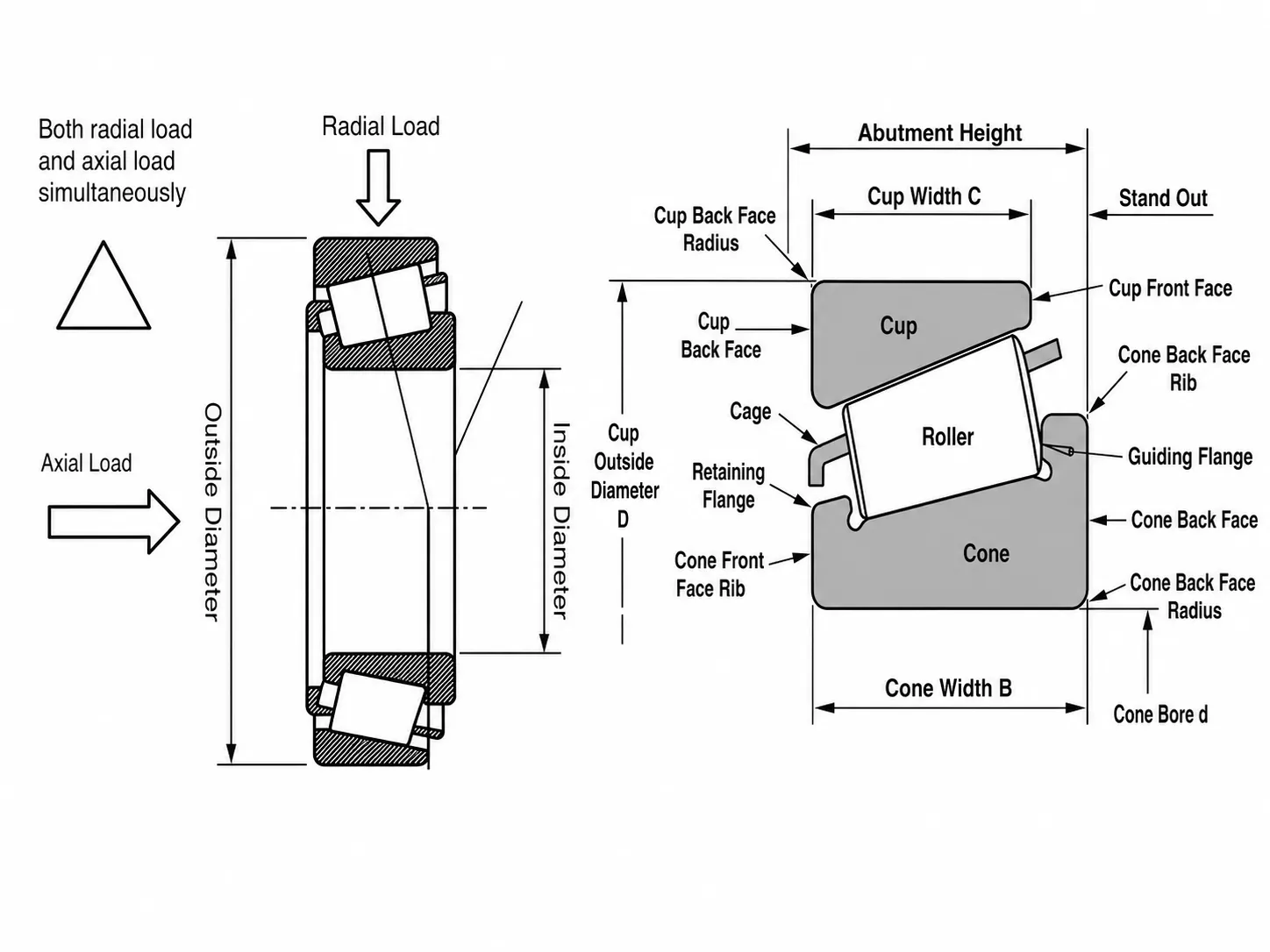
How Tapered Roller Bearings Handle Radial and Axial Loads
How to Choose the Right Tapered Roller Bearing
Follow these 6 steps to match the right bearing structure to your industrial application.
Confirm Load Direction
Determine whether the bearing will mainly carry radial load, one-direction axial load, two-direction axial load, or combined radial and axial loads.
Choose Bearing Structure
Select single row, double row, four row, matched set, or thrust tapered roller bearing based on load direction and installation space.
Confirm Speed & Condition
Check operating speed, shock load, vibration, lubrication method, temperature, dust, water, and contamination level.
Decide Preload Requirement
For wheel hubs, gearboxes, and precision machinery, clearance or preload setting can strongly affect stiffness, heat generation, and service life.
Match Size and Standard
Confirm metric or inch series, bore diameter, outside diameter, width, cup/cone number, or equivalent bearing model.
Confirm Custom Requirements
Check cage material, sealing, flanged design, precision grade, heat treatment, lubrication, packaging, private label, and annual demand.
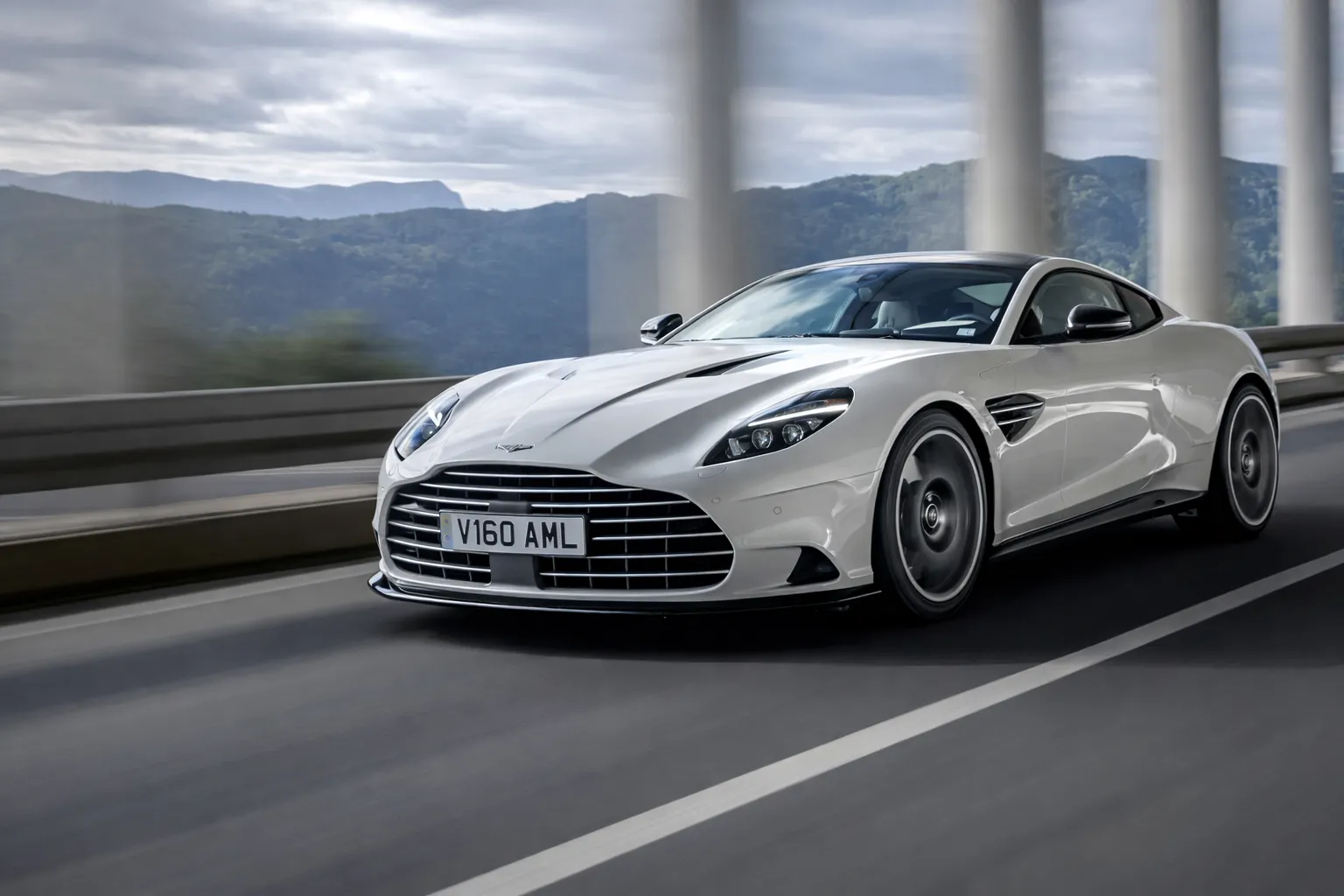
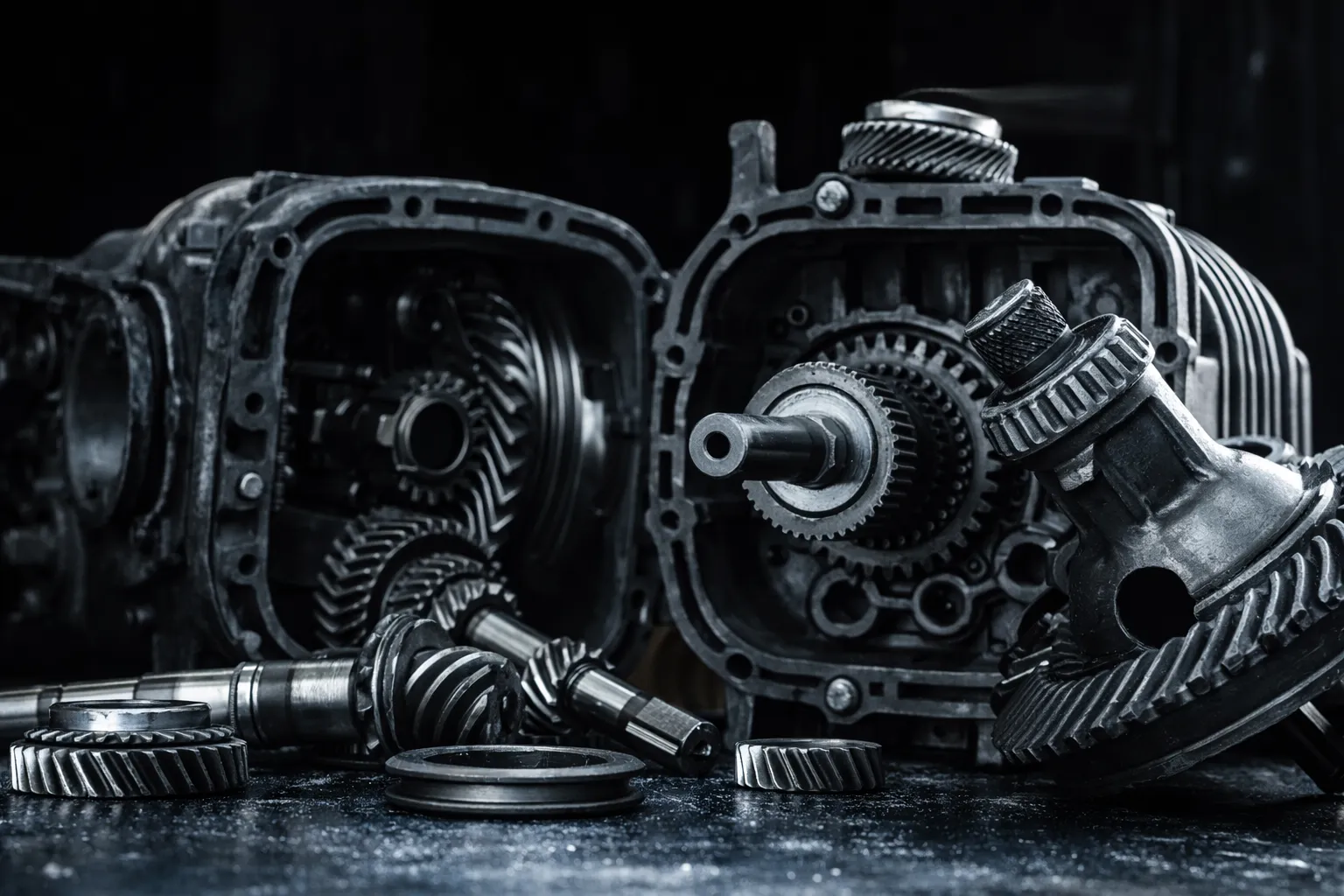
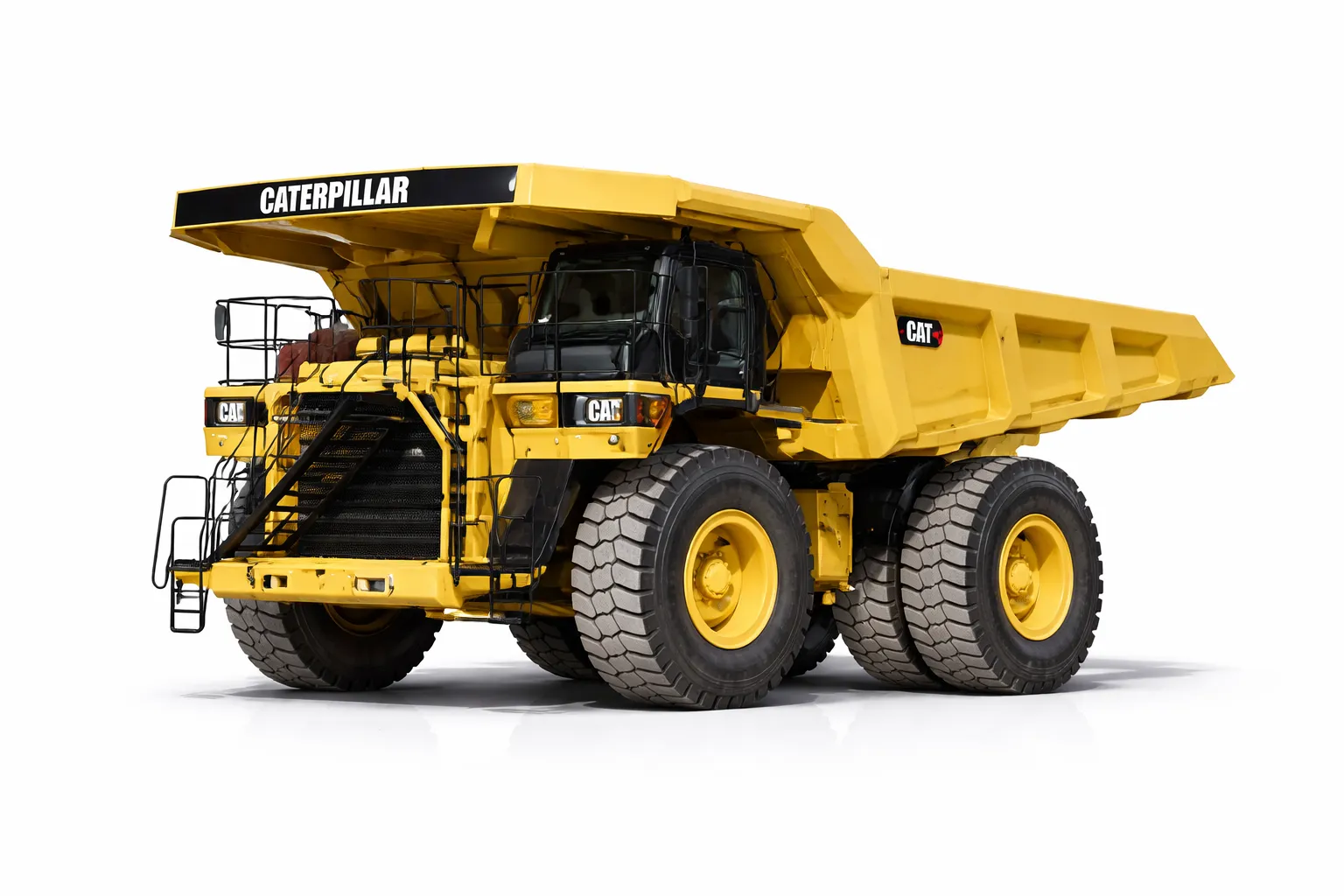
Explore by Tapered Roller Bearing Application
Discover how our precision bearing solutions deliver reliable performance across diverse industrial sectors.
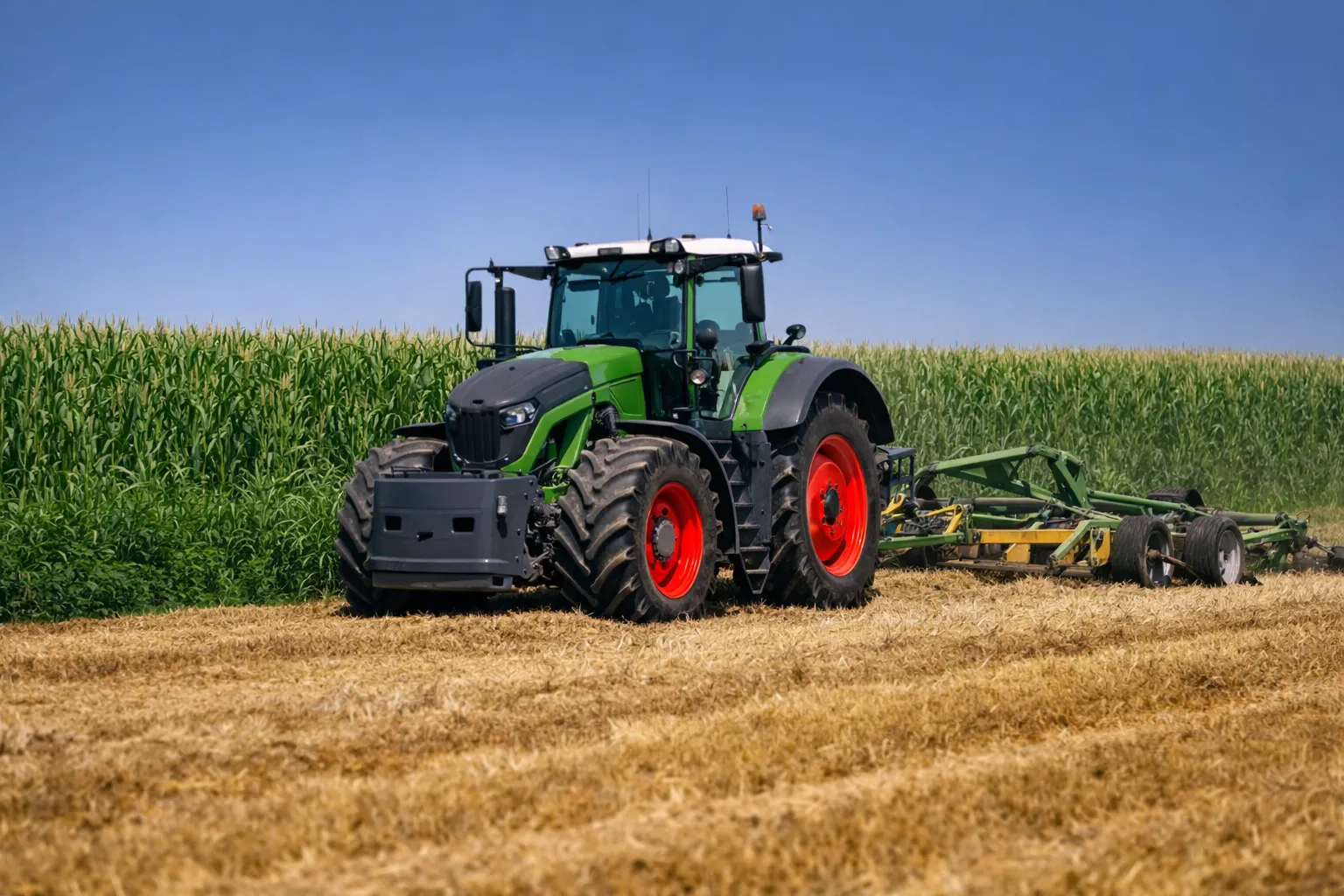
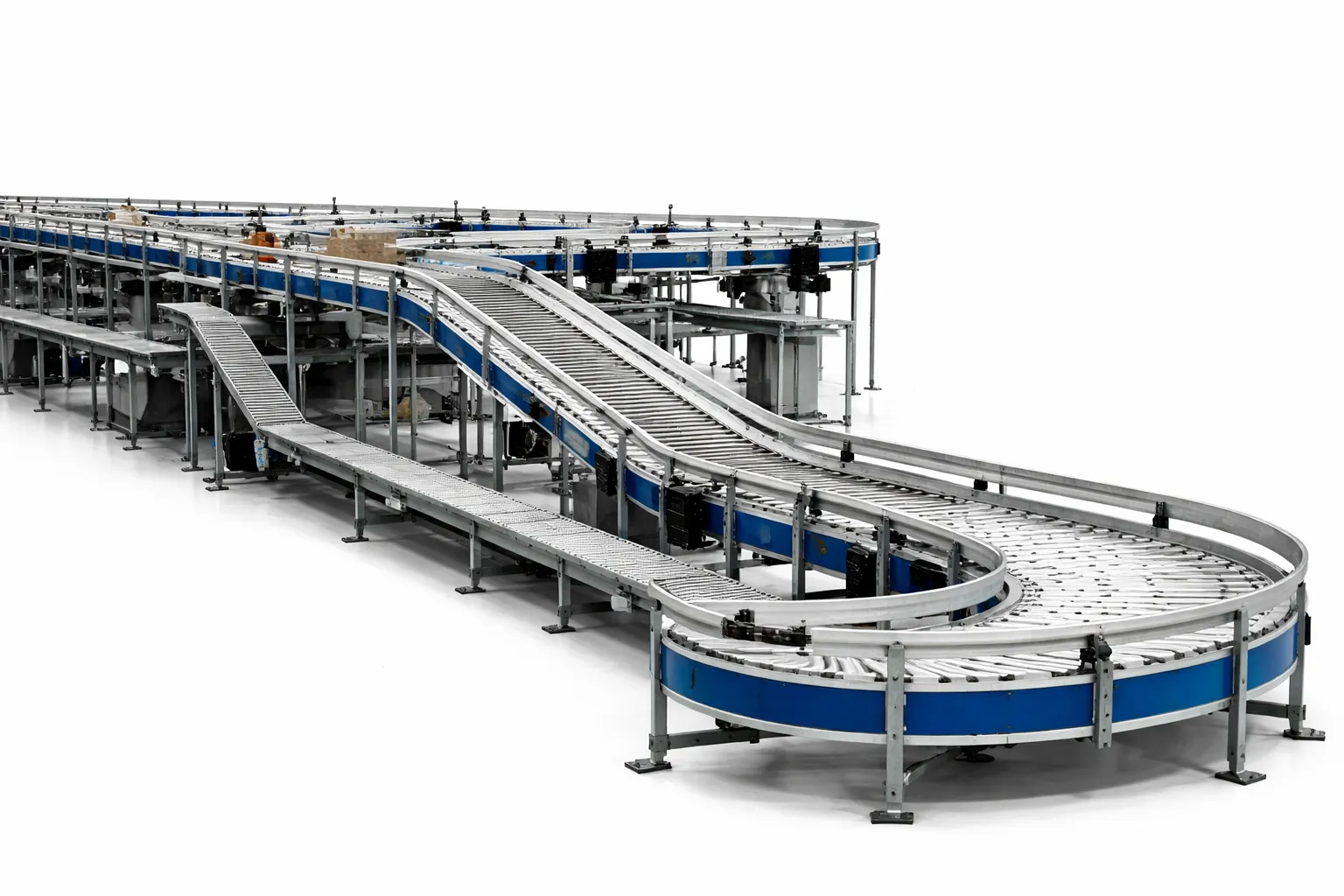
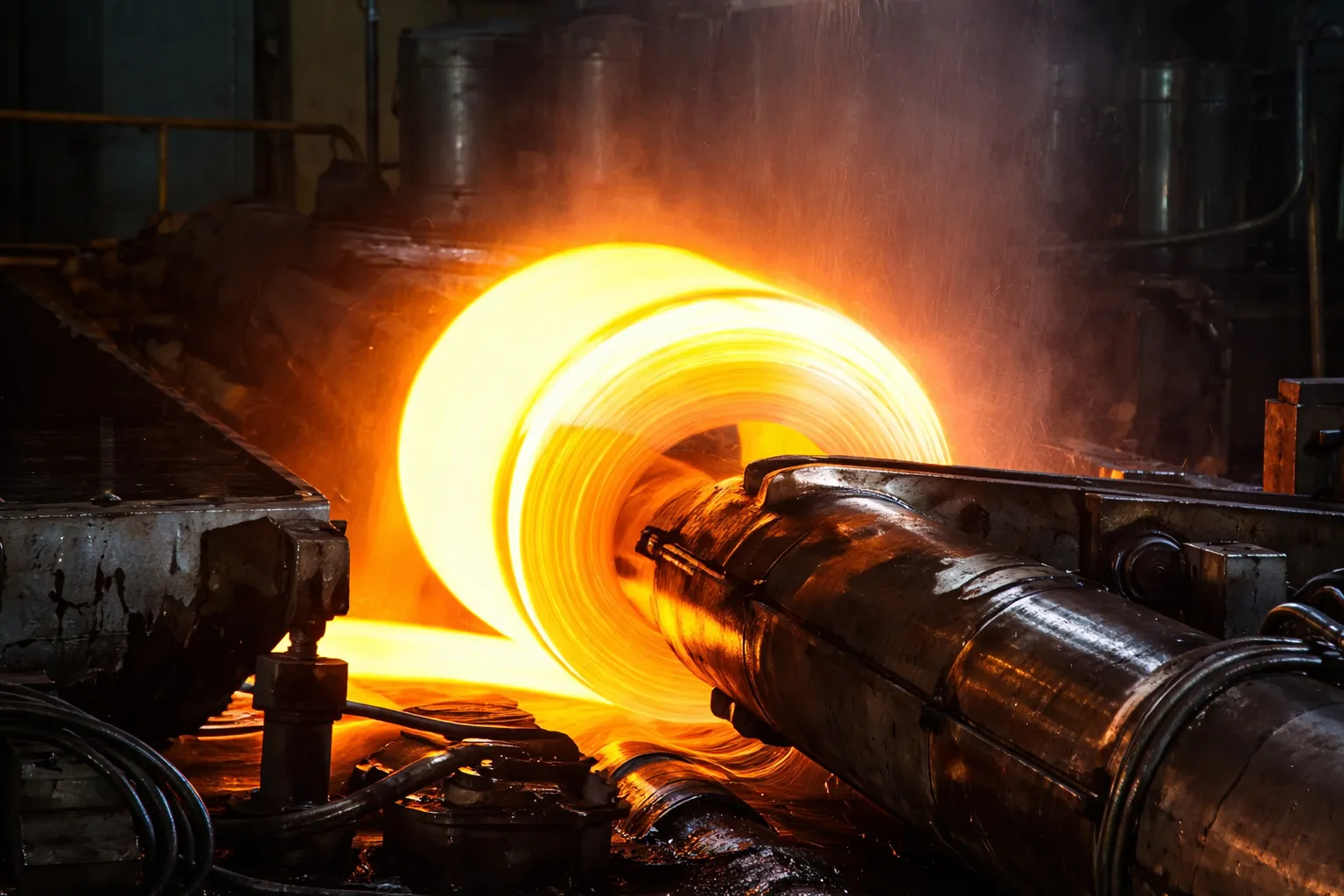
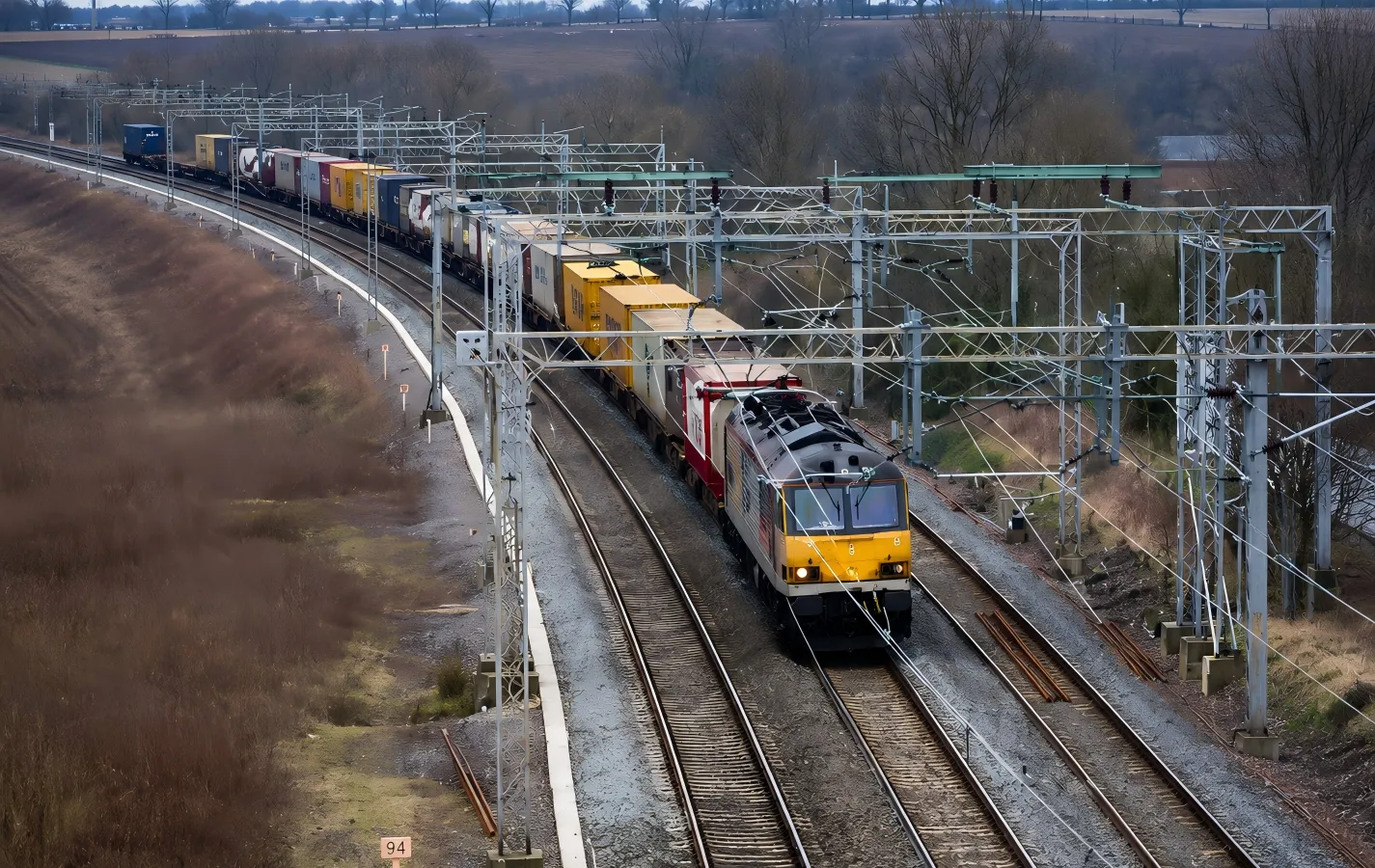
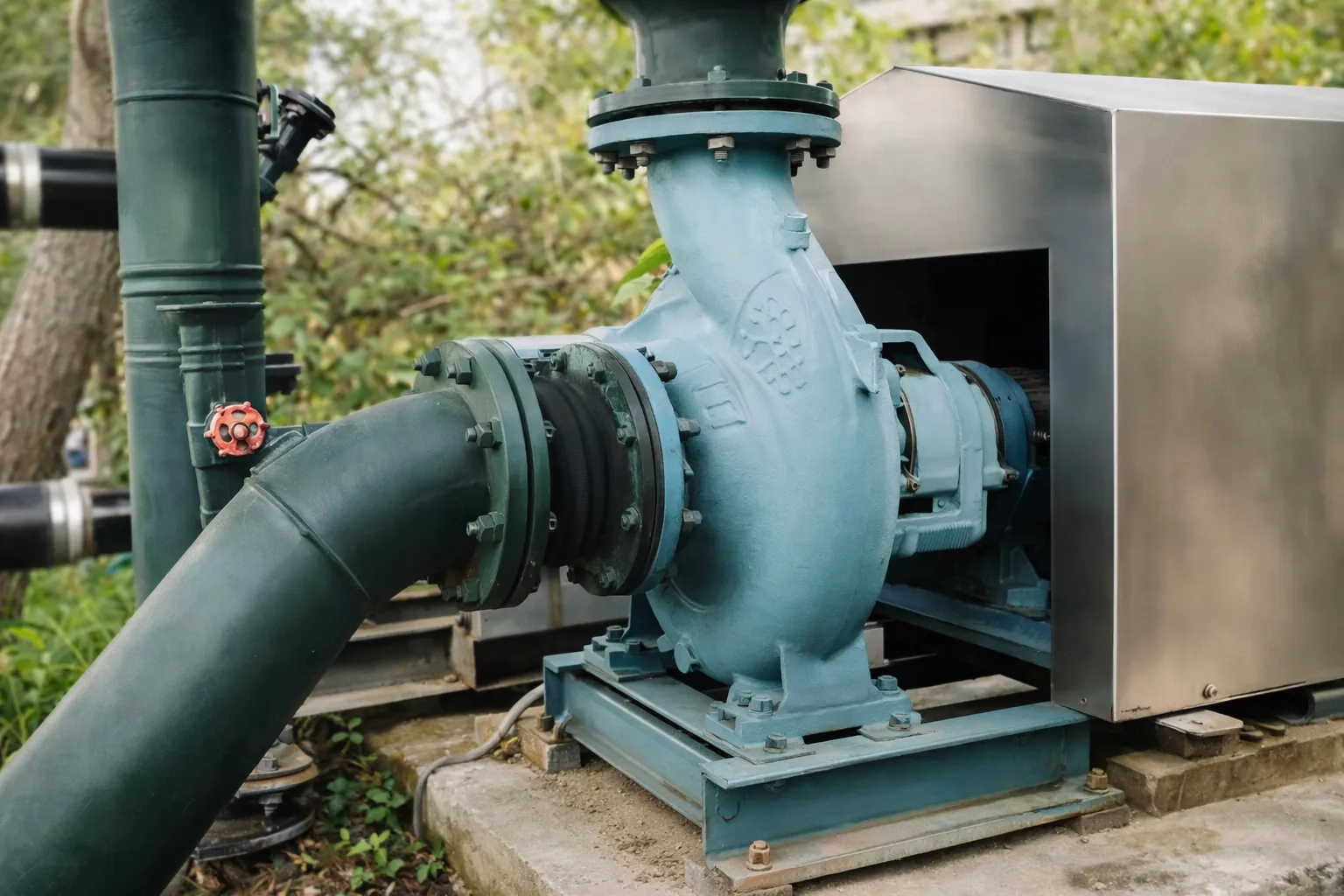
Tapered Roller Bearing Categories
Single Row
Most common for combined loads.
Double Row
Higher rigidity, two-way axial load.
Four Row
Heavy-duty for rolling mills.
Matched Sets
DB, DF, DT arrangements.
Thrust Bearings
Mainly for heavy axial thrust.
Sealed Types
Protection against contamination.
Flanged Types
Useful for compact positioning.
Metric & Inch
Global equipment standards.
Cup & Cone
Separable assembly components.
Custom OEM
Special sizes, cages, seals.
Single Row Tapered Roller Bearings
Single row tapered roller bearings are the most widely used tapered roller bearing type. They can carry radial loads and axial loads in one direction, making them suitable for gearboxes, wheel hubs, reducers, agricultural machinery, and general industrial equipment.
Suitable Scenes
- Wheel hubs
- Gearboxes
- Reducers
- Conveyors
- Agricultural machinery
Structural Advantages
- Simple and reliable
- Separable cup and cone
- High combined capacity
- Suitable for pairing
- Metric and inch series
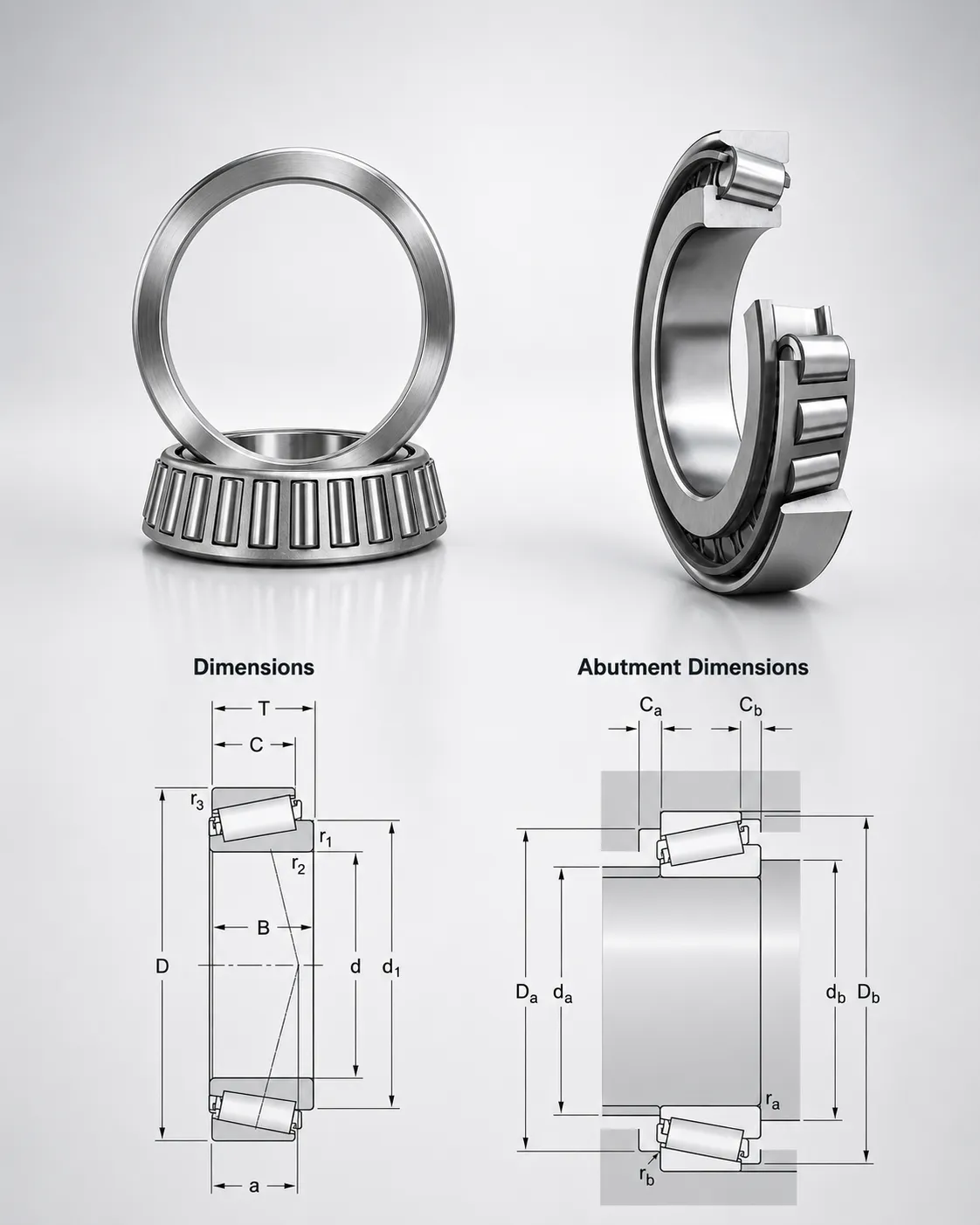
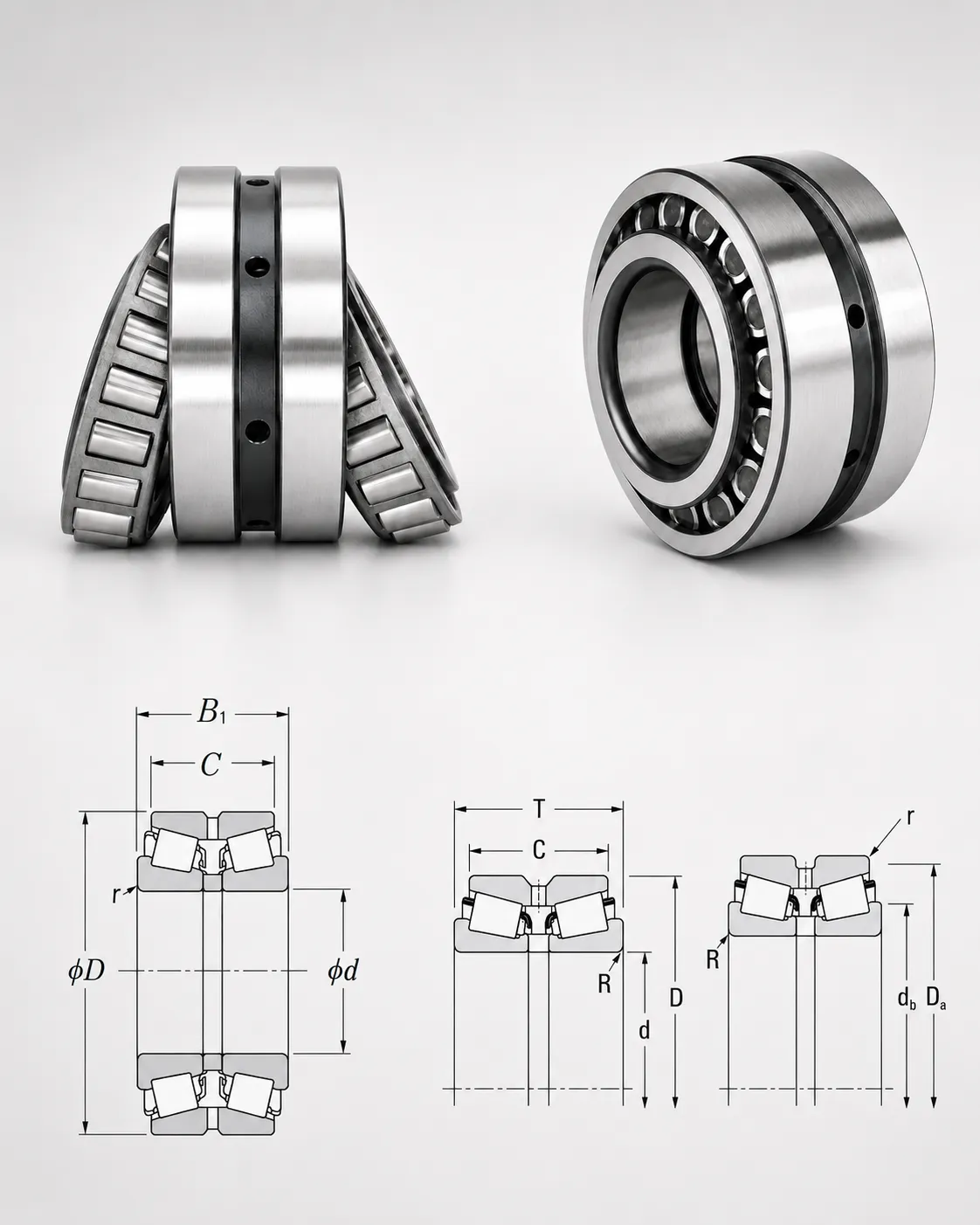
Double Row Tapered Roller Bearings
Double row tapered roller bearings use two rows of tapered rollers to provide higher load capacity and greater stiffness. They can support axial loads in both directions depending on internal arrangement.
Suitable Scenes
- Heavy gearboxes
- Rolling equipment
- Wheel assemblies
- Industrial transmission
- Mining machinery
Structural Advantages
- Higher rigidity
- Two-way axial capacity
- Compact footprint
- Heavy-duty performance
Four Row Tapered Roller Bearings
Four row tapered roller bearings are designed for extremely heavy radial and axial loads. They are commonly used in rolling mills, steel equipment, and heavy industrial applications.
Suitable Scenes
- Steel rolling mills
- Work roll applications
- Heavy industrial equipment
- Metallurgical machinery
Structural Advantages
- Extreme load capacity
- Low-to-medium speed
- Multi-row load distribution
- Harsh environment ready
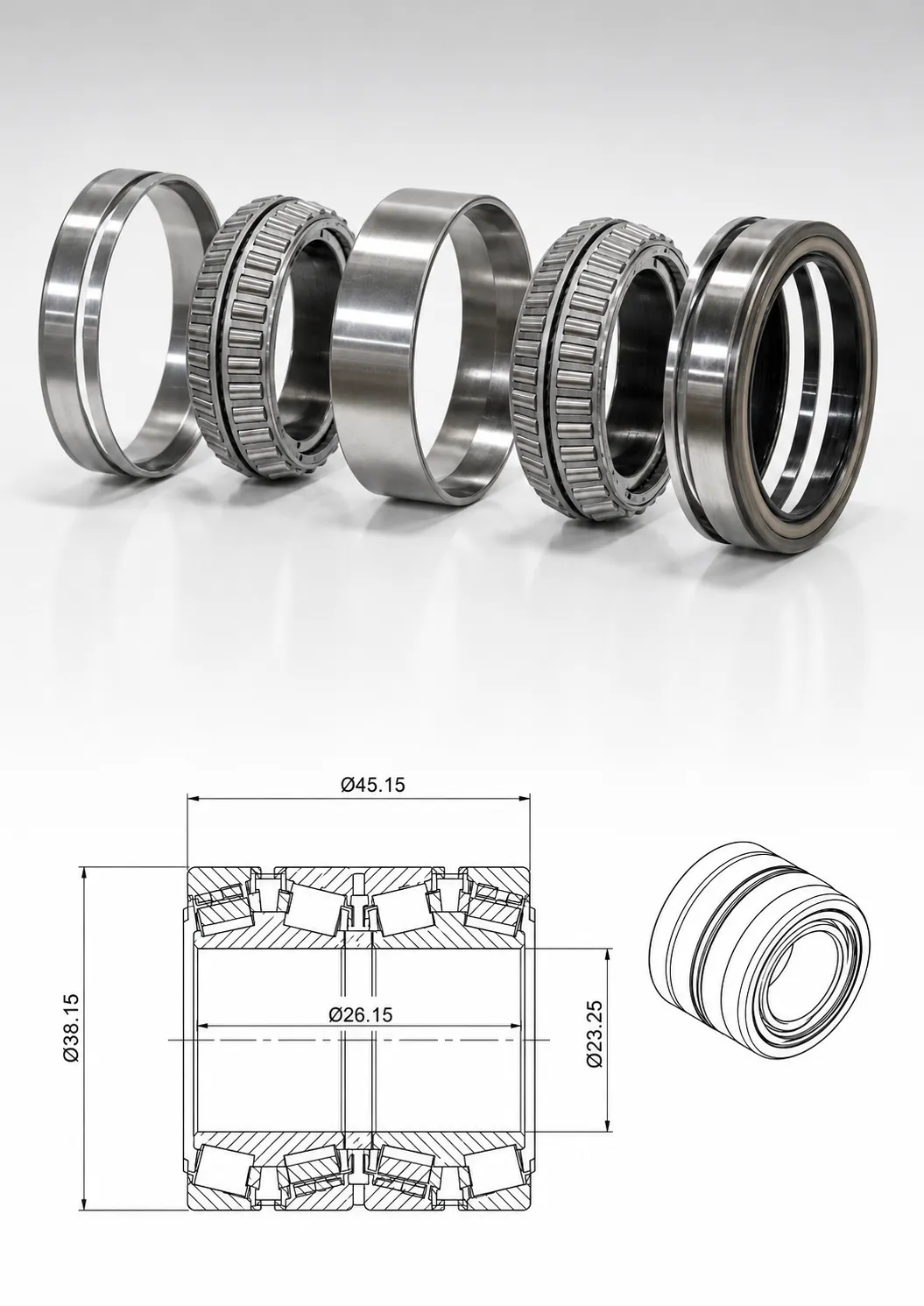
Matched Tapered Roller Bearing Sets
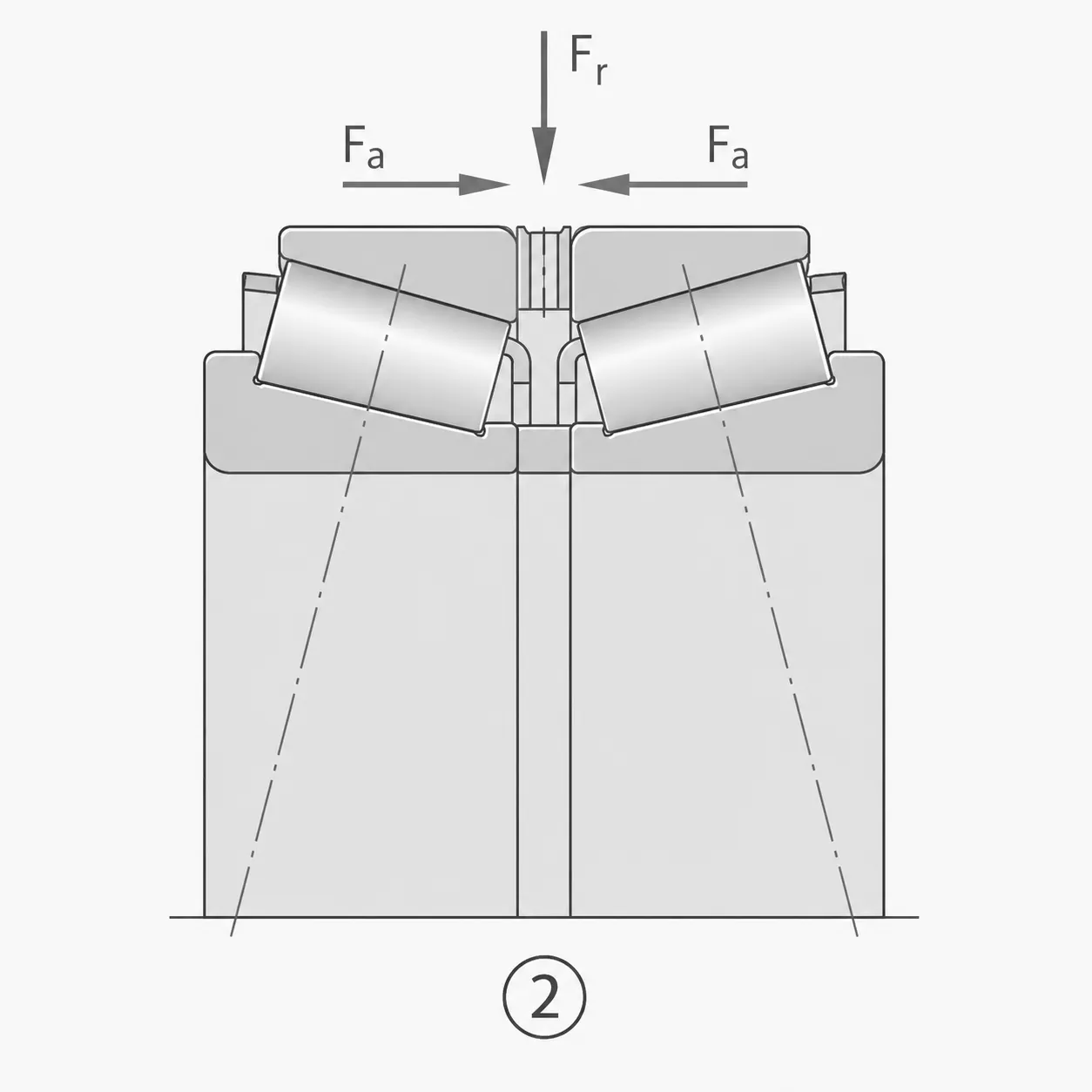
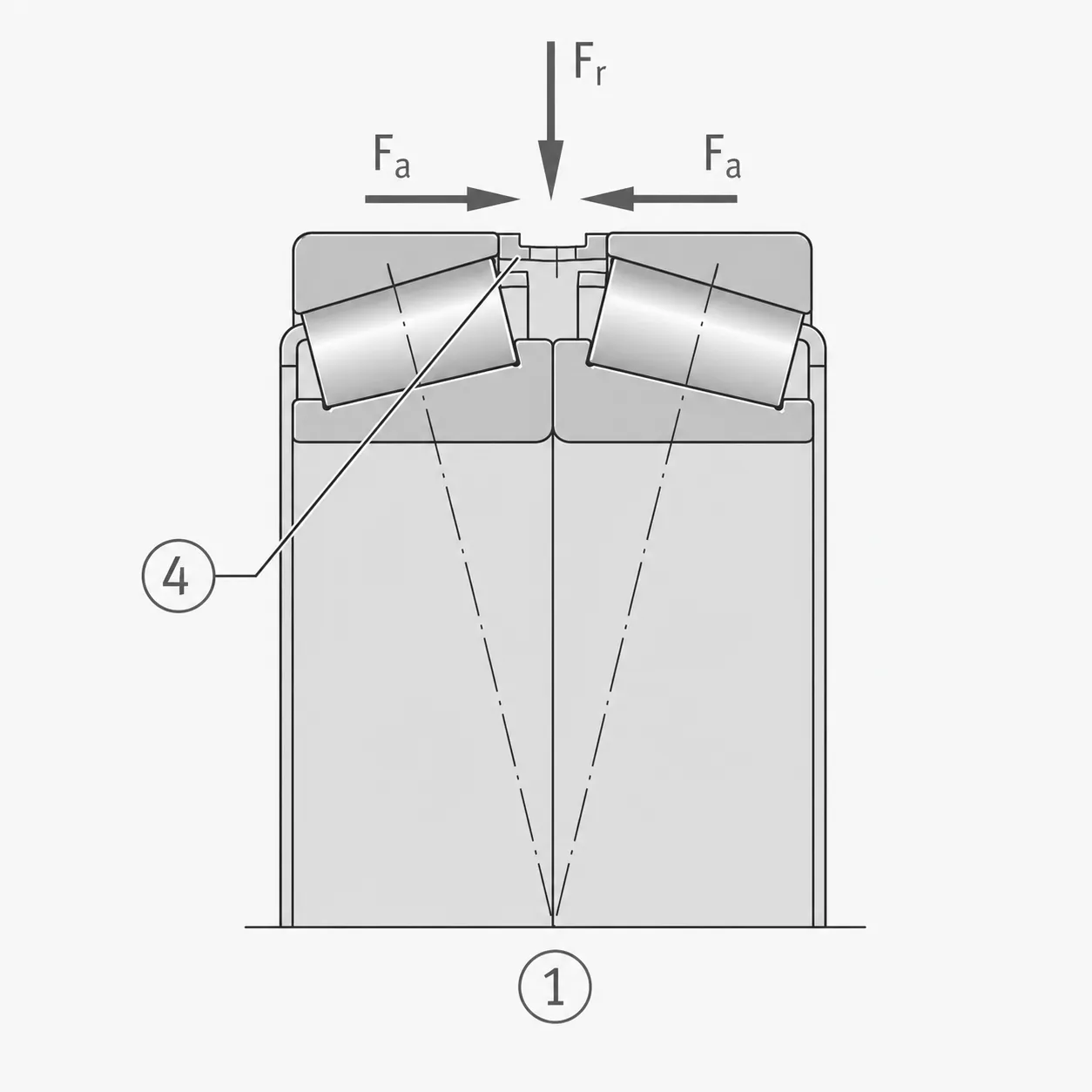
Matched sets use two or more single row bearings arranged to control axial load direction, stiffness, preload, and shaft positioning.
Back-to-Back (DB)
High rigidity and strong moment load resistance. Ideal for gearboxes.
Face-to-Face (DF)
Better tolerance for slight mounting misalignment.
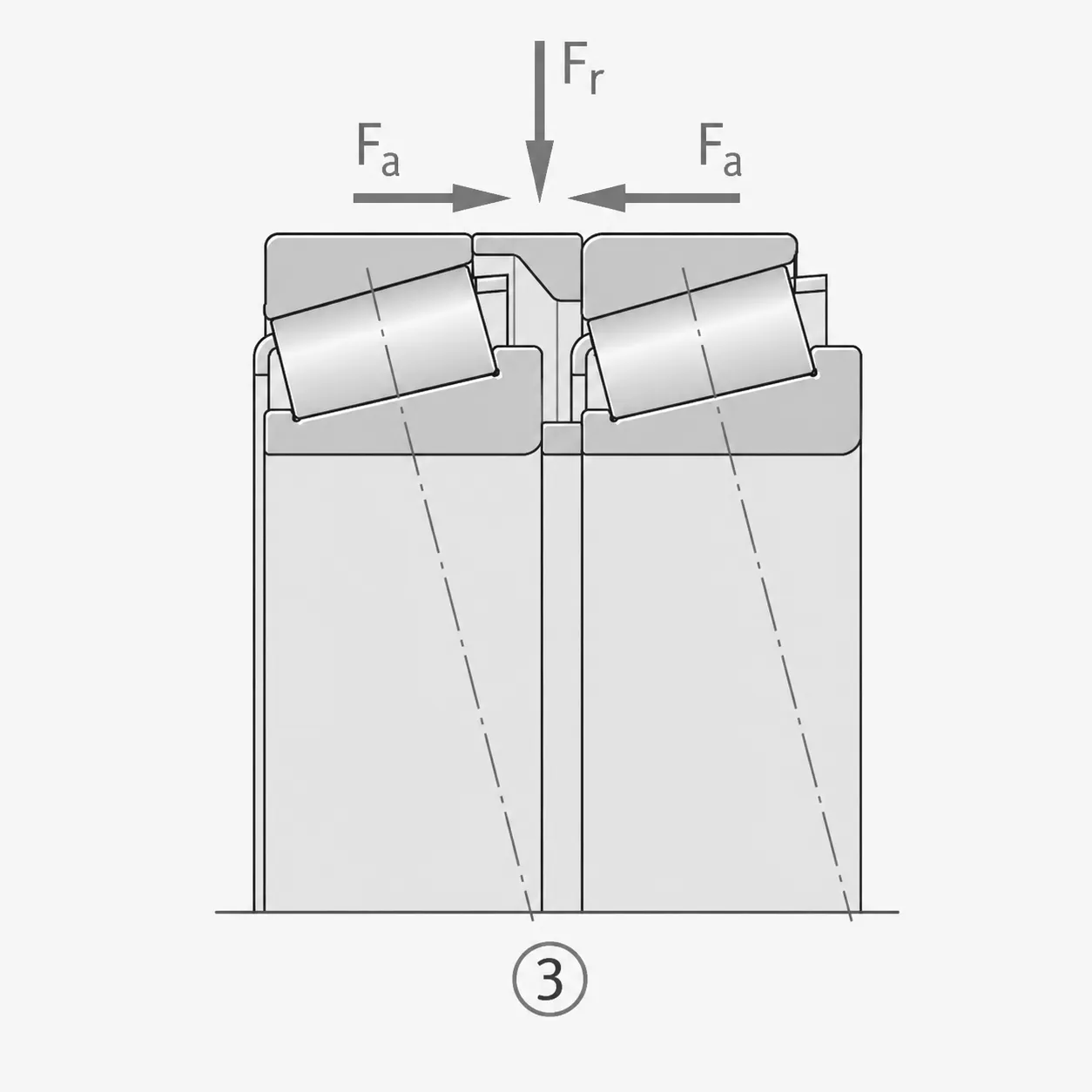
Tandem (DT)
Higher axial load capacity in one specific direction.
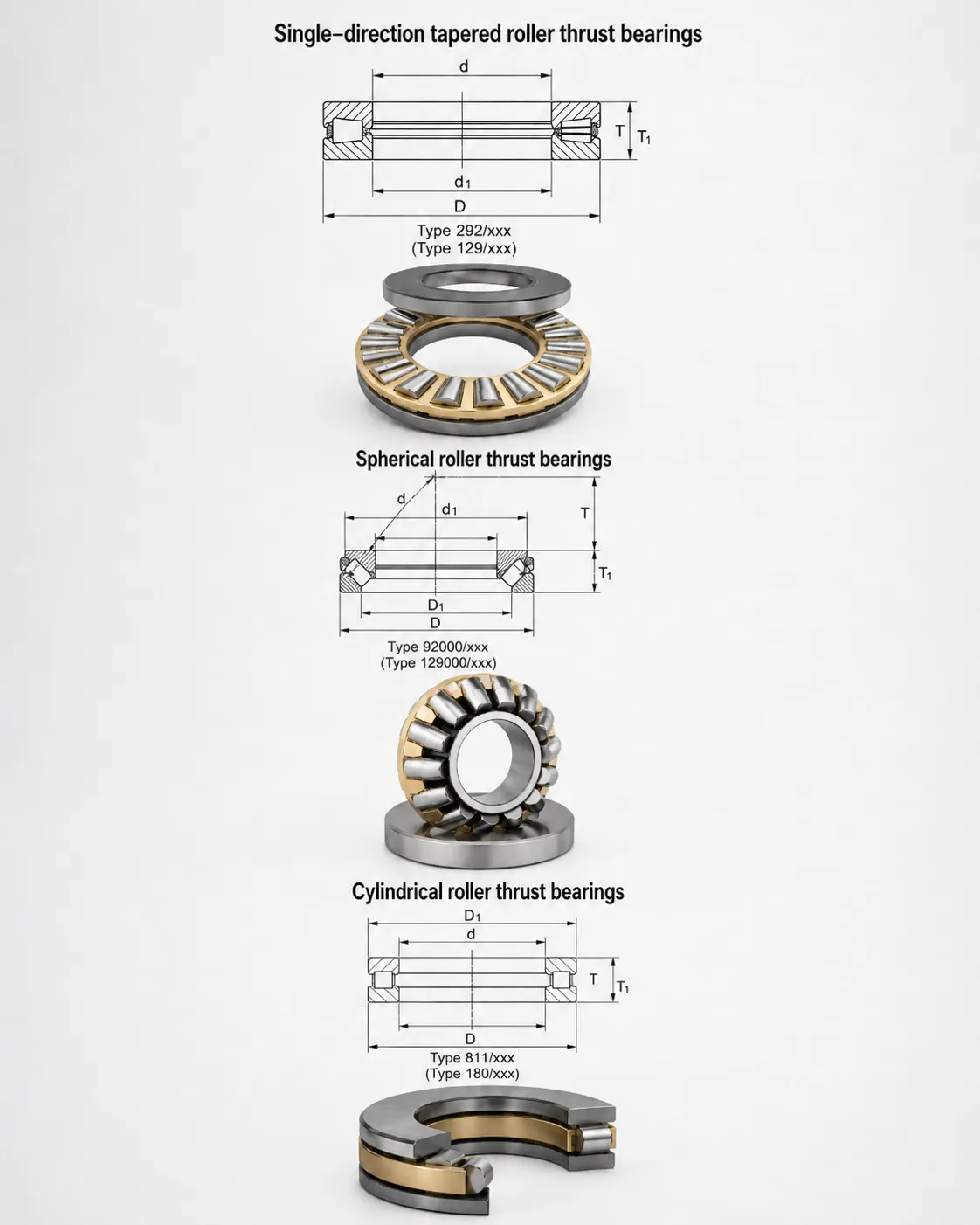
Tapered Roller Thrust Bearings
Designed mainly for axial load applications where high thrust load capacity is required, such as in extruders, press machines, and crane hooks.
Suitable Scenes
- Extruders
- Press machines
- Crane hooks
- Heavy thrust systems
Structural Advantages
- High axial capacity
- Line contact structure
- Demanding equipment ready
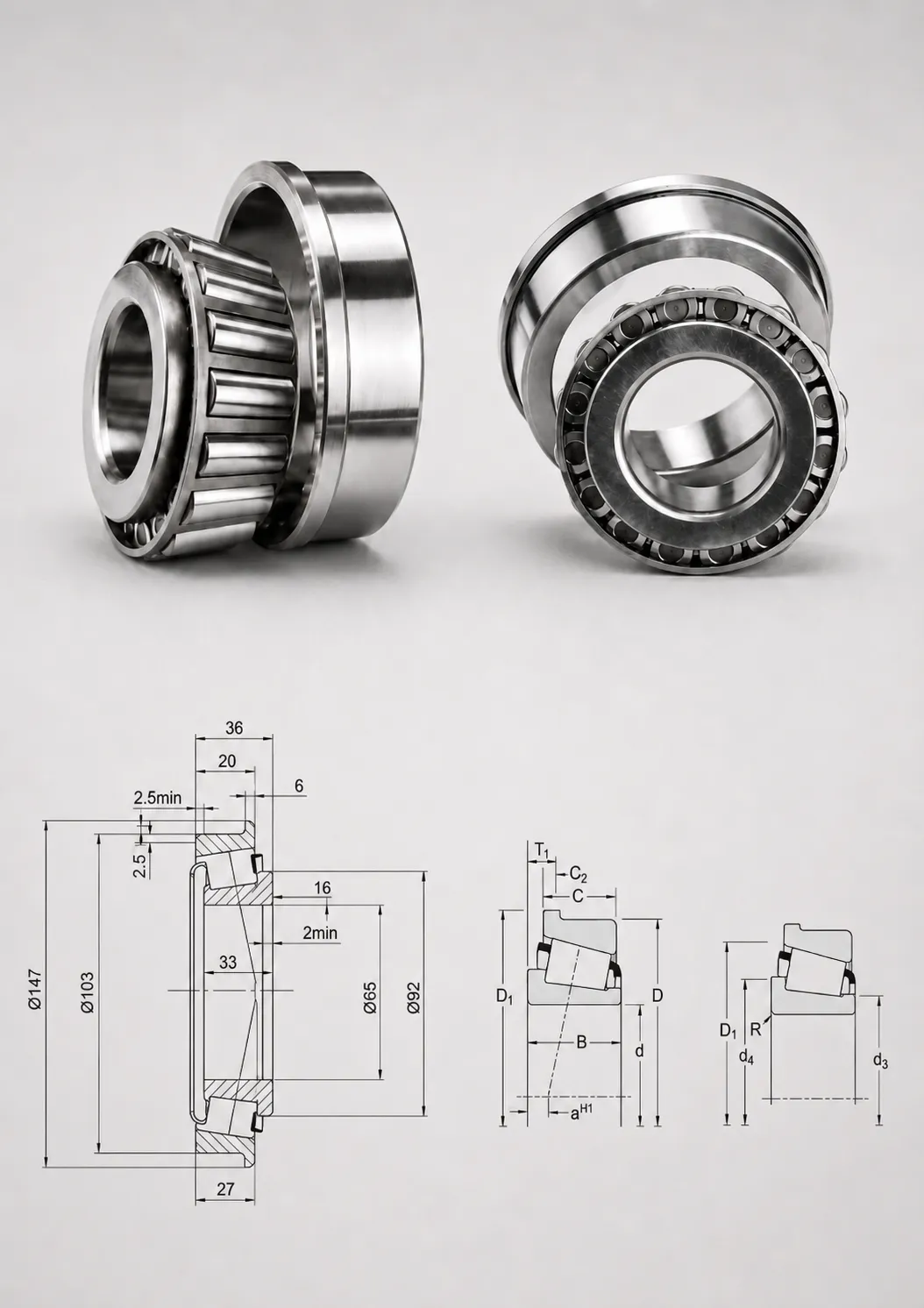
Sealed and Flanged Tapered Roller Bearings
Sealed bearings protect rolling elements from dust and water. Flanged bearings support easier positioning and compact mounting for automotive and agricultural uses.
Suitable Scenes
- Agricultural machinery
- Automotive replacement
- Outdoor equipment
- Compact systems
Structural Advantages
- Contamination protection
- Reduced grease loss
- Easier installation
- Harsh environment ready
Metric and Inch Tapered Roller Bearings
Available for different global equipment standards, replacement markets, and OEM machinery designs. We cross-reference by model number, cup/cone number, or drawing.
Suitable Scenes
- European machinery
- American equipment
- Automotive aftermarket
- Industrial maintenance
Structural Advantages
- Wide interchangeability
- Global buyer support
- OEM replacement programs
Specification Matching
Understand Tapered Roller Bearing Structure
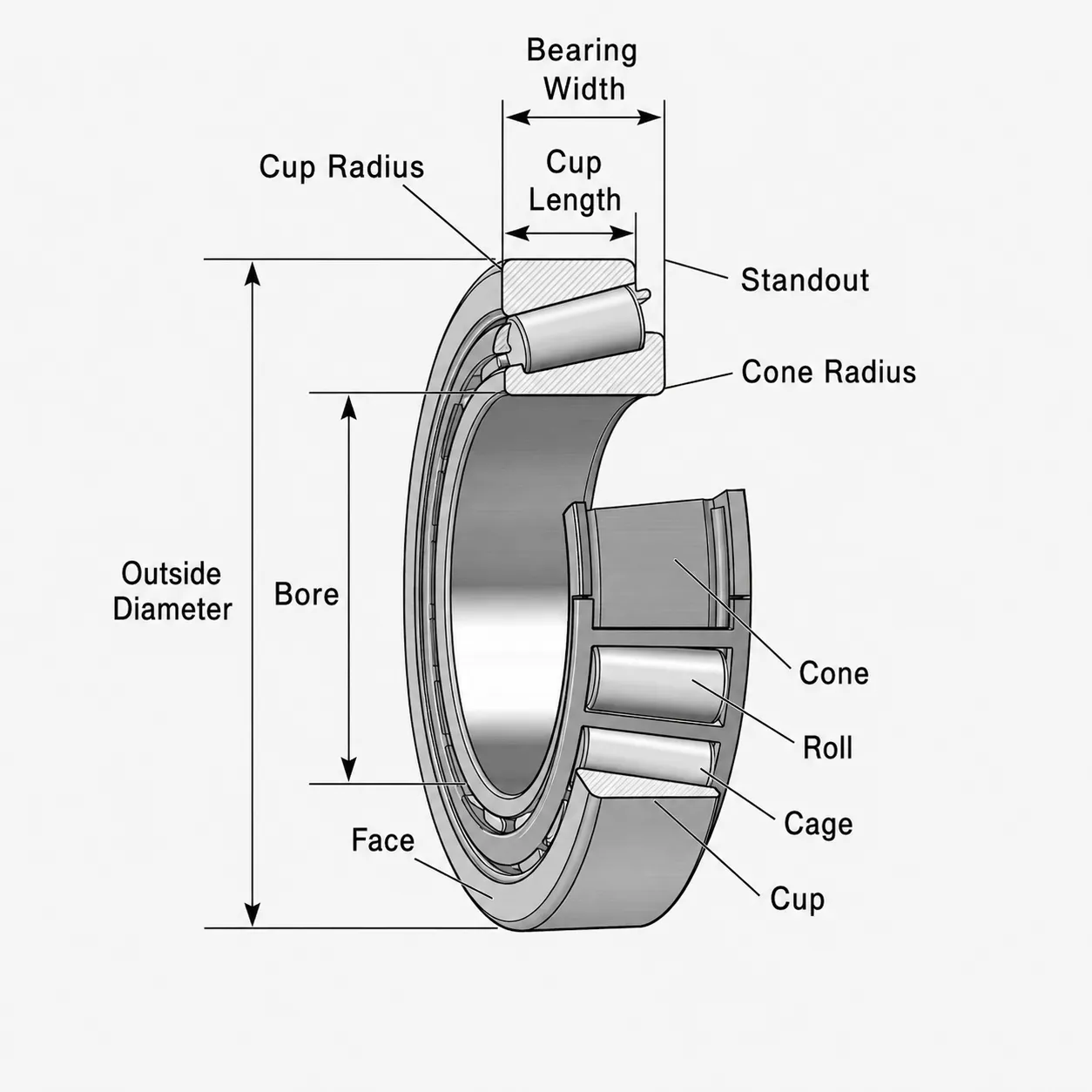
1. Cup / Outer Ring
Forms the outer raceway and works with the cone assembly to guide tapered rollers.
2. Cone / Inner Ring
Includes the inner ring, rollers, and cage assembly in many designs.
3. Tapered Rollers
Provide line contact and help carry combined radial and axial loads.
4. Cage
Separates rollers and helps maintain stable roller spacing during rotation.
5. Contact Angle
Affects axial load capacity. A larger contact angle generally supports higher axial load.
6. Clearance & Preload
Improper clearance or preload may cause heat, vibration, noise, or shorter life.
Choose the Right Bearing Arrangement
Bearing arrangement should be confirmed based on load direction, shaft design, housing stiffness, mounting method, preload, and lubrication condition.
Back-to-Back / DB Arrangement
Best for high rigidity, moment load resistance, and applications requiring strong shaft support.
Face-to-Face / DF Arrangement
Suitable for applications where slight mounting errors may exist and moderate rigidity is acceptable.
Tandem / DT Arrangement
Used when axial load is mainly applied in one direction and higher axial load capacity is required.
Custom Tapered Roller Bearing Options
Haron Bearing supports OEM/ODM projects with flexible configuration options to match your specific industrial requirements.
Built for Bearing Selection, Manufacturing, and Long-Term Supply
Bearing Structure Knowledge
We help buyers compare single row, double row, four row, matched set, sealed, flanged, metric, and inch tapered roller bearings.
Application-Based Selection
Selection support based on load direction, speed, shaft design, working environment, and mounting space.
Precision Manufacturing
Support precision grinding, stable raceway quality, roller accuracy, and dimensional consistency up to P2 level.
Quality Inspection
Inspection includes hardness, dimensional accuracy, clearance, noise, vibration, surface finish, and packaging checks.
OEM / ODM Support
Support custom drawings, private labels, packaging design, special cage, sealing, lubrication, and repeat supply programs.
Global Industrial Supply
Suitable for distributors, OEM manufacturers, machinery factories, maintenance companies, and project-based buyers globally.
Common Tapered Roller Bearing Problems and How to Prevent Them
• Overheating
Possible causes include excessive preload, insufficient lubrication, wrong grease, or misalignment.
• Spalling
Often related to fatigue, overload, contamination, or poor lubrication.
• Excessive Noise
May come from poor mounting, incorrect clearance, surface damage, contamination, or low precision matching.
• Premature Wear
Can be caused by poor lubrication, dust, water, overloading, or improper bearing arrangement.
• Cage Damage
May happen under shock load, vibration, poor lubrication, or incorrect installation.
• Seal Failure
Sealed bearings may fail if exposed to severe contamination, excessive temperature, or unsuitable working conditions.
Need help reducing bearing failure? Send us your working condition, load, speed, and current bearing model.
Which Tapered Roller Bearing Fits Your Project?
| Type | Best For | Load Direction | Main Advantage |
|---|---|---|---|
| Single Row | Wheel hubs, gearboxes, reducers | Radial + one-direction axial load | Most common and flexible structure |
| Double Row | Heavy gearboxes, wheel assemblies, construction | Radial + axial load in both directions | Higher rigidity and load capacity |
| Four Row | Steel mills, rolling mills, heavy machinery | Extremely heavy radial and axial loads | Maximum heavy-duty capacity |
| Matched Sets | Precision shafts, reducers, gearboxes | Depends on DB / DF / DT arrangement | Better preload, stiffness, and axial control |
| Thrust Bearings | Presses, extruders, heavy thrust systems | Mainly axial load | Strong thrust load capacity |
| Sealed Type | Agricultural, automotive, outdoor equipment | Combined load with contamination risk | Better protection and grease retention |
| Flanged Type | Compact installation and positioning | Combined load with axial positioning | Easier mounting and positioning |
| Metric / Inch | OEM and replacement markets | Depends on structure | Matches different global equipment standards |
FAQ About Tapered Roller Bearings
What are tapered roller bearings?
What loads can tapered roller bearings carry?
What is the difference between tapered roller bearings and cylindrical roller bearings?
What is the difference between single row and double row tapered roller bearings?
When should I choose four row tapered roller bearings?
What are matched tapered roller bearing sets?
What is the difference between back-to-back and face-to-face arrangements?
Can tapered roller bearings carry axial load in both directions?
What are tapered roller thrust bearings used for?
What is the difference between metric and inch tapered roller bearings?
Can tapered roller bearings be sealed?
What information is needed for tapered roller bearing selection?
Can Haron Bearing support OEM or custom tapered roller bearings?
Can I send a drawing or bearing model for quotation?
What industries use tapered roller bearings?
Need Help Choosing the Right Tapered Roller Bearing?
Tell us your bearing model, drawing, load direction, speed, application, working environment, precision requirement, quantity, and target market. Haron Bearing can help recommend suitable tapered roller bearing structures for wheel hubs, gearboxes, reducers, construction machinery, agricultural equipment, mining systems, steel mills, and OEM machinery projects.