
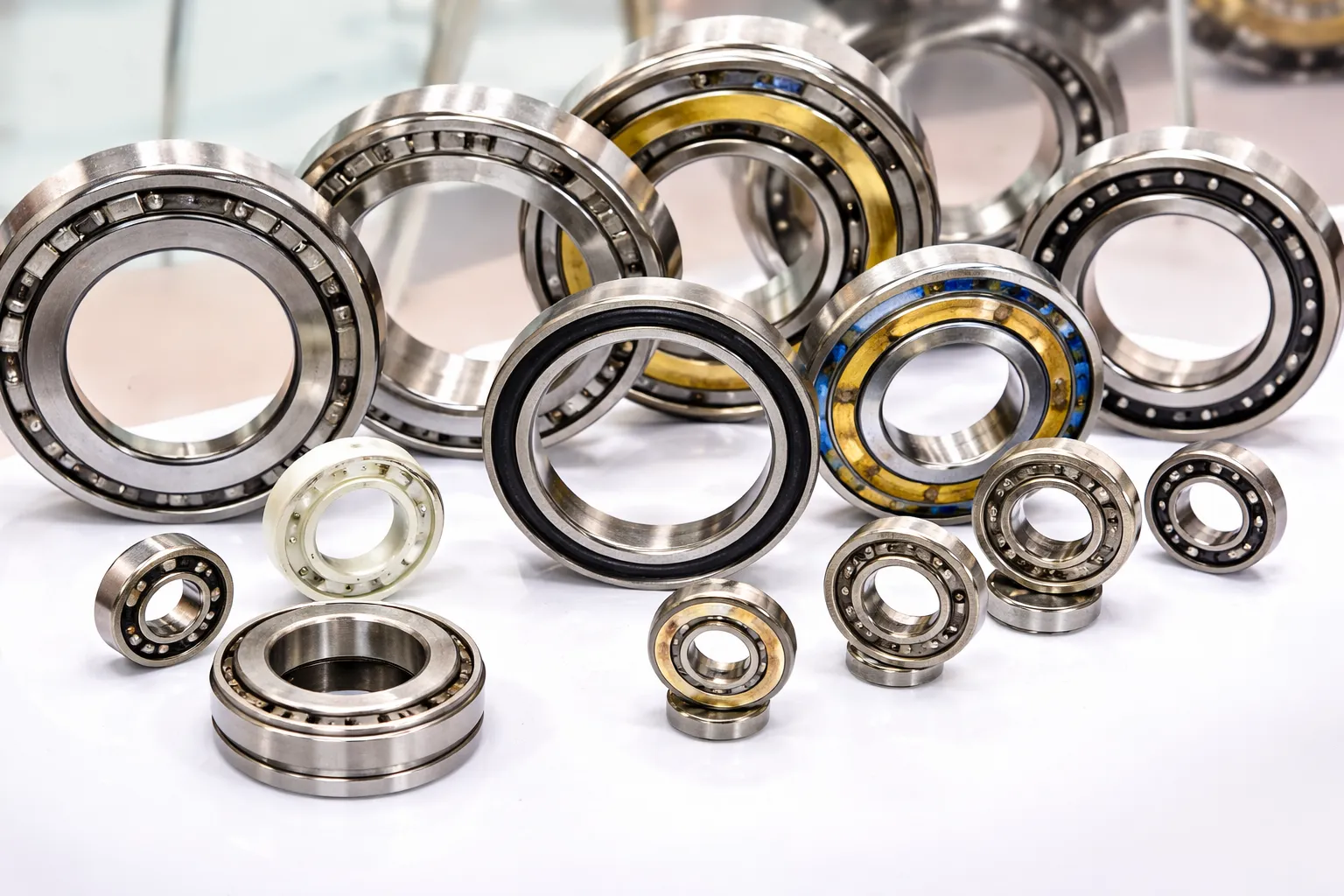
Choosing 440C, 304, or 316 stainless steel bearings depends on hardness, load capacity, and corrosion resistance. 440C suits higher wear and load, 316 fits marine, washdown, and chemical environments, while 304 offers a balanced, cost-effective option.
440C vs 304 vs 316 Stainless Steel Bearings: What’s the Difference?
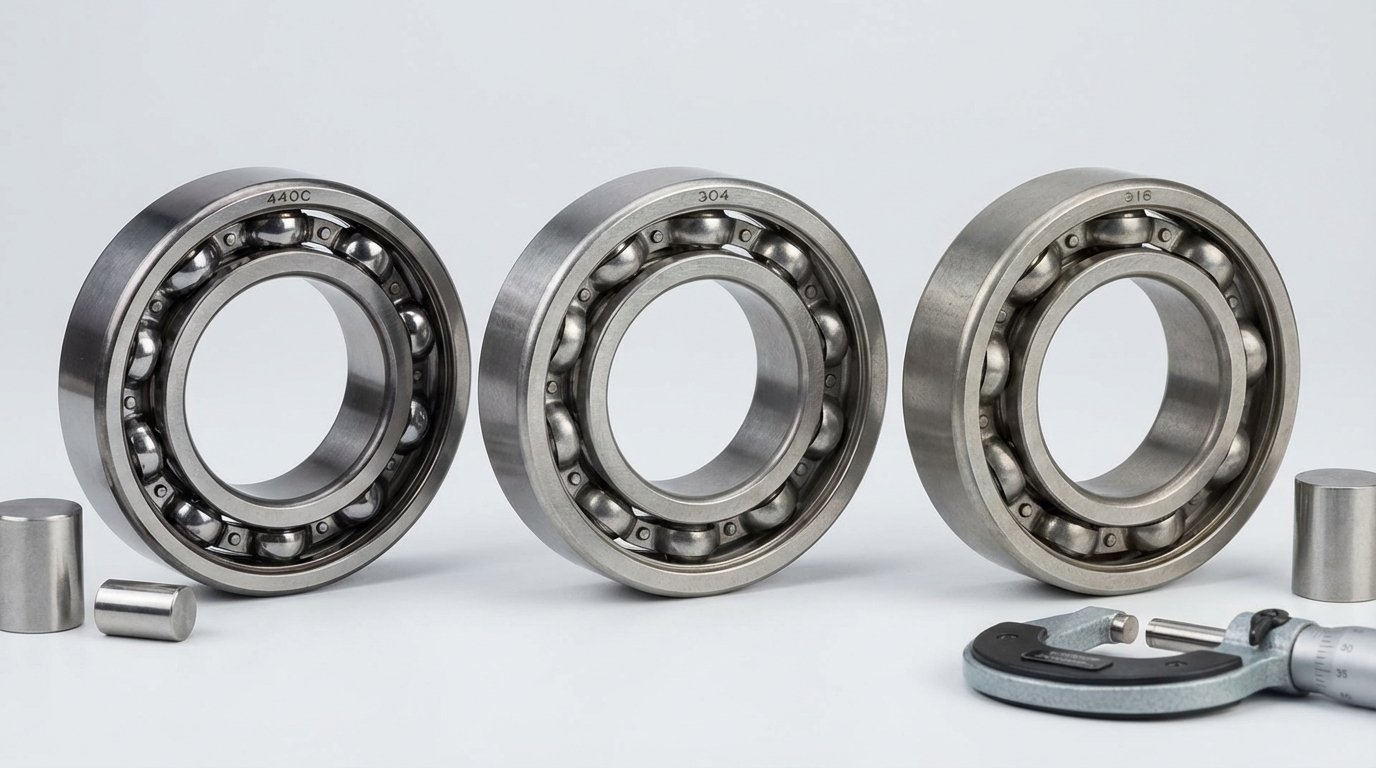
440C vs 304 vs 316 stainless steel bearings compares three common stainless alloys used for bearing rings/balls. 440C is martensitic and heat-treatable for high hardness and wear resistance. 304 and 316 are austenitic and prioritize corrosion resistance, with 316 (“marine grade”) offering the strongest chloride resistance.
Definitions that matter in real bearing selection
A “stainless bearing grade comparison” is mainly a trade-off between hardness (wear, load, fatigue) and corrosion resistance (rust, pitting, crevice corrosion)—plus what portion of the bearing is stainless (rings/balls vs cage vs seals).
- 440C stainless steel bearings: heat-treated martensitic stainless; typically used when you need higher hardness and better rolling contact durability.
- 304 stainless steel bearings: austenitic stainless; typically used for general corrosion resistance but with lower achievable hardness than 440C.
- 316 stainless steel bearings: austenitic stainless with molybdenum; preferred for marine grade bearings and chloride exposure.
- Food grade stainless bearings: usually driven by washdown chemicals, sanitation cycles, and corrosion risk; alloy choice is only one part—grease, seals, and surface finish matter too.
Haron Bearing Pro Tip: I treat alloy choice as a “failure mode decision”: if your bearings are dying from rust/pitting, move toward 316 (and upgrade sealing/grease); if they’re dying from wear/brinelling under load, start with 440C and focus on lubrication and contamination control.
How do 440C, 304, and 316 stainless steel bearings compare?
The grade “works” by setting the bearing’s core limits: 440C provides higher hardness that improves wear and rolling fatigue performance, while 304/316 provide improved corrosion resistance that reduces rust and pitting. In practice, the best performance comes from matching alloy, heat treatment, lubrication, and sealing to the environment.
How alloy choice translates into bearing life
Bearings typically fail by fatigue, wear, corrosion/pitting, false brinelling, or lubrication breakdown. The stainless grade influences multiple mechanisms:
- Hardness and contact stress capacity: Higher hardness (typical of heat-treated 440C) improves resistance to denting and wear in rolling contact.
- Corrosion resistance and surface integrity: In chloride-rich or washdown environments, 316 resists pitting better than 304; reduced pitting helps maintain smooth raceways.
- Temperature and chemical compatibility: Austenitic grades (304/316) often tolerate certain corrosives better, but overall bearing performance still depends on grease, polymer seals, and cage material.
- Magnetism and heat treatment realities: 440C is readily hardened; 304/316 generally are not hardened via heat treatment to the same levels as bearing steels.
- When 440C wins: higher loads, higher speeds, abrasion risk, and when corrosion is moderate/controlled.
- When 316 wins: salt spray, marine splash zones, frequent washdown, chlorine exposure, and harsh cleaners—where corrosion drives early failure.
Haron Bearing Pro Tip: If the application is “wet + dirty,” don’t rely on stainless alone—spec the right seals and grease first, then pick 316 vs 440C based on whether you’re fighting chlorides (316) or contact fatigue/wear (440C).
What is the difference between 440C and 316 stainless steel?
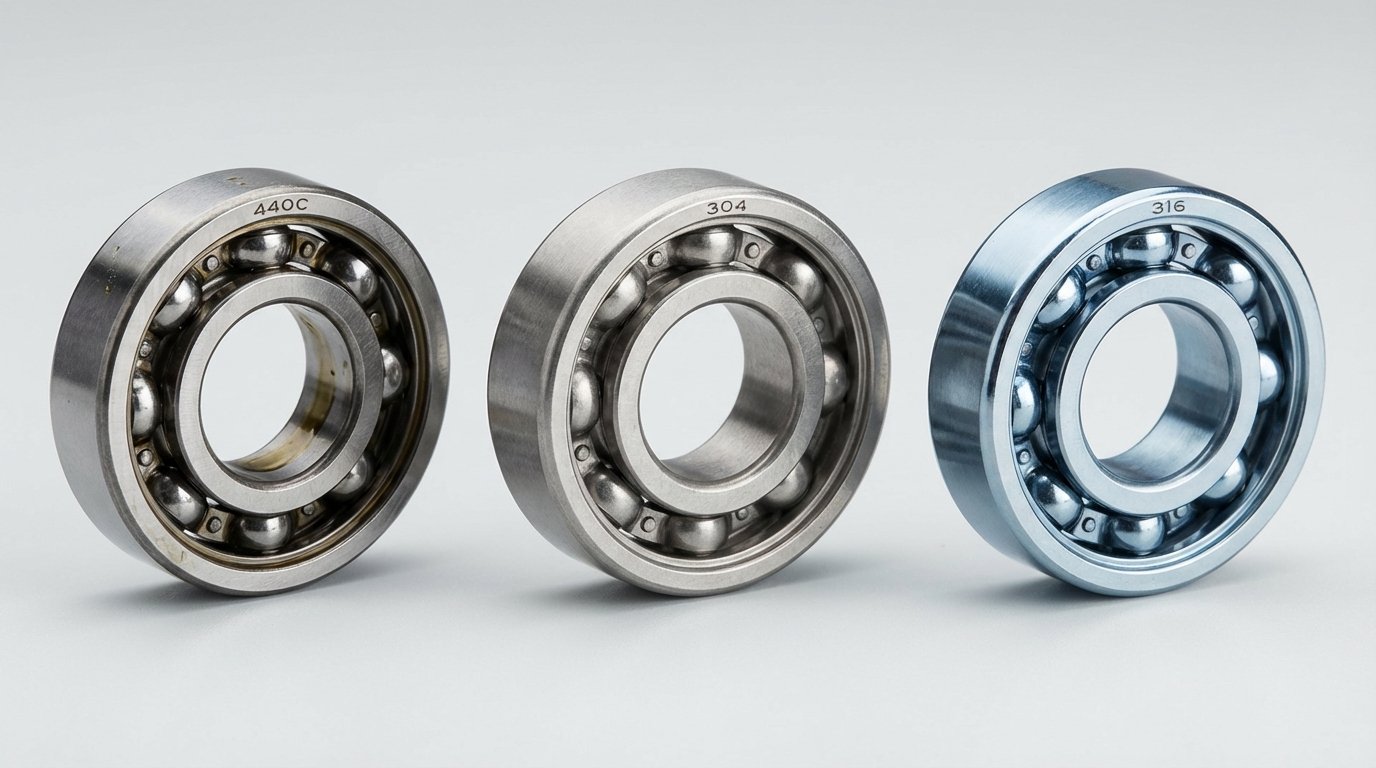
440C and 316 differ mainly in structure and purpose: 440C is martensitic and heat-treatable to high hardness for wear and load capability, while 316 is austenitic with molybdenum for superior corrosion resistance—especially against chlorides. For bearings, 440C often lasts longer under load; 316 lasts longer in salt and chemicals.
Practical differences that affect bearing performance
Based on our internal data and market analysis, here is the breakdown:
| Attribute | 440C stainless steel bearings | 316 stainless steel bearings |
|---|---|---|
| Primary advantage | High hardness, wear resistance | Chloride corrosion resistance (“marine grade”) |
| Typical failure avoided | Wear, brinelling, rolling fatigue | Rust, pitting, crevice corrosion |
| Best environments | Indoor, controlled humidity, mild moisture | Saltwater, coastal air, washdown, chemical exposure |
| Trade-off | More vulnerable to aggressive chlorides | Lower achievable hardness; may sacrifice load capacity |
| Common selection trigger | “Bearing is wearing out/indenting” | “Bearing is rusting/pitting quickly” |
Haron Bearing Pro Tip: When customers ask “440C vs 316 bearings,” I ask one question first: “Is the bearing failing from red rust/pitting or from roughness/wear?” That answer almost always points to the correct alloy faster than any catalog spec.
Which steel will never rust?
No steel “never rusts” in all environments. Stainless steels resist corrosion by forming a passive chromium-oxide layer, but chlorides, low oxygen crevices, stagnant water, and harsh cleaners can break that layer and cause pitting. 316 generally resists chloride attack better than 304, while 440C can corrode faster in salty conditions.
What “stainless” really means in corrosive environments
Corrosion risk depends on chemistry + exposure pattern, not just the grade.
- Chlorides (salt, bleach, many cleaners): promote pitting; 316 usually performs better than 304.
- Crevices (under shields/seals, tight fits): low oxygen areas can trigger crevice corrosion even on stainless.
- Stagnant moisture: increases time-at-risk for corrosion.
- Mixed materials: galvanic corrosion can accelerate attack.
To reduce “rust” outcomes, you typically combine:
- More corrosion-resistant alloy (often 316)
- Better sealing (contact seals, labyrinths, shields as appropriate)
- Correct grease (washdown-resistant, corrosion-inhibiting, food-grade where required)
- Maintenance practice (rinse, re-lube, avoid trapped cleaner residues)
Haron Bearing Pro Tip: If someone needs “never rust,” I redirect to “rust-resistant system design”: pick 316 where chlorides exist, then specify seals + grease + drainage so the bearing never sits in trapped saltwater or cleaner.
What is the best steel for bearings?
For maximum load capacity and wear resistance, heat-treated bearing steels and 440C are often best choices. For corrosive environments, the “best stainless steel for bearings” is usually the one that prevents pitting first—often 316 for chlorides—because corrosion damage can destroy raceways faster than fatigue. The best choice depends on load, speed, and exposure.
Selection checklist: match the steel to the dominant failure mode
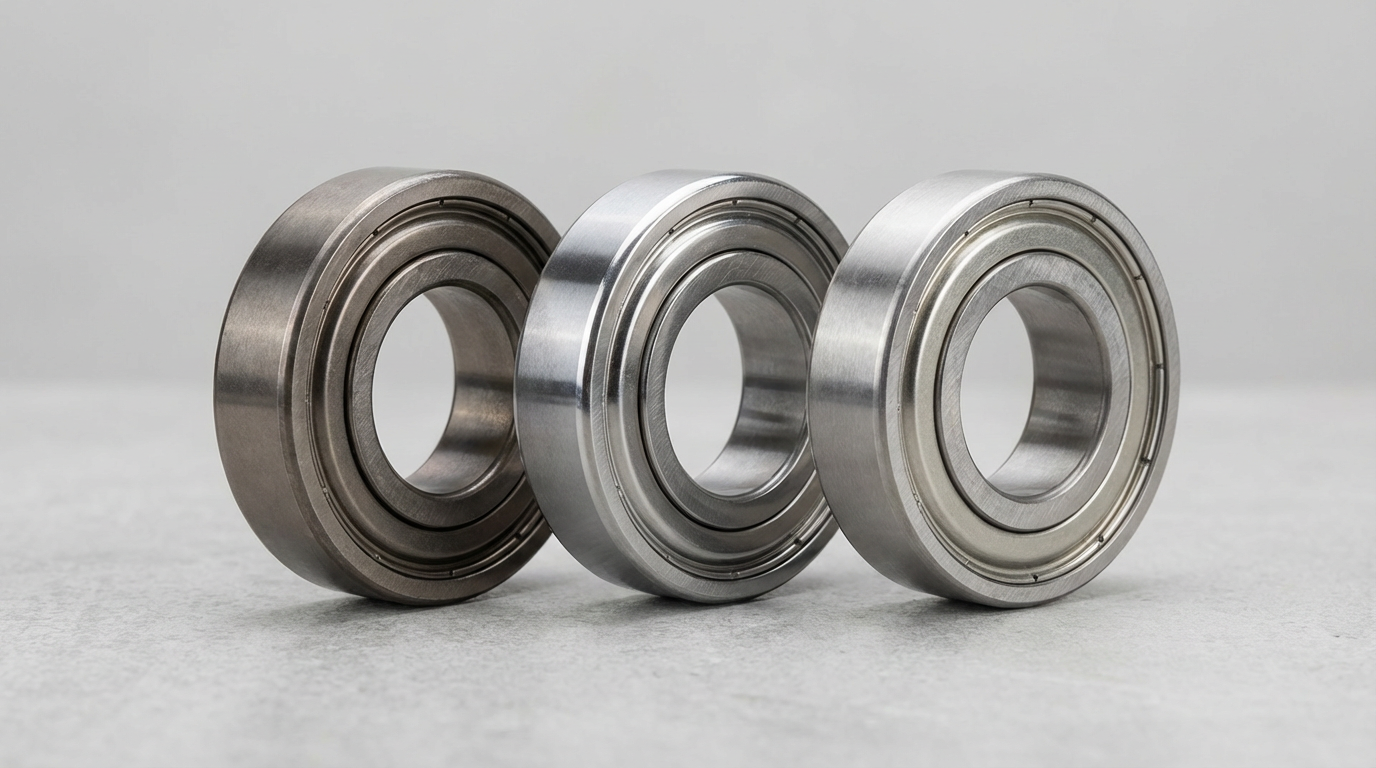
Use this quick decision list to choose a bearing material for corrosive environments versus high-load use:
- Choose 440C when you need:
- Higher hardness and better wear resistance
- Better performance under higher contact stress
- Longer life where corrosion is secondary/controlled
- Choose 316 when you need:
- Strong chloride resistance (marine, coastal, salt spray)
- Frequent washdown/sanitation exposure
- Reduced risk of pitting-driven roughness and seizure
- Choose 304 when you need:
- General corrosion resistance without severe chlorides
- A cost/performance middle ground for mild wet areas
Haron Bearing Pro Tip: I define “best” by what ends the bearing’s life first. If your downtime reports show rust stains, pitting, or black corrosion debris, move toward 316; if they show polishing wear, noise from roughened raceways, or denting, prioritize 440C and improve lubrication/cleanliness.
Key Features & Comparison
440C, 304, and 316 stainless bearings differ most in hardness versus corrosion resistance. 440C typically leads in wear and load capability, 316 leads in marine and washdown durability, and 304 fits mild corrosion at a lower cost. A clear matrix helps match grade to environment, speed, sealing, and maintenance realities.
Side-by-side decision matrix for stainless bearing grades
Based on our internal data and market analysis, here is the breakdown:
| Feature | 440C stainless steel bearings | 304 stainless steel bearings | 316 stainless steel bearings |
|---|---|---|---|
| Corrosion resistance (general) | Medium | High | Very High |
| Chloride/salt resistance (marine) | Low–Medium | Medium | High (marine grade bearings) |
| Hardness / wear resistance | High | Low | Low |
| Load capacity potential (material-limited) | Higher | Lower | Lower |
| Best fit applications | Light corrosion + higher load/speed | Mild wet areas, light loads | Salt/washdown/chemical exposure |
| Typical risk if misapplied | Pitting/rust in chlorides | Premature wear under load | Lower load tolerance; wear under stress |
| Common industries | General industrial, light moisture | Light-duty, indoor wet | Marine, food washdown, chemical handling |
Haron Bearing Pro Tip: If you’re torn between 304 vs 316 for “food grade stainless bearings,” I usually push toward 316 when chlorinated cleaners or aggressive sanitation cycles are present; the cost increase is often cheaper than replacing bearings damaged by pitting.
Cost & Buying Factors
Price typically increases from 304 to 316 due to alloying, while 440C pricing varies by heat treatment, precision class, and supply. The real buying decision should include total cost of ownership: seal type, grease, lead time, and expected replacement interval in your environment. The cheapest bearing often costs the most in downtime.
What to evaluate before you buy (beyond the alloy)
Key buying factors that change real-world performance and cost:
- Environment severity
- Salt spray, immersion, and chlorides push you toward 316
- Dry/controlled environments allow 440C to maximize life under load
- Load, speed, and shock
- Higher contact stress generally favors 440C due to higher hardness
- Shock loads may require geometry and internal clearance review, not just material
- Sealing strategy
- Contact seals help in washdown but can add drag/heat at higher speeds
- Shields may be insufficient for washdown and salt exposure
- Grease selection
- Food-grade grease (H1) for food equipment
- Water washout resistance and corrosion inhibitors matter in wet duty
- Availability and consistency
- Verify material certification, heat treatment controls (where applicable), and dimensional tolerances
Haron Bearing Pro Tip: When quoting, I ask for three details—chemical exposure, washdown frequency, and target service interval—then I recommend the lowest-cost option that reliably hits that interval (often 440C indoors, 316 in chlorides, and upgraded seals/grease in both).
Conclusion
Selecting 440C vs 304 vs 316 stainless steel bearings depends on wear, corrosion, and cost. 440C suits high hardness and wear, 316 resists chlorides and washdown, while 304 fits mild corrosion. Haron Bearing helps match grade, sealing, and lubrication.
Haron Bearing Pro Tip: If you share your operating environment (salt/chemicals), washdown routine, speed/load, and current failure photos, I can usually narrow the right stainless grade—and the right seal/grease combination—in a single spec review.