
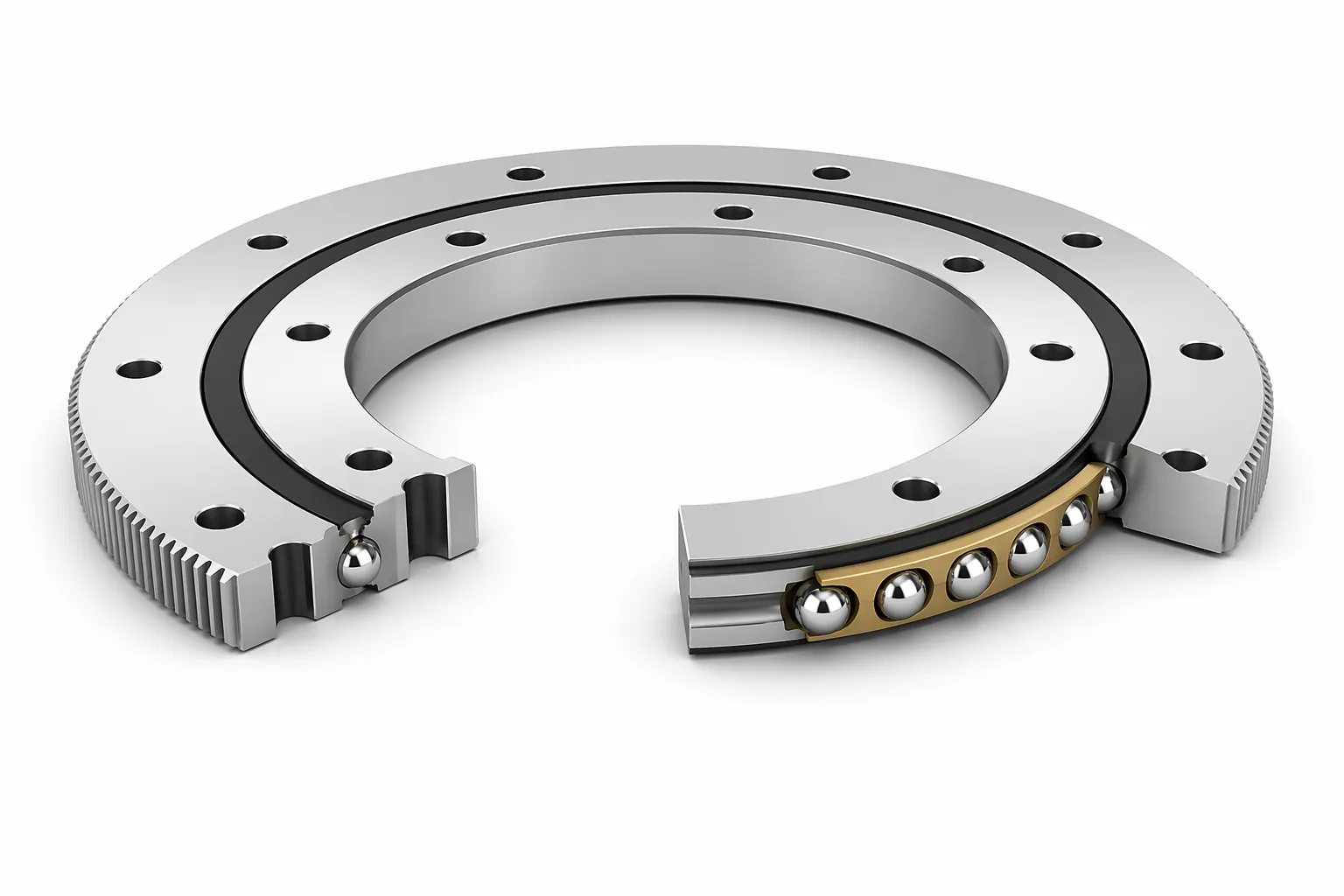
Thin cross-section bearings—often discussed under reali slim bearings, slim section bearings, or thin section bearing design—solve a common engineering problem: keeping high rotational accuracy when space and weight are limited. They enable compact rotary bearings for robots, indexing tables, medical devices, and other precision compact assemblies where traditional bearing envelopes are too bulky.
Video Guide: This overview explains why thin section bearings matter in compact designs and what performance tradeoffs to watch for.
What are Reali-Slim bearings and their alternatives?
Thin cross-section (slim section) bearings are precision rolling bearings engineered with a very small radial cross-section relative to bore size, enabling space saving precision bearings in compact rotary bearings and robot bearing joints. “Reali-slim bearings” is commonly used for this category; Haron Bearing also supplies reali slim bearing alternatives tailored to compact design needs.
Video Guide: This video helps visualize where thin cross-section bearings fit and why they’re chosen for tight packaging.
Category definition and where it fits in compact assemblies
Thin section bearing design focuses on minimizing radial envelope while still carrying combined loads (radial, axial, and moment) with controlled runout and torque.
Key identifiers used in sourcing and design reviews include:
- Constant/near-constant cross-section across a range of bore sizes (packaging stays predictable as bore increases).
- Compact rotary bearings behavior: intended for confined housings, lightweight industrial bearings requirements, and reduced inertia.
- Application-driven variants: open/closed, sealed/shielded, different cage styles, and ball complement options.
Common application clusters for space saving precision bearings:
- Robot bearing joints (harmonic drives, rotary axes, wrist assemblies)
- Gimbals, EO/IR platforms, and aerospace mechanisms
- Medical imaging/diagnostics rotation modules
- Semiconductor and metrology stages
- Compact indexing tables and lightweight automation
Haron Bearing Pro Tip: I treat “reali slim bearings” as a functional class, not a single brand spec—always confirm cross-section, load ratings, torque range, and allowable runout for your precision compact assemblies before assuming interchangeability.
How do Reali-Slim bearings work in compact designs?
These thin cross section bearings work by supporting rotation with balls rolling between hardened inner and outer raceways while keeping the bearing’s radial height minimal. This enables compact rotary bearings to fit into tight housings and robot bearing joints. Performance depends on raceway geometry, contact angle, preload, lubrication, and stiffness of the surrounding compact design.
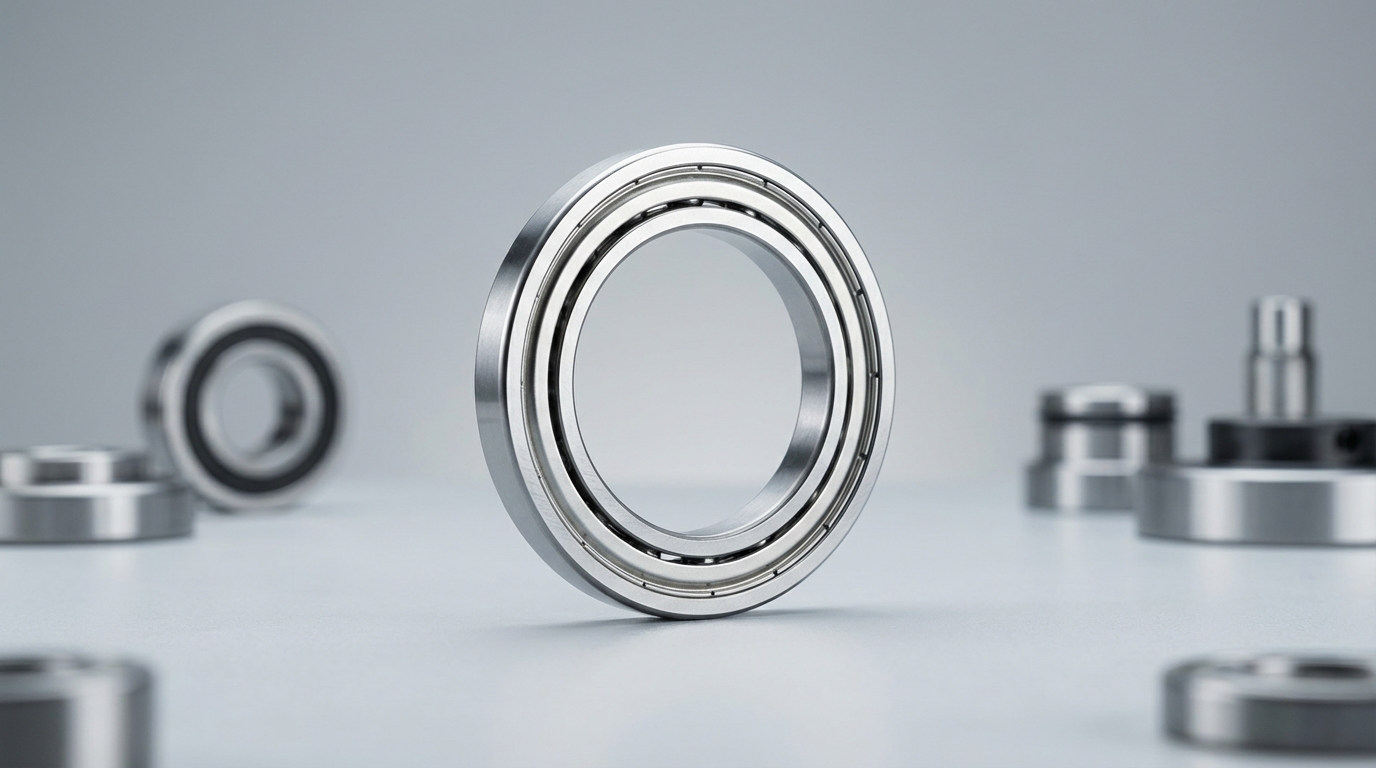
Load paths, contact angle, and stiffness in thin section bearing design
In slim section bearings, the bearing itself is only one part of the system. Because the rings are thinner, housing and shaft stiffness strongly influence:
- Running accuracy (radial/axial runout)
- Torque variation
- Deflection under moment load
- Noise/vibration (especially at high speed)
Typical design levers:
- Contact angle selection (radial vs combined loads).
- Preload strategy (reduce clearance for stiffness/accuracy, but increases torque and heat).
- Ring support (full 360° housing support vs local clamping that distorts thin rings).
- Lubrication choice (grease vs oil; viscosity affects starting torque).
- Sealing/shielding (contamination control vs friction penalty).
System-level checks to avoid common issues in precision compact assemblies:
- Confirm housing roundness and cylindricity tolerances suited to thin rings.
- Validate interference fits don’t ovalize rings.
- Simulate moment loads; thin sections can deflect more if surrounding structure is compliant.
Haron Bearing Pro Tip: In my experience, most “thin section bearing problems” are actually housing/shaft problems—validate fit and roundness first, then tune preload and lubrication for torque and accuracy.
What are the benefits of Reali-Slim bearings in compact designs?
The main benefits are major space and weight reduction, predictable packaging across bore sizes, and high rotational precision when properly installed. Thin cross section bearings enable compact rotary bearings with lower inertia—ideal for robot bearing axes and lightweight industrial bearings goals. They also simplify compact design by freeing room for motors, cables, sensors, or larger through-bores.
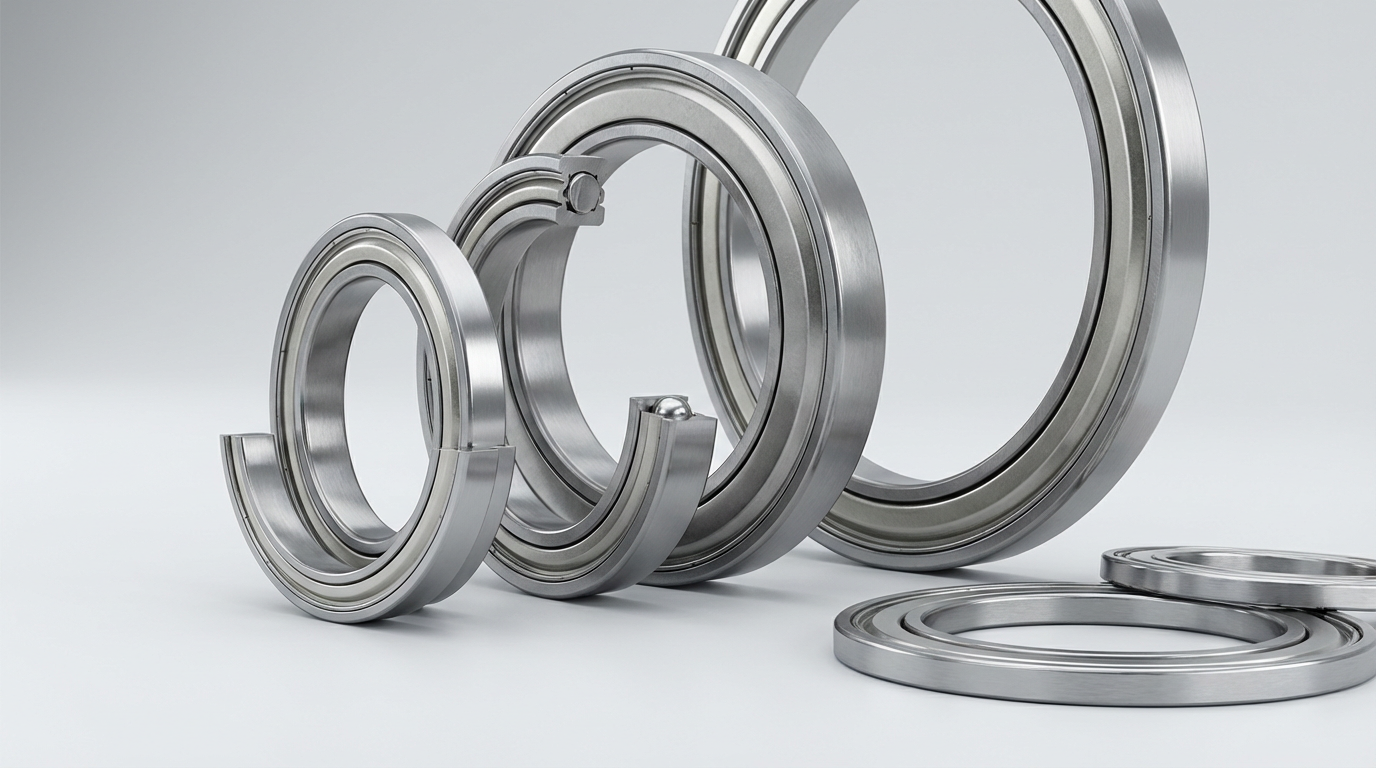
Practical benefits mapped to real-world design constraints
Benefits typically show up in four engineering “budgets”: space, mass, dynamic response, and accuracy.
- Space saving precision bearings: thinner cross-section reduces housing diameter and stack height.
- Lower rotating inertia: helps servo tuning and acceleration in robotics and automation.
- Architecture flexibility: allows larger central apertures for wiring, pneumatics, optics, or shafts.
- Precision potential: controlled runout and stiffness with correct preload and rigid supports.
- Simplified assemblies: fewer compromises when combining bearings with gears, encoders, and seals.
A quick benefit-to-application map:
| Benefit | Where it matters most | Typical outcome |
|---|---|---|
| Reduced envelope | Robot wrists, gimbals, compact stages | Smaller OD, tighter packaging |
| Lower inertia | High-accel rotary axes | Faster response, less motor size |
| Larger through-bore | Slip rings, cabling, tooling | Cleaner routing, fewer failures |
| High accuracy potential | Metrology, imaging rotation | Better repeatability/runout |
Haron Bearing Pro Tip: If your goal is faster robot axis settling time, don’t just downsize—pair slim section bearings with a stiffness-first housing design so you keep precision while cutting inertia.
How do you maintain Reali-Slim bearings in compact applications?
Maintain thin cross section bearings by controlling contamination, preserving lubrication, and preventing ring distortion during service. Because slim section bearings use thin rings, improper handling, over-tightened clamping, and poor fit tolerances can quickly degrade torque and accuracy. Use correct grease/oil, keep seals intact, monitor noise/temperature, and replace at defined wear limits for precision compact assemblies.
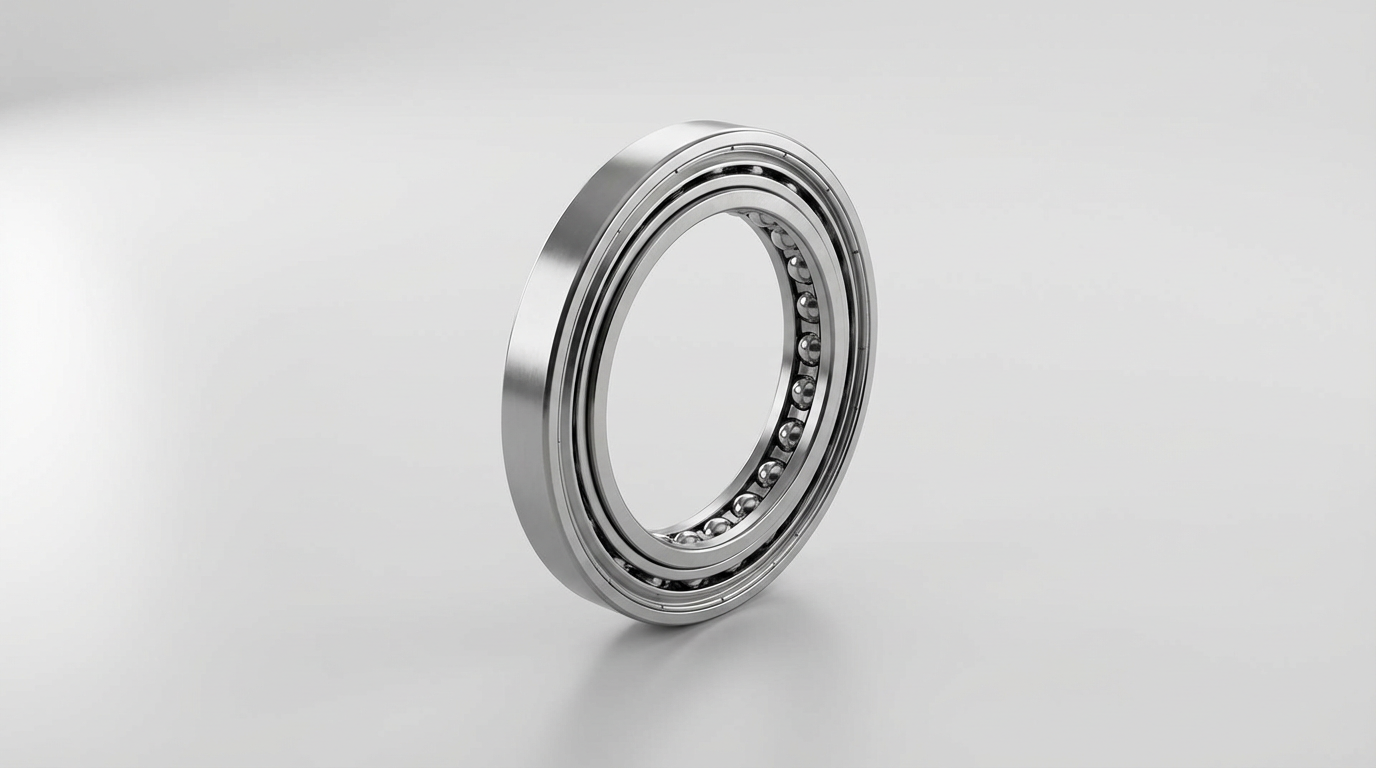
Maintenance checklist for compact rotary bearings in the field
A practical maintenance routine for space saving precision bearings:
- Cleanliness control: keep abrasive dust out; verify seals/shields are intact.
- Lubrication management: use the specified grease type and fill; avoid over-greasing (heat/torque rise).
- Fastener discipline: tighten clamping features to spec and in pattern to avoid ovalizing thin rings.
- Condition monitoring: trend torque, temperature, vibration/noise, and positional repeatability.
- Re-lube or replace triggers: based on hours, temperature exposure, washdown, or vibration thresholds.
Common symptoms and likely causes:
- Torque increase → contamination, over-preload, over-greasing, ring distortion
- Runout growth → fit damage, brinelling, housing deformation, wear
- Noise → debris ingress, insufficient lubrication, surface damage
Haron Bearing Pro Tip: I always check mounting distortion before blaming the bearing—thin rings can “look fine” off the machine but bind once clamped in a slightly out-of-round housing.
What is the price of Reali-Slim bearings?
Pricing varies widely because thin cross section bearings are driven by size, precision grade, material, sealing, preload, and order volume. Real i slim bearings or reali slim bearing alternatives for robot bearing and compact rotary bearings applications often cost more than standard deep-groove bearings due to tighter runout control and lower production volumes. Request a quote with full specs for accuracy.
What drives cost in thin section bearing guide quotes
The biggest pricing inputs usually include:
- Dimensions: bore/OD/width and cross-section series
- Precision: runout/torque requirements (higher grades cost more)
- Load configuration: radial vs angular contact vs four-point contact
- Materials: standard bearing steel vs stainless; special heat treatments/coatings
- Sealing: open vs shields vs contact seals (tradeoff: protection vs torque)
- Preload and matching: tighter preload windows increase cost
- Quality documentation: inspection reports, traceability, special testing
Quote-ready checklist (send to Haron Bearing or your approved supplier):
- Bearing type (radial / angular contact / four-point)
- Size (ID/OD/width) and any cross-section constraint
- Load case (radial, axial, moment) and target life
- Speed range and allowable torque
- Accuracy/runout requirements
- Environment (temperature, vacuum, corrosion, washdown)
- Quantity and annual demand
Haron Bearing Pro Tip: If you only specify dimensions, you’ll get a wide price spread—include runout, torque, preload, and environment so the bearing is quoted correctly the first time.
Key Features & Comparison
Based on our internal data and market analysis, here is the breakdown:
| Feature | Thin cross section bearings (slim section) | Standard deep-groove ball bearing | Crossed roller bearing |
|---|---|---|---|
| Radial envelope | Minimal (space saving) | Moderate | Moderate |
| Moment load capacity | Moderate (system stiffness dependent) | Low–moderate | High |
| Running torque | Low–moderate (depends on preload/seals) | Low | Moderate–higher |
| Achievable precision | High with correct fits/preload | Moderate–high | High |
| Weight/inertia | Low (lightweight industrial bearings) | Moderate | Moderate |
| Housing sensitivity | High (thin rings can distort) | Moderate | Moderate |
| Typical use | Robot bearing axes, compact rotary bearings, gimbals | General rotating shafts | High-stiffness rotary tables, precision stages |
Cost & Buying Factors
Selecting slim section bearings is a system decision: you’re buying packaging efficiency and precision potential, but you must budget for tighter housing/shaft tolerances and correct preload/lubrication. For many compact design projects, the lowest total cost comes from matching the bearing type to the load/moment profile and avoiding over-spec precision that adds cost without measurable performance gain.
A practical buying workflow for precision compact assemblies
Use this sequence to reduce rework and ensure quote comparability:
- Define the load case: include axial, radial, and overturning moment (peak and continuous).
- Set accuracy targets: runout, wobble, and positional repeatability at the output.
- Choose bearing style: radial vs angular contact vs four-point contact based on combined loads.
- Decide on seals and lubrication: contamination risk vs torque limits.
- Validate the structure: confirm housing stiffness/roundness so thin section bearing benefits are realized.
- Compare alternatives: evaluate reali slim bearing alternatives on equivalent preload, grade, and test conditions.
Buying factors that most affect success:
- Supplier capability on thin-ring geometry control
- Consistent preload and torque measurement
- Documentation/traceability needs
- Lead time stability and batch-to-batch consistency
Haron Bearing Pro Tip: I recommend qualifying two configurations early—one optimized for lowest torque and one for highest stiffness—then pick the winner using your real load/motion profile, not catalog assumptions.
Conclusion
Thin cross section bearings (including reali slim bearings and qualified reali slim bearing alternatives) are a proven way to build compact rotary bearings that save space, reduce weight, and support high-precision motion—especially in robot bearing and other precision compact assemblies. The best results come from pairing the bearing with correct fits, rigid support, appropriate preload, and clean lubrication.
If you share your ID/OD/width limits, load/moment targets, speed, and runout/torque requirements, Haron Bearing can recommend an appropriate thin section bearing design and a quote-ready configuration.