
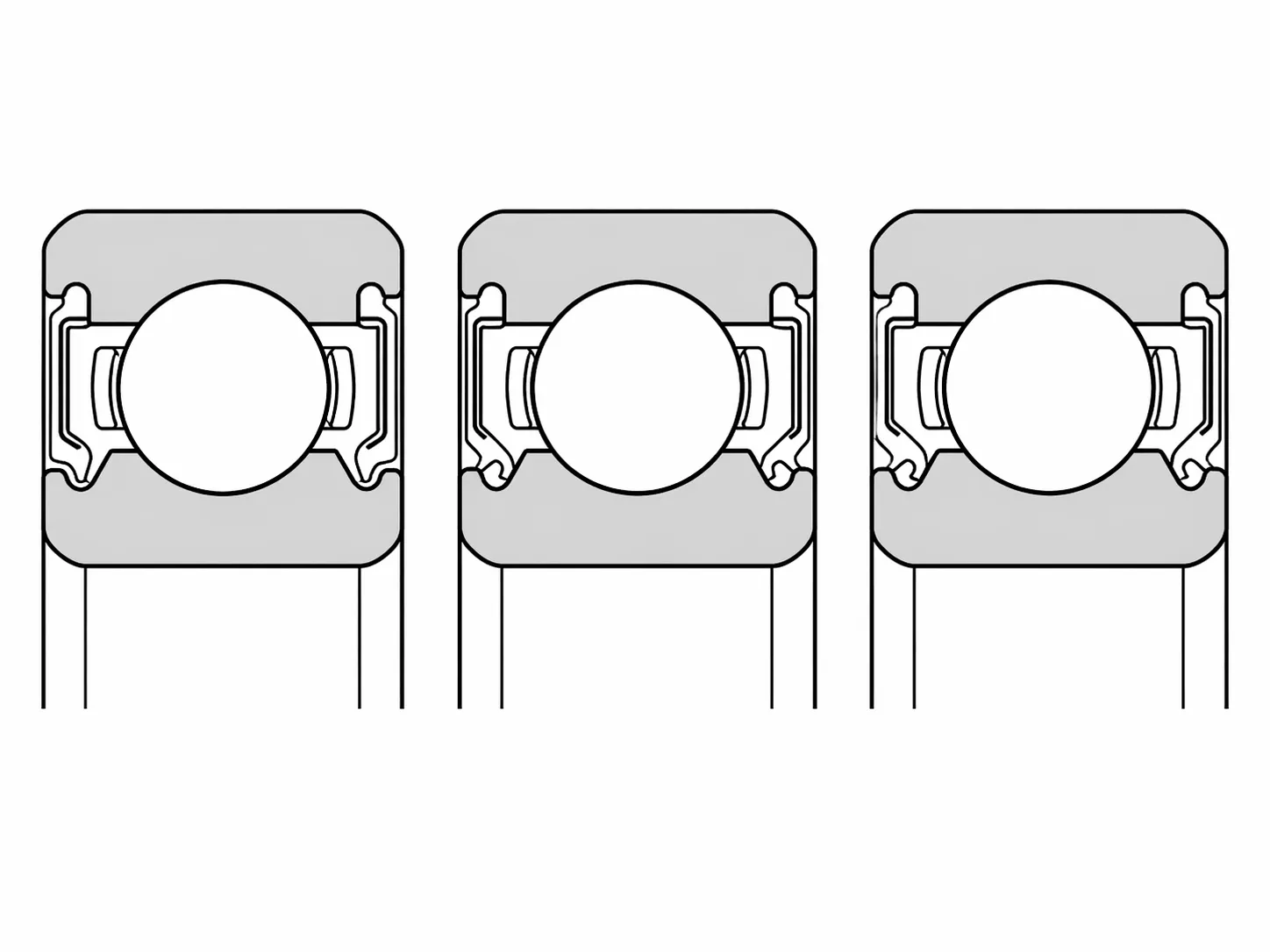
Choosing between lip seals and labyrinth seals in pillow block bearings comes down to contamination risk, speed, heat, and maintenance style. Lip seals provide positive contact sealing and handle wet, dirty conditions well, while labyrinth designs excel in higher speed, low-friction applications where heat and power loss matter. Below is a practical, selection-focused comparison from Haron Bearing.
Video Guide: This overview helps you visualize contact vs. non-contact sealing behavior and where each approach fits in mounted bearing applications.
What are pillow block bearing seals and how do they differ?
Pillow block bearing seals are the sealing elements built into mounted bearing units (or their housings) to keep grease in and contaminants out. The common “lip vs. labyrinth” choice compares a contact rubber lip that wipes the shaft against a non-contact, tortuous-path design that blocks ingress with minimal friction.
Video Guide: This explains the labyrinth concept and why a “tortuous path” can protect bearings without direct shaft contact.
Seal Families Used in Mounted Bearings (and What They’re For)
In industrial bearing seals for pillow blocks, “seal type” usually refers to how the seal interfaces with the shaft and housing. This matters because mounted bearing seals see misalignment, vibration, washdown, abrasive dust, and frequent relubrication—conditions that can defeat the wrong design.
Common bearing seal types you’ll encounter in sealed pillow block bearings and split housings include:
- Contact lip seals (single or double lip): Elastomer lip rides on the shaft, creating a positive barrier; often includes a garter spring.
- Labyrinth seals (non-contact): A rotating/stationary geometry creates multiple turns and chambers to slow contamination migration; typically relies on grease as a secondary barrier.
- Bearing isolators (non-contact, often metallic): A more engineered labyrinth/isolator design intended for severe contamination, higher speeds, and minimal wear.
- V-ring seals (contacting on axial face): Rubber ring rotates with the shaft and flings contaminants; often used as a secondary “slinger.”
Selection is less about “best” universally and more about the best seal for mounted bearings in your duty cycle: contamination type, speed, temperature, shaft condition, and maintenance practice.
Haron Bearing Pro Tip: I treat seal selection like a system: contamination + speed + relube interval. If you can’t guarantee clean relubrication and consistent grease purging, choose the seal that tolerates real-world maintenance errors—not the one that looks best on paper.
How do lip seals and labyrinth seals for pillow block bearings work?
Lip seals work by maintaining continuous contact between an elastomer lip and the rotating shaft to block ingress and retain grease. Labyrinth seals work by forcing contaminants through a long, restricted path with directional turns and grease-filled cavities, reducing entry without shaft contact, friction, or wear from rubbing.
Video Guide: This shows how housing seals are integrated and handled during assembly, which directly affects sealing performance in service.
Contact vs. Non-Contact Sealing Mechanics (What Actually Stops Contamination)
A seal’s “working principle” determines whether it fails gradually (wear) or suddenly (washout/ingress).
- Lip seal mechanics (contact):
- The lip forms a tight line contact on the shaft surface.
- Hydrodynamic micro-film effects can help retain lubricant at speed.
- Performance depends heavily on shaft finish, runout, and temperature.
- Failure mode is often wear groove, hardening, or tearing.
- Labyrinth mechanics (non-contact):
- The path length and small clearances restrict particle and liquid migration.
- Grease acts like a “dynamic plug” in chambers.
- Works best when you can maintain a grease collar and avoid direct pressure wash.
- Failure mode is typically ingress under heavy spray/pressure or when grease purges out and isn’t replenished.
Key operating factors that change outcomes:
- Shaft speed: Higher speeds penalize contact seals (heat and wear) and favor labyrinth/isolators.
- Contamination type: Sticky mud and washdown often favor lip; dry dust can be handled well by labyrinth with correct greasing.
- Shaft condition: Pitted or grooved shafts quickly defeat lip seals; labyrinth can be more tolerant.
- Misalignment/vibration: Excess movement increases lip wear; labyrinth tends to tolerate movement better (within design clearances).
Haron Bearing Pro Tip: If you’re seeing “black grease” and hot housings, I usually suspect contact seal drag or overpacked grease. A non-contact labyrinth/isolator often cuts temperature while improving bearing life—provided you control washdown exposure.
Who makes the best pillow block bearings?
The “best” pillow block bearings are made by manufacturers that control steel quality, heat treatment, sealing design, and unit-to-unit consistency—and can support your load, alignment, and contamination needs. Premium global brands and strong specialty suppliers both perform well when the bearing series, insert fit, and seal type are correctly matched to the application.
Video Guide: This provides a broad look at housing and mounted bearing product ranges, useful for understanding what “good” options look like across designs.
How to Judge a Pillow Block Brand (Beyond the Logo)
Rather than relying only on brand reputation, evaluate what matters to uptime in your environment.
Use this practical checklist:
- Seal offering depth: lip, labyrinth, isolator options; availability of heavy-duty seals for abrasive or wet conditions.
- Insert bearing quality: internal clearance control, ring material, heat treat consistency, and cage robustness.
- Housing accuracy: bore geometry, cap/base fit, and rigidity (especially on larger housings).
- Relube design: grease port location, purge paths, and whether seals tolerate regreasing without popping out.
- Field support: interchange guidance, failure analysis, and supply continuity.
For many industrial bearing seals applications, the “best” mounted unit is the one with the right sealing solutions and housing bearing seal design for your contamination profile—not necessarily the highest catalog rating.
Haron Bearing Pro Tip: I recommend qualifying a pillow block supplier by running one severe-location trial (worst dust/wet zone) and cutting open the unit after a set interval. The condition of the grease near the raceway tells you more than any datasheet claim.
What are the disadvantages of labyrinth seals?
Labyrinth seals can struggle in direct spray, pressure washdown, or submerged conditions because they rely on clearances and grease barriers rather than a positive contact wipe. They may also allow fine contamination over time if grease management is poor, and they typically require correct installation orientation and routine relubrication discipline.
Where Labyrinth Seals Can Underperform (Real-World Failure Triggers)
Labyrinth seal bearings are excellent for many environments, but they are not magic. Common disadvantages include:
- Poor resistance to pressure differential: High-pressure water jets can drive fluid through clearances.
- Grease dependency: If the grease collar dries out or purges away, protection drops significantly.
- Fine dust ingress over long periods: Especially with vibration and low grease replenishment.
- Space/geometry constraints: Some labyrinth designs need axial space that compact pillow blocks don’t have.
- Installation sensitivity: Incorrect orientation, damaged rings, or missing O-rings can turn a labyrinth into an open path.
Situations where a contact lip (or a hybrid system) is often safer:
- Food/beverage washdown zones
- Outdoor conveyors with driving rain + mud splash
- Applications with infrequent maintenance and no relube schedule
Haron Bearing Pro Tip: When customers insist on labyrinth seals in wet zones, I push for a two-layer strategy: labyrinth plus an external slinger/V-ring and a documented regrease interval. Non-contact alone is rarely enough against aggressive washdown.
What are the common problems with pillow blocks?
Common pillow block problems include premature bearing failure from contamination, lubricant starvation or overgreasing, misalignment, loose fits on the shaft, improper mounting torque, and seal damage during installation. Many issues are “system problems” where sealing, relubrication practice, and shaft/housing condition combine to degrade bearing life quickly.
Video Guide: This walks through split block features, installation, and maintenance themes that directly connect to typical pillow block failure modes.
Failure Modes You Can Diagnose Quickly (and What They Usually Mean)
Use this field-oriented list to narrow root cause:
- Grease leaking constantly from ends:
- Overgreasing, wrong grease consistency, damaged lip, or blocked purge paths.
- Bearing runs hot after relube:
- Overpacked housing, incompatible grease, contact seal drag, or excessive preload from misalignment.
- Rusty grease / milky grease:
- Water ingress (washdown, rain, condensation) and inadequate sealing strategy.
- Vibration and fretting at the base:
- Loose mounting bolts, soft base, poor flatness, or resonance.
- Insert spinning on the shaft:
- Undersized shaft, incorrect locking method, insufficient torque, or shock loads.
- Rapid seal wear grooves on shaft:
- Shaft finish too rough, runout/misalignment, abrasive environment, or inadequate material choice.
A good pillow block seal comparison should always be paired with a mounting and lubrication review—because the best seal cannot overcome a loose shaft fit or poor greasing practice.
Haron Bearing Pro Tip: If a pillow block fails “mysteriously,” I start by checking shaft size/roundness and base flatness before blaming the bearing. Many “bad bearing” cases are actually fit-up issues that destroy seals and invite contamination.
Key Features & Comparison
Lip seals generally deliver stronger exclusion in wet, dirty environments but add friction, heat, and wear risk at higher speeds. Labyrinth seals minimize drag and tolerate speed and shaft imperfections better, but depend more on grease management and can be vulnerable to direct spray or pressure washdown. The best choice is application-specific, not universal.
Video Guide: Use this to connect sealing choices to real housing assembly details like seal placement, grease paths, and maintenance access.
Side-by-Side Selection Matrix for Mounted Bearing Seals
Based on our internal data and market analysis, here is the breakdown:
| Factor | Lip Seal (Contact) | Labyrinth Seal (Non-Contact) | What It Means for Pillow Blocks |
|---|---|---|---|
| Contamination exclusion (dust) | Good to very good (depends on wear) | Good, can be excellent with grease collar | Dusty conveyors often favor labyrinth/isolator + correct relube |
| Water/washdown resistance | Often best (positive contact) | Moderate to poor under pressure spray | Washdown zones often favor multi-lip or specialized contact seals |
| Friction / power loss | Higher | Low | High-speed lines benefit from labyrinth/isolator |
| Heat generation | Higher | Lower | Heat accelerates grease breakdown and seal hardening |
| Shaft wear risk | Moderate to high (grooving possible) | Low | Poor shaft finish is a red flag for lip seals |
| Tolerance to misalignment/runout | Moderate | Better (design-dependent) | Vibration-heavy sites lean non-contact when possible |
| Maintenance dependence | Moderate | Higher (grease management matters) | If relube discipline is weak, choose more forgiving sealing |
| Typical failure mode | Lip wear/hardening, spring loss | Ingress after grease loss or washdown | Match to your most likely failure trigger |
| Best-fit environments | Mud, splash, washdown, slow-to-medium speed | Dry dust, higher speed, temperature-sensitive | Many plants use hybrids by zone |
| Relative unit cost | Often lower | Often higher (for engineered labyrinth/isolator) | Total cost should be based on uptime, not seal price |
Haron Bearing Pro Tip: When in doubt, I split the plant into “wet zones” and “dry abrasive zones” and standardize seals per zone. That single step reduces spare variety while improving contamination protection and bearing life consistency.
Cost & Buying Factors
Total cost is driven more by downtime, relube labor, and housing/bearing replacement frequency than by the seal’s purchase price. Lip seals are usually cheaper upfront but can increase heat and wear at speed. Labyrinth or isolator-style seals may cost more initially yet reduce failures in dusty, high-speed service.
Video Guide: This helps frame the cost tradeoff by showing why contact friction and non-contact protection affect operating temperature and longevity.
Practical Buying Checklist (What to Specify to Avoid the Wrong Seal)
When sourcing bearing sealing solutions for mounted bearings, confirm these items in the RFQ:
- Environment: dry dust, abrasive fines, mud, chemical splash, washdown pressure, immersion risk.
- Speed and temperature: RPM range, ambient temp, heat soak, proximity to ovens/steam.
- Shaft details: diameter tolerance, surface finish, hardness, runout, corrosion risk.
- Relubrication plan: interval, grease type, purge method, and who performs it.
- Seal architecture preference: single/double lip, labyrinth, isolator, or hybrid (e.g., labyrinth + slinger).
- Housing constraints: available axial space, split vs solid housing, accessibility for maintenance.
Simple cost guidance (relative):
- Lowest upfront: standard contact lip sealed pillow block bearings
- Mid: upgraded multi-lip or heavy-duty contact seals
- Higher upfront: labyrinth/isolator-equipped housings, especially for severe dust/high speed
Haron Bearing Pro Tip: I ask buyers to price “one year of failures,” not one bearing unit: unit price + labor + production loss. In most plants, preventing a single contamination-driven failure pays for a higher-grade seal many times over.
Conclusion
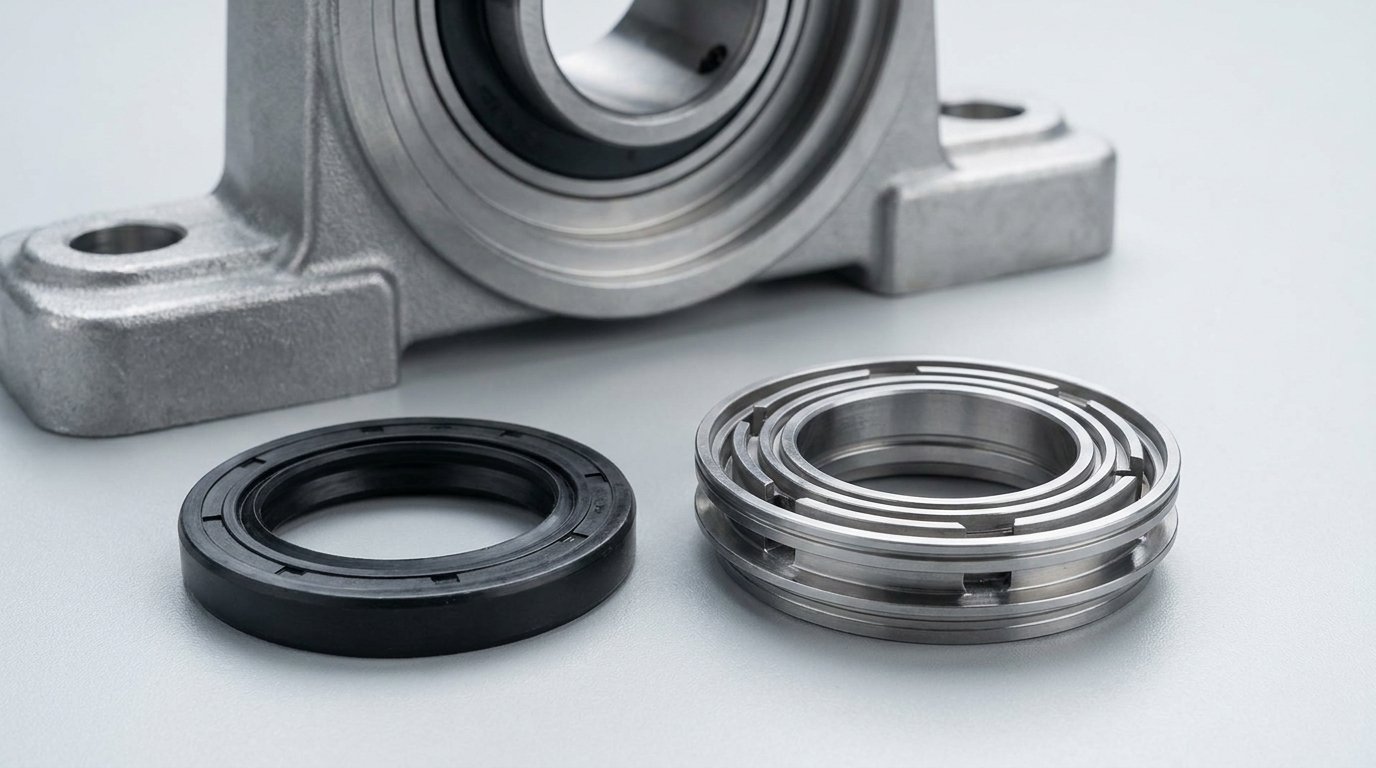
Lip seals are typically the safer choice for wet, dirty, washdown-prone service because they provide positive contact sealing, while labyrinth seals are often better for higher speed, lower friction, and long-life performance in dusty environments with good grease discipline. The right answer depends on contamination type, speed, shaft condition, and maintenance reality.
A Simple Decision Rule You Can Use Today
- Choose lip seals when water, slurry, sticky contamination, or washdown is your primary enemy.
- Choose labyrinth/isolator designs when heat, speed, and long wear life are critical—and you can maintain the grease barrier.
For application-specific recommendations on Haron Bearing pillow block seal comparison options (including hybrid sealing strategies), match the seal to your zone conditions and relube capabilities before standardizing across the site.
Haron Bearing Pro Tip: If you share your RPM, shaft size, contamination type, and relube interval, I can usually narrow the “best seal for mounted bearings” to one or two practical choices and tell you what to watch during the first 30 days of operation.