
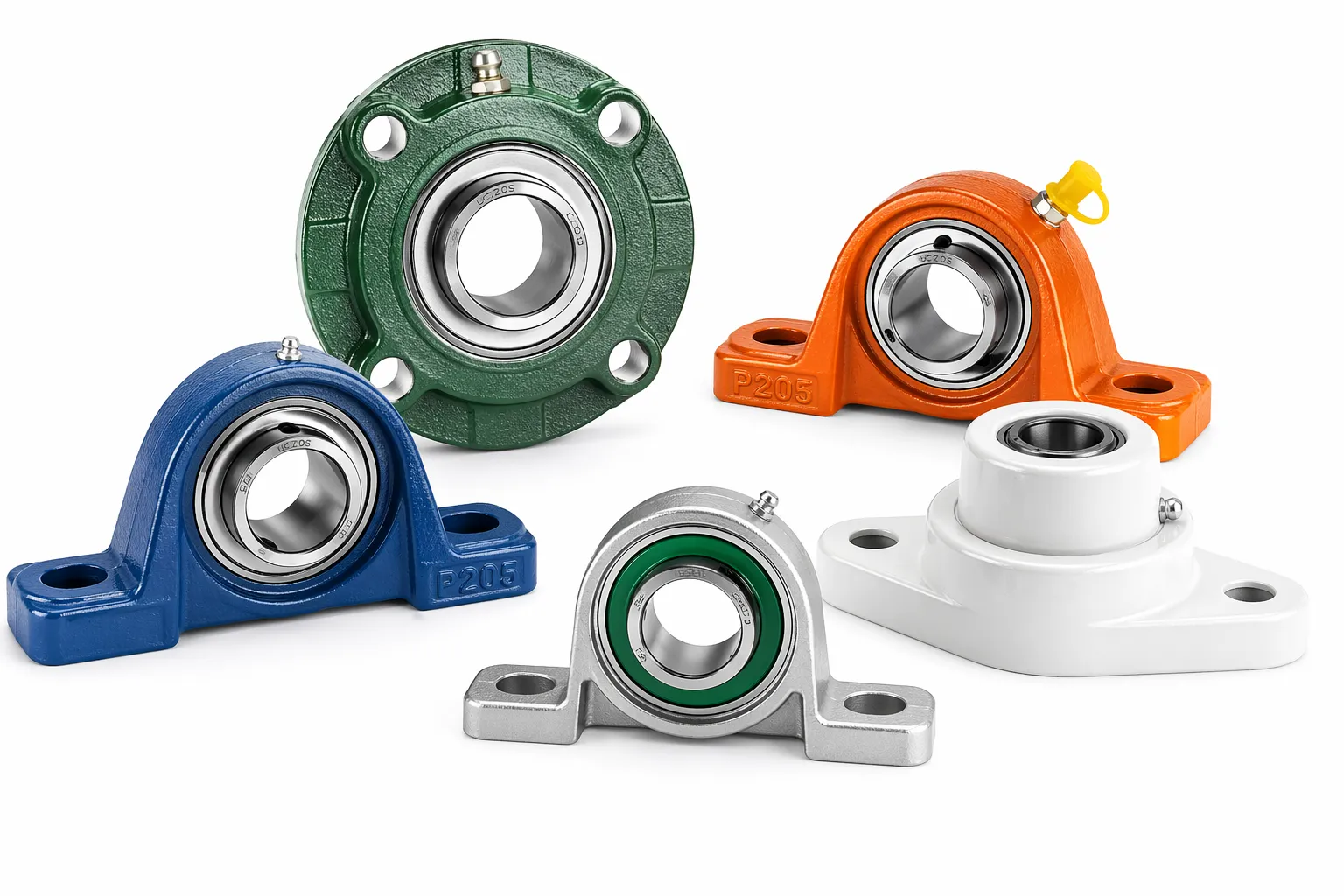
Mounted bearing units combine a bearing and housing for easier shaft support, alignment, and sealing. This guide explains pillow block and flange bearing units, common failures, and selection tips based on load direction, mounting surface, and maintenance needs.
Video Guide: A broad breakdown of bearing and unit types to build context before comparing pillow block and flange housings.
What are mounted bearings and where are they used?
Mounted bearings are pre-assembled bearing unit types that integrate ball bearing units (or roller inserts) into housing bearings such as pillow blocks or flanges. They support a rotating shaft, manage radial/axial loads, and improve contamination resistance via seals. The “guide” focuses on selecting between pillow block bearing units and flange bearing units for mounted bearing applications.
Video Guide: A clear, product-focused overview of pillow block mounted bearing units and what the assembly looks like.
What the assembly includes and why it’s used
Mounted bearing units are designed to reduce design time and field assembly errors by packaging the critical components together. In most industrial mounted bearings, you’re selecting a housing style plus an insert bearing with a locking method and sealing arrangement.
Common components you’ll see in mounted bearing selection:
- Insert bearing: usually a deep-groove ball bearing with an extended inner ring for locking and improved fit on the shaft.
- Housing: cast iron, stamped steel, stainless, or polymer; provides mounting features and rigidity.
- Locking method: set-screw, eccentric collar, or adapter sleeve (varies by series).
- Seals: contact or non-contact to keep grease in and contaminants out.
- Lubrication features: grease fitting, relube channels, and purge paths depending on duty.
Haron Bearing Pro Tip: I treat “mounted bearings” as a system, not just a part number—housing rigidity, sealing, and locking style typically drive service life more than the ball bearing itself in dusty or washdown environments.
How do mounted bearings work and where are they used?
Mounted bearings work by supporting a rotating shaft with a rolling-element insert secured inside a housing that bolts to a machine frame. The bearing’s inner ring locks to the shaft while the outer ring is supported by the housing, allowing rotation with controlled friction. Seals and grease manage contamination and heat for longer service.
Video Guide: Visual explanation of what’s inside flange and pillow block units and how the insert sits in the housing.
Load transfer, alignment, and sealing in real equipment
In typical mounted bearing applications, loads travel from the shaft → inner ring → rolling elements → outer ring → housing → machine frame. The housing provides mounting stability, while the insert bearing accommodates minor misalignment (varies by insert design) between shaft and base.
A practical process view:
- Mount housing to structure (base plate or machine wall).
- Insert aligns and seats in the housing bore (often spherical OD to allow small self-alignment).
- Lock inner ring to shaft to prevent creep (set screws/eccentric collar/adapter sleeve).
- Lubricate and seal so grease film stays intact and contaminants are excluded.
- Operate within limits (speed, load, temperature, and misalignment) to avoid premature wear.
Haron Bearing Pro Tip: If you’re seeing repeat failures, I first verify shaft tolerance/finish and locking method—shaft creep and fretting are frequent root causes that look like “bearing quality” problems but aren’t.
What is the difference between pillow block and flange bearings?
Pillow block bearing units mount to a horizontal base using two (or more) foot bolts, making them ideal for supporting shafts over a frame. Flange bearing units bolt to a vertical surface through a round or square flange, better for wall-mounted or end-plate designs. The key difference is housing geometry and load path, not the insert’s basic function.
Video Guide: Simple flange-bearing walkthrough showing flange mounting style and typical use orientation.
Housing geometry, mounting surface, and typical use cases
The insert bearing can be very similar across both styles; the selection is primarily about how the machine needs to bolt the unit down and where the reaction forces go.
Key differences that matter on the machine:
- Mounting plane
- Pillow block: bolts to a base (horizontal surface).
- Flange: bolts to a wall/plate (vertical surface).
- Installation flexibility
- Pillow block: often easiest for long shafts and conveyor frames.
- Flange: compact for end plates, gearboxes, augers, and enclosed machinery.
- Load considerations
- Both handle radial loads well; axial capability depends on the insert series and locking/preload style.
- Flange layouts can better match “through-plate” load paths in some designs.
Haron Bearing Pro Tip: I choose the housing first by how the customer’s frame is built; once mounting is correct, we fine-tune insert series, seals, and locking to match contamination and shaft behavior.
What are the common problems with pillow blocks?
Common pillow block problems include misalignment beyond the insert’s capability, loose mounting bolts, shaft creep from improper locking, contamination-driven wear, and lubrication issues such as over-greasing or wrong grease type. These failures often show up as heat, noise, seal damage, and fretting corrosion. Fixes usually involve mounting integrity, sealing, and correct relubrication practice.
Video Guide: Service-focused look at pillow-block bearing maintenance and what to check during troubleshooting.
Failure modes, symptoms, and quick diagnostics
Use this checklist to diagnose pillow block bearing units before replacing parts.
Common issues and what they look like:
- Misalignment / soft foot
- Symptoms: uneven temperature, rapid seal wear, vibration.
- Checks: base flatness, shim needs, shaft straightness.
- Loose bolts / housing movement
- Symptoms: fretting under the feet, shifting position, repeat failures.
- Checks: torque, washer use, base rigidity, bolt grade.
- Shaft creep / incorrect locking
- Symptoms: polished shaft, inner ring movement, black fretting dust.
- Checks: shaft tolerance, set-screw torque, collar engagement, rotation direction with eccentric collars.
- Contamination and washdown ingress
- Symptoms: gritty noise, brown grease, corrosion pits.
- Checks: seal type, relube purge path, pressure washing practices.
- Lubrication errors
- Symptoms: overheating (over-grease), dry running (under-grease), grease separation.
- Checks: grease compatibility, relube intervals, operating temperature.
Haron Bearing Pro Tip: I recommend marking housing position and bolt heads after installation—if the marks shift over time, you’ve found a mounting integrity problem before it becomes a bearing problem.
When to use a pillow block bearing?
Use a pillow block bearing when the unit must bolt to a base and support a shaft along a machine frame, especially on conveyors, fans, agricultural equipment, and general power transmission. Pillow block bearing units are preferred when you need easy shaft height setting, accessible relubrication, and straightforward replacement. Choose the housing size and insert sealing to match contamination and load.
Video Guide: Practical overview of pillow block uses and benefits to help confirm when this housing style is the right fit.
Selection triggers and a practical decision checklist
Pillow blocks are typically the default choice when your machine has a flat mounting base and you want simple alignment and service access. Use this quick checklist:
- Choose pillow block bearing units when:
- The frame provides a flat base with two-bolt mounting.
- You need easy access to grease fittings and set screws/collars.
- Shaft support is needed at multiple points along a long span.
- You may need shim adjustment to set shaft height.
- Consider flange bearing units instead when:
- The bearing must mount to a wall, end plate, or bulkhead.
- Space is tight and you need a compact footprint around the shaft exit.
Haron Bearing Pro Tip: If your operators can’t easily reach the relube point, I treat it as “non-relubricated in practice” and specify better sealing or a different unit placement—even a perfect grease schedule fails if it’s not accessible.
Key Features & Comparison
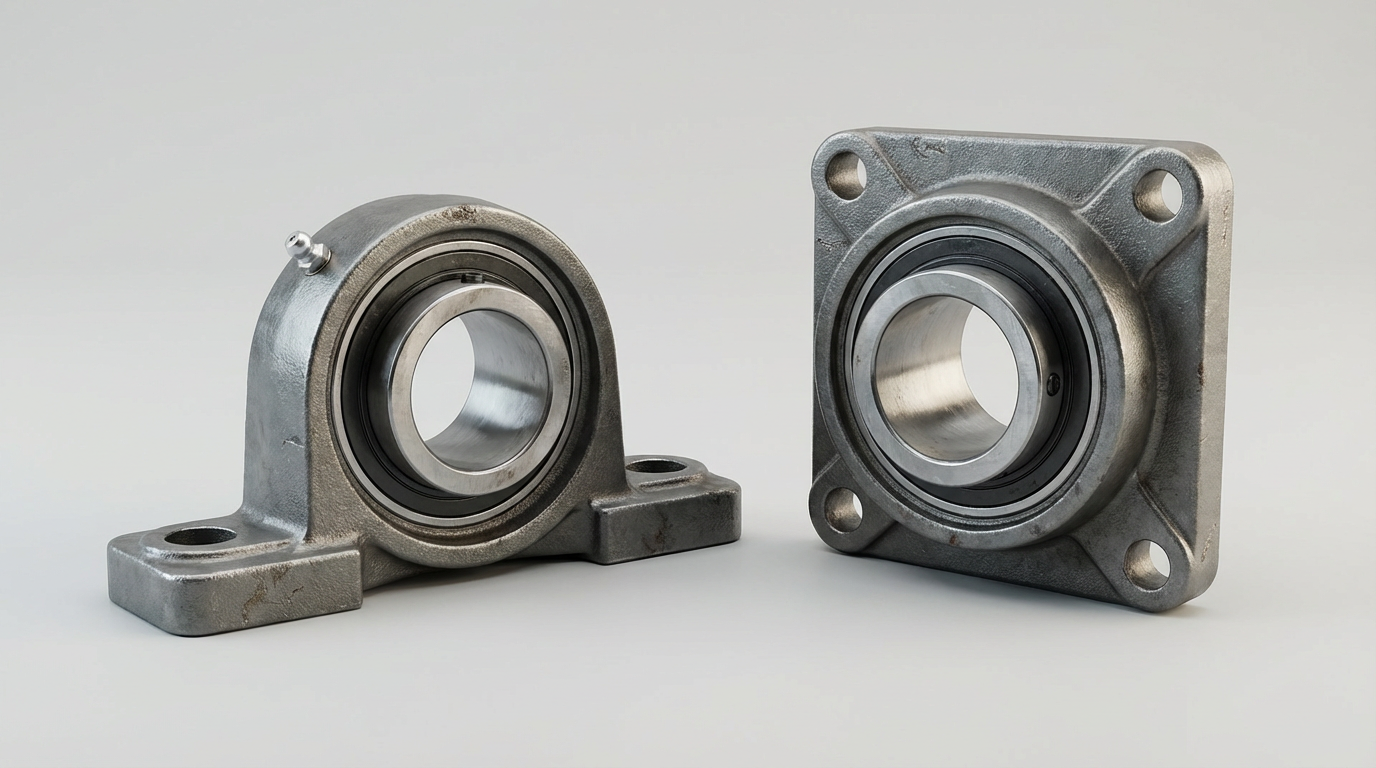
Pillow block and flange mounted bearings share the same purpose—supporting rotating shafts with an insert bearing inside a housing—but they differ in mounting method, footprint, and how they fit into machine structures. Comparing housing style, sealing, locking, and maintenance access makes mounted bearing selection more reliable. The best choice is the one that matches your mounting plane and contamination level.
Side-by-side comparison for mounted bearing selection
Based on our internal data and market analysis, here is the breakdown:
| Feature | Pillow Block Bearing Units | Flange Bearing Units |
|---|---|---|
| Mounting surface | Base (horizontal) | Wall/plate (vertical) |
| Typical bolt pattern | 2-bolt (common), also 4-bolt | 2-, 3-, or 4-bolt flange |
| Best fit for | Conveyor frames, line shafts, fans, general supports | End plates, augers, gear/motor plates, shaft-through walls |
| Alignment flexibility | Good for base shimming and adjustment | Good for plate-mounted layouts; less base-height adjustment |
| Maintenance access | Often excellent (open access on frames) | Can be constrained by guarding/plates |
| Space/compactness | Larger footprint along base | Compact around shaft exit |
| Common sealing needs | Dusty environments, washdown options depend on series | Similar sealing options; selection driven by exposure at wall/plate |
| Typical mistakes | Soft foot, base distortion, bolt loosening | Plate flex, incorrect flange piloting/centering, misalignment from warped plates |
Haron Bearing Pro Tip: When comparing units, I always confirm the mounting structure stiffness—an undersized plate on a flange unit can flex and create “mystery misalignment” that no bearing upgrade will fix.
Cost & Buying Factors
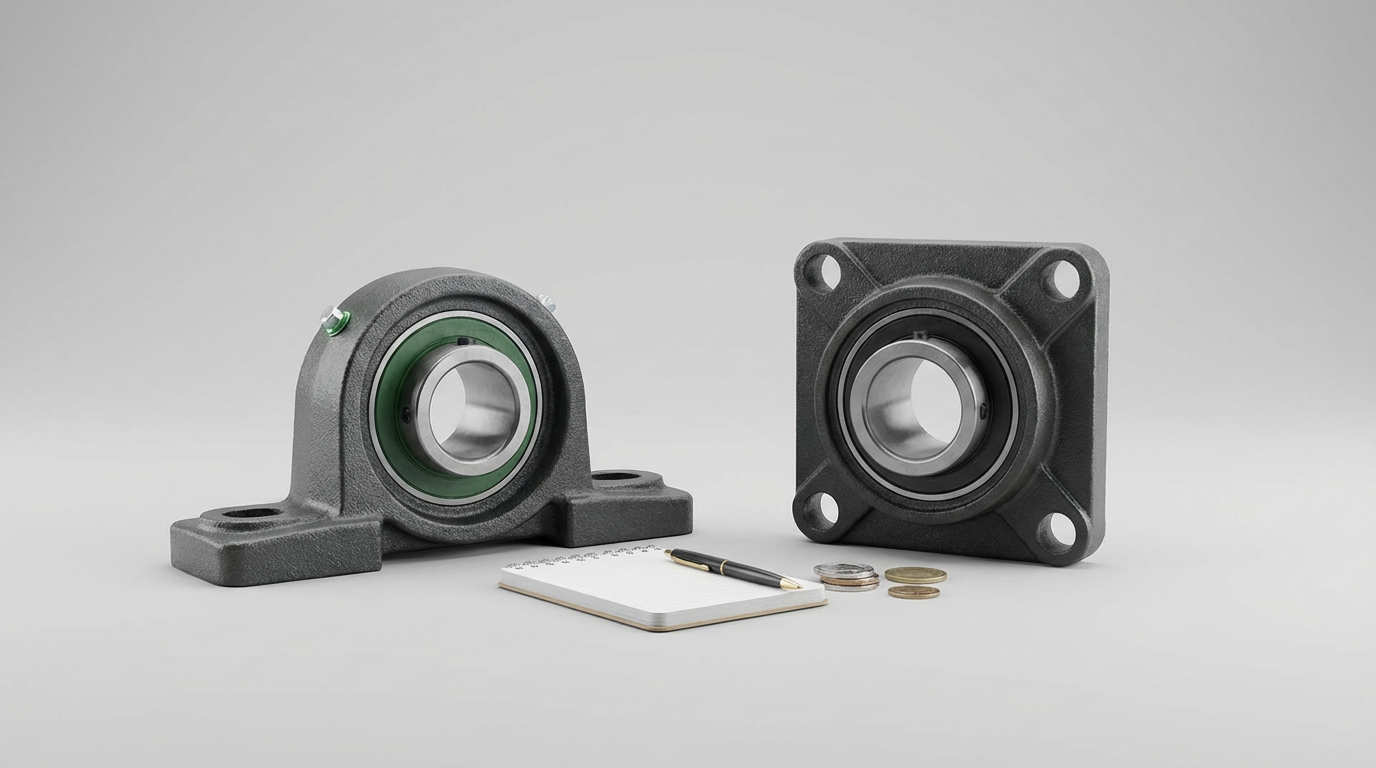
Mounted bearings cost is driven by insert size and series, housing material, sealing level, locking method, and whether the unit is relubricatable. Pillow block and flange units of the same insert size can be similar in price, but application-driven upgrades—better seals, stainless housings, high-temp grease—typically dominate total cost. Buying correctly reduces downtime far more than chasing the lowest unit price.
What changes price—and what to specify to avoid mismatches
Key buying factors for industrial mounted bearings:
- Housing material
- Cast iron (general duty), stainless (washdown/corrosion), polymer (chemical/light duty).
- Sealing and contamination control
- Standard seals for clean environments; upgraded contact seals, slingers, or labyrinth seal options for dust/wet conditions.
- Locking method vs. shaft behavior
- Set-screw: common, economical; needs correct shaft tolerance and torque.
- Eccentric collar: good for many conveyors; mind rotation direction.
- Adapter sleeve: better concentricity for heavier duty and larger shafts.
- Lubrication strategy
- Relubricatable vs. sealed-for-life depending on access, speed, and contamination.
- Interchangeability and lead time
- Confirm dimensional standards (bolt spacing, shaft height, piloting) to avoid re-drilling or frame changes.
Haron Bearing Pro Tip: I ask buyers to specify the environment first (dust, water, chemicals), then shaft size and speed—once those are fixed, we can choose the most cost-effective sealing and housing without overbuying capacity.
Conclusion
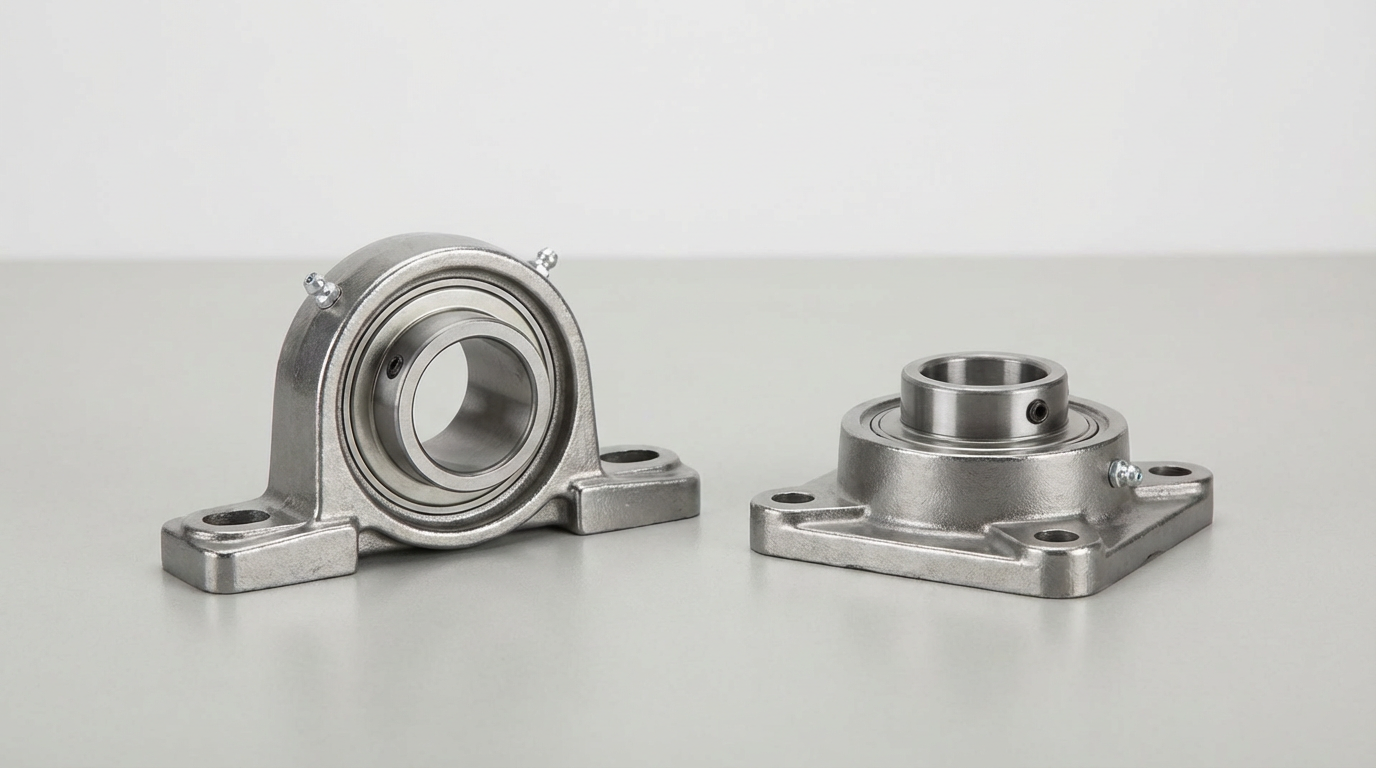
Mounted bearings combine bearing units with housings for easy shaft support and contamination protection. Pillow block units suit base-mounted frames, while flange units fit wall or end-plate mounting. Match housing style, seals, locking, and lubrication for reliable selection.