
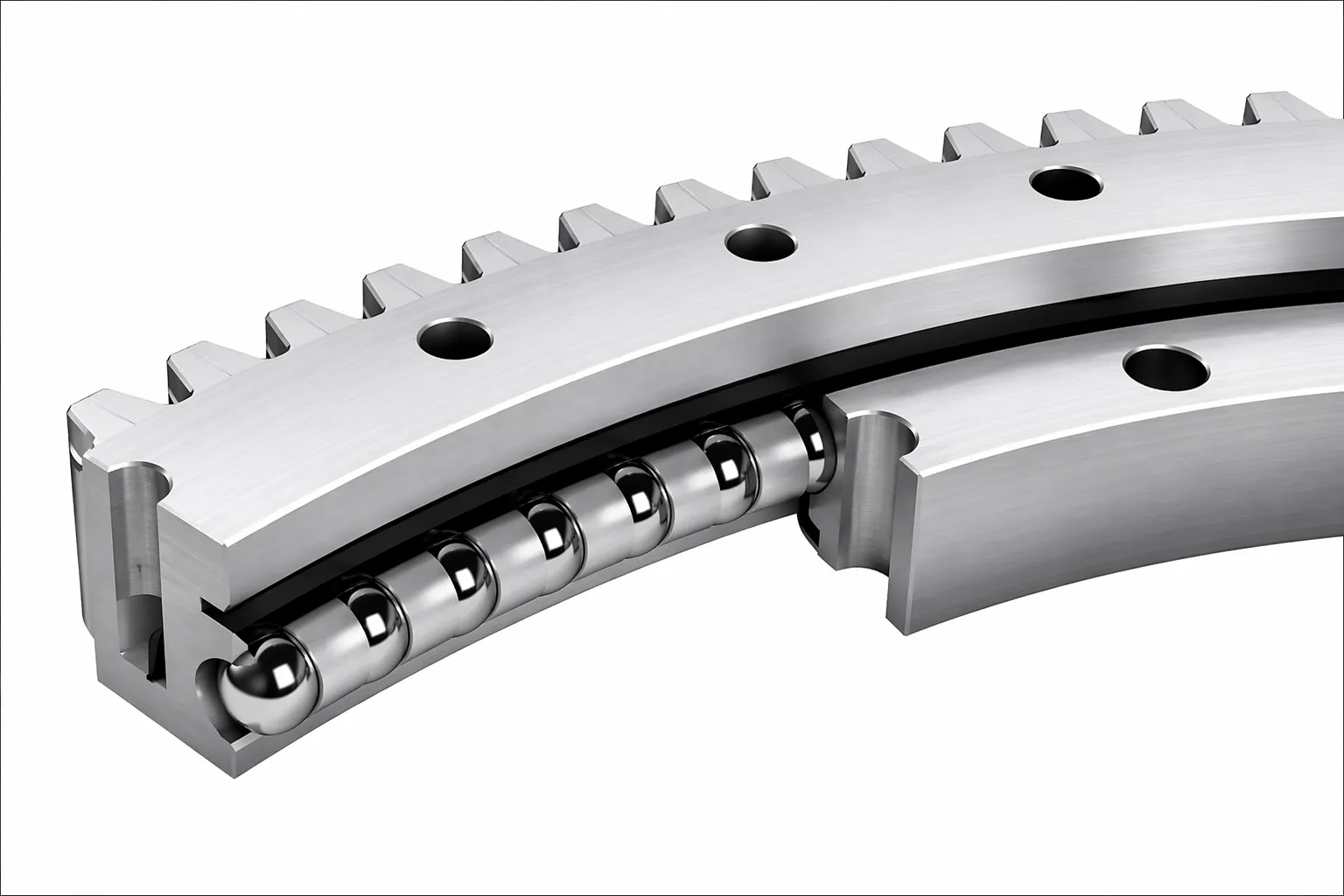
Kaydon-style thin section bearings are engineered to deliver high accuracy and stiffness in a very compact envelope, helping designers reduce weight and save space without sacrificing rotational performance. They’re common in robotics, aerospace, medical devices, and precision automation where tight packaging and reliable runout control matter. This guide explains types, thin section bearing uses, maintenance, pricing expectations, and practical kaydon bearing replacement alternatives—including options from Haron Bearing.
Video Guide: A practical overview of thin section bearing advantages, packaging benefits, and typical application drivers.
What are the best alternatives to Kaydon thin section bearings?
Kaydon thin section bearings (and kaydon style bearings) are thin-profile ball bearings designed to keep a constant cross-section while offering precision rotation, low friction, and compact packaging. They’re used where space and weight are constrained, and are often sourced as precision thin section bearings or custom thin section bearings for industrial and robotics thin section bearings applications.
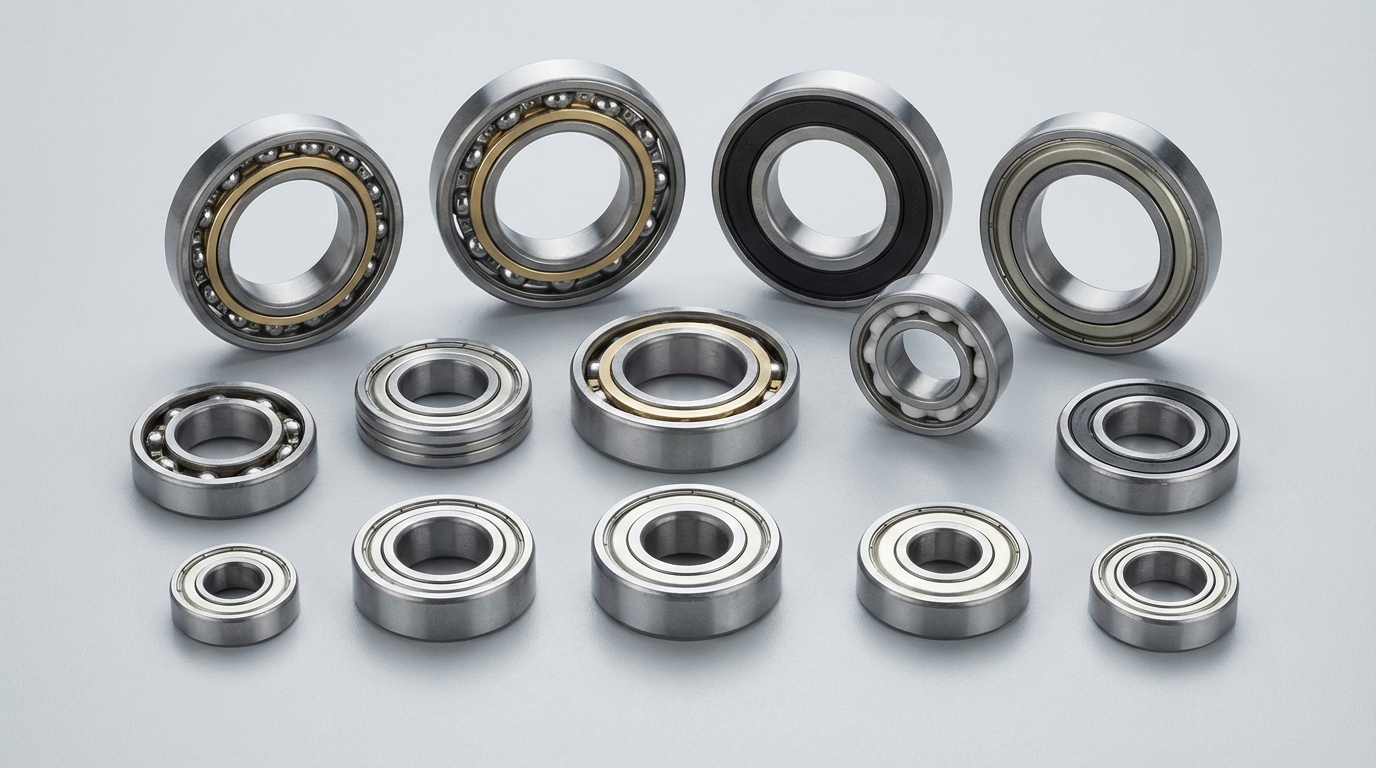
Definition, series families, and what “Kaydon-style” typically means in procurement
Thin section bearings are commonly defined by their “constant cross-section” design philosophy: as bore size changes, the bearing’s cross-sectional height/width remains the same (within a given family). In purchasing language, “Kaydon-style” often indicates a form/fit/function equivalent to widely-used thin section series (including “Reali-Slim” style envelopes), not necessarily the same brand.
Key identifiers buyers typically use to define a kaydon bearing replacement:
- Cross-section size (e.g., “thin,” “extra thin,” “ultra thin” families depending on series)
- Bearing type: deep groove radial, angular contact, or four-point contact
- Precision level: runout, bore/OD tolerances, and axial/radial clearance targets
- Cage, material, and lubrication: to match speed, torque, vacuum, or cleanliness needs
- Seals/shields: contamination control versus torque trade-offs
Common thin section bearing types you’ll see requested:
- Radial (deep groove): balanced radial capacity, moderate thrust capacity both directions
- Angular contact: higher thrust in one direction, can be paired for bidirectional thrust
- Four-point contact: supports radial plus thrust in both directions in a single bearing, useful when axial space is limited
Haron Bearing Pro Tip: When a customer asks for a “Kaydon replacement,” I confirm the application loads and mounting scheme first—because many “equivalents” match dimensions but not stiffness, preload behavior, or torque once installed.
How do Kaydon thin section bearings and their alternatives compare?
Kaydon-style thin section bearings work by guiding balls between precision raceways in a slim cross-section ring set, enabling low-friction rotation with controlled runout. Load is transmitted through ball-to-race contact angles that depend on bearing type (radial, angular contact, or four-point), allowing compact precision bearings to carry radial and/or axial forces efficiently.
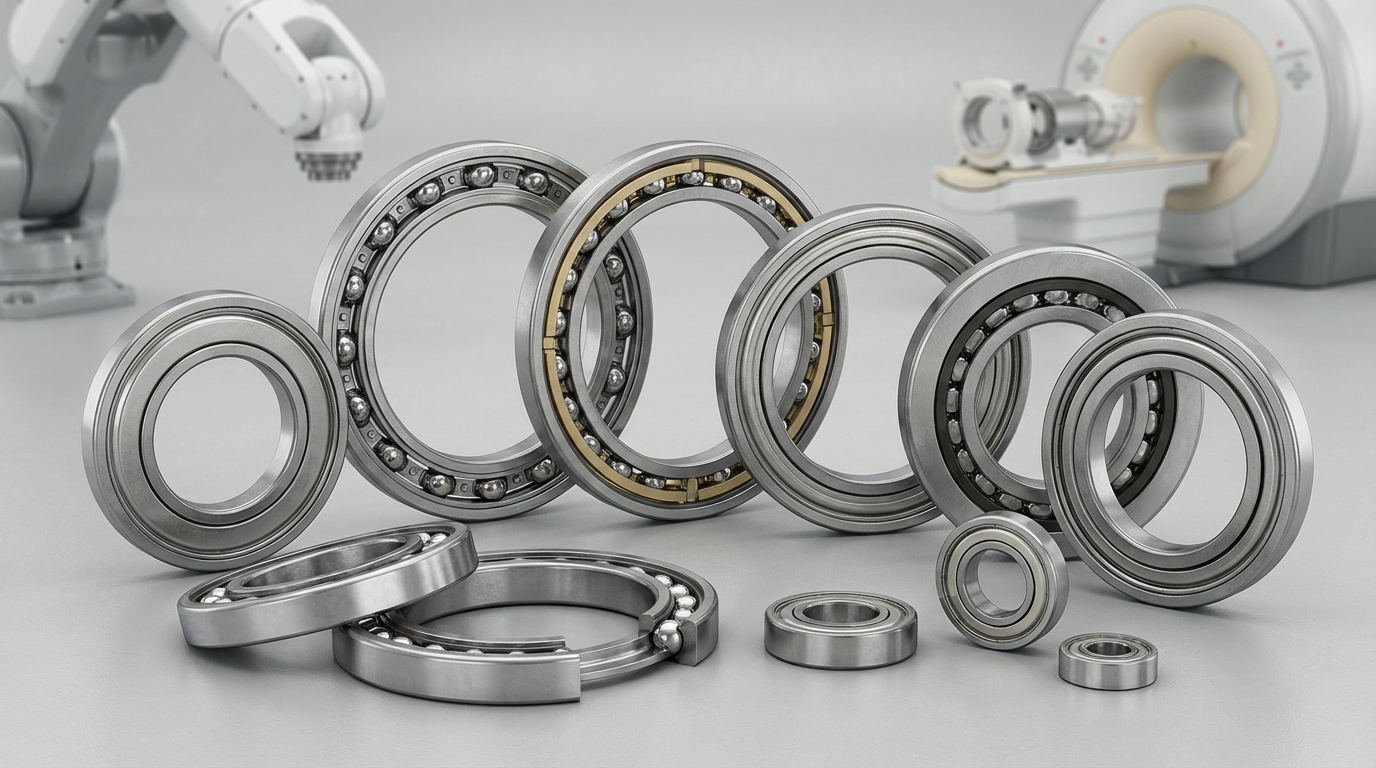
Load paths, contact angle, and why thin sections stay stable
A thin section bearing functions like any ball bearing—inner ring rotates relative to the outer ring while balls roll in raceway grooves—but the design challenges are different due to reduced ring thickness. Thin rings can be more sensitive to housing/shaft distortion, mounting errors, and uneven bolt patterns (especially in split housings or lightweight structures typical in robotics).
How each type carries load:
- Radial (deep groove): primarily radial loads; limited axial loads both directions.
- Angular contact: combined loads; optimized for axial load in one direction; often used in matched pairs for stiffness.
- Four-point contact: a single bearing can take axial loads in both directions plus radial load; good when you need to minimize axial stack height.
Key performance mechanisms:
- Raceway geometry and contact angle determine stiffness and axial capacity.
- Internal clearance/preload influences torque, heat, and positional accuracy.
- Cage design affects high-speed stability and noise.
- Mounting fit and housing roundness strongly impact runout in thin rings.
Haron Bearing Pro Tip: In thin section designs, I treat the housing as part of the bearing system—roundness, shoulder squareness, and clamping pattern can change running torque and life more than a single ABEC/ISO class upgrade.
What are the advantages of Kaydon thin section bearing alternatives?
The main benefits are space savings, weight reduction, and precision rotation in compact assemblies. Kaydon thin section bearings enable high stiffness-to-size performance, support demanding runout targets, and allow designers to increase payload or reduce inertia—especially valuable in robotics thin section bearings, gimbals, indexing tables, and medical imaging equipment.
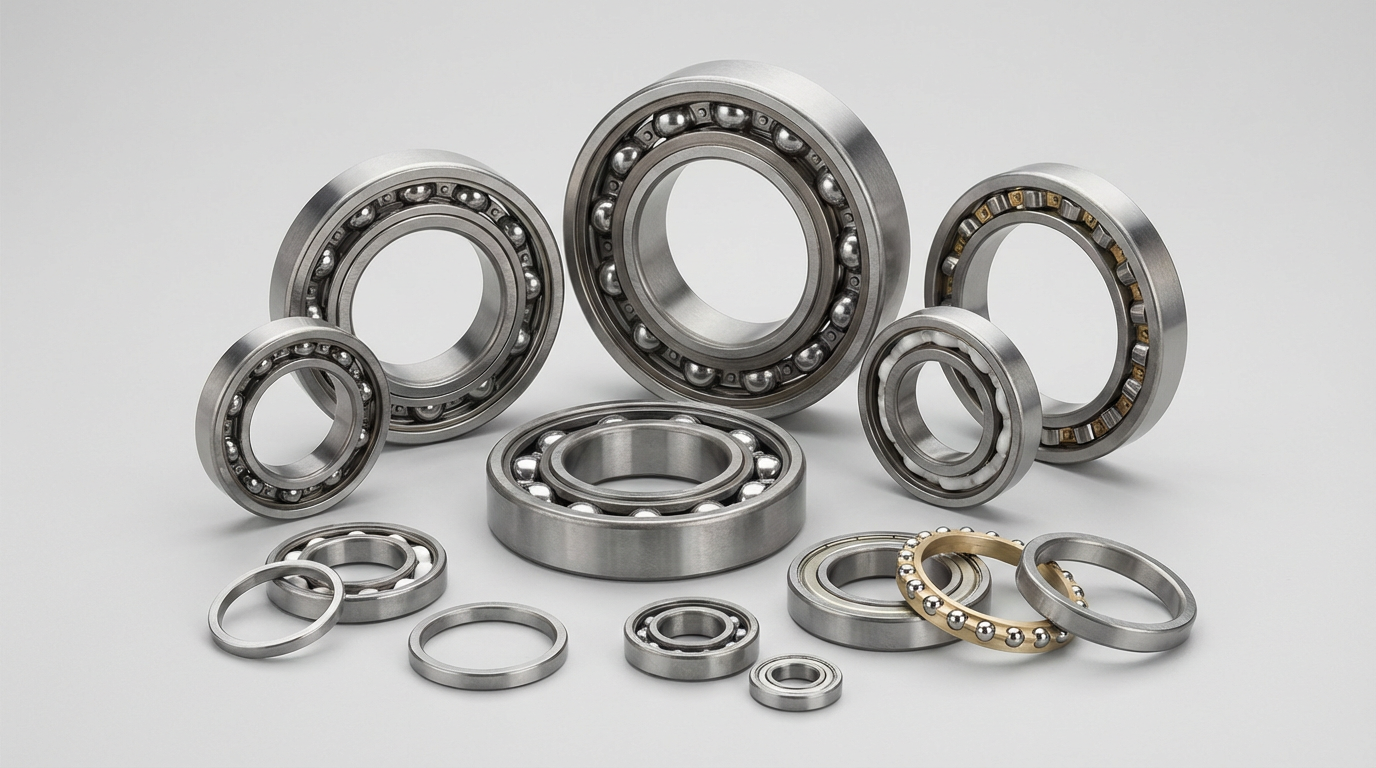
Why designers choose thin section bearings in compact precision systems
Thin section bearings are often selected to solve packaging constraints without compromising motion quality. Compared to “standard” bearings with thicker rings, thin sections can reduce envelope size and inertia, improving dynamic response.
Primary benefits (practical outcomes):
- Compact packaging: frees space for motors, sensors, cable routing, or larger bores.
- Lower mass and inertia: faster acceleration/deceleration, reduced servo tuning burden.
- Precision capability: supports controlled runout and repeatability requirements.
- Design flexibility: multiple contact configurations (radial, angular, four-point) for tailored load support.
- System simplification: four-point contact can replace paired bearings in some layouts.
Typical thin section bearing uses by industry:
- Robotics: joints, harmonic drive outputs, end-effectors, SCARA axes
- Aerospace/defense: gimbals, antenna pointing, optical payloads
- Medical: CT gantries, surgical robots, diagnostic scanners
- Industrial automation: indexers, rotary tables, semiconductor handling
Haron Bearing Pro Tip: If your priority is robot joint repeatability, I usually recommend evaluating stiffness/preload and housing rigidity before chasing tighter runout grades—because the structure often dominates the final accuracy.
How do you maintain Kaydon thin section bearings and their alternatives?
Maintain kaydon style bearings by keeping contamination out, preserving correct lubrication, and preventing mounting distortion that can raise torque and wear. Inspect running torque, noise, and temperature trends; verify seals and grease condition; and re-check fits and fastener patterns. For precision thin section bearings, gentle handling and clean assembly practices are critical.
Maintenance checklist for thin section bearings (what actually prevents failures)
Thin section bearings tend to be less forgiving of dirt, misalignment, and out-of-round housings. Maintenance should focus on contamination control and monitoring for early indicators of raceway damage.
Recommended maintenance steps:
- Keep it clean: control particulates; use clean gloves and lint-free wipes in assembly/service.
- Verify lubrication condition: check grease age, bleed, or hardening; follow relube intervals if applicable.
- Monitor torque and temperature: rising torque or heat is often the earliest symptom of preload change, contamination, or distortion.
- Check seals/shields: damaged seals allow debris ingress and grease loss.
- Confirm mounting integrity: inspect shaft/housing fits, shoulder squareness, and bolt pattern uniformity.
- Avoid aggressive washdowns: solvents and high-pressure spray can purge grease and damage seals.
Common preventable issues:
- False brinelling from vibration during shipment/storage
- Raceway contamination from assembly debris
- Distortion due to uneven clamping, thin housings, or press fits outside recommendation
- Over-greasing causing churn and heat at speed
Haron Bearing Pro Tip: If you see torque increase after installation (before run-in), I immediately suspect housing distortion or uneven clamping—loosening and re-torquing in a star pattern often reveals the root cause.
What is the price of Kaydon thin section bearings and their alternatives?
Pricing varies widely because thin section bearings are specified by size, precision, configuration, material, and lubrication. As a rule, larger diameters, higher precision, matched pairs, special materials (stainless), and custom features increase cost. Thin section bearing alternatives and kaydon bearing replacement options can reduce lead time and total cost when specs are well-defined.
Price drivers, typical ranges, and how to quote accurately
There isn’t a single “price” for kaydon thin section bearings because the bearing is often a configured component. Two bearings with the same dimensions can differ significantly in cost due to precision grade, cage type, cleanliness, and inspection requirements.
Main cost drivers:
- Size: bore/OD and cross-section family
- Type: radial vs angular contact vs four-point contact
- Precision level: tighter runout/tolerance classes raise manufacturing and inspection cost
- Material: chrome steel vs stainless; special coatings
- Preload/clearance control: tighter control typically costs more
- Seals and lubrication: low-torque seals, special greases (vacuum/cleanroom) add cost
- Documentation: material certs, dimensional reports, PPAP/FAI requirements
- Volume and lead time: prototypes and expedited builds cost more per unit
What to prepare for a fast, accurate quotation (Haron Bearing or any thin section bearing manufacturer):
- Bearing type (radial / angular / four-point)
- Dimensions (ID × OD × width/cross-section)
- Load/speed/duty cycle and orientation
- Accuracy targets (runout, clearance/preload)
- Environment (temperature, corrosion, vacuum, cleanroom)
- Sealing and lubrication requirements
- Annual volume and target delivery schedule
Haron Bearing Pro Tip: I can usually reduce your total bearing cost faster by tightening the specification (what truly matters) than by switching brands—unnecessary precision classes and documentation are common hidden multipliers.
Key Features & Comparison
Based on our internal data and market analysis, here is the breakdown:
| Attribute | Kaydon thin section bearings (brand reference) | Kaydon style bearings (form/fit/function equivalents) | Thin section bearing alternatives (multi-supplier) | Haron Bearing approach (replacement/custom) |
|---|---|---|---|---|
| Core value | Proven thin-section envelopes and series | Interchangeable dimensions in many cases | Broader sourcing options for cost/lead time | Match envelope + performance targets with application review |
| Common types | Radial, angular contact, four-point | Radial, angular contact, four-point | Radial, angular contact, four-point + specialty variants | Radial, angular contact, four-point; custom thin section bearings available |
| Best-fit applications | High-precision compact systems | OEM replacement and standardized designs | Cost/lead-time optimization, supply risk reduction | Robotics thin section bearings, industrial thin section bearings, automation, medical |
| Precision options | Multiple grades depending on series | Varies by supplier | Varies widely by supplier and QA | Specify to need; focus on runout, torque, and stiffness balance |
| Lead time risk | Can be long depending on series | Often improved with alternates | Can be optimized via multi-source | Focus on manufacturability + inspection plan for stable delivery |
| Typical integration risk | Low if designed around it | Medium: equivalent dimensions may not equal same torque/preload | Medium-high without validation | Reduced via application confirmation + inspection + test plans |
| Replacement strategy | Replace like-for-like | Validate preload/clearance and mounting sensitivity | Verify performance with incoming inspection and functional checks | Define “must-match” parameters (envelope, torque, runout, preload) for kaydon bearing replacement |
Cost & Buying Factors
Buying thin section bearings successfully depends less on the part number and more on controlling the system requirements: envelope, load, stiffness, runout, torque, environment, and verification. For kaydon thin section bearings or any reali slim alternative, the best value comes from specifying only what you need—then confirming mounting conditions and inspection methods to avoid distortion-driven performance loss.
A practical buying checklist (to avoid rework and downtime)
Use this checklist to select compact precision bearings with predictable results:
- Confirm bearing type vs load: four-point for bidirectional thrust in one bearing; angular contact for higher stiffness (often in pairs).
- Define accuracy targets: runout and torque limits should reflect system-level needs, not just “highest grade.”
- Clarify preload/clearance intent: especially in robotics joints where stiffness and low backlash are priorities.
- Review mounting design: housing roundness, shoulder geometry, clamp pattern, and fit recommendations.
- Set environmental requirements: corrosion resistance, temperature range, vacuum/cleanroom grease.
- Plan verification: incoming inspection items (runout/torque), and functional test criteria.
- Manage supply risk: qualify thin section bearing alternatives if downtime cost is high.
When a kaydon bearing replacement is requested, the critical “match points” usually are:
- Exact envelope dimensions
- Load rating sufficiency
- Preload/clearance behavior under mounting
- Running torque window
- Runout targets after installation (system, not free-state only)
Haron Bearing Pro Tip: I recommend validating alternatives with a simple two-step test—measure free-state torque/runout, then repeat after installation in the real housing—because thin rings often shift performance once clamped.
Conclusion
Kaydon thin section bearings and kaydon style bearings solve tight-space motion challenges by delivering precise rotation, low torque, and strong load support in a compact profile. The right choice depends on bearing type, preload/clearance, mounting rigidity, and environmental needs—not just dimensions. For thin section bearing alternatives or a dependable kaydon bearing replacement, Haron Bearing can support both standard and custom thin section bearings with application-focused selection.
Next step for sourcing
- Share your dimensions, load/speed, accuracy targets, and environment, and we can recommend a suitable Haron Bearing replacement or equivalent, plus inspection/fit guidance to protect torque and runout in your assembly.
Haron Bearing Pro Tip: If you send me the current bearing designation plus your housing/shaft fit notes, I can quickly identify which parameters must be held tightly—and which can be relaxed to cut cost and lead time safely.