

Reducing bearing friction in high-speed, precision systems requires balancing bearing type, preload, lubrication, surface finish, alignment, sealing drag, and thermal stability. The aim is to cut heat while preserving stiffness, accuracy, reliability, and bearing life.
Video Guide: This tutorial gives a solid overview of bearing types and the main friction contributors you’ll be managing in high-speed precision systems.
What is How to Reduce Bearing Friction in High?
Reducing bearing friction in high-speed and precision applications means lowering torque and heat generated at the rolling contacts and seals while preserving stiffness and runout control. It’s achieved through optimized bearing selection, correct preload/clearance, appropriate lubrication (type, amount, and delivery), and tight control of alignment, contamination, and temperature.
Video Guide: This overview helps connect bearing construction (raceways, rolling elements, cages) to where friction losses come from and what you can optimize.
Friction sources you’re actually controlling
In practice, “bearing friction” is the sum of multiple loss mechanisms, and each one has different levers and tradeoffs. High speed amplifies churning and seal drag, while high precision amplifies sensitivity to preload, misalignment, and thermal growth.
Common friction contributors include:
- Rolling contact losses (micro-slip, Hertzian contact deformation, surface roughness effects)
- Lubricant losses (shear in grease/oil, churning, starvation or overfill)
- Seal and shield drag (especially at high RPM)
- Cage drag and windage (air/oil mist interaction at very high speed)
- Misalignment and fit distortion (shaft/housing errors, thermal gradients)
Haron Bearing Pro Tip: I treat friction reduction like a budget: measure baseline torque/temperature first, then change only one variable at a time (preload, lubricant fill, seal type, fit). Otherwise, you’ll “fix” one loss mechanism while accidentally increasing another.
How Does How to Reduce Bearing Friction in High Work?
It works by shifting the bearing into a stable lubrication regime, minimizing parasitic losses (seal drag, churning), and preventing geometric errors (misalignment, excessive preload) that increase contact stress and micro-slip. The best results come from matching bearing design and lubrication delivery to speed, load, stiffness targets, and the expected thermal growth of the assembly.
Video Guide: This video discusses “near-frictionless” concepts and is useful for understanding why lubrication film control, seals, and preload dominate torque at high speed.
The control loop: torque → heat → clearance → torque
At high speed, small friction reductions compound because lower friction reduces heat, which stabilizes internal clearance and preload, which further reduces friction. The reverse is also true: friction increases temperature, thermal growth reduces clearance (or increases preload), and torque spikes.
A practical workflow to make friction reduction “work” is:
- Define operating point: RPM, radial/axial loads, duty cycle, target runout/stiffness, ambient temperature.
- Select a low-loss bearing architecture: ball vs roller, contact angle, cage type, seal strategy.
- Set preload/clearance intentionally: enough stiffness for precision, but not so high that torque rises sharply.
- Choose lubrication regime: grease (correct fill), oil bath (avoid churning), oil-air/mist (high-speed), or jet (very high heat).
- Control contamination: particles and moisture increase friction and surface damage quickly.
- Validate with measurement: torque, temperature, vibration, and run-in behavior over time.
Haron Bearing Pro Tip: I always check temperature rise at steady-state and after speed ramps. If the bearing “looks fine” but temperature keeps climbing, you likely have excessive preload, over-greasing, or seal drag—torque measurement will confirm it fast.
How to reduce friction in bearings?
Reduce friction by selecting low-torque bearing types, optimizing preload/clearance, using the right lubricant and quantity, and minimizing seal drag and misalignment. In high-speed precision spindles, the biggest wins usually come from switching to oil-air or optimized grease fill, reducing contact seal drag, and tightening alignment and fits to prevent distortion.
Video Guide: This selection-focused video helps link application demands (speed/load/accuracy) to bearing types and design choices that influence friction.
High-impact actions (from fastest to most structural)
If you need immediate improvements, start with the simplest variables first, then move toward design changes.
- Correct lubricant quantity
- Grease: avoid overfill; over-greasing increases churning and heat at high RPM.
- Upgrade lubrication delivery
- Oil-air/mist reduces churning and improves film control at high speed.
- Reduce seal drag
- Consider non-contact shields/labyrinth seals where contamination risk allows.
- Optimize preload
- Too much preload increases contact stress and sliding losses; too little can hurt stiffness and runout.
- Improve alignment and fits
- Housing/shaft geometry errors distort rings and raise friction; verify roundness, coaxiality, and shoulder squareness.
- Increase surface quality where it matters
- Raceway/shaft seat finish affects film formation and micro-slip; avoid waviness and handling damage.
Haron Bearing Pro Tip: In high-speed builds, I’d rather spend time validating grease fill by weight than guessing—small fill differences can swing temperature by double digits and make the bearing “feel” like it has a preload problem.
What are the 4 ways of reducing friction?
Four reliable ways to reduce friction are: improve lubrication (right type and amount), reduce normal force or contact stress where possible (preload/load control), smooth/engineer the contact surfaces (finish/coatings), and replace sliding with rolling or low-drag interfaces (bearing type, cages, seals). In precision systems, combine these without losing stiffness or accuracy.
Video Guide: This basics video is a helpful refresher on how rolling elements, lubrication, and contact mechanics relate to friction reduction choices.
Practical “four ways” mapped to bearings
- Lubrication control
- Use viscosity appropriate for speed/temperature; implement oil-air for very high DN values; prevent starvation.
- Contact force control
- Tune preload; avoid thermal preload growth; manage belt/gear loads and unbalance.
- Surface engineering
- Interface substitution (reduce sliding losses)
- Use angular contact balls for high speed vs heavier roller solutions when appropriate; select low-drag cages; choose non-contact sealing when feasible.
Haron Bearing Pro Tip: I separate “precision friction” from “powertrain friction.” In precision, don’t chase the absolute lowest torque if it destabilizes stiffness—target the lowest torque that still holds runout and dynamic stability at operating temperature.
Does polishing reduce friction?
Polishing can reduce friction if it removes harmful roughness, waviness, or directionality that disrupts lubricant film and increases micro-slip. However, over-polishing or changing geometry can worsen performance by reducing film retention, altering fits, or creating taper/roundness errors. In bearings, controlled superfinishing is beneficial; uncontrolled polishing is risky.
Video Guide: This roller-bearing-focused video helps visualize why surface condition, contact geometry, and lubrication film matter to friction and heat at load.
When polishing helps—and when it backfires
A controlled finishing process is about surface texture and geometry, not just “shininess.”
- Helps when you:
- Remove high asperities that break the film at high speed.
- Reduce directional grinding marks that promote micro-slip.
- Improve consistency across mating seats to avoid ring distortion.
- Backfires when you:
- Round edges or alter shoulders, changing load paths.
- Reduce surface features that help lubricant retention in certain regimes.
- Introduce taper/out-of-round conditions that increase preload or misalignment.
A quick decision checklist:
- Are you improving raceway/seat texture with a controlled process (superfinish), not hand polishing?
- Are you verifying geometry (roundness, cylindricity, coaxiality) after finishing?
- Is your lubrication regime stable enough to benefit from finer texture?
Haron Bearing Pro Tip: I only approve polishing/superfinishing when we can measure geometry before and after (roundness and waviness). A mirror finish that quietly adds taper will raise friction and temperature faster than a slightly rough but geometrically correct surface.
Key Features & Comparison
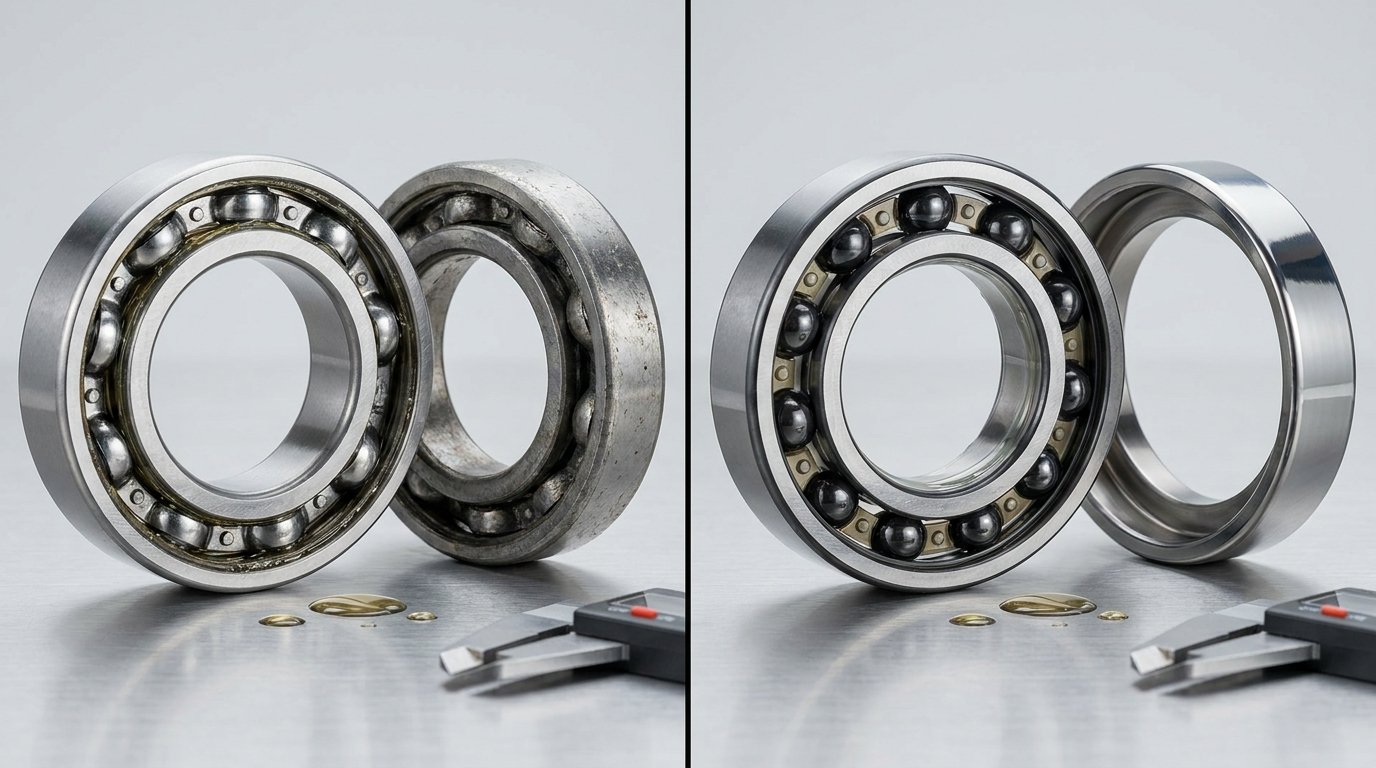
Reducing bearing friction at high speed is mainly about balancing torque, stiffness, heat, and contamination resistance. The “best” choice depends on your speed-load-precision envelope: seals lower contamination risk but add drag, grease is simple but churns at high RPM, and oil-air is excellent for speed but needs infrastructure. Choose the lowest-loss setup that remains stable thermally.
Friction-reduction options compared for high-speed precision
Based on our internal data and market analysis, here is the breakdown:
| Lever | Typical friction impact | Precision impact | Risk if misapplied | Best-fit scenarios |
|---|---|---|---|---|
| Optimize preload (reduce excess) | High | Improves thermal stability; may reduce stiffness if too low | Skidding, runout instability, chatter | High-speed spindles, light-to-moderate loads |
| Switch grease → oil-air/oil-mist | Very high | Excellent at speed; stable temperature | Added system complexity; contamination from poor air quality | Very high RPM, high DN, tight thermal limits |
| Reduce grease fill (by weight) | High | Often improves temperature consistency | Starvation if too low | Greased precision bearings at elevated speed |
| Non-contact seals / labyrinth | Medium to high | Lower torque; can improve high-speed stability | Contamination ingress | Clean environments, controlled enclosures |
| Low-drag cage/material change | Medium | Can reduce vibration and heat | Cage instability if wrong design | High-speed angular contact bearings |
| Improved alignment & fits | Medium to high | Strong improvement in runout and heat | Fit too tight can increase preload | All precision assemblies |
| Superfinishing (controlled) | Medium | Smoother torque, lower micro-slip | Geometry damage if uncontrolled | Ultra-precision, sensitive vibration limits |
Haron Bearing Pro Tip: If you need one “universal” upgrade path, I start with preload verification, then lubricant quantity, then seal drag. Those three typically explain most friction and temperature complaints in high-speed precision assemblies.
Cost & Buying Factors
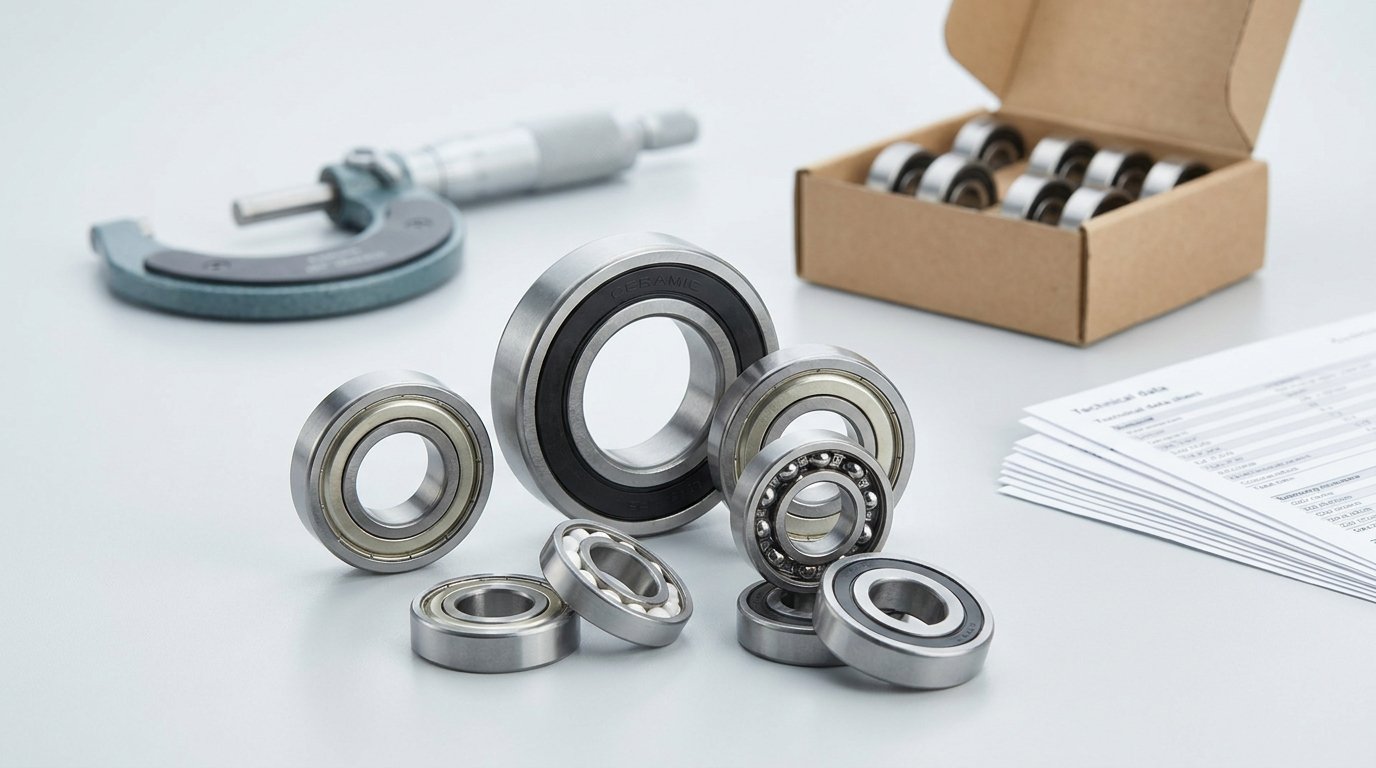
Cost is driven by bearing precision class, material/heat treatment, cage and seal options, and the lubrication approach needed for your speed range. The lowest total cost rarely comes from the cheapest bearing—it comes from a stable thermal design that avoids rework, downtime, and premature failures. Specify operating RPM, loads, target runout, and lubrication method to buy correctly.
What to specify to avoid overbuying—or underbuying
Key buying factors to evaluate:
- Speed factor and duty cycle: continuous high RPM needs different lubrication and cages than intermittent operation.
- Precision requirements: runout, stiffness, and vibration limits may require higher precision grades and matched sets.
- Preload method: fixed vs spring preload; thermal growth tolerance; target stiffness.
- Lubrication strategy: grease simplicity vs oil-air performance; availability of air quality control and filtration.
- Seal strategy: contact seals for contamination vs non-contact for low torque.
- Material and coatings: hybrid ceramic options can lower heat and improve high-speed capability, but cost more.
- Installation and measurement plan: ability to measure torque/temperature/runout during commissioning reduces risk.
Haron Bearing Pro Tip: I ask buyers to include target steady-state temperature rise and allowable starting torque in the RFQ. That forces the right conversation about seals, preload, and lubrication—otherwise you’ll get a bearing that meets dimensions but misses the friction/heat target.
Conclusion
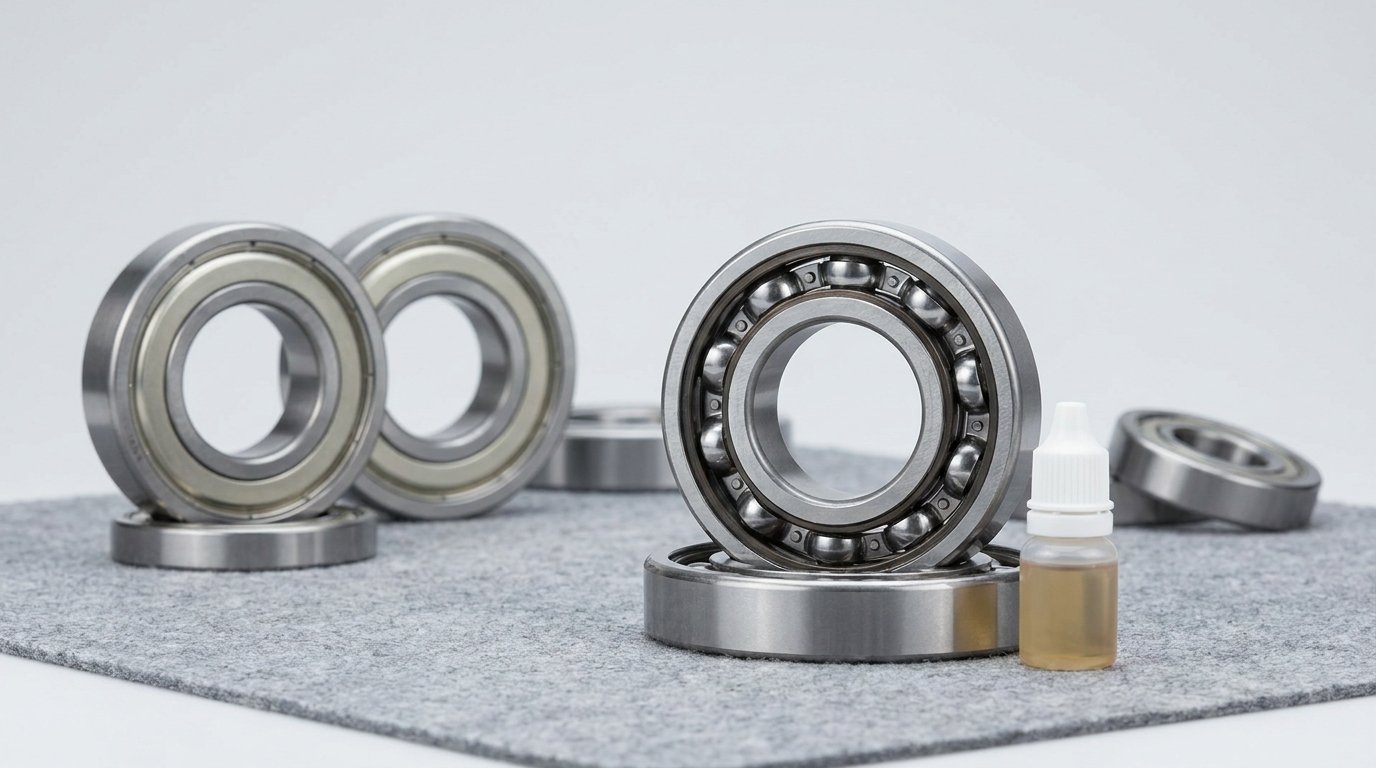
Reducing bearing friction in high-speed, high-precision systems requires coordinated choices: low-loss bearing architecture, correct preload, stable lubrication delivery, minimal seal drag, precise alignment/fits, and controlled surface quality. If you share your RPM, load directions, target runout, lubrication constraints, and operating temperatures, Haron Bearing can help shortlist configurations that minimize torque while keeping stiffness and service life predictable.