
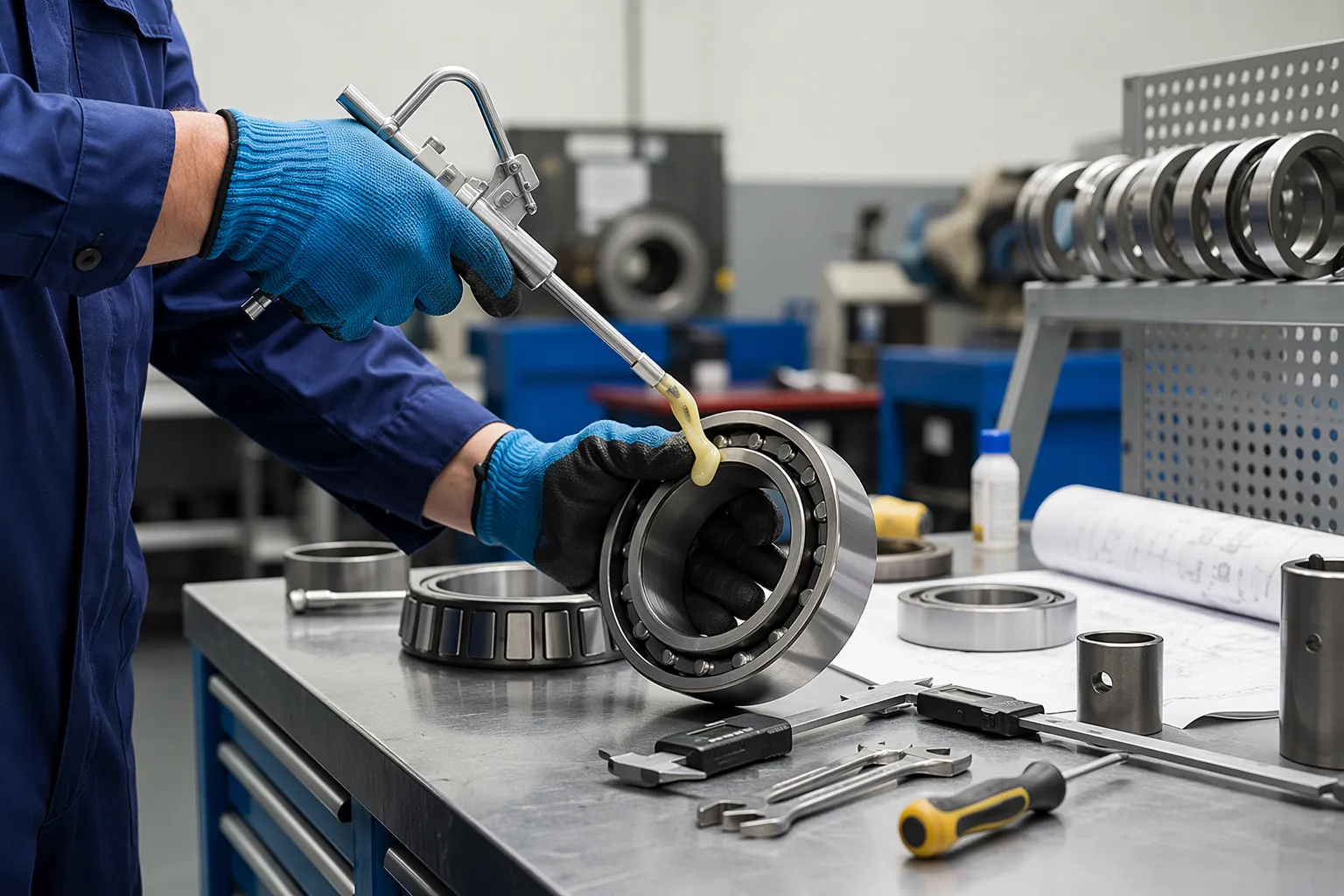
Extending bearing service life requires proper bearing maintenance, lubricant selection, and relubrication routines matched to speed, load, temperature, and contamination risk. Good lubrication and sealing help prevent failure, reduce heat, and stabilize vibration.
Video Guide: A clear, general overview of lubrication and relubrication concepts you can map directly to an industrial bearing maintenance schedule.
How can proper bearing maintenance extend bearing life?
Bearing maintenance is the planned set of lubrication, inspection, cleaning, and condition checks that keeps rolling elements separated by a stable lubricant film while preventing contamination and overload. Done correctly, it extends bearing life by reducing wear, heat, and corrosion, and by catching misalignment, looseness, or lubricant breakdown early.
Practical definition and what “good” looks like
Bearing lubrication and maintenance is not just “adding grease.” It’s a bearing care guide that ensures the right lubricant, in the right amount, at the right interval, under controlled cleanliness—supported by inspection and condition monitoring.
Key components of bearing maintenance best practices include:
- Lubricant selection (grease vs. oil, viscosity, thickener, additives).
- Correct fill quantity (avoids starvation and churning).
- Relubrication interval control (time- or condition-based).
- Contamination management (seals, breathers, handling cleanliness).
- Mechanical checks (alignment, fits, preload/clearance, fasteners).
- Condition monitoring (temperature, vibration, ultrasound, oil/grease analysis).
Haron Bearing Pro Tip: In most plants, contamination and over-greasing cause more failures than “old age.” If you standardize cleanliness and grease volume per bearing size, you’ll often see a faster life increase than changing bearing brands.
How does bearing maintenance extend bearing life?
Bearing maintenance works by maintaining a full lubricating film (reducing metal-to-metal contact), controlling heat, and preventing abrasive particles and water from entering the raceways. A disciplined bearing maintenance schedule combines correct relubrication, sealing, and condition checks so problems like starvation, churning, misalignment, and corrosion are corrected before they become failures.
Video Guide: Demonstrates correct greasing practices that directly affect temperature, film thickness, and bearing life in rotating equipment.
Failure mechanisms maintenance directly prevents
A bearing fails early when one or more “life reducers” dominate. Maintenance extends bearing life by interrupting these pathways:
- Lubrication starvation: insufficient grease/oil, wrong viscosity, blocked lube path.
- Over-lubrication (churning): excess grease causes heat, oxidation, and cage stress.
- Contamination: hard particles create abrasive wear and surface fatigue.
- Water ingress: corrosion, hydrogen effects, and grease washout.
- Misalignment/looseness: edge loading, smearing, abnormal vibration.
- Electrical fluting (motors/VFDs): EDM damage if grounding/insulation is missing.
A simple “control loop” that works in most facilities:
- Define operating conditions (speed, load, temperature, environment).
- Choose lubricant type and base oil viscosity to match conditions.
- Set relubrication interval and quantity.
- Verify delivery (purge points, relief, correct grease gun calibration).
- Monitor condition (trend temperature, vibration, ultrasound).
- Adjust schedule based on actual trends and inspections.
Haron Bearing Pro Tip: Treat relubrication like dosing medication: interval and quantity must be controlled together. If you only change the interval without controlling volume (or vice versa), you’ll still get overheating, purge issues, and premature bearing failure.
How to increase bearing life?
To increase bearing life, focus on three levers: correct lubrication (right type, right amount, right timing), contamination control (seals, clean handling, filtration), and mechanical correctness (alignment, fits, balance, and proper mounting). Combine these with trend-based monitoring to catch issues before damage progresses into spalling or seizure.
Video Guide: Offers industrial-focused tactics that link lubrication discipline and contamination control to longer bearing service life.
High-impact actions that typically deliver the biggest gains
Use this prioritized checklist to prolong bearing life in industrial applications:
- Standardize lubricant selection: limit the plant to a controlled grease/oil list; match viscosity to speed and temperature.
- Calibrate grease guns: document grams per stroke and label lube points accordingly.
- Optimize relubrication intervals: start with OEM guidance, then refine using ultrasound/temperature/vibration trends.
- Improve sealing and ingress protection: upgrade seals, add labyrinths, use desiccant breathers where applicable.
- Improve cleanliness during relube: wipe fittings, use clean transfer containers, avoid dirty grease guns.
- Verify alignment and soft foot (motors/pumps): reduce edge loading and heat.
- Control fits and mounting practice: correct heating methods, avoid brinelling from hammering.
- Add condition monitoring: monthly routes for vibration/ultrasound often pay back quickly.
- Address electrical erosion: shaft grounding rings or insulated bearings for VFD-driven motors.
- Train and document: a bearing maintenance schedule is only effective when consistently executed.
Haron Bearing Pro Tip: If you can only do one upgrade this quarter, add ultrasound-guided relubrication on critical assets—it reduces both starvation and over-greasing by telling you when to stop adding grease.
Why not use WD40 on bearings?
WD-40 is primarily a water-displacing penetrant and light solvent, not a bearing lubricant designed to maintain a load-carrying film. It can thin or wash out grease, leave insufficient viscosity under load, and may accelerate wear and corrosion protection loss—especially in high-speed or high-load bearings—leading to premature bearing failure.
Video Guide: Explains the role of proper bearing oils and why correct viscosity and lubrication type matter for bearing protection.
What WD-40 does versus what bearings need
Bearings typically require a lubricant that can maintain elastohydrodynamic (EHD) lubrication film thickness and resist oxidation while staying in place.
Situations where WD-40 is commonly misused—and better alternatives:
- “Quieting” a noisy bearing: noise usually indicates damage, contamination, or starvation; inspect and relubricate with the correct grease/oil.
- Freeing a stuck assembly: use WD-40 as a penetrant only for disassembly, then clean and apply proper lubricant afterward.
- Corrosion protection: use rust preventatives or the correct grease with corrosion inhibitors.
- High-speed applications: require correct base oil viscosity and thickener stability; WD-40 is too light.
If WD-40 was applied, best practice is typically:
- Remove the bearing (if possible) or isolate the lube cavity.
- Clean out solvent residue and degraded grease.
- Relubricate with specified product and quantity.
- Monitor temperature and vibration for abnormal trends.
Haron Bearing Pro Tip: If someone “fixed” a bearing noise with WD-40, treat it as a short-term symptom mask—schedule an inspection and proper relube ASAP before the washed-out grease turns into heat and spalling.
What is the best way to extend the service life of lubrication oil?
The best way to extend lubrication oil service life is to control the three main oil killers: heat, contamination, and moisture. Use correct viscosity, keep operating temperatures stable, filter continuously to remove particles, prevent water ingress with seals and breathers, and verify condition with regular oil analysis to avoid unnecessary oil changes.
Video Guide: Reinforces practical relubrication and lubrication control concepts that also apply to extending oil life through cleanliness and correct intervals.
Oil-life extension controls you can implement quickly
A reliable oil-life program combines hardware upgrades and routine checks:
- Filtration: target cleanliness codes appropriate to bearing type and speed; use kidney-loop filtration for reservoirs.
- Water control: desiccant breathers, proper sealing, drain free water, and investigate condensation sources.
- Temperature control: improve cooling, avoid churning, correct oil level, and verify viscosity is not too high/low for conditions.
- Correct top-up practices: clean containers, dedicated transfer carts, and filtered fill ports.
- Oil analysis: trend viscosity, TAN (Total Acid Number), oxidation, particle count, and water (Karl Fischer titration) to decide change intervals.
- Compatibility management: avoid mixing oils with incompatible additive packages unless verified.
A simple oil analysis schedule for many industrial systems:
- Monthly: particle count and water screening on critical assets.
- Quarterly: full panel (viscosity, TAN, oxidation, wear metals).
- After events: overheating, seal failure, or contamination ingress.
Haron Bearing Pro Tip: Don’t extend oil drains blindly—extend them based on oil analysis trends plus filtration results. In practice, clean oil can run far longer than calendar intervals, but only if particle and moisture control is proven.
Key Features & Comparison
The most effective bearing maintenance programs combine optimized relubrication (quantity + interval), contamination control, and condition-based monitoring. The “best” approach depends on speed, load, and environment: high-speed bearings are sensitive to over-greasing, while dirty/wet environments demand sealing and frequent checks. Comparing methods clarifies what to standardize first.
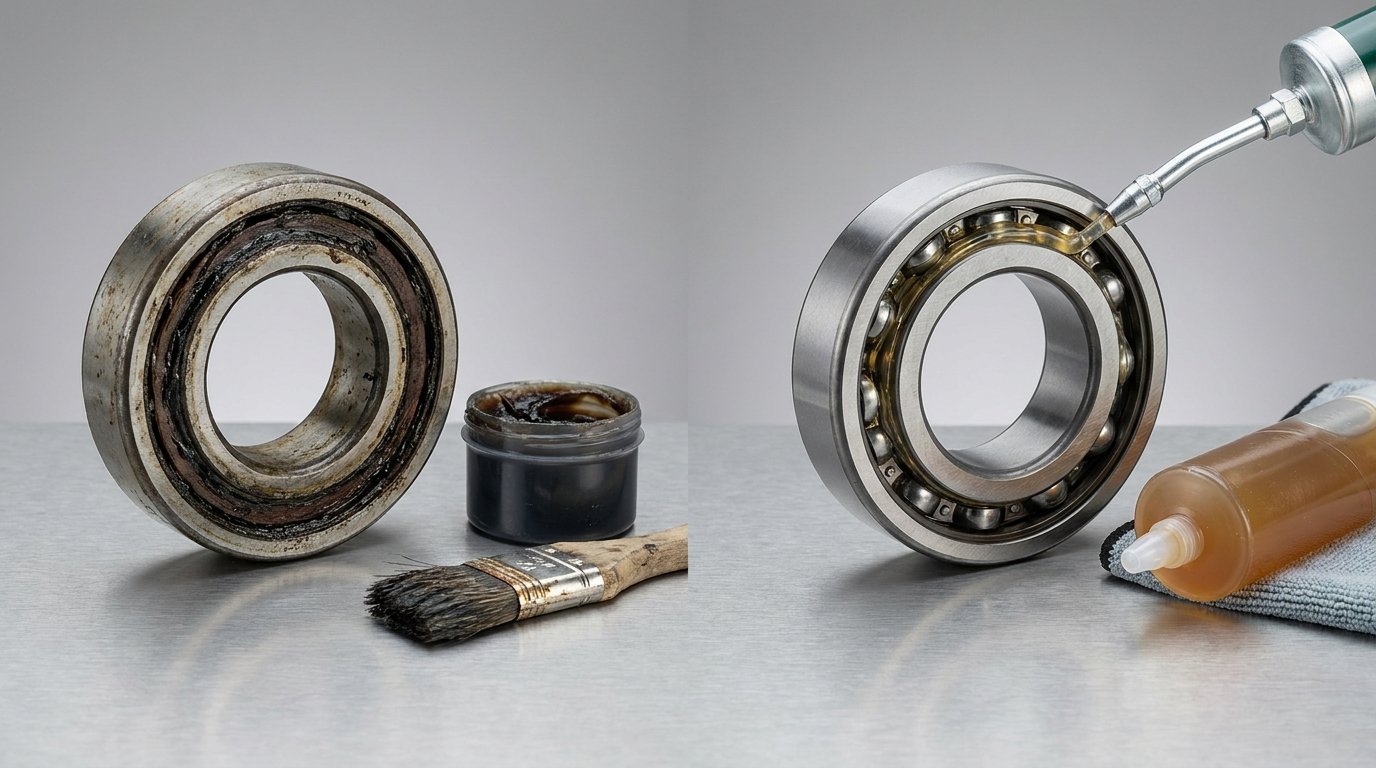
Comparing maintenance approaches for longer bearing service life
Based on our internal data and market analysis, here is the breakdown:
| Approach | Best for | Strengths | Common pitfalls | Typical impact on premature bearing failure |
|---|---|---|---|---|
| Time-based relubrication (fixed interval) | Stable operations, low variability | Simple to execute, easy to audit | Over/under-greasing if conditions change | Moderate reduction when well-tuned |
| Condition-based relubrication (ultrasound/temperature) | Critical assets, variable loads | Prevents starvation and over-greasing | Requires training and route discipline | High reduction |
| Sealing + ingress control upgrades | Dusty, wet, washdown environments | Attacks the #1 root cause (contamination) | Poor installation negates benefits | High reduction |
| Oil analysis + filtration (oil-lubed systems) | Gearboxes, circulating oil systems | Extends oil life and protects bearings | Sampling errors, ignoring trends | High reduction |
| Precision installation/alignment program | Motors, pumps, fans | Reduces heat and edge loading | Skipping soft-foot checks | Moderate to high reduction |
| Lubricant consolidation and labeling | Multi-line plants | Reduces wrong-lube events | Incomplete change management | Moderate reduction |
Haron Bearing Pro Tip: Standardize two things first: (1) grease gun output (grams/stroke) and (2) lube-point labels showing exact dose and interval. This alone eliminates a large share of “mystery failures” caused by inconsistent relubrication.
Cost & Buying Factors
Bearing maintenance costs are driven by lubricant choice, labor time for relubrication routes, monitoring tools, and downtime risk. The best buying decisions prioritize total cost of ownership: a slightly higher-quality grease, improved sealing, or basic ultrasound tooling often costs far less than one unplanned failure event and the resulting secondary damage.
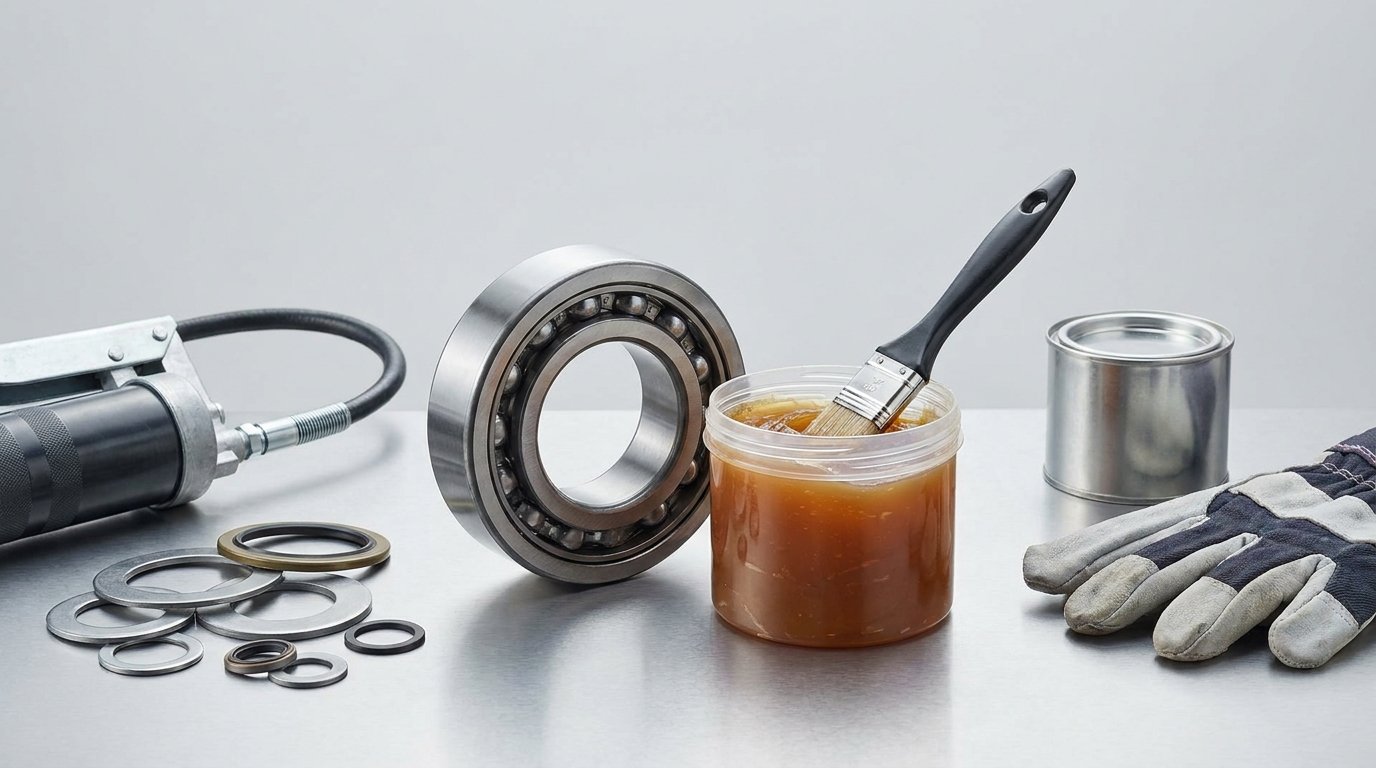
What to evaluate when budgeting a bearing maintenance program
Key cost and selection factors to consider:
- Lubricant fit-for-purpose: base oil viscosity, thickener type, temperature range, load additives, water resistance.
- Compatibility risk: avoid mixing greases unless compatibility is confirmed; changeover may require purge/cleanout.
- Relubrication method: manual grease guns vs. single-point or centralized auto-lube (labor vs. consistency tradeoff).
- Monitoring level: basic temperature checks, vibration routes, ultrasound for relube, or full online systems.
- Seal upgrades: contact seals vs. labyrinth; consider speed, temperature, and contamination level.
- Criticality and downtime cost: focus investment where failure consequences are highest.
Typical cost buckets (from lowest to highest) often follow this order:
- Labeling/standard work + training
- Better grease control tools (calibrated guns, clean storage)
- Sealing improvements
- Ultrasound/vibration route program
- Automatic lubrication systems
- Online monitoring and engineered upgrades
Haron Bearing Pro Tip: When choosing between “better grease” and “better sealing,” pick sealing first in dirty or wet areas. Clean lubrication with average grease usually outperforms premium grease in a contaminated bearing.
Conclusion
Extending bearing life is mostly about repeatability: select the right lubricant, apply the correct quantity on a disciplined bearing maintenance schedule, and keep contamination and moisture out. Add condition monitoring to refine relubrication and catch misalignment, heat, and wear early. Haron Bearing recommends standardizing lubrication practices plant-wide to prevent premature bearing failure and maximize bearing service life.
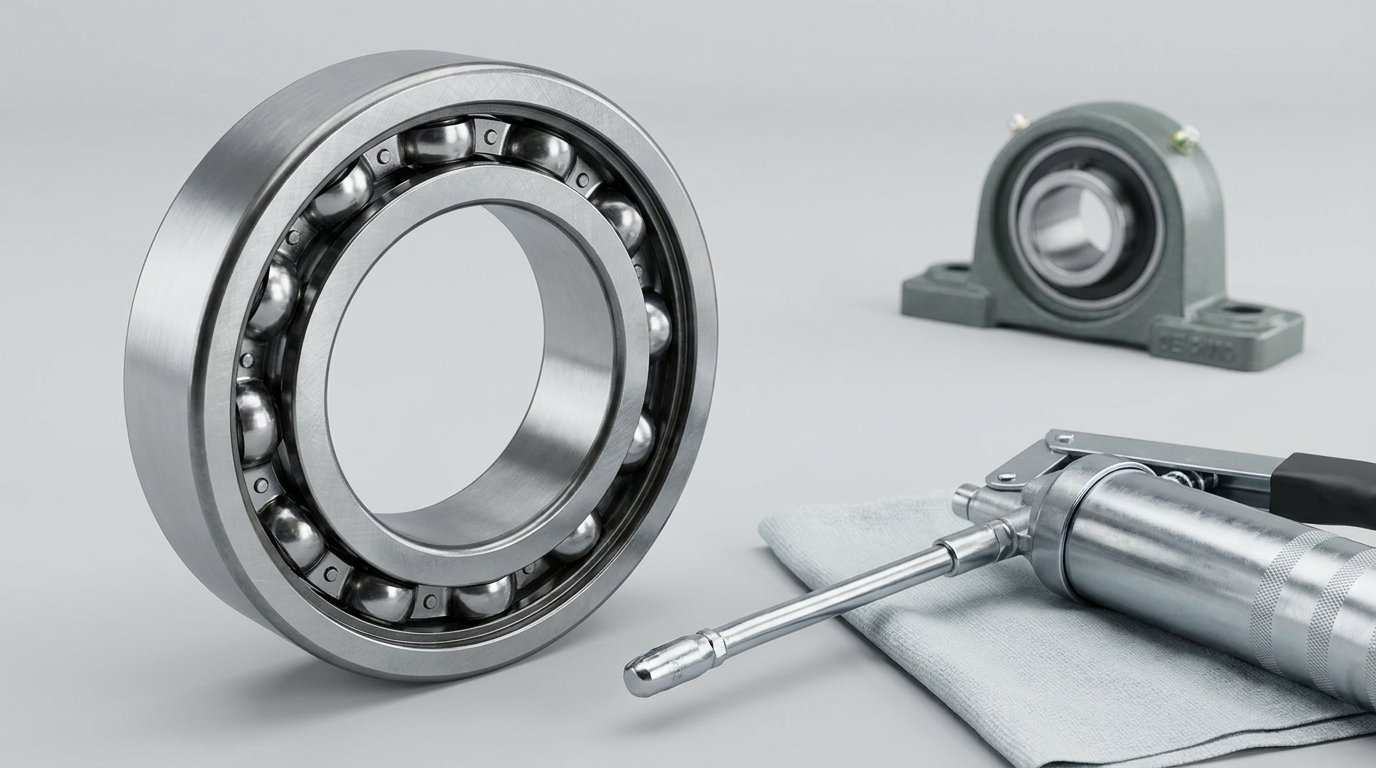
Next steps to implement this week
- Audit the top 20 critical bearings for lubricant type, dose, and interval accuracy.
- Calibrate grease guns and label lube points with grams and frequency.
- Fix the most obvious ingress points (damaged seals, missing breathers, dirty fittings).
- Start trending temperature/vibration (or ultrasound) to adjust relubrication based on real condition.
Haron Bearing Pro Tip: If you want a fast win, pick one problematic asset, implement clean relubrication + labeling + a simple temperature/vibration trend, and use that “before/after” result to scale your bearing care guide across the plant.