
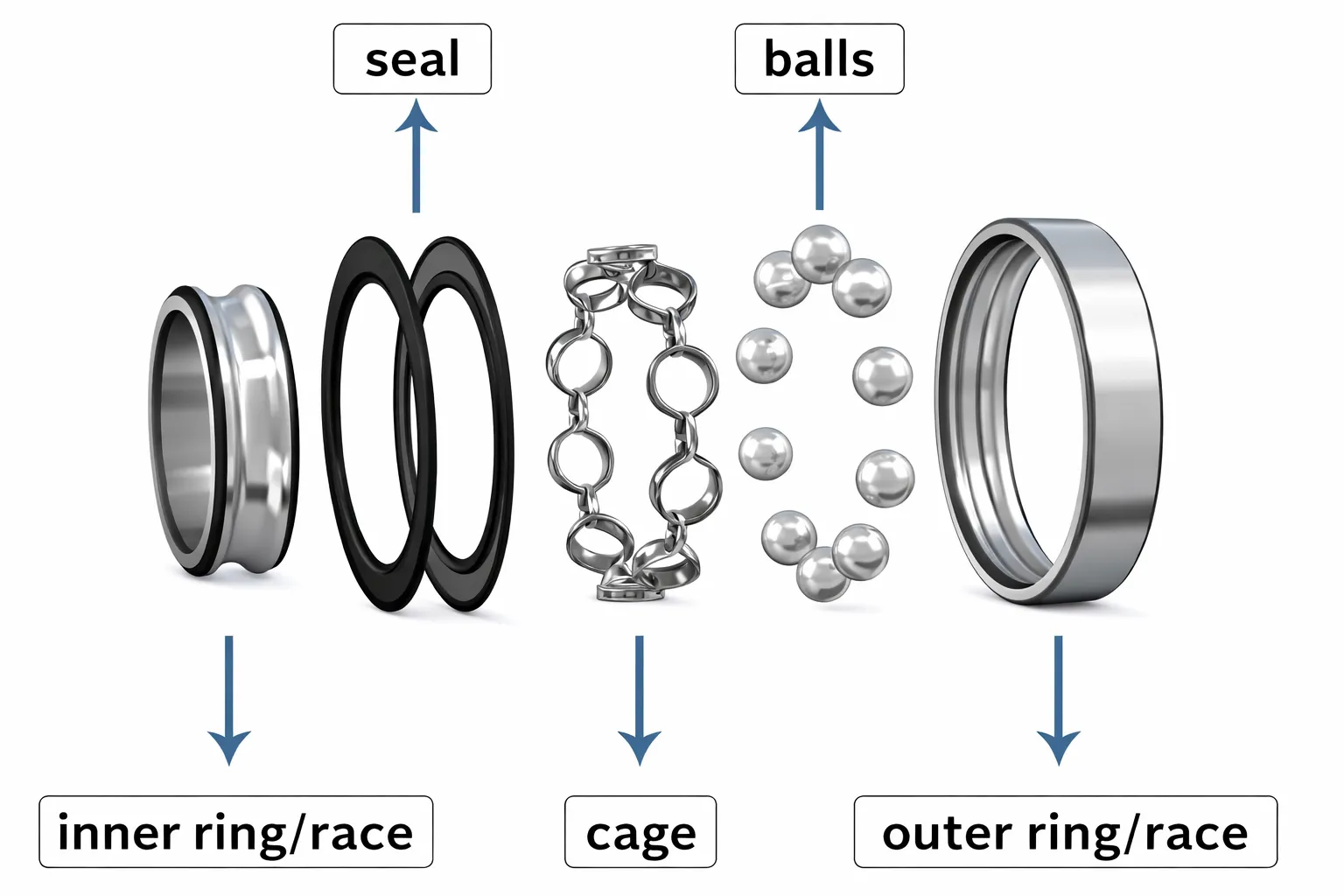
Choosing bearing material means balancing load, corrosion, speed, temperature, and total cost. Steel offers strength and value, stainless steel improves corrosion resistance, and ceramic hybrids support higher speed and chemical resistance at a premium.
What is bearing material selection?
Bearing material selection is the process of matching bearing ring/ball materials to your operating conditions—load, speed, temperature, lubrication, contaminants, and corrosion risk—to minimize friction and failures. The right choice balances performance and lifecycle cost, not just upfront price, and often involves tradeoffs between strength, corrosion resistance, and wear behavior.
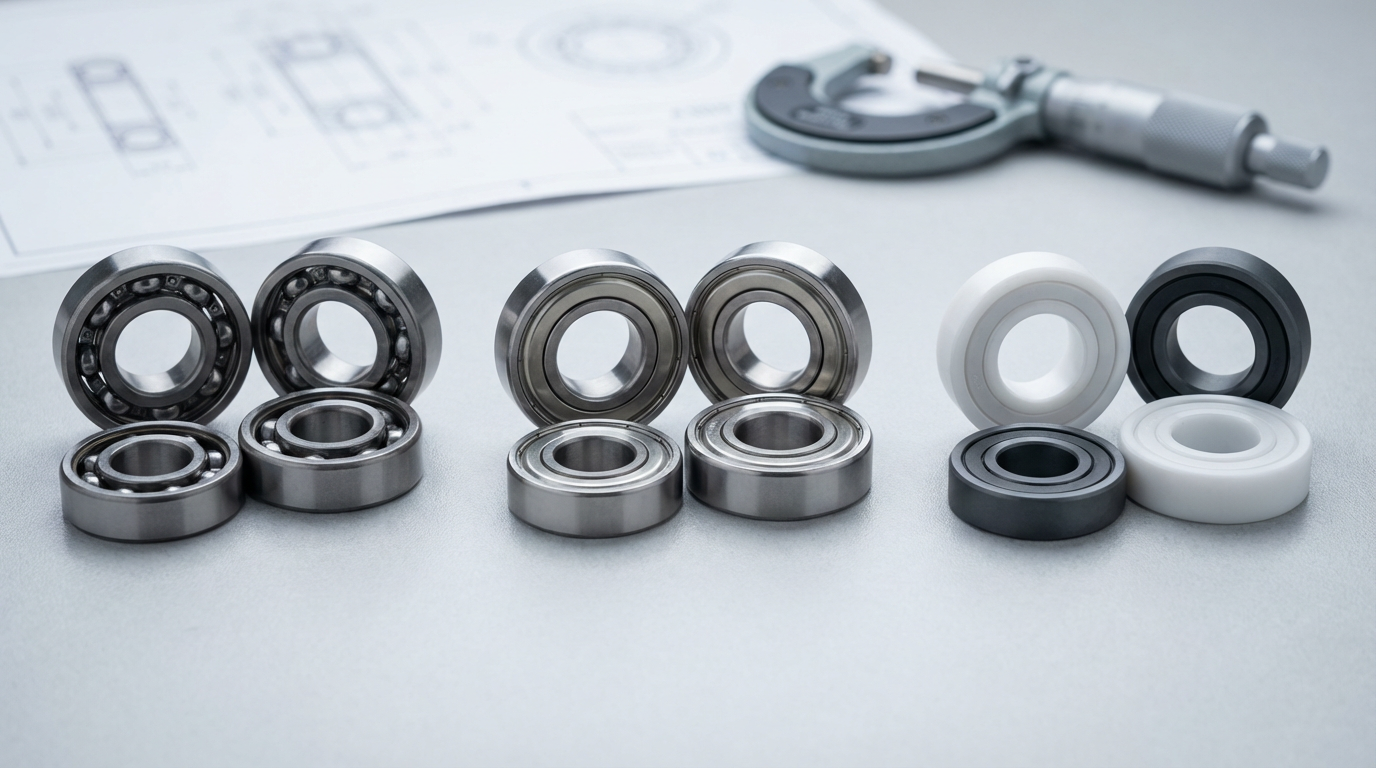
Practical definition and what you’re actually choosing
Bearing material selection usually means deciding among:
- Standard bearing steel (e.g., 52100 / 100Cr6): High hardness and fatigue strength; needs good lubrication and rust protection.
- Stainless steel (e.g., 440C and others): Better corrosion resistance; generally lower fatigue strength than 52100.
- Ceramic (typically Si3N4 balls, “hybrid” bearings): Very hard, low density, electrically insulating, corrosion resistant; usually paired with steel rings for load capacity.
Key decision inputs you should collect before choosing:
- Environment: water/humidity, chemicals, salt spray, washdown, vacuum, cleanroom.
- Duty cycle: continuous vs intermittent, start/stop, shock loads.
- Speed factor: rpm and bearing size (DN value).
- Lubrication reality: grease vs oil, relube intervals, starvation risk.
- Contamination profile: dust, abrasive particles, metallic debris.
- Failure history: corrosion pits, smearing, false brinelling, flaking, overheating.
Haron Bearing Pro Tip: I always start by naming the most likely failure mode (corrosion pitting, lubricant starvation, electrical fluting, abrasive wear). Once that’s clear, the “best” material choice becomes obvious—and you avoid overpaying for ceramic when a sealing/lube upgrade fixes the real issue.
How Does bearing material selection Work?
Bearing material selection means matching load, speed, heat, corrosion, chemicals, electrical current, and maintenance needs to each material’s strengths. Choose the simplest option that meets reliability targets, plus proper sealing, lubrication, or surface treatment.
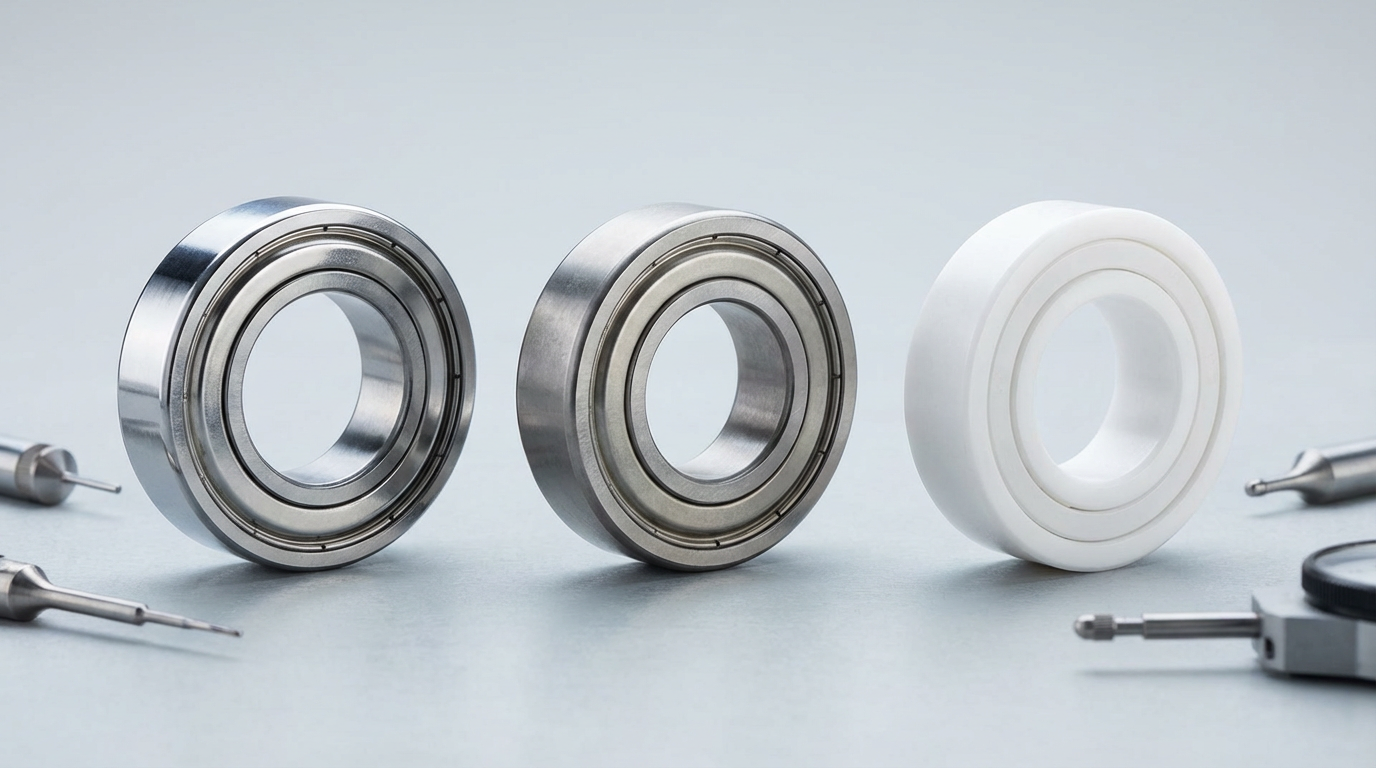
A step-by-step selection workflow used in the field
Use this practical workflow:
- Define loads and misalignment: radial/axial loads, shock, housing/shaft fits.
- Define speed and temperature: peak rpm, sustained rpm, ambient + generated heat.
- Identify corrosion and chemical exposure: water, salt, detergents, coolants, acids/alkalis.
- Assess contamination: particle size, abrasiveness, ingress paths; decide on seals/shields.
- Choose lubrication strategy: grease type, oil viscosity, relube access, expected starvation.
- Map to material choice:
- Steel for high load, controlled environment, best fatigue life per cost.
- Stainless for moisture/washdown with moderate load/speed.
- Ceramic hybrid for high speed, electrical insulation, low lubricant tolerance, or severe corrosion.
- Validate with risk controls: seals, corrosion inhibitors, coatings, preload/clearance.
- Confirm economics: downtime cost vs premium material.
Quick “red flag” triggers that often force material changes:
- Rust staining/pitting: move to stainless or improve sealing + corrosion-inhibiting grease.
- Electrical fluting: consider ceramic hybrid or grounding brushes/insulated housings.
- Overheating at high DN: hybrid ceramic balls can reduce heat generation.
Haron Bearing Pro Tip: When the application is borderline, I prototype two options: stainless with upgraded sealing/grease versus hybrid ceramic. The cheaper option often wins if it survives a contamination-and-washdown test without pitting in the first few weeks.
Are ceramic bearings better than stainless steel?
Ceramic bearings may beat stainless steel for high speed, corrosion resistance, electrical insulation, or low-lubrication use. Stainless steel is better for impact loads, cost control, and robust handling. Hybrid ceramic works best when the application truly needs its advantages.
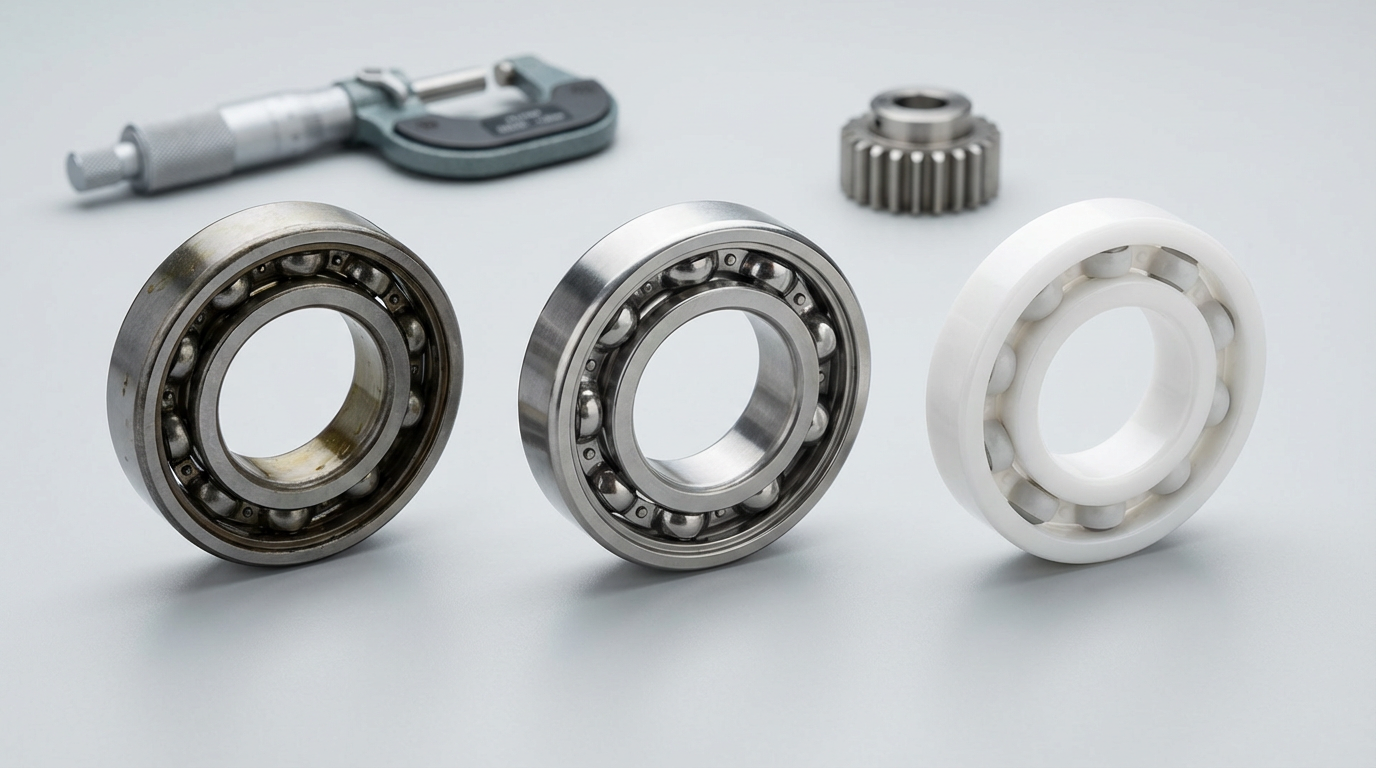
When ceramic wins—and when stainless is the smarter choice
Choose ceramic (usually hybrid) if you need:
- Higher speed capability (lower ball density reduces centrifugal forces).
- Better corrosion resistance (ceramic balls won’t corrode).
- Electrical insulation (reduces fluting in motor applications).
- Lower friction/heat in marginal lubrication conditions.
Choose stainless steel if you need:
- Better toughness under shock (ceramics are hard but less tolerant of impact).
- Lower cost and simpler supply chain.
- Good corrosion resistance without extreme chemical exposure.
A practical comparison checklist:
- High RPM + heat issues? Lean ceramic hybrid.
- Frequent washdown but moderate RPM? Stainless often sufficient.
- Dirty environment? Material alone won’t save you—prioritize sealing and grease.
Haron Bearing Pro Tip: I treat ceramic as a performance tool, not a corrosion “band-aid.” If washdown is the only issue, stainless plus correct seals and a water-resistant grease usually beats ceramic on value.
What is the enemy of stainless steel?
Stainless steel bearings are mainly attacked by chlorides, crevices, harsh cleaning chemicals, and high heat. Stainless resists rust but is not corrosion-proof; pitting and crevice corrosion can quickly become fatigue points and shorten bearing life.
Corrosion mechanisms that matter in real bearing applications
Common stainless bearing “killers”:
- Chloride exposure: saltwater, coastal air, road salt, bleach-based cleaners.
- Crevice conditions: trapped moisture under seals, in housings, or under debris films.
- Galvanic effects: contact with dissimilar metals in wet environments.
- Chemical washdown: strong alkalis/acids, oxidizers, detergents at temperature.
- Heat + poor lubrication: breaks down films and accelerates surface damage.
Practical mitigation actions (often cheaper than changing material):
- Use non-chloride cleaners where possible.
- Upgrade to contact seals for washdown.
- Select corrosion-inhibiting grease and define relube intervals.
- Prevent standing water (drain paths, shield orientation).
- If chlorides are unavoidable, consider hybrid ceramic or application redesign.
Haron Bearing Pro Tip: If you see tiny “pepper-like” pits on stainless races, assume chlorides and crevices. I fix it by changing the cleaner, improving seal compression, and switching grease before I jump to an expensive bearing upgrade.
Do pro cyclists use ceramic bearings?
Yes, some pro cyclists use ceramic, usually hybrid ceramic bearings, for small efficiency gains at high speed. But real performance depends on sealing, lubrication, and contamination. In wet or gritty conditions, well-sealed steel or stainless bearings may perform better.
Why they use them and why it’s not universal
Reasons ceramic appears in pro cycling:
- Low friction focus in controlled, well-maintained race setups.
- High-speed efficiency benefits are attractive when every watt matters.
- Marketing and sponsorship can influence component choices.
Why many teams/mechanics still prioritize conventional bearings:
- Rain, grit, pressure washing can negate gains fast.
- Seal drag vs contamination protection is a constant tradeoff.
- Maintenance frequency is high; frequent servicing matters more than material.
Decision cues for cycling-like applications:
- Dry, clean, serviced often: ceramic hybrid can make sense.
- All-weather training, poor maintenance: stainless with robust seals typically wins.
Haron Bearing Pro Tip: In bikes (and similar light-duty, high-contamination machines), sealing strategy beats material choice. I’d rather run a slightly higher-friction seal with stable grease than chase “ceramic speed” while letting grit in.
Key Features & Comparison
Bearing material selection compares fatigue strength, corrosion, speed, temperature, lubrication needs, and electrical insulation. Steel offers strong value, stainless balances corrosion resistance, and ceramic hybrid supports higher speed, corrosion, and electrical demands at higher cost.
Side-by-side comparison for fast decisions
Based on our internal data and market analysis, here is the breakdown:
| Feature | Steel (52100/100Cr6) | Stainless Steel (e.g., 440C) | Ceramic Hybrid (Si3N4 balls + steel rings) |
|---|---|---|---|
| Fatigue strength under high load | Excellent | Good to moderate | Good (depends on ring steel and design) |
| Corrosion resistance | Low (needs protection) | Good | Very high (balls), rings depend on steel choice |
| Speed capability / heat generation | Good | Good | Excellent |
| Lubrication tolerance | Moderate | Moderate | Better under marginal lubrication |
| Contamination tolerance | Depends mostly on sealing | Depends mostly on sealing | Depends mostly on sealing (hard balls can still be damaged by debris) |
| Electrical insulation | No | No | Yes (strong advantage in motors) |
| Shock/impact robustness | High | High | Moderate (ceramic is hard but less impact-tolerant) |
| Typical best-fit applications | General industrial, gearboxes, conveyors | Washdown, food-adjacent, marine/湿 environments | High-speed spindles, EV motors, electrically noisy systems, corrosive/high-speed niches |
| Relative cost (bearing-only) | $ | $$ | $$$–$$$$ |
Haron Bearing Pro Tip: I decide material last: first I lock in sealing, lubrication, and fits. When those are correct, steel often meets targets; when corrosion or electrical issues remain, that’s when stainless or ceramic hybrid earns its premium.
Cost & Buying Factors
Cost-effective bearing material selection focuses on downtime and maintenance, not just price. Steel has the lowest upfront cost, stainless adds corrosion resistance, and ceramic hybrid costs more for speed, insulation, and corrosion performance.
A practical pricing-and-risk checklist
Use this buying checklist to avoid over- or under-specifying:
- Total cost of ownership: downtime, labor, lost production, warranty exposure.
- Environment severity: washdown, chlorides, chemicals, condensation cycles.
- Speed/load envelope: high DN and high heat tilt toward hybrid ceramic.
- Electrical risk: VFD motors/EV drivetrains often justify ceramic hybrids.
- Sealing and lubrication budget: sometimes a better seal + correct grease is cheaper and more effective than upgrading material.
- Supply and interchangeability: lead times, standard sizes, brand equivalency, QA documentation.
- Quality assurance: material certs, hardness, precision grade, noise/vibration requirements.
A simple buying heuristic:
- If failure is rare and maintenance is easy, start with steel.
- If corrosion is the primary driver, move to stainless (and still improve sealing/grease).
- If you have high speed, electrical fluting, or extreme corrosion, evaluate hybrid ceramic.
Haron Bearing Pro Tip: When customers ask me “Which is best?”, I ask “What does one hour of downtime cost you?” If downtime is expensive, paying more for the right material (plus sealing and grease) is usually the cheapest decision you’ll make.
Conclusion
Bearing material selection matches risks to materials: steel for load capacity and value, stainless for wet or washdown corrosion resistance, and ceramic hybrid for high speed, insulation, or harsh environments. Share load, speed, temperature, and exposure details for a reliable choice.