
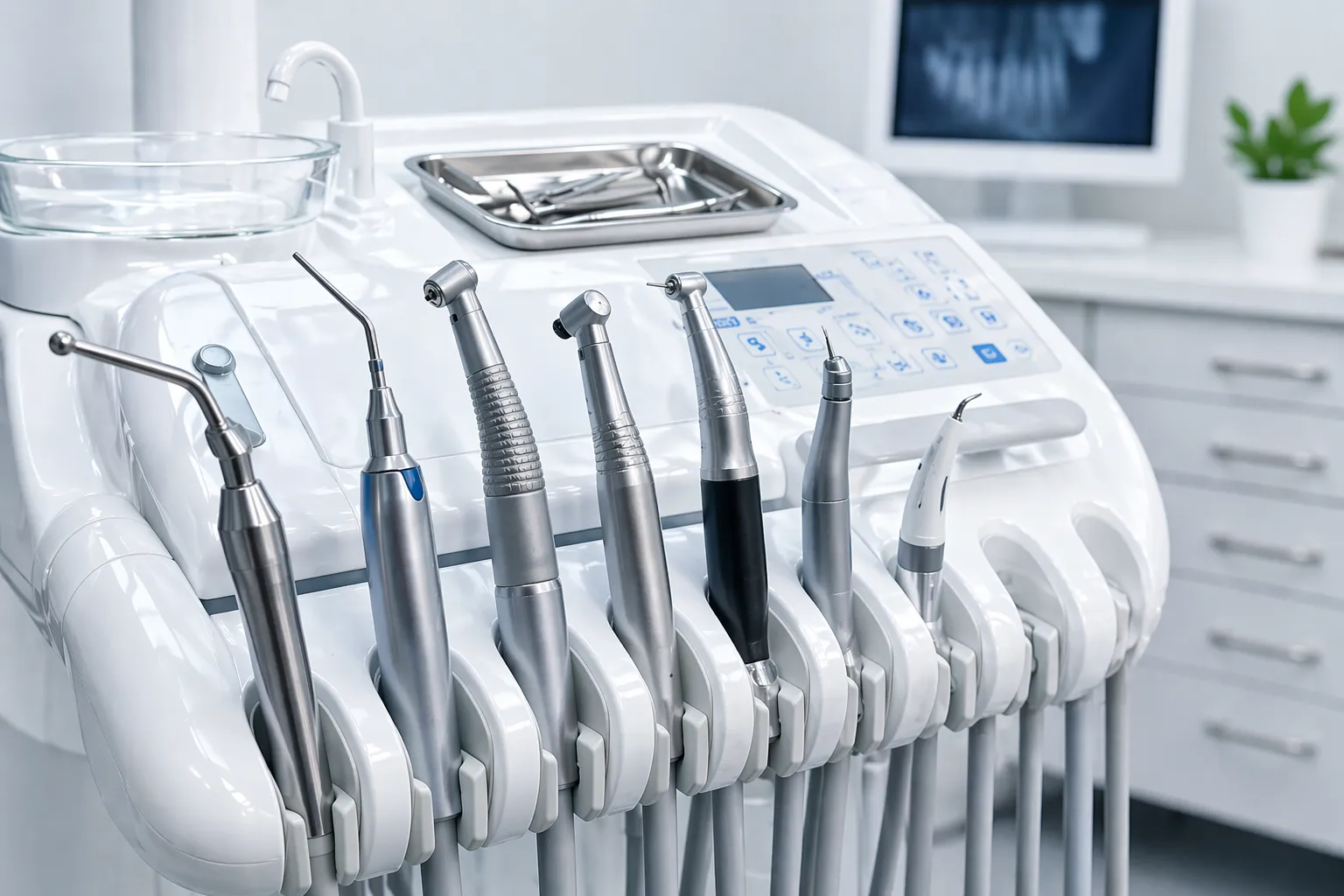
Selecting bearings for medical and dental equipment is a risk-managed engineering decision: you’re balancing speed, noise, sterilization, corrosion resistance, and repeatable precision under strict regulatory expectations. The right choice starts with the application profile (loads, RPM, duty cycle), then narrows by material, sealing, lubrication, and tolerances. This guide outlines a practical selection workflow used for surgical devices, dental handpieces, and compact medical instruments.
Video Guide: Use this general 8-step bearing selection method as the baseline, then apply the medical/dental constraints covered below (noise, sterilization, corrosion, miniature precision).
What are medical and dental bearings used for?
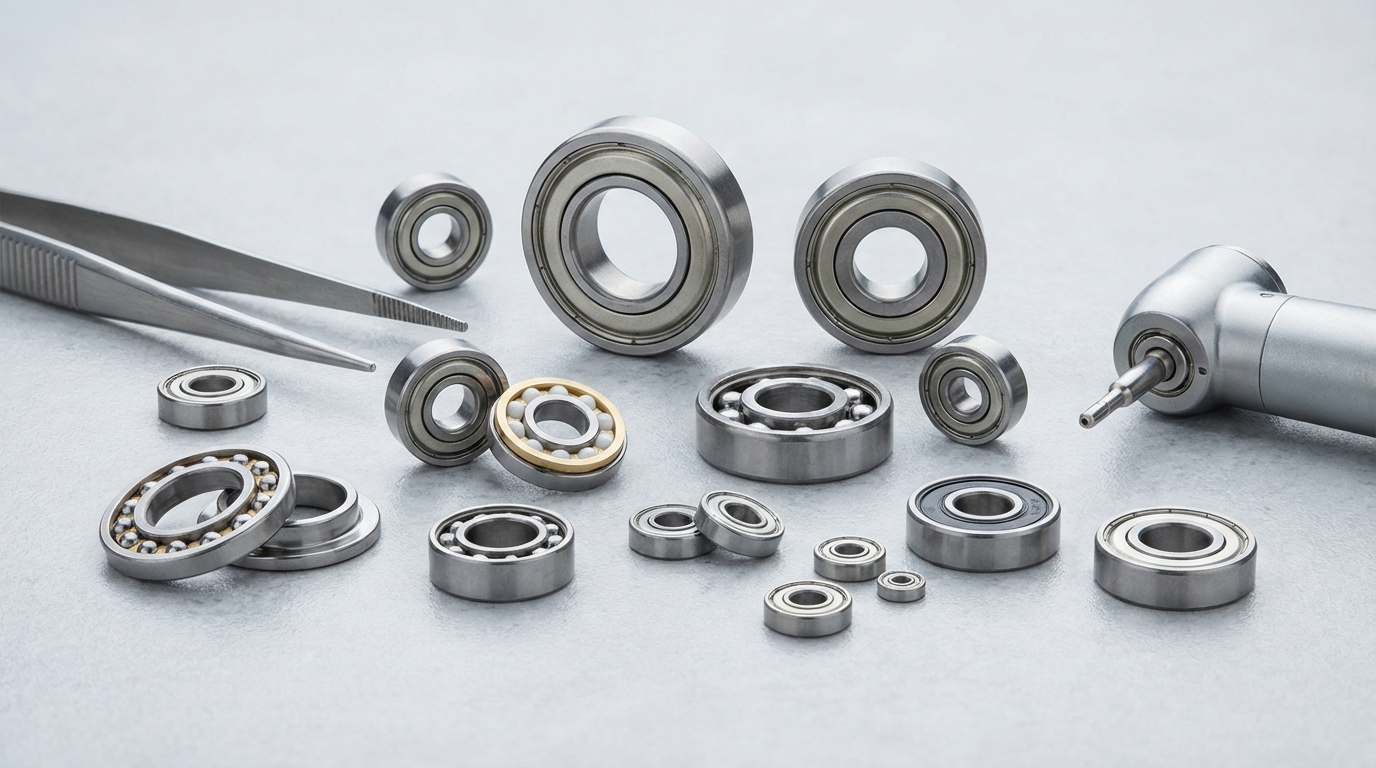
Medical and dental bearings are precision rolling bearings—often miniature, stainless, and low-noise—designed for compact medical devices, surgical tools, and high-speed dental handpieces. They prioritize smooth running, cleanliness, corrosion resistance, and controlled lubrication, while meeting tight tolerances and consistent performance across repeated cleaning or sterilization cycles.
Practical definition by application class
In medical equipment bearing selection, the “type” is less about a single bearing family and more about a performance envelope suited to the device environment. Typical groupings include:
- Dental handpiece bearings: Ultra-high speed, very low vibration/noise, optimized cages and grease, high concentricity.
- Bearing for surgical devices: High reliability, intermittent loads, exposure to cleaning agents, emphasis on corrosion resistance and contamination control.
- Compact bearings for medical equipment: Miniature bearings that fit tight packaging constraints while holding preload and runout requirements.
- Stainless bearings for medical equipment: Material-focused category emphasizing corrosion resistance (often 440C stainless steel or equivalent) and stability in humid/chemical environments.
- Low noise medical bearings: Manufacturing and internal geometry tuned for low vibration (critical for patient comfort and sensor accuracy).
Haron Bearing Pro Tip: I treat “medical bearing” as a requirements package, not a catalog label—start by listing sterilization method, allowable acoustic level, and runout limit, then we can choose the bearing architecture that realistically survives the environment.
How do medical and dental bearings work in precision equipment?
These bearings reduce friction by rolling elements (balls/rollers) moving between inner and outer raceways, supporting radial and/or axial loads while maintaining precise shaft guidance. In medical and dental tools, controlled preload, tight runout, optimized lubrication, and sealing/shielding are used to keep noise low, speed stable, and contamination risk minimized.
Video Guide: Review bearing types and typical use-cases, then map each type to medical constraints like miniature size, high RPM, and low noise.
Key operating mechanisms in medical/dental devices
Performance is driven by geometry, internal clearance/preload, lubrication regime, and contamination control. A practical workflow:
- Define loads and moments: Radial load from cutting forces, axial load from thrust, and any bending moment from cantilevered tools.
- Set the speed and duty cycle: Dental turbines and electric handpieces can run at very high RPM; continuous vs intermittent duty changes lubrication and heat decisions.
- Select internal clearance/preload: Preload reduces runout and improves stiffness but increases heat and can shorten grease life if excessive.
- Choose material system: Stainless for corrosion resistance; hybrid ceramic options when very high speed/low heat is required (application-dependent).
- Select sealing/shielding: Shields for low friction; seals for contamination control (but higher drag/heat).
- Finalize lubrication: Medical-grade greases/oils, compatibility with chemicals, and re-lubrication feasibility (often “lubed-for-life” in compact devices).
Haron Bearing Pro Tip: If you’re chasing “low noise” in a dental handpiece, don’t only specify a low-noise grade—control preload, shaft/seat geometry, and lubricant fill percentage, or the bearing will sound rough even if it’s perfectly made.
What is the 2 1 bearing rule?
The “2:1 bearing rule” is a layout guideline: space two bearings as far apart as practical relative to the overhung load distance (or keep overhang small compared with bearing span) to reduce shaft deflection and improve stiffness. In compact medical tools, it helps control runout, vibration, and bearing load share.
How to apply the 2:1 concept in compact devices
Because medical devices are space-constrained, you often can’t “just increase span,” so you balance packaging with stiffness. Use these checks:
- Bearing span vs. overhang: Aim for a larger span between bearings and a shorter tool overhang to reduce bending.
- Load path clarity: Ensure the primary radial/axial loads have a clear path into the bearing designed to carry them (fixed vs floating concept where appropriate).
- Preload strategy: With small precision bearings, modest preload improves runout—but excessive preload acts like added load and accelerates grease breakdown.
- Housing stiffness: A stiff bearing arrangement on a flexible plastic housing won’t deliver expected runout improvements.
Haron Bearing Pro Tip: When the “2:1” layout is impossible due to packaging, I compensate with (1) higher housing stiffness, (2) tighter fits to prevent creep, and (3) a preload that’s validated by temperature rise testing—not guesswork.
What is the difference between 6203 and 6204 bearings?
6203 and 6204 are deep-groove ball bearings of the same series but different sizes. 6204 has a larger bore/OD/width, typically offering higher load capacity and stiffness at the cost of more space, mass, and frictional torque. In medical equipment, the choice is usually packaging vs. capacity and thermal margin.
Video Guide: Learn how bearing numbering works so you can quickly decode what “6203” vs “6204” implies before checking precision, seals, and material.
Dimensional and selection implications
Common catalog dimensions (verify with your supplier’s standard):
- 6203: 17 mm bore × 40 mm OD × 12 mm width
- 6204: 20 mm bore × 47 mm OD × 14 mm width
Selection checklist for medical/dental use:
- Space constraint: If the housing is fixed, size often dictates the answer.
- Required stiffness/runout: Larger bearings can reduce deflection but may increase torque/noise if not optimized.
- Speed factor: Larger size can reduce max RPM depending on lubrication/sealing choice.
- Material/sealing options: Stainless, low-noise, shields vs seals, and grease type matter more than size alone in clinical environments.
Haron Bearing Pro Tip: I don’t upsize from 6203 to 6204 “for safety” unless we’ve validated heat rise at operating RPM—extra torque from seals/grease in a larger bearing can quietly become your real failure mode.
What are the three rules for bearings?
Three practical bearing rules are: (1) match the bearing type and internal clearance/preload to the actual loads and speed, (2) control fits, alignment, and cleanliness to protect precision and noise performance, and (3) ensure lubrication and sealing are compatible with the environment (chemicals, humidity, sterilization) and the intended service life.
A field-ready “three-rule” checklist
- Design rule (load/speed): Confirm equivalent load, axial components, and RPM against catalog limits; avoid using “similar device” assumptions.
- Installation rule (fits/cleanliness): Select proper shaft/housing tolerances, maintain coaxiality, and keep assembly debris-free—miniature precision bearings are extremely contamination-sensitive.
- Environment rule (lubrication/corrosion): Choose stainless bearings for medical equipment when corrosion is credible; select shields/seals and medical-grade lubricants compatible with cleaning agents and temperature.
Haron Bearing Pro Tip: If you only enforce one rule, make it cleanliness—most “mystery noise” and early failures in miniature precision bearings trace back to microscopic debris or damaged seats during assembly.
Key Features & Comparison
Key differentiators are speed capability, noise/vibration, corrosion resistance, sterilization/chemical compatibility, and precision (runout, preload consistency). Comparing these features across bearing constructions—stainless vs hybrid, shielded vs sealed, standard vs low-noise grades—helps you select a bearing that meets clinical performance without overheating or losing lubricant life.
Video Guide: Use this bearing sizing-for-life approach to compare options objectively when load, speed, and required service life are known.
Feature comparison for common medical and dental use-cases
Based on our internal data and market analysis, here is the breakdown:
| Bearing option (typical) | Best for | Strengths | Trade-offs | Notes for Haron Bearing selection |
|---|---|---|---|---|
| Miniature precision bearings (steel) | Compact instruments, light loads | Small envelope, high precision potential | Corrosion risk if environment is aggressive | Pair with controlled lubrication and clean assembly processes |
| Stainless bearings for medical equipment (440C-class) | Humid/chemical exposure, general medical | Corrosion resistance, good availability | Can be noisier than best-in-class steel/hybrid at extreme RPM | Validate noise and torque with the actual seal/grease combination |
| High speed dental bearings (optimized geometry) | Dental handpieces/turbines | High RPM capability, low vibration | More sensitive to preload and contamination | Specify runout, preload, grease fill, and cage type explicitly |
| Low noise medical bearings (screened/optimized) | Diagnostic devices, patient-facing tools | Reduced vibration/acoustic signature | May cost more; requires matching fits | Noise depends heavily on seats, alignment, and lubricant |
| Shielded (ZZ) configuration | High speed, lower torque | Lower drag than sealed | Less contamination protection | Better where environment is clean and ingress risk is low |
| Sealed (2RS/medical seals) | Fluid/particle exposure | Better contamination control | Higher torque/heat; RPM limit may drop | Confirm temperature rise at duty cycle; avoid over-greasing |
Haron Bearing Pro Tip: For dental handpiece bearings, I prefer to lock down measurable specs (runout, vibration/noise grade, preload window, grease type) instead of relying on a generic “high-speed” label—those details decide whether the handpiece stays quiet after real clinical cycles.
Cost & Buying Factors
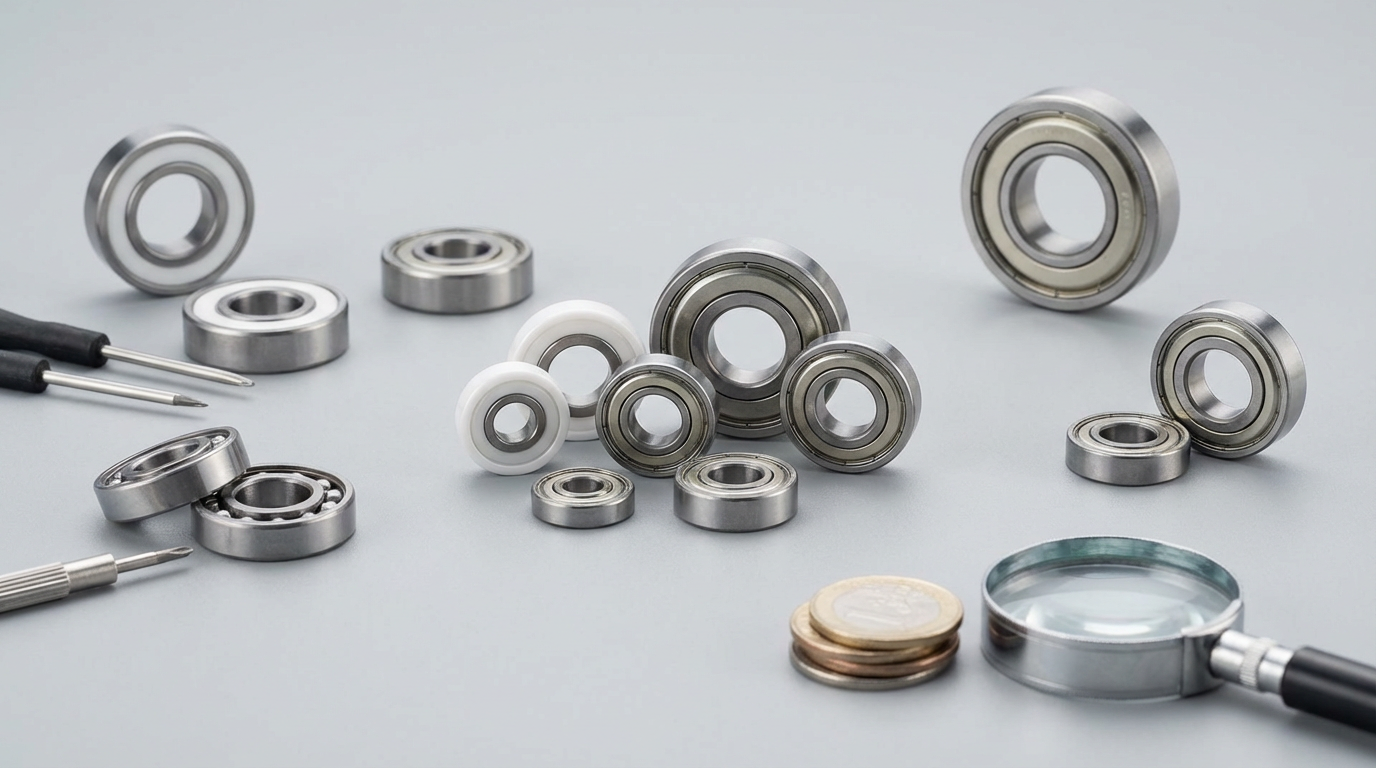
Bearing cost for medical and dental equipment is driven less by size and more by precision grade, noise screening, material (stainless/hybrid), sealing, lubrication, and traceability. The lowest total cost comes from matching performance to the real duty cycle and environment, then specifying only the tolerances and certifications you actually need.
What to evaluate before requesting a quote
- Application profile: RPM range, continuous vs intermittent duty, load directions, and expected service interval.
- Precision requirements: Runout, preload/clearance, vibration/noise grade (especially for low noise medical bearings and dental handpiece bearings).
- Material and corrosion risk: Stainless bearings for medical equipment when exposure to moisture/chemicals is credible.
- Sealing and lubrication: Shield vs seal, grease type, fill amount, and compatibility with cleaners.
- Quality and documentation: Lot traceability, inspection reports, and consistency controls for miniature precision bearings.
- Validation plan: Temperature rise, noise, and endurance tests under realistic assembly fits and operating conditions.
Haron Bearing Pro Tip: When buyers ask me for “the cheapest medical bearing,” I answer with two prices: unit price and validation price—if the bearing isn’t specified with noise, preload, seals, and lubricant, you’ll pay later in testing loops and field returns.
Conclusion
Choosing medical bearings and dental bearings is about engineering certainty: define loads, RPM, noise limits, environment, and space, then select the bearing type, material, seals, lubrication, and fits to match. For miniature bearings in medical devices and high speed dental bearings, preload control, cleanliness, and validated heat/noise performance matter as much as catalog ratings.
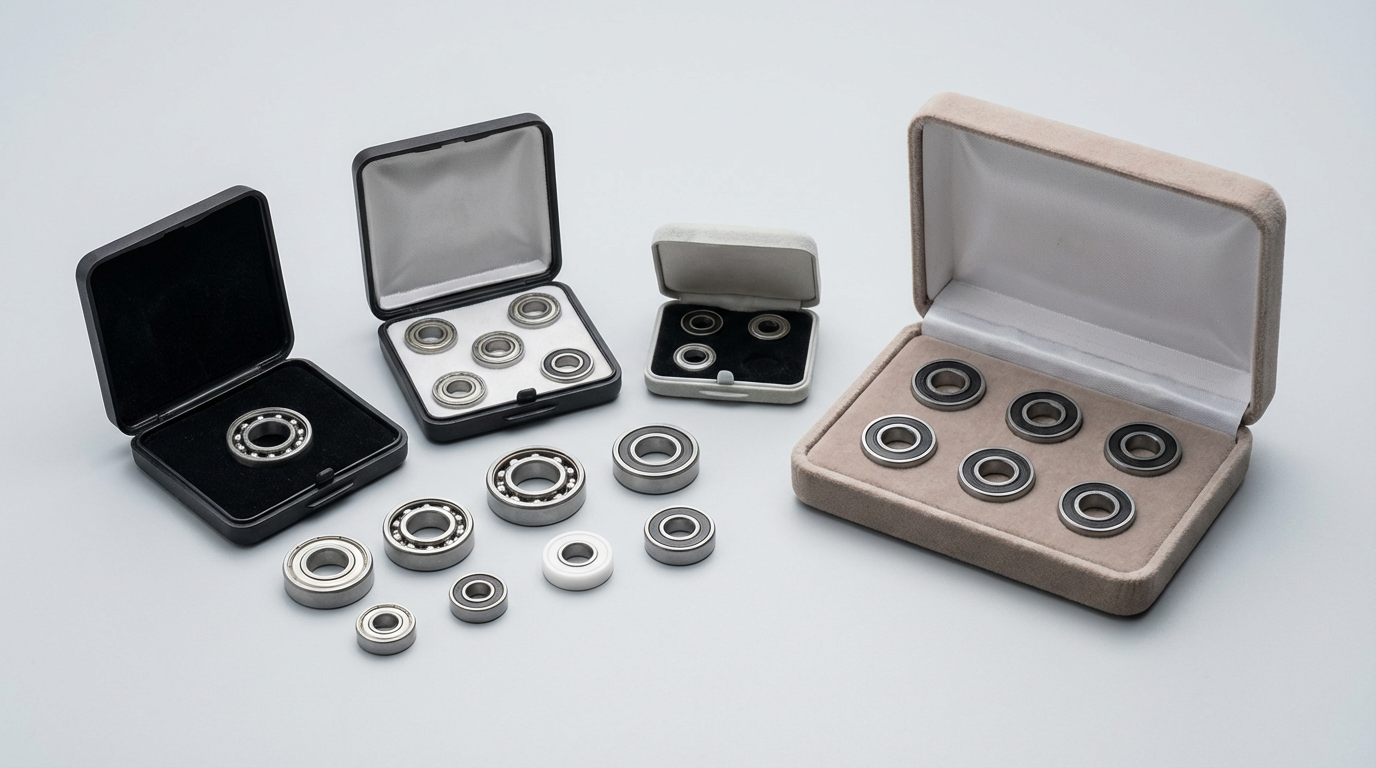
Haron Bearing Pro Tip: If you send us your shaft/housing drawings, target RPM, sterilization/cleaning method, and runout/noise requirements, I can help you narrow to a short list of Haron Bearing options that are realistic to manufacture and stable in production.