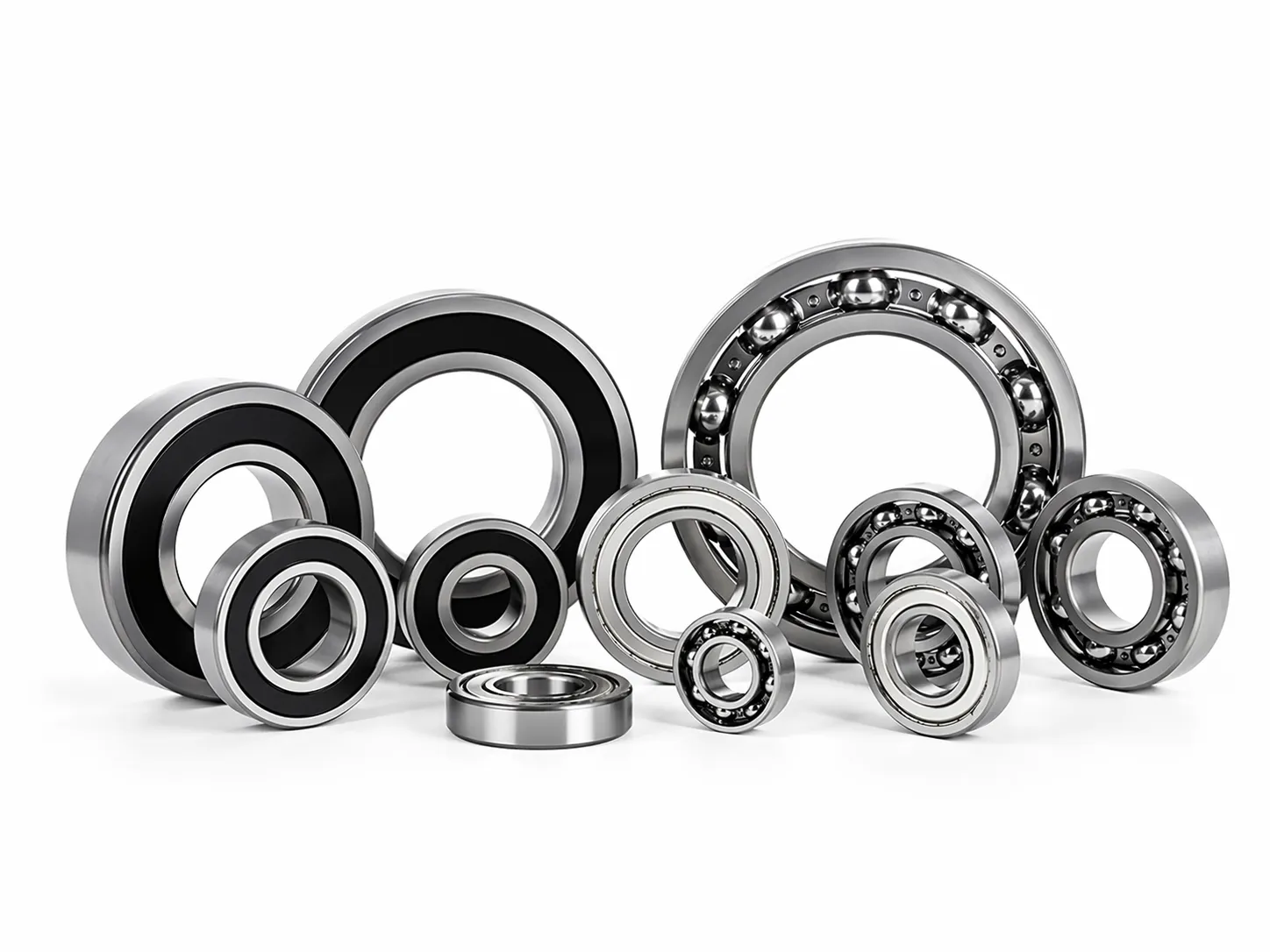
Choosing a reliable bearing manufacturer for OEM and industrial programs means managing risk, not just buying parts. The right supplier offers traceable quality, engineering support, stable capacity, validation, and clear terms across global and China bearing factory options.
Video Guide: This 8-step selection framework helps you translate application requirements into bearing type, load, life, and reliability decisions you can use to evaluate suppliers.
What Is a Bearing Manufacturer and How Do You Choose One?
A bearing manufacturer produces bearings (e.g., ball, roller, needle) to defined standards and tolerances, while a reliable bearing supplier consistently delivers verified quality, documentation, and support. For OEM and industrial bearing sourcing, “reliable” means repeatable processes, traceability, stable capacity, and engineering responsiveness—whether the source is global bearing suppliers or a bearing factory in China.
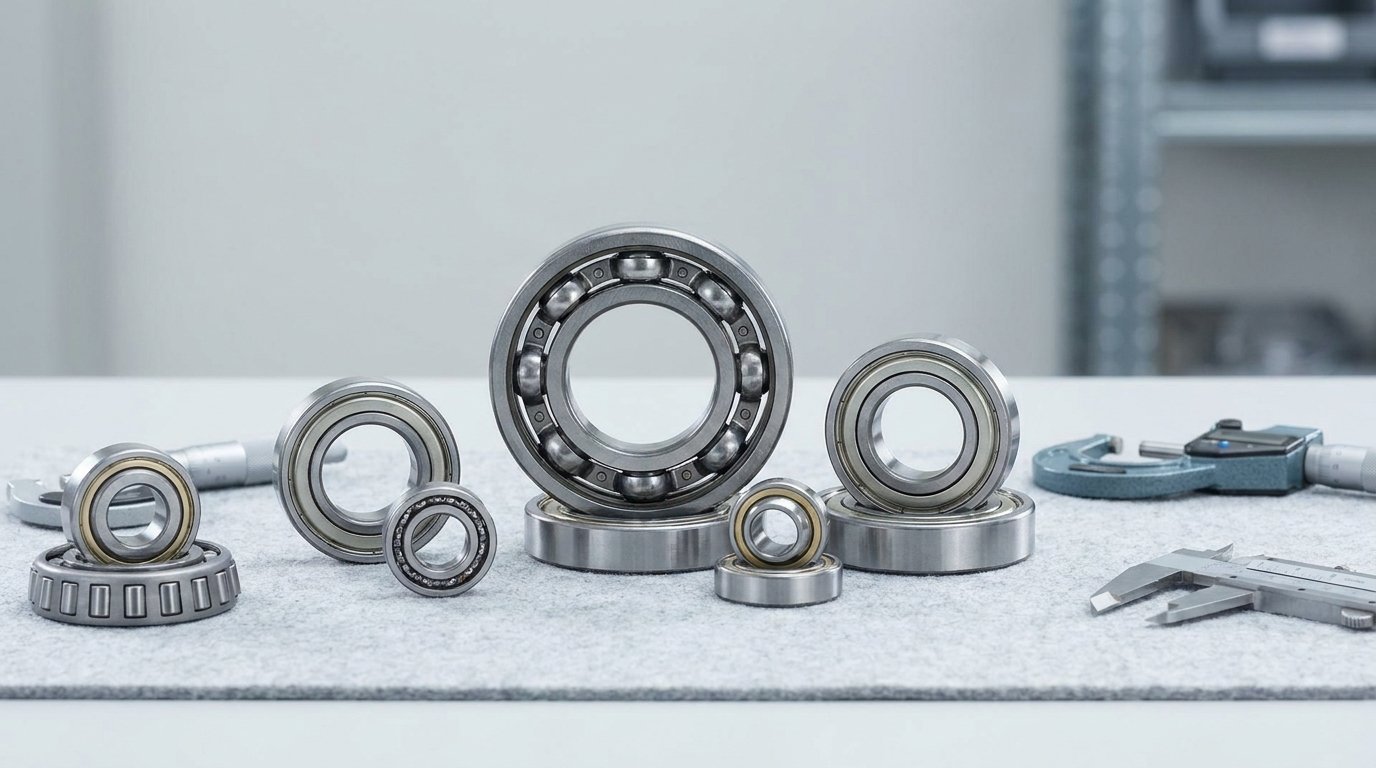
Definition and scope in OEM and industrial programs
A bearing manufacturer typically controls core processes (heat treatment, grinding/superfinishing, inspection) and can certify product conformance; a bearing supplier may be a manufacturer, an authorized distributor, or a trading partner managing multiple bearing factories.
For OEM bearing manufacturer selection, the scope is broader than product: it includes change control, PPAP/FAI, process capability, packaging validation, and long-term supply stability. For industrial bearing manufacturer sourcing, priorities often include availability, interchangeability, and service life under real operating conditions.
Key terms you should align internally before RFQ:
- Precision bearing manufacturer: can meet tight runout, noise/vibration, and geometry targets (often tied to ISO tolerance classes and application-specific specs).
- Custom bearing manufacturer: can modify internal geometry, cages, seals, lubrication, materials, coatings, or packaging to meet your application and assembly process.
- Reliable bearing supplier: proves consistency with documentation, audits, warranty handling, and corrective action discipline.
A practical qualification checklist:
- Confirm the supplier’s role (actual manufacturer vs. integrator/trader).
- Verify quality system scope (sites, processes, outsourced steps).
- Define acceptance criteria (tolerance, noise, torque, cleanliness, life).
- Require traceability (heat/lot/date code and retained samples).
- Require change-control notification and approval rules.
Haron Bearing Pro Tip: I always ask one “identity” question early: Which processes are done in-house, and which are outsourced? If the answer is vague, you’re not dealing with a controlled bearing manufacturer relationship yet—only a purchasing channel.
How do you choose a reliable bearing manufacturer for OEM and industrial sourcing?
Reliable industrial bearing sourcing works by converting application demands (loads, speed, environment, life, noise) into a controlled specification, then validating a bearing manufacturer’s process capability and quality system to repeatedly meet it. The best OEM bearing manufacturer partners back claims with test data, traceability, audits, and disciplined change control across materials, heat treat, grinding, assembly, and inspection.
Video Guide: Use these bearing selection factors (load, speed, lubrication, materials) as the technical input to your supplier qualification and RFQ requirements.
From requirement → specification → validation → stable production
A bearing program fails most often when the technical spec is incomplete or when the supplier’s process variation is not quantified. A robust workflow links engineering and procurement so your “how to choose a bearing manufacturer” decision is evidence-based.
Recommended sourcing workflow:
- Define duty cycle and failure modes: radial/axial loads, shock, misalignment, contamination, corrosion, temperature, expected life (L10/Lnm), and downtime cost.
- Translate into a supplier-ready spec: tolerance class, internal clearance/preload, cage type, lubrication, sealing, noise/vibration, cleanliness, and corrosion protection.
- Shortlist bearing manufacturers: focus on proven application history, certifications, and similar-volume programs.
- Audit capability: incoming steel control, heat treat (carburizing/through-hardening), grinding, superfinishing, metrology, cleanliness control, and packaging.
- Prototype + validation: dimensional/geometry data, endurance testing, NVH/torque tests (if applicable), grease life, salt spray (if needed).
- Approve production: FAI/PPAP (as required), control plan, sampling plan, gauge R&R, and traceability rules.
- Monitor performance: PPM, field returns, SPC trends, and formal change control.
Signals of a mature precision bearing manufacturer:
- Clear control plan for critical characteristics (raceway geometry, waviness, hardness depth, noise).
- Lot traceability tied to raw material heats and process batches.
- Defined nonconformance handling and 8D corrective actions with containment.
Haron Bearing Pro Tip: I recommend writing one page called “What cannot change without approval” (steel grade, heat treatment recipe, cage material, grease, seal design, key dimensions). It prevents silent substitutions that create field failures months later.
Who makes the highest quality bearings?
“Highest quality” depends on the application, but top-tier bearing manufacturers consistently demonstrate superior metallurgy control, precision grinding/superfinishing, low variation, and strong validation data. Global leaders often excel in high-speed, high-load, and safety-critical uses, while specialized precision bearing manufacturers may outperform in niche segments. The best choice is the one that proves capability for your duty cycle and acceptance criteria.
Video Guide: This reliability-focused comparison helps you connect load capacity and operating limits to real-world bearing performance when evaluating brands and suppliers.
How to evaluate “quality” without relying on brand reputation alone
Instead of asking who is best in general, evaluate who is best for your failure risks (fatigue spalling, cage wear, lubricant breakdown, contamination damage, false brinelling, corrosion).
Use measurable quality indicators:
- Dimensional & geometric capability: Cp/Cpk on bore/OD, roundness, runout, raceway form.
- Surface integrity: roughness, waviness, burn checks, microstructure inspection.
- Heat treatment consistency: hardness profile, case depth (if carburized), retained austenite control.
- Cleanliness: particle counts in assembly area, washed component verification (if required).
- NVH/torque (when relevant): noise grade, vibration velocity, starting/running torque distributions.
Procurement-ready comparison points:
- Request test reports (not just certificates): life testing, grease life, noise curves.
- Ask for process capability evidence: SPC snapshots for key characteristics.
- Review field performance: warranty rate, MTBF, use-case references.
Haron Bearing Pro Tip: If a supplier claims “premium quality,” I ask for three datasets: (1) capability on raceway geometry, (2) hardness profile by lot, and (3) noise/vibration distribution. Real bearing manufacturers can share controlled data (with redactions) quickly.
Is Timken or SKF better?
Neither is universally “better.” SKF is broadly recognized for extensive product breadth and engineering tools across many bearing types, while Timken is especially strong in tapered roller bearings and heavy-duty industrial power transmission ecosystems. For OEM bearing manufacturer selection, compare the exact series, country of manufacture, validation data, availability, total cost, and support—then qualify the supplier against your spec and risks.
Video Guide: This overview of bearing types and use-cases helps you map your application to the bearing family where each major brand tends to be strongest.
Practical decision criteria for OEM and industrial buyers
Make it a structured evaluation rather than a brand debate.
Decision checklist:
- Application fit: tapered roller vs spherical vs cylindrical vs deep groove ball; misalignment tolerance; stiffness requirements.
- Performance proof: published ratings plus your validation tests (life, temperature, torque, contamination).
- Supply chain: lead times, dual-sourcing options, regional stocking, interchangeability.
- Support: failure analysis capability, root-cause turnaround time, on-site engineering.
- Commercials: total cost (unit price + logistics + downtime risk), warranty terms, tooling/NRE (for custom bearing manufacturer work).
If you are considering alternatives (including bearing factory China or other global bearing suppliers), apply the same rubric and demand the same evidence.
Haron Bearing Pro Tip: When comparing major brands (or a custom option), I normalize everything to “cost per operating hour at target reliability,” not piece price. It prevents choosing a cheaper bearing that drives higher downtime and returns.
Is SKF a Chinese company?
No. SKF (AB SKF) is a Swedish company founded in Gothenburg, Sweden. Like many global bearing suppliers, SKF operates manufacturing and distribution in multiple countries, including China, but ownership and headquarters are Swedish. For sourcing decisions, focus less on the brand’s origin and more on the specific plant, process controls, documentation, and traceability tied to the bearing you will actually receive.
Video Guide: This materials-focused explainer supports supplier discussions about steel choice, heat treatment, and operating environment—often more important than country-of-origin assumptions.
Why “country of origin” is not the same as “manufacturing control”
In industrial bearing sourcing, confusion often comes from mixing up:
- Company HQ (ownership, R&D leadership)
- Manufacturing site (where the bearing is made)
- Supply chain steps (steel source, heat treat outsourcing, grinding/assembly location)
What to request on documentation:
- Country of origin statement (for trade compliance).
- Manufacturing site identification (plant code/address).
- Traceability: lot/heat/date code mapping to production records.
- Certificates: CoC, material certs (when applicable), inspection reports.
This approach applies equally when qualifying a bearing factory China or any other region: the goal is verified control, not assumptions.
Haron Bearing Pro Tip: I tell buyers to stop asking “Is it made in X country?” and start asking “Can you trace this bearing back to steel heat, heat treat batch, and inspection records?” That’s the real reliability line.
Key Features & Comparison
A reliable bearing manufacturer stands out through controlled metallurgy and heat treatment, precision machining and inspection, proven validation, and disciplined change control—supported by responsive engineering and stable logistics. When comparing bearing manufacturers for OEM programs, weigh capability and risk (PPM, traceability, lead time stability) alongside cost. The table below summarizes what to compare and what evidence to request.
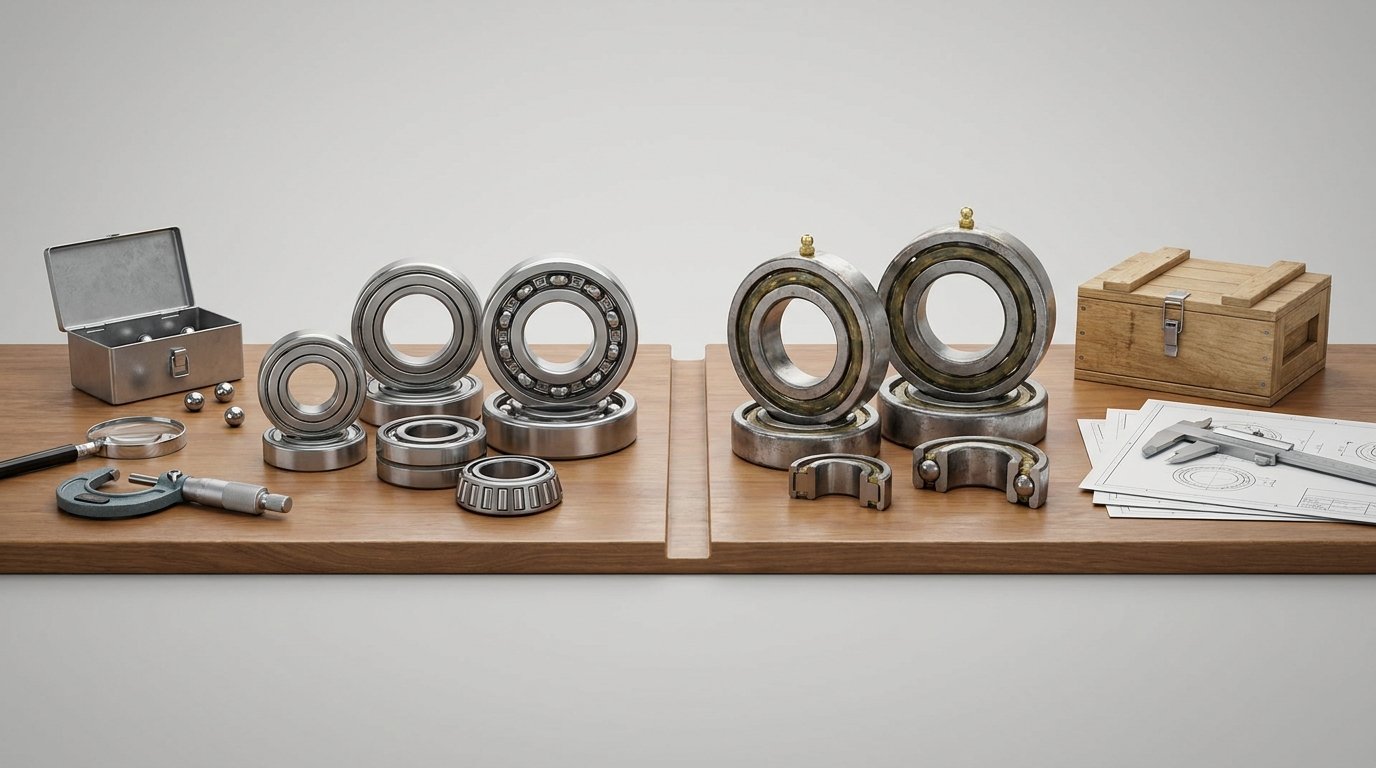
Side-by-side criteria to compare bearing manufacturers
Based on our internal data and market analysis, here is the breakdown:
| Comparison Area | What “Good” Looks Like | What to Request | Common Red Flags |
|---|---|---|---|
| Quality System | ISO 9001 minimum; IATF 16949/AS9100 when required | Certificates with scope + audit acceptance | Certificate doesn’t cover the actual plant/process |
| Traceability | Lot-level trace to steel heat and process batches | Lot coding rules + sample traveler | “No lot tracking” or mixed lots in one shipment |
| Process Control | SPC on key geometry and hardness; gauge R&R | Control plan + Cp/Cpk snapshots | Only final inspection, no in-process control |
| Metrology | Calibrated instruments; roundness/waviness capability | Calibration records + measurement method | Vague tolerances, no method for form measurement |
| Validation | Endurance, torque/NVH, grease life, environmental tests as needed | Test plan + reports + acceptance criteria | “Meets standard” with no data |
| Engineering Support | Fast response, failure analysis, DFM for custom bearings | Engineering contact + sample 8D | Sales-only communication |
| Capacity & Lead Time | Stable OTIF, realistic MOQ, surge plan | Capacity statement + lead time history | Unrealistic lead times, frequent date changes |
| Change Control | PCN/ECN process with customer approval gates | Change notification SOP | Silent substitutions (steel, grease, cage, seals) |
| Packaging & Handling | Cleanliness control, rust prevention, transit validation | Packaging spec + corrosion protection | Mixed packaging, poor rust protection |
| Commercial & Warranty | Clear warranty, claims process, liability boundaries | Warranty terms + RMA flow | No written warranty process |
Haron Bearing Pro Tip: I recommend scoring suppliers with weighted criteria (quality/traceability/change control > price). In my experience, a supplier with disciplined change control prevents the most expensive failures.
Cost & Buying Factors
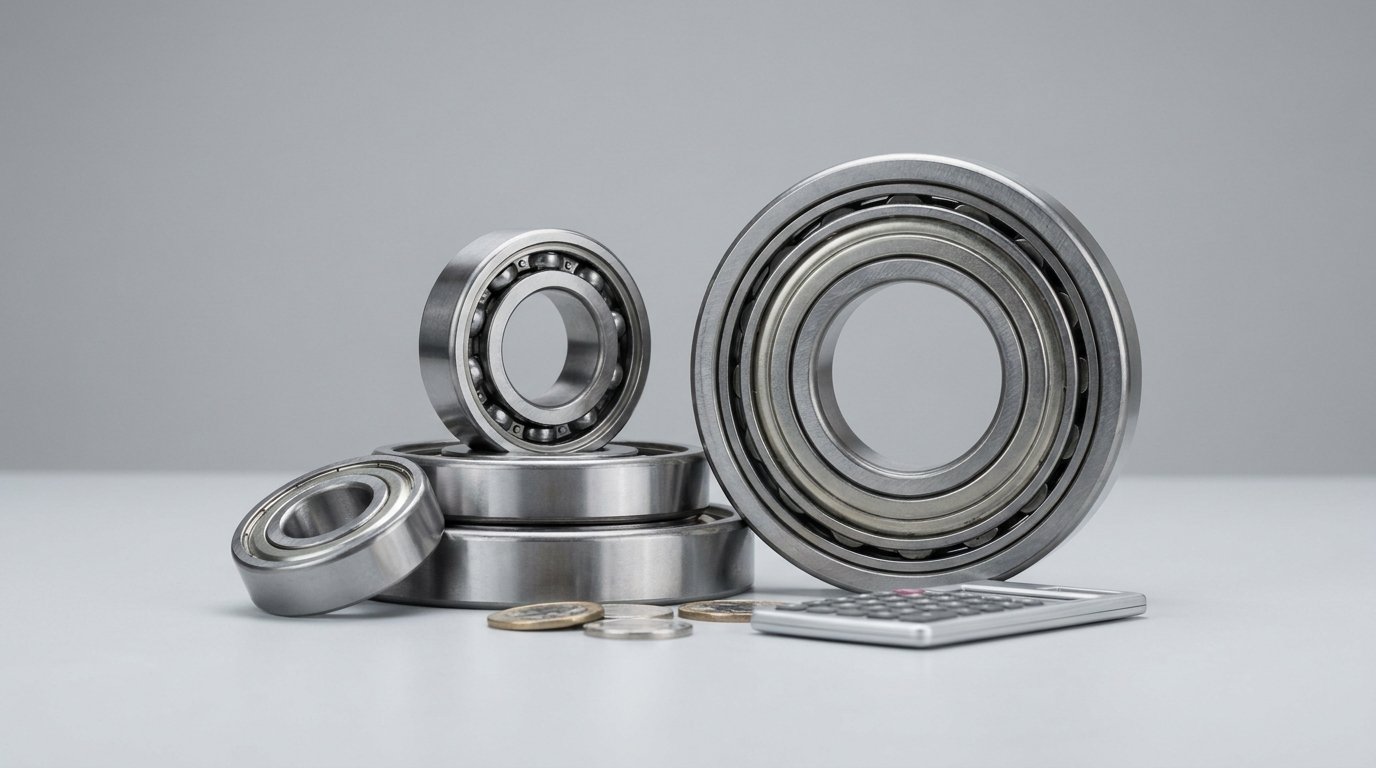
Bearing cost is driven by precision level, materials, heat treatment, seals/grease, validation effort, and volume—plus the hidden cost of lead time volatility and quality escapes. For OEM bearing manufacturer sourcing, evaluate total landed cost and total lifecycle cost (downtime, returns, rework). Reliable bearing suppliers will clearly separate unit price, tooling/NRE, testing, and logistics so you can compare offers fairly.
What actually drives price—and what to lock in during RFQ
Key cost drivers (and what to specify):
- Tolerance/precision requirements (runout, noise/vibration, torque): tighter specs raise scrap risk and inspection time.
- Material and heat treatment: premium steels, special coatings, and controlled case depth increase cost but may improve life.
- Seals and lubrication: higher-temp grease, low-torque seals, or contamination-resistant designs can materially change price.
- Customization: modified geometry, cages, special clearances, packaging, or branding adds NRE/tooling and longer lead times.
- Validation & documentation: PPAP/FAI, endurance tests, and traceability controls are not free—but reduce field risk.
RFQ and buying checklist:
- Provide a complete spec pack (drawing, tolerance targets, duty cycle, test requirements, packaging).
- Ask for a price breakdown: unit price, tooling/NRE, test costs, freight terms, MOQ, annual rebate/price locks.
- Define quality terms: acceptance sampling, Cpk targets, lot traceability, allowable process changes.
- Confirm lead time model: standard vs expedited, capacity reservation, buffer stock options.
- Include warranty and claims: response times, documentation needed, disposition rules.
Haron Bearing Pro Tip: I always ask suppliers to quote two options: (1) lowest compliant cost and (2) “risk-reduced” cost with upgraded seals/grease/validation. It makes the reliability trade-off explicit and speeds internal approvals at OEMs.
Conclusion
Reliable bearing sourcing requires process control, traceability, validation data, and change management. Whether choosing global suppliers or a bearing factory in China, use a clear scorecard. Haron Bearing supports OEM projects with precision manufacturing, custom bearings, and quality documentation.