
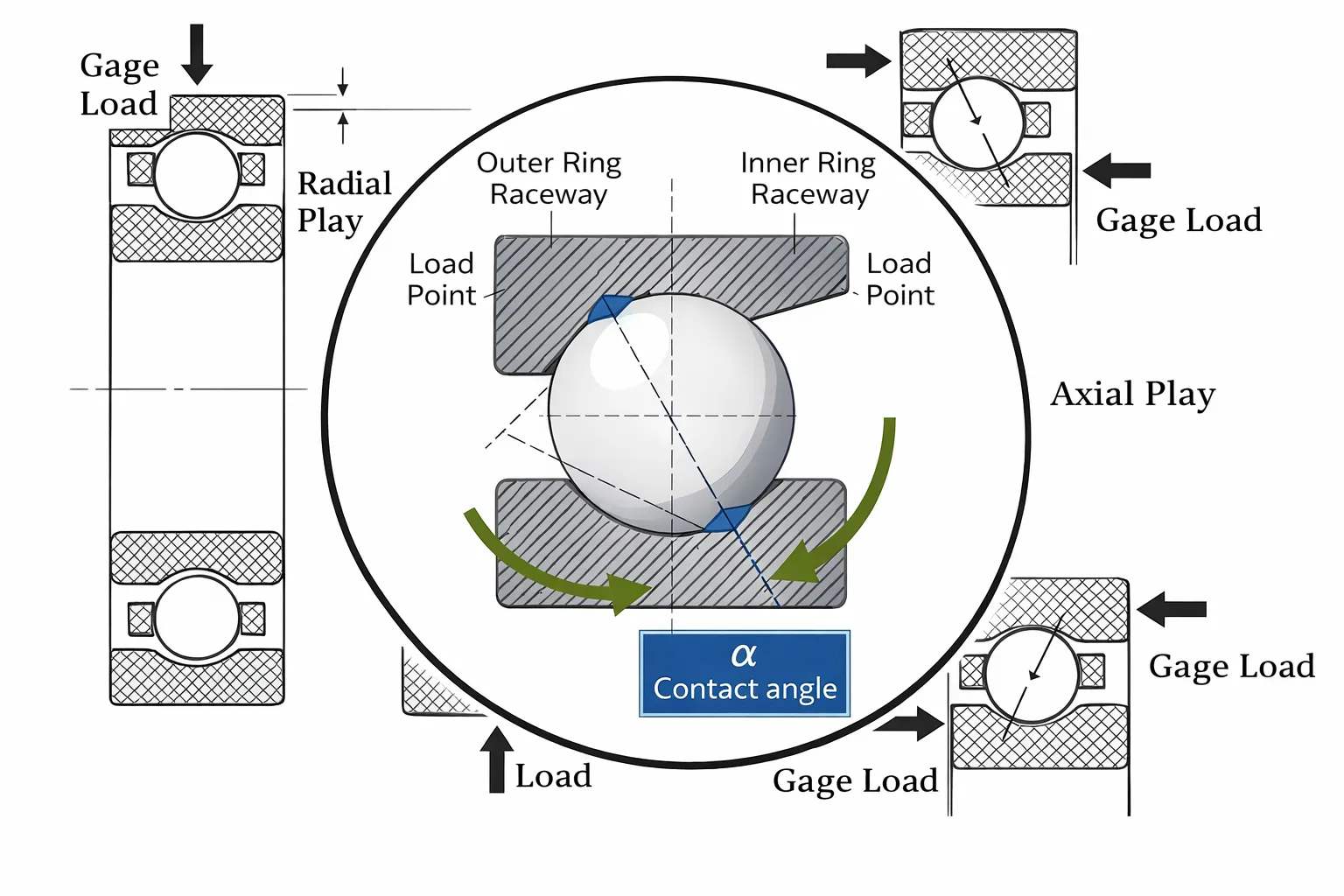
Bearing clearance is the internal gap that helps a bearing run smoothly under load, temperature changes, and mounting fits. Too little clearance increases heat and friction; too much causes vibration and accuracy loss. Choose the right radial/axial play for reliable performance.
What is bearing clearance?
Bearing clearance is the internal looseness between rolling elements and raceways before mounting and loading. It can be radial or axial, and changes during operation due to fits, preload, temperature, and load.
Internal clearance types and why they exist
Bearing clearance is designed into the bearing so it can survive real-world conditions: tight shaft/housing fits reduce clearance, thermal expansion changes it further, and loads elastically deform rings and rolling elements. In practice, you don’t “run” on catalog clearance—you run on operating (effective) clearance.
- Radial internal clearance (RIC): Movement perpendicular to the shaft axis (commonly specified for most bearings).
- Axial internal clearance (AIC): Movement parallel to the shaft axis (often derived from geometry; more relevant in angular contact/tapered designs).
- Initial vs. effective clearance: Initial (unmounted) → reduced by fits/preload → shifted by temperature gradient → becomes effective operating clearance.
- Why it matters: It directly affects heat generation, stiffness, noise/vibration, and achievable runout/positioning precision.
Haron Bearing Pro Tip: I always treat clearance as a “budget” that gets spent by interference fits and temperature. If you don’t estimate those reductions up front, you’ll accidentally end up with negative clearance (preload) and chase overheating issues later.
How Does bearing clearance Work?
Bearing clearance provides room for deformation, lubricant film, and thermal growth while keeping stable rolling contact. Fits and temperature often reduce clearance, while heavy loads add deflection, so effective clearance depends on all operating factors.
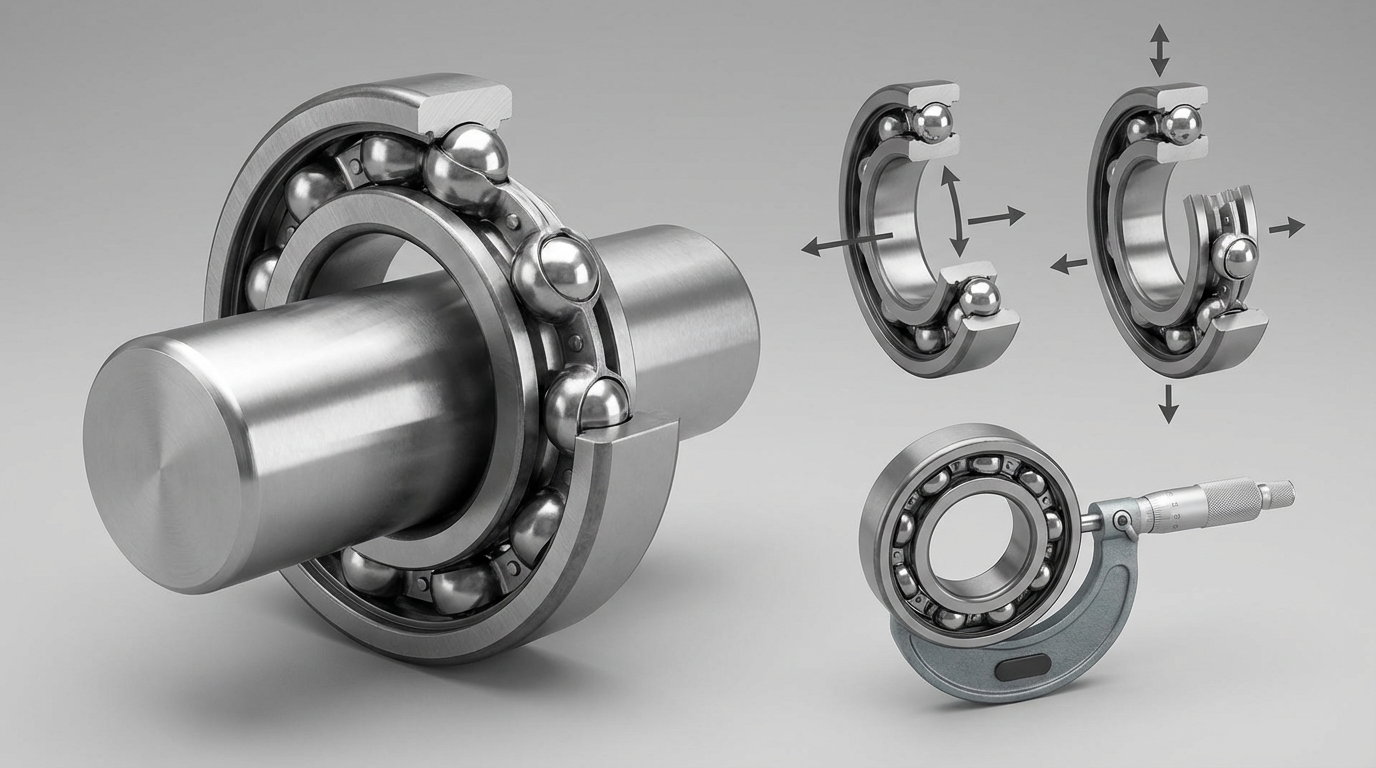
Clearance change drivers in real operation
Effective clearance is not static; it moves as conditions change. The key is predicting the direction and magnitude so the bearing operates in the intended zone (slight positive clearance, near-zero, or controlled preload depending on the application).
- Mounting fits: Tight shaft or housing fits expand/contract rings and reduce radial clearance.
- Preload (intentional): Removes clearance to boost stiffness/precision, but increases heat and reduces speed capability.
- Temperature differential: If the inner ring runs hotter than the outer ring (common), clearance decreases as the inner ring grows more.
- Load and deflection: Higher radial/axial loads increase contact deformation, influencing stiffness and vibration behavior.
- Lubrication regime: Adequate clearance helps maintain elastohydrodynamic lubrication (EHL) film; too little can starve film and spike friction.
Haron Bearing Pro Tip: I recommend calculating clearance change in this order: fit reduction → thermal reduction → then verify load zone and lubricant viscosity. That sequence catches the most common “runs hot after assembly” failures.
How much bearing clearance is acceptable?
Acceptable bearing clearance depends on bearing type, speed, load, temperature, and precision needs. General machines often use small positive clearance, while precision spindles may use near-zero clearance or slight preload to reduce vibration and avoid overheating.
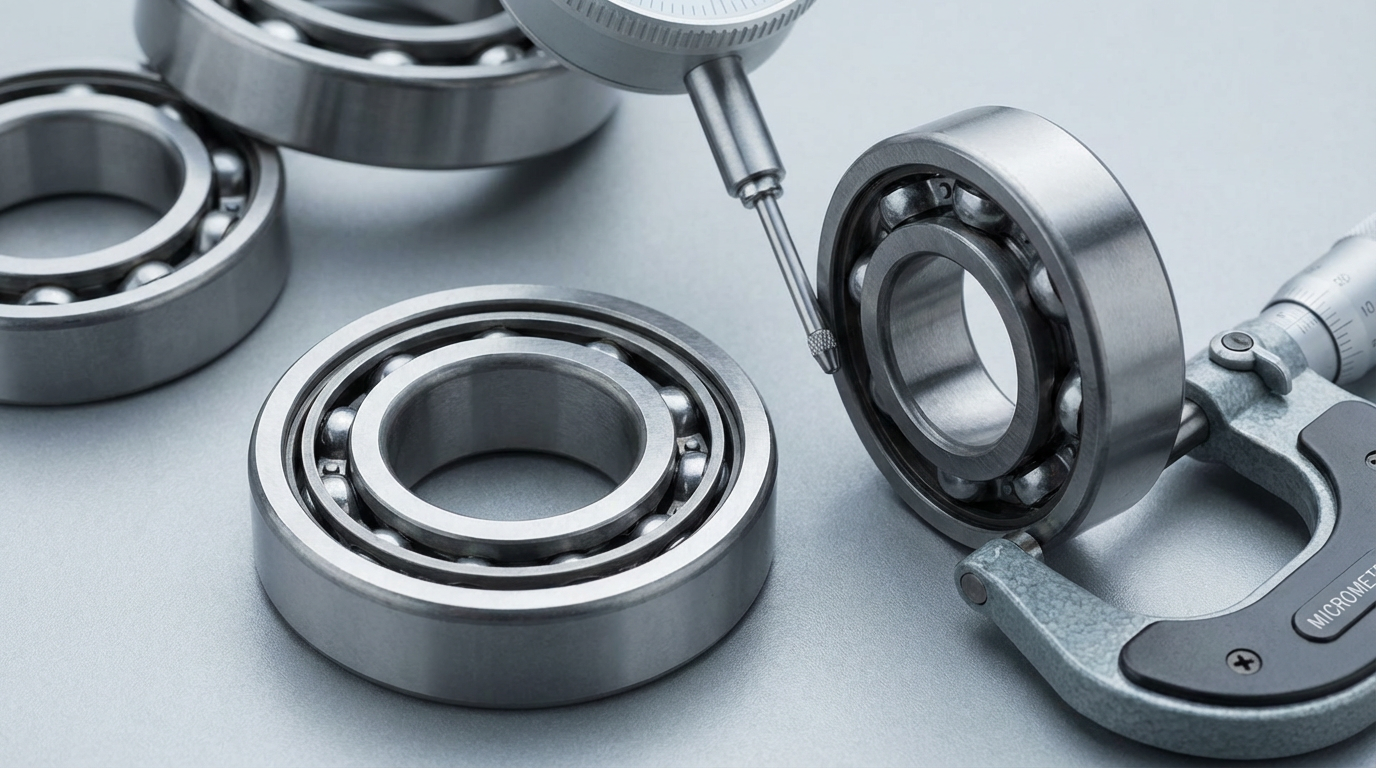
Practical acceptance criteria you can use on the shop floor
Rather than chasing a single “universal” value, evaluate clearance by function and operating behavior. Use specification limits (clearance class) plus a performance check after assembly.
- Use the correct clearance class (e.g., normal, increased clearance) recommended for the application’s fit and temperature.
- Watch for symptoms of too little clearance: rapid temperature rise, lubricant discoloration, torque increase, early spalling/smearing.
- Watch for symptoms of too much clearance: excessive noise, vibration, poor runout, fretting at fits, unstable seals.
- Acceptance checks (typical):
- Measure initial radial clearance (before mount) when feasible.
- Verify shaft/housing fits and roundness.
- Run-in temperature stabilization and vibration trend after installation.
Haron Bearing Pro Tip: I don’t sign off an “acceptable” clearance until the machine reaches thermal steady state—if temperature keeps climbing after run-in, treat it as insufficient effective clearance or excessive preload, even if the catalog class looked right.
What is the 2 1 bearing rule?
The “2:1 bearing rule” often means using one locating bearing and one floating bearing. This allows axial expansion, reduces thermal stress, and prevents shaft growth from consuming clearance or creating unintended preload.
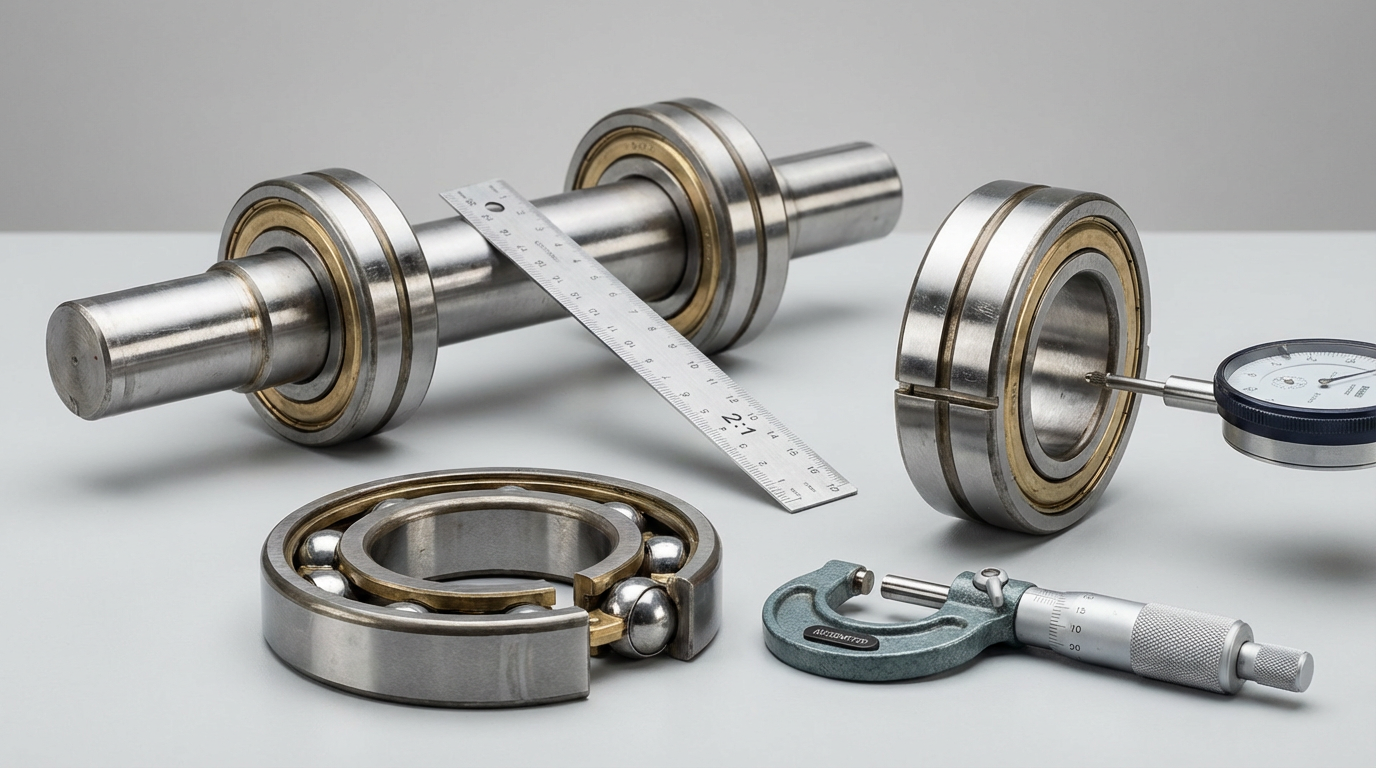
How the 2:1 concept protects clearance and alignment
In many rotating systems, shafts grow with temperature. If both bearings are locked axially, thermal growth can force axial load into the bearings, reducing effective clearance and raising heat.
- Choose a locating bearing position: Typically near the load or precision reference point.
- Choose a floating bearing position: Allows axial displacement via fit selection or bearing type arrangement.
- Confirm axial freedom: Ensure housings, shoulders, and locknuts don’t accidentally trap the floating side.
- Validate with operating temperature: Higher gradients require more attention to float and clearance class.
Haron Bearing Pro Tip: I’ve seen the “floating” bearing accidentally become fixed because of paint, burrs, or an over-tight end cover—always confirm real axial float during assembly, not just on the drawing.
What is the difference between radial clearance and axial clearance?
Radial clearance is internal looseness perpendicular to the shaft, while axial clearance is looseness along the shaft. Radial clearance is most commonly specified, while axial clearance depends on contact angle and geometry, especially in thrust or precision positioning designs.
Selecting by load direction and precision need
Radial and axial clearance affect different performance outcomes—mixing them up leads to wrong bearing choice or incorrect expectations after installation.
- Radial clearance impacts: vibration, noise, radial stiffness, heat generation, cage stability at high speed.
- Axial clearance impacts: axial positioning accuracy, thrust load sharing, preload sensitivity, gear mesh alignment (where applicable).
- Geometry linkage: In angular contact and tapered roller bearings, axial displacement is tightly coupled to radial displacement via contact angle.
Haron Bearing Pro Tip: If your application is position-critical (ball screw supports, spindles, precision reducers), I focus on axial behavior first—then back-calculate what radial clearance/preload setting delivers that axial stiffness without overheating.
Key Features & Comparison
Bearing clearance balances heat, stiffness, noise, and accuracy. Larger clearance helps handle fit and temperature changes but may increase vibration; reduced clearance or preload improves precision but can raise heat and shorten grease life.
Performance comparison by effective clearance state
Based on our internal data and market analysis, here is the breakdown:
| Effective Condition | Typical Result | Best For | Common Risk if Misapplied |
|---|---|---|---|
| Excessive positive clearance | Lower friction at light load, but more play | Loose fits, thermal expansion, contamination tolerance | Noise, vibration, poor runout, fretting |
| Small positive clearance | Balanced heat and stability | General industrial motors, pumps, gearboxes | Can become preload if fits/temperature reduce too much |
| Near-zero clearance | High stiffness, improved accuracy | Higher precision rotating systems | Sensitivity to temperature, higher friction |
| Light preload (negative clearance) | Maximum stiffness, best positioning | Machine tool spindles, precision pairs | Overheating, reduced speed, reduced lubricant life |
Haron Bearing Pro Tip: When I’m unsure between “normal” and “increased” clearance, I model fit + temperature first; if the estimate is borderline, I choose the option that avoids unintended preload because heat-related failures show up faster than slightly higher vibration.
Cost & Buying Factors
Bearing clearance affects cost because tighter classes, matched sets, and precision grades need more inspection and sorting. The cheapest bearing may cost more if clearance doesn’t match fits and temperature, causing early failure, downtime, and replacement.
What to evaluate before you buy
- Operating temperature and gradients: Hot inner rings usually need more initial clearance.
- Fit strategy (shaft/housing): Interference fits reduce clearance; confirm tolerances and surface finish.
- Load type and direction: Radial-only vs combined loads changes what “acceptable” play means.
- Speed and lubrication: Higher speed may need clearance for film and thermal management; grease life is heat-sensitive.
- Precision requirement: Runout, noise, and stiffness targets may require controlled near-zero clearance or preload.
- Total cost of ownership: Consider installation time, measurement capability, and warranty risk.
| Buying Factor | Tends to Increase Cost When… | Why It Matters |
|---|---|---|
| Clearance control | You need non-standard or tightly controlled classes | Reduces variability in operating clearance |
| Precision grade | You need low runout / low vibration | Better geometry control and sorting |
| Matched sets | You need defined preload/axial behavior | Predictable stiffness and positioning |
| Material/heat treatment | You need high temp or long life | Improves stability and fatigue life |
Haron Bearing Pro Tip: I ask buyers to send shaft/housing tolerances and the expected inner/outer ring temperatures—those two inputs let us recommend the right Haron Bearing clearance class far more accurately than “same as last time.”
Conclusion
Bearing clearance is a design tool, not a fixed number. Fits, preload, load, and temperature change effective clearance. The right choice improves heat stability, vibration, and precision; the wrong choice causes overheating, looseness, or noise.
Haron Bearing Pro Tip: Share speed, load, fits, and temperature estimate. We can prepare a quick clearance check and select the right clearance class to reach the intended effective clearance after assembly.