
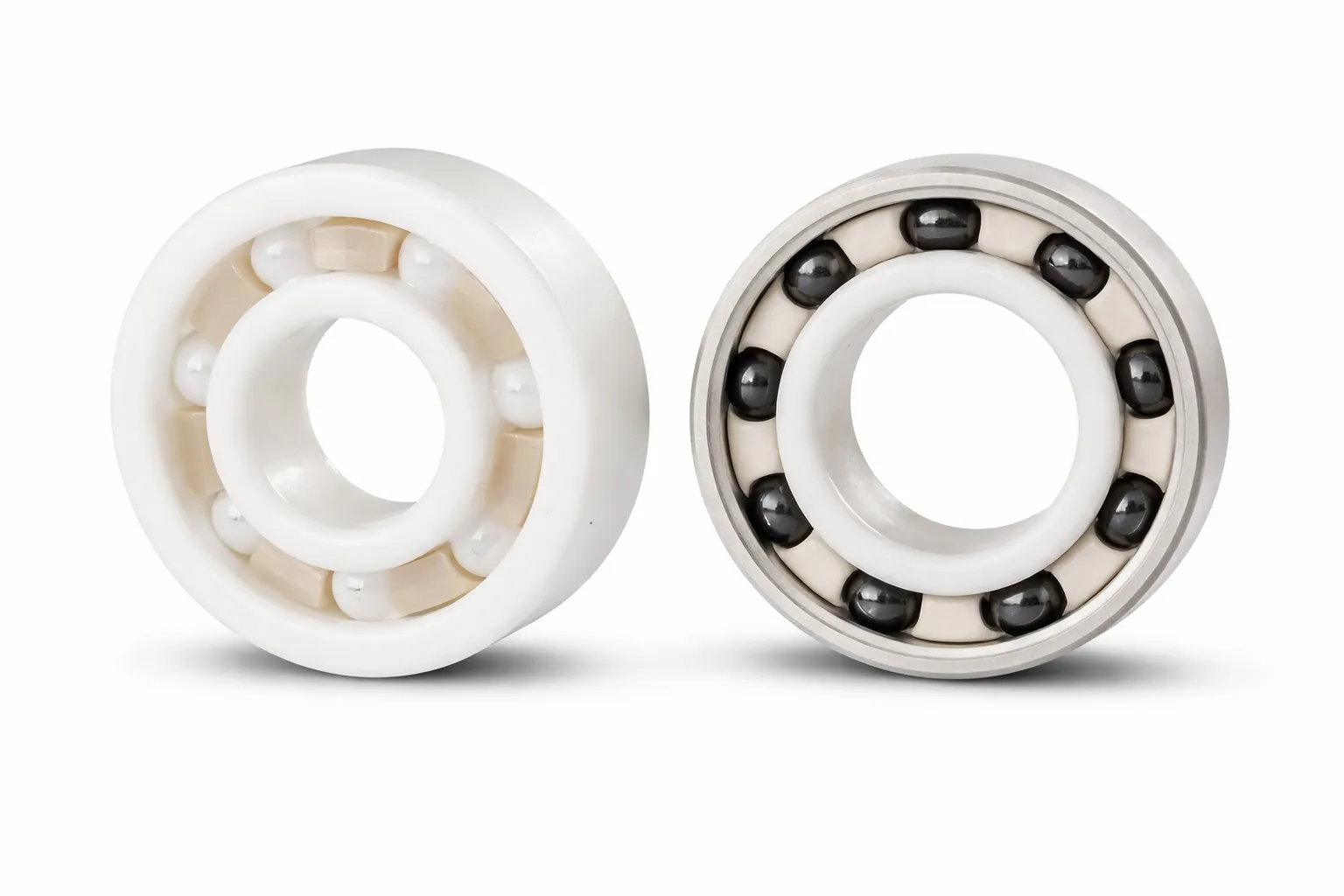
Choosing full ceramic bearings vs hybrid ceramic bearings depends on speed, environment, and risk. Full ceramic suits corrosion, insulation, and non-magnetic needs; hybrids offer better load tolerance and cost efficiency. This guide compares silicon nitride and zirconia applications.
Video Guide: A practical overview comparing steel, hybrid ceramic, and full ceramic bearings to help frame the tradeoffs.
Full Ceramic Bearings vs Hybrid Ceramic Bearings: What’s the Difference?
Full ceramic bearings use ceramic rings and ceramic rolling elements, while hybrid ceramic bearings pair ceramic balls (typically silicon nitride) with steel rings. Both target higher speed, lower friction, non-magnetic behavior, and corrosion resistance versus steel bearings, but they differ in load capacity, shock tolerance, cost, and best-fit applications.
Video Guide: Explains common bearing constructions and where ceramic or hybrid builds fit in real product choices.
Definitions, materials, and where each fits best
Full ceramic bearings typically use silicon nitride (Si₃N₄) or zirconia (ZrO₂) for both rings and balls. Hybrid ceramic bearings almost always use silicon nitride balls with bearing steel or stainless steel rings.
Key points to understand:
- Full ceramic bearings
- Ceramic inner ring + ceramic outer ring + ceramic balls
- Strongest fit for: corrosive media, washdown, chemical exposure, electrical insulation, non-magnetic requirements
- Hybrid ceramic bearings
- Steel rings + silicon nitride balls
- Strongest fit for: high speed ceramic bearings needs with good load capability, broader mounting tolerance, and more economical upgrades from steel bearings
Haron Bearing Pro Tip: When customers say “I need ceramic,” I first confirm whether they mean ceramic balls (hybrid) or fully non-metallic construction (full ceramic). That single clarification prevents most mis-specifications and avoids unnecessary cost.
Full Ceramic Bearings vs Hybrid Ceramic Bearings: How Do They Compare?
Both bearing types reduce friction by rolling ceramic elements between precision raceways, but ceramic’s lower density and smoother tribology can improve high-speed stability and reduce heat. Hybrids rely on steel rings for robustness, while full ceramic relies on ceramic rings for corrosion resistance, insulation, and non-magnetic performance.
Video Guide: Walks through why ceramic and hybrid bearings behave differently under speed, lubrication, and heat.
What actually changes versus steel bearings
Ceramic rolling elements (especially silicon nitride balls) change performance in several practical ways:
- Lower ball density reduces centrifugal forces at high RPM, helping stability and lowering heat generation.
- Higher hardness and wear resistance can reduce adhesive wear and micro-welding risk versus steel-on-steel contact.
- Electrical behavior
- Hybrids: ceramic balls help interrupt some current paths, but steel rings can still conduct depending on installation.
- Full ceramic: strongest choice for electric motors where EDM-related electrical pitting (fluting) is a risk and insulation is required.
- Corrosion behavior
- Full ceramic is typically best for aggressive moisture/chemicals.
- Hybrids depend on ring material (standard steel vs stainless) and sealing/grease strategy.
Numbered selection logic used in many ceramic bearing applications:
- Define environment: chemical exposure, washdown, salt, humidity, vacuum.
- Define operating limits: RPM, temperature, load, shock/vibration.
- Decide if electrical insulation or non-magnetic behavior is mandatory.
- Choose construction: hybrid for balanced loads/cost; full ceramic for harsh environment/insulation.
- Finalize details: cage material, seals/shields, internal clearance, grease type.
Haron Bearing Pro Tip: If your main issue is heat at high RPM, I usually start with a hybrid ceramic bearing plus the right clearance and grease; if your main issue is corrosion or electrical insulation, I move straight to full ceramic and validate the mounting and shock conditions.
What is the difference between full ceramic and hybrid ceramic bearings?
The main difference is ring material: full ceramic bearings use ceramic rings and balls, while hybrid ceramic bearings use steel rings with ceramic balls. Full ceramic typically wins in corrosion resistance, insulation, and non-magnetic needs; hybrid typically wins in load tolerance, shock robustness, and price-to-performance for high-speed use.
Video Guide: Side-by-side comparison of steel, hybrid, and ceramic bearing behavior and common user tradeoffs.
Practical differences that matter in spec sheets
Based on our internal data and market analysis, here is the breakdown:
| Attribute | Full Ceramic Bearings | Hybrid Ceramic Bearings |
|---|---|---|
| Construction | Ceramic rings + ceramic balls | Steel rings + silicon nitride balls |
| Corrosion resistance | Excellent | Moderate to good (depends on ring material) |
| Electrical insulation | Excellent | Limited to moderate (application-dependent) |
| Non-magnetic requirement | Best option | Partially non-magnetic (steel rings remain magnetic) |
| Load capacity | Can be lower in shock/impact cases | Typically stronger under shock and combined loads |
| Speed potential | High (with correct design) | Very high and commonly selected for high RPM |
| Cost | Higher | Lower than full ceramic |
| Typical use cases | chemical processing, medical, marine, vacuum, insulation needs | machine tools, e-mobility, motors, high-speed spindles, performance upgrades |
Haron Bearing Pro Tip: If you’re comparing quotes, don’t compare “ceramic” vs “ceramic.” I always verify ring material (Si₃N₄ vs ZrO₂ vs steel/stainless), cage type, and sealing—those three items usually explain the real performance and price gap.
Are hybrid ceramic bearings good?
Yes—hybrid ceramic bearings are often an excellent choice when you want higher speed capability, lower friction, and improved wear performance without paying full ceramic costs. They’re widely used in industrial high-speed systems and some electric motor applications, but they still depend on steel rings, so corrosion and magnetism limits remain.
Video Guide: Broad expert explanation of bearing behavior that helps interpret when ceramic upgrades actually make sense.
When hybrids are the “best value” ceramic option
Hybrid ceramic bearings are “good” when the application matches their strengths:
- High speed ceramic bearings needs where reduced heat and improved stability matter
- Cleaner running and potentially longer service life under proper lubrication
- Retrofit-friendly versus changing to full ceramic construction
- Electric motors where ceramic balls can help reduce certain damage modes (but ring conduction still exists)
Common reasons hybrids disappoint:
- Incorrect internal clearance for temperature rise
- Contamination + poor sealing (ceramic balls don’t fix dirty conditions)
- Expecting full corrosion immunity while using standard steel rings
- Installing them in high-shock environments without validating loads
Haron Bearing Pro Tip: When I approve a hybrid for a customer, I require two checks: (1) confirm the ring steel/stainless grade and coating, and (2) match grease to RPM and temperature. Most “hybrid failures” are actually lubrication or contamination problems.
What bearings do most skaters use?
Most skaters use standard steel or stainless 608 bearings because they’re affordable, durable, and easy to maintain. Hybrid ceramic bearings are popular as an upgrade for smoother roll and corrosion resistance benefits (especially in wet conditions), while full ceramic bearings are less common due to higher cost and lower practicality under impact and dirt.
Video Guide: Demonstrates real-world bearing comparisons often discussed in skating and spinner-style applications.
What typically matters in skating applications
For skating, the biggest performance drivers are usually cleanliness, lubrication choice, and shields, not just material.
Typical choices:
- Steel bearings (most common): best price, good durability, easy replacement
- Stainless steel bearings: better corrosion resistance, common for humid/wet users
- Hybrid ceramic bearings: popular for those wanting a premium feel and some corrosion benefits
- Full ceramic bearings: niche; cost is high and impact/dirt tolerance often makes them impractical
Quick selection checklist for skaters:
- Choose shield type (removable shields make cleaning easier).
- Choose lubricant (oil for speed, grease for durability/wet resistance).
- Only then consider material upgrades (stainless or hybrid).
Haron Bearing Pro Tip: If you skate outdoors, I usually recommend prioritizing good shields and a water-resistant grease before paying for ceramics—maintenance habits often beat material upgrades for real-world roll quality.
Key Features & Comparison
Full ceramic bearings vs hybrid ceramic bearings is ultimately a balance of environment versus mechanical robustness: full ceramic is strongest for corrosion, insulation, and non-magnetic requirements, while hybrids are the go-to for high-speed, high-load practicality. The best choice depends on RPM, load, contamination, lubrication strategy, and total cost of ownership—not just “ceramic content.”
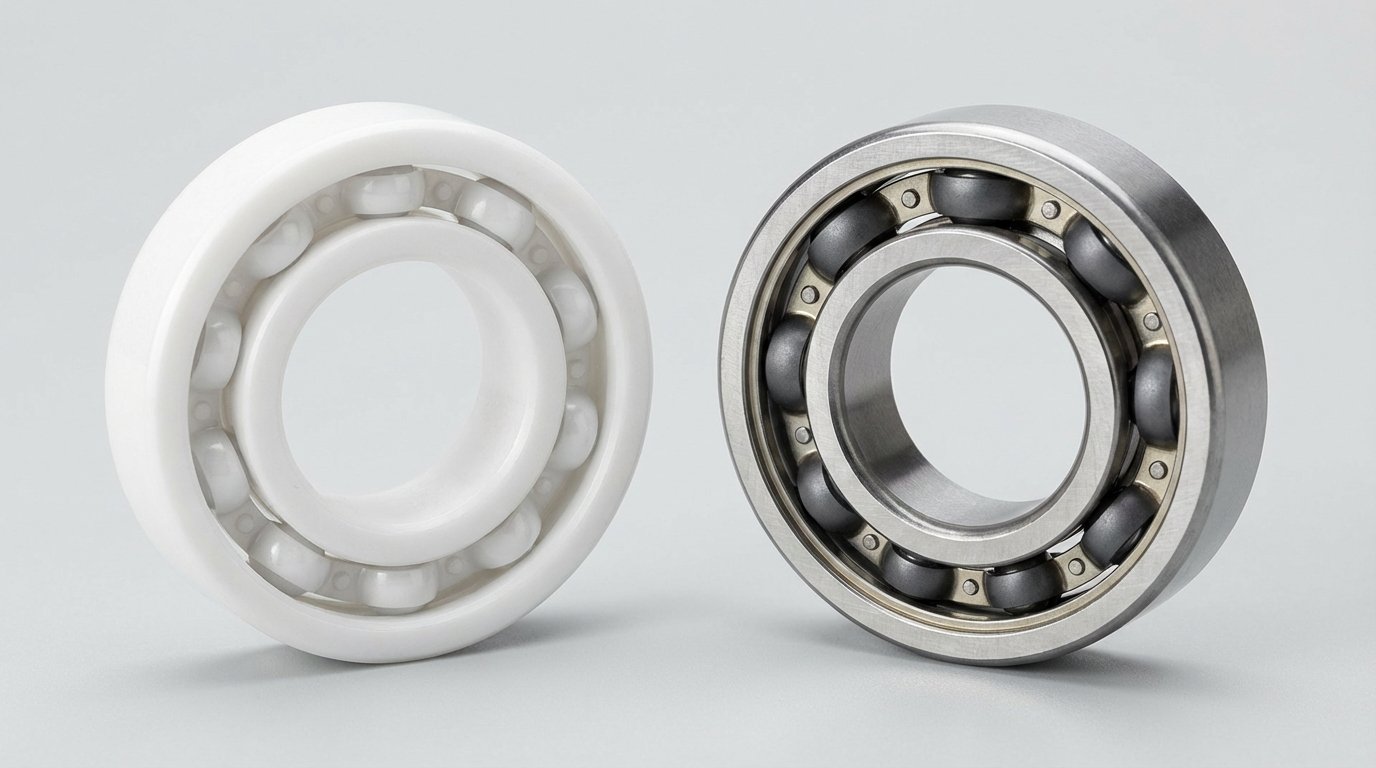
Feature-by-feature comparison for specification decisions
Based on our internal data and market analysis, here is the breakdown:
| Feature | Full Ceramic Bearings | Hybrid Ceramic Bearings |
|---|---|---|
| Best ceramic material fit | Si₃N₄ for speed; ZrO₂ for corrosion/chemistry (application-dependent) | Si₃N₄ balls are standard for performance |
| Corrosion resistant ceramic bearings capability | Highest | Medium (improves vs steel, but rings still matter) |
| Non magnetic bearings requirement | Strong match | Partial (steel rings remain magnetic) |
| Electrical insulation (motors/inverters) | Strong match | Sometimes helpful, not equivalent to full insulation |
| High-speed capability | High | Very high and common in spindles/motors |
| Shock/impact tolerance | Often less forgiving | Typically more forgiving due to steel rings |
| Maintenance sensitivity | Lower corrosion risk, still needs cleanliness | Needs good sealing/lube; steel rings can corrode |
| Typical ceramic bearing applications | chemical, marine, medical, vacuum, EMI-sensitive | spindles, pumps, e-mobility, precision machinery |
Haron Bearing Pro Tip: In proposals, I like to frame the choice as: “Is your primary risk environmental (corrosion/current/magnetism)? Choose full ceramic. Is it primarily mechanical (load/shock/cost)? Choose hybrid—then optimize sealing and lubrication.”
Cost & Buying Factors
Hybrid ceramic bearings typically cost less than full ceramic bearings while delivering many speed and friction advantages, so they’re often the best ROI for industrial upgrades. Full ceramic bearings cost more due to ceramic rings and tighter manufacturing demands, but can be the lowest total-cost option when corrosion, insulation, or non-magnetic constraints would rapidly destroy steel-ring bearings.
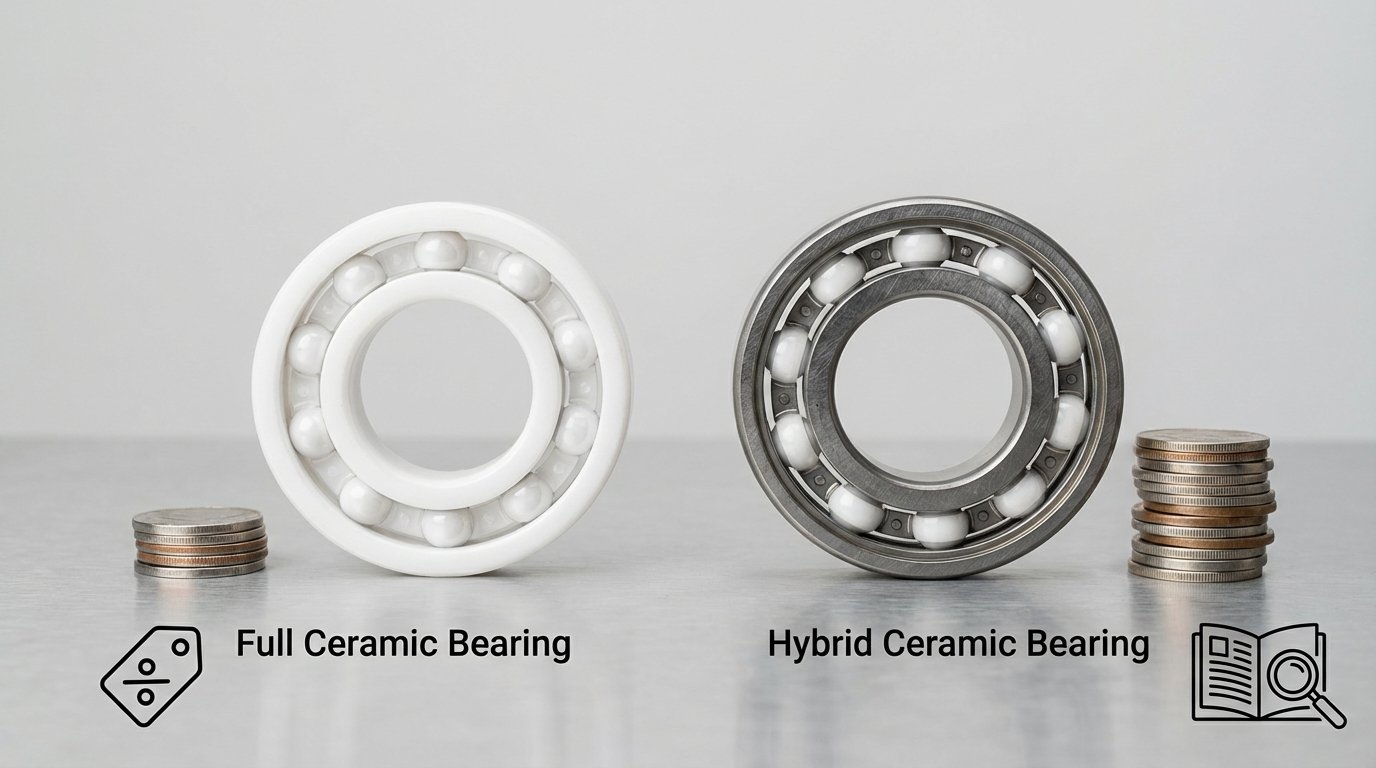
A practical buying checklist (what to specify to avoid wrong quotes)
Key factors that drive price and performance:
- Material callout
- Hybrid: confirm ring material (bearing steel vs stainless) and ball grade (Si₃N₄).
- Full ceramic: confirm whether rings/balls are Si₃N₄ or ZrO₂ and why.
- Sealing
- Open, shielded, contact seals—this often matters more than ceramic choice in dirty or wet environments.
- Cage design
- Polymer/phenolic/metal cages affect speed limits, noise, and chemical compatibility.
- Clearance and preload
- High-speed ceramic bearings frequently require careful clearance selection to manage thermal growth.
- Lubrication
- Grease/oil type must match RPM, temperature, and environment (washdown, solvents, vacuum).
- Application specifics
- Load direction (radial/axial), shock, misalignment, and housing/shaft fits.
Haron Bearing Pro Tip: When you request a quote from Haron Bearing, I recommend sending RPM, temperature range, load (radial/axial), environment (water/chemicals), and whether insulation or non-magnetic performance is required. With those five inputs, I can usually prevent an over-spec (too expensive) or under-spec (early failure).
Conclusion
Choosing full ceramic vs hybrid ceramic bearings is easiest when you start with the failure mode you’re trying to prevent. If corrosion, electrical insulation, or non-magnetic operation is non-negotiable, full ceramic bearings are often the right answer. If your goal is high speed with strong load capacity and better value, hybrid ceramic bearings are typically ideal. Haron Bearing can help match material, sealing, and lubrication to your exact application.