Choosing the best grease for bearings depends on speed, load, temperature, contamination, and relubrication access—not just brand. Proper bearing grease selection reduces friction, heat, wear, corrosion, and ingress for reliable industrial lubrication.
How do you choose the right bearing lubricant?
Bearing lubrication is the controlled use of grease or oil to create a protective film between rolling elements and raceways, reducing friction, heat, and wear. The “best grease for bearings” depends on speed, load, temperature, sealing, and contamination. Bearing lubricant types vary by base oil, thickener, and additives for specific applications.
Video Guide: This video explains common bearing lubricant types and how to match them to operating requirements.
Practical definition and what “best” really means
A bearing lubricant does three jobs at once: separate surfaces (film), control temperature (carry heat), and protect (corrosion + contamination resistance). Grease is not “thick oil”—it is base oil held in a thickener matrix, releasing oil gradually under shear.
Key elements that define bearing grease selection:
- Base oil viscosity (viscosity, ISO VG): The primary driver of film thickness at operating temperature.
- Thickener type: Lithium, lithium complex, polyurea, calcium sulfonate, etc. (structure + water/heat performance).
- Additives: EP/AW, rust inhibitors, oxidation inhibitors, solids (moly/graphite) when appropriate.
- NLGI grade: Consistency (e.g., NLGI 2 is common; NLGI 1/0 for lower torque/cold).
Typical “best grease” categories by application (high level):
- High speed bearing grease: Lower base oil viscosity + good channeling + low bleed + low torque.
- High temperature bearing grease: Oxidation-resistant base oil + high dropping point thickener; manage relube intervals.
- Food grade bearing grease: NSF H1 formulations; balance safety with load/speed/temperature constraints.
- Sealed bearing grease: Long-life, oxidation-stable, compatible with elastomers; often factory-filled for life.
Haron Bearing Pro Tip: I treat “best grease” as a system choice—bearing type, sealing, housing heat path, and relubrication method. If you only match thickener but ignore base oil viscosity at operating temperature, you’ll still get heat and premature failure.
How does bearing lubrication work and how do you choose the right lubricant?
Grease works by releasing base oil from its thickener to form a lubricating film in the rolling contact while the thickener provides structure, sealing, and reserve lubricant. Correct fill quantity and relubrication keep fresh oil available and purge contaminants. Wrong viscosity, overgreasing, or incompatibility causes heat, starvation, or leakage.
Video Guide: This guide visualizes how grease lubricates bearings and how relubrication practices affect temperature and service life.
Film formation, starvation, and why overgreasing fails
In rolling bearings, lubrication regimes shift between mixed and elastohydrodynamic lubrication (EHL). You want enough viscosity at operating temperature to build film, but not so much that churning losses spike. Grease must also “channel” (move out of the way) at speed, leaving a stable path while still feeding oil to the contact.
Operational levers that change results dramatically:
- Fill amount: Too much grease increases churning, heat, and cage drag; too little risks starvation.
- Speed factor (n·dm): Higher speed needs lower viscous drag and better channeling characteristics.
- Temperature: Higher temperature reduces viscosity, thins film, and accelerates oxidation; relube intervals shorten.
- Contamination: Water/dust drive corrosion and abrasive wear; select water-resistant thickeners and good sealing strategy.
Common failure patterns and typical causes:
- Hot running after regrease: Overgreasing, wrong NLGI, excessive base oil viscosity, incompatible mixing.
- Noise/vibration increase: Starvation, contamination, grease hardening, wrong grease for speed.
- Rust staining: Poor corrosion inhibitors, water washout, inadequate seals or purge strategy.
Haron Bearing Pro Tip: When a bearing “runs hot,” I first suspect grease quantity and viscosity before blaming the bearing. A controlled purge relube (small, frequent shots) usually stabilizes temperature better than large, infrequent regreasing.
How to choose bearing grease?
Choose bearing grease by matching base oil viscosity to operating temperature and speed, then selecting a thickener and additives for load, water, and chemical exposure. Confirm compatibility with seals and any existing grease, and set a fill/relube plan that avoids overgreasing. Validate with temperature and vibration trends after commissioning.
Video Guide: This selection-focused video is useful for understanding how high-speed demands change grease viscosity and performance targets.
A step-by-step bearing grease selection workflow
Use this process to select grease for ball bearings and lubrication for roller bearings in industrial bearing lubrication programs:
- Define operating conditions
- Speed (RPM, and preferably n·dm)
- Load type (light/steady vs shock)
- Bearing type (ball vs cylindrical/tapered/spherical roller)
- Temperature (ambient + steady-state bearing temp)
- Pick base oil viscosity (most important)
- Higher temperature → higher viscosity grade may be needed to maintain film
- Higher speed → lower viscosity and low-torque formulation may be required
- Select thickener for environment
- Water exposure: consider water-resistant options (e.g., calcium sulfonate complex)
- High temperature: consider high-temp capable thickeners (e.g., polyurea, lithium complex)
- Choose additives based on load and risk
- Verify compatibility
- Grease-to-grease mixing can soften/harden and cause bleed changes
- Confirm seal material compatibility (NBR, FKM, EPDM, etc.)
- Set fill and relubrication method
- Initial fill depends on housing free volume and speed (high speed usually needs lower fill)
- Relube: small, frequent additions typically outperform large shots
- Commission with condition monitoring
- Track temperature rise after regrease
- Use vibration/ultrasound to prevent both under- and over-lubrication
Haron Bearing Pro Tip: I never finalize a grease without checking what’s already in the bearing. If we can’t fully clean/purge, I choose a grease known to be compatible—or I schedule a controlled changeover to prevent softening and leakage.
Is lithium or moly grease better for bearings?
Lithium-based greases are widely used general-purpose bearing greases with good mechanical stability and broad availability. Moly (MoS₂) greases contain solid lubricants suited for boundary lubrication under high load or shock, but they can increase drag and are often unsuitable for high-speed or low-noise bearings. Selection depends on load, speed, and precision needs.
Video Guide: This ball-bearing grease selection video helps clarify when additive packages (including EP and solids) help or hurt bearing performance.
When lithium wins vs when moly helps (and when it hurts)
“Moly vs lithium” is not a perfect comparison because moly is usually an additive, while lithium refers to a thickener family. In practice, people mean: standard lithium/lithium complex grease vs grease containing MoS₂.
Use this decision list:
- Prefer lithium / lithium complex for bearings when:
- You need a reliable general-purpose solution
- Speed is moderate to high and low torque matters
- You want good pumpability and availability across suppliers
- Consider moly grease when:
- You have shock loads, oscillation, or slow speed where full-film lubrication is hard to maintain
- You have sliding interfaces near the bearing (certain applications) and accept higher drag
- Avoid/limit moly in bearings when:
- High speed bearing grease is required (heat + churning risk)
- Low noise/low vibration precision bearings are critical
- Manufacturer guidance warns against solids (common in many electric motor bearings)
If you are selecting for lubrication for roller bearings under heavy load, EP additives may be appropriate—but solids should still be justified by the duty cycle rather than habit.
Haron Bearing Pro Tip: In my field work, “moly fixes it” usually means the application is operating in boundary conditions (too slow, overloaded, contaminated, or starved). I first correct viscosity, relube frequency, and sealing—then only add solids if the duty cycle truly demands it.
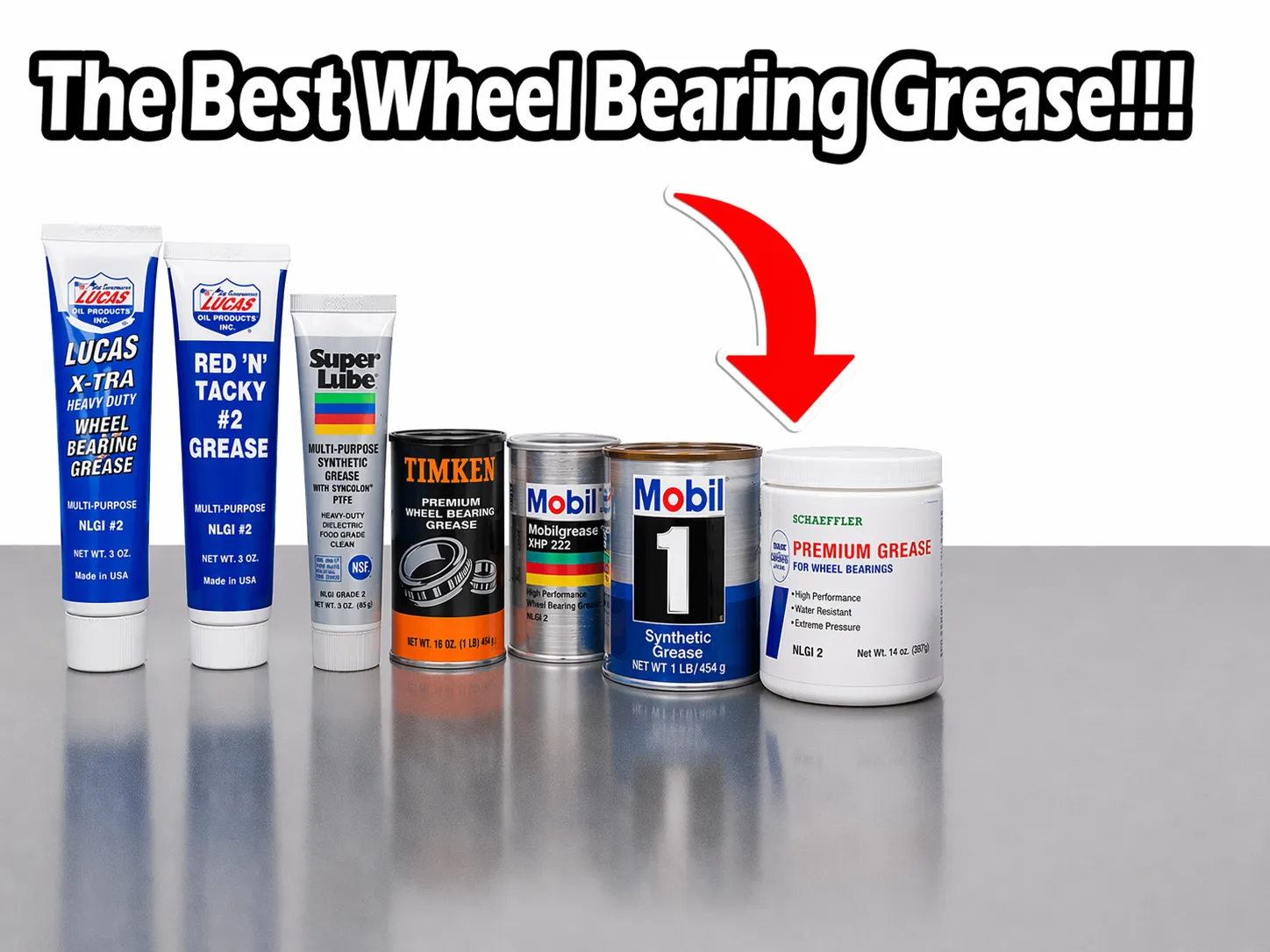
Is red and tacky grease good for bearings?
“Red and tacky” greases are typically EP lithium or lithium complex greases formulated for adhesion and staying power. They can be good for many moderate-speed, moderate-load bearings, especially where vibration or purge resistance matters. They are not automatically best for high-speed, low-torque, low-noise, or very high-temperature bearing applications.
Video Guide: This practical grease-choosing video helps explain why “popular” greases may not fit every bearing speed, temperature, or noise requirement.
Fit check: when red-and-tacky works and when it doesn’t
A tacky grease can improve retention and resistance to sling-off, but tackiness can also increase churning losses at higher speeds. Use this checklist before adopting it as your default bearing grease:
- Good fit scenarios
- Moderate speeds and normal bearing temperatures
- Equipment with vibration where grease migration is an issue
- Dirty environments where purging helps keep contaminants out
- Poor fit scenarios
- High-speed spindles or low-torque applications
- Electric motors where low noise and low drag are priorities
- High temperature bearing grease needs where oxidation stability is the limiting factor
- Verification tests to run in your plant
- Measure steady-state bearing temperature before and after grease change
- Check energy draw/amps on motors after regreasing
- Track vibration spectrum changes over two relube cycles
- Inspect purge and seal area for leakage (overgrease sensitivity)
Haron Bearing Pro Tip: I treat “red and tacky” as a category, not a spec. Always confirm the base oil viscosity and operating temperature fit—two red greases can behave very differently in the same bearing.
Key Features & Comparison
The key grease features that control bearing performance are base oil viscosity at operating temperature, thickener type, additive package, NLGI grade, and resistance to water and oxidation. Comparing greases by application—high speed, high temperature, food grade, or wet environments—helps you select a lubricant that balances film thickness, torque, and service interval.
Video Guide: This overview video explains multiple grease properties that matter when comparing bearing lubricants across different applications.
Application-based comparison for bearing grease selection
Based on our internal data and market analysis, here is the breakdown:
| Application need | Typical grease direction | Why it fits | Watch-outs |
|---|---|---|---|
| High speed bearing grease | Lower-viscosity base oil, good channeling, often polyurea or optimized lithium complex | Lower torque and reduced churning heat | Too low viscosity can cause film loss at temperature/load |
| High temperature bearing grease | Oxidation-stable base oil (often synthetic), high-temp thickener system | Resists oxidation and softening, longer life at elevated temps | Relube intervals still shorten; seal limits may dominate |
| Wet / washdown | Water-resistant thickener (e.g., calcium sulfonate complex), strong rust inhibitors | Better water washout resistance and corrosion protection | Some products have higher torque; confirm pumpability |
| High load / shock (roller bearings) | EP/AW additives, adequate base oil viscosity, robust mechanical stability | Supports boundary events and reduces wear | Solids (moly) can hurt high-speed/low-noise bearings |
| Food grade bearing grease | NSF H1, careful additive selection, often aluminum complex or calcium sulfonate H1 options | Compliance for incidental contact | Reduced EP choices; confirm temperature and load margins |
| Sealed bearing grease (fill-for-life) | Long-life oxidation stability, low bleed, seal-compatible | Maintains properties for extended intervals | Incompatibility risk if regreasing later; avoid mixing |
| Bearing oil vs grease decision | Oil for very high speed/heat removal; grease for sealing/retention | Oil removes heat; grease simplifies and seals | Oil requires delivery/filtration; grease risks churning if overfilled |
Haron Bearing Pro Tip: For sealed bearing grease, I assume “no second chance.” I select for oxidation life and bleed stability first, then validate seal compatibility—because regreasing a sealed unit later often creates incompatibility and leakage problems.
Cost & Buying Factors
Bearing grease cost should be evaluated by total operating cost, not pail price. The right grease reduces bearing failures, downtime, and energy loss, while extending relubrication intervals. Buying factors include specification fit (viscosity, thickener, NLGI), certifications (NSF H1), compatibility, packaging for your lube method, and supplier consistency across batches.
Video Guide: This video outlines practical buying criteria and selection priorities that translate well to industrial bearing lubrication decisions.
What to evaluate before you standardize a grease
Use this buying checklist to control both performance risk and lubricant inventory complexity:
- Performance specifications
- Base oil viscosity (ISO VG) at operating temperature range
- Operating temperature limits and oxidation stability expectations
- Water washout, corrosion, and mechanical stability data
- Compliance and risk controls
- Food grade bearing grease: NSF H1 registration + plant allergen/chemical policies
- Documentation: COA/COC, SDS, traceability
- Compatibility & changeover plan
- Confirm thickener compatibility with incumbent grease
- If uncertain: plan purge cycles or full cleanout during maintenance
- Packaging and dispensing
- Cartridge vs pail vs drum; suitability for single-point auto-lubers
- Color-coding and labeling to prevent cross-contamination
- Total cost of ownership (TCO) drivers
- Relube frequency (labor)
- Bearing life and downtime risk
- Energy consumption changes (torque/drag)
If you are comparing quotes, require vendors to state base oil viscosity, thickener type, NLGI grade, and intended application category (high speed/high temp/wet/food grade).
Haron Bearing Pro Tip: I standardize greases by application family (high-speed, high-temp, wet, food-grade) and keep the list short. Inventory reduction prevents accidental mixing—which is one of the fastest ways I’ve seen plants create recurring bearing failures.
Conclusion
Selecting bearing lubrication means matching oil viscosity, thickener, additives, and consistency to speed, load, temperature, contamination, and relubrication. Use grease for sealing/retention and oil for high speed or heat removal. Haron Bearing supports grease selection and validation.