
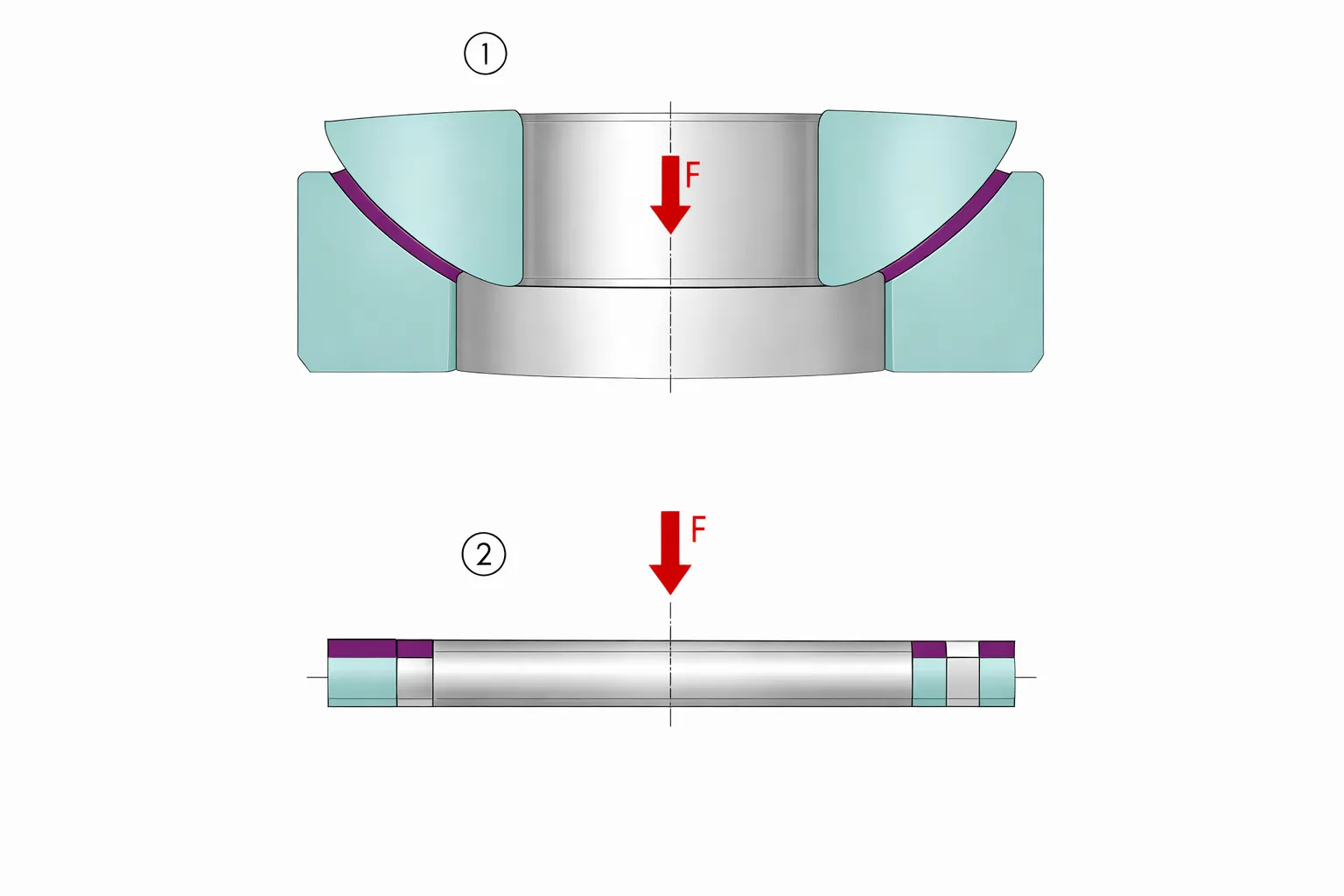
Bearing load capacity shows whether a bearing can handle real forces without early fatigue or failure. Buyers should understand static/dynamic ratings, equivalent load, speed, misalignment, lubrication, and mounting quality to turn catalog data into safe specifications.
What is bearing load capacity?
Bearing load capacity is the maximum load a bearing can support under defined conditions while meeting a target life or deformation limit. It is usually specified as dynamic load rating (C) for fatigue life and static load rating (C0) for permanent deformation risk. Real capacity depends on load direction, speed, lubrication, and mounting.
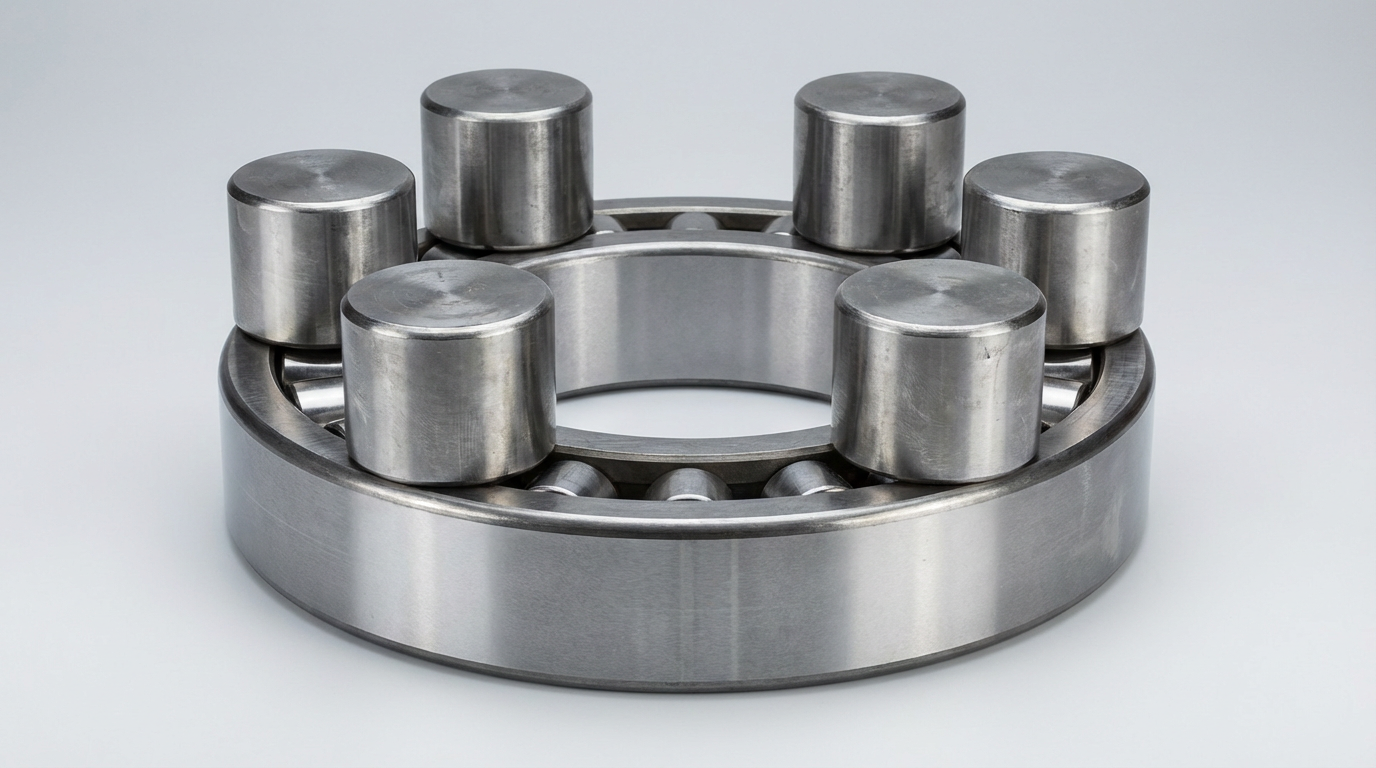
Dynamic vs. Static Capacity in Plain Terms
Manufacturers publish standardized ratings so buyers can compare bearings consistently.
- Dynamic load rating (C): Used for rotating bearings; relates to fatigue life (how long before rolling contact fatigue is expected).
- Static load rating (C0): Used when stationary, shock-loaded, or very slow motion; limits permanent deformation at contact points.
Key ideas to keep straight:
- Capacity is not a single “do not exceed” number for every situation.
- Combined radial + axial loads are converted into an equivalent dynamic load (P) for life calculations.
- Misalignment, contamination, poor lubrication, and housing/shaft fits can reduce practical capacity significantly.
Based on our internal data and market analysis, here is the breakdown:
| Rating Type | Symbol | What It Protects Against | Typical Use Case | Common Buyer Mistake |
|---|---|---|---|---|
| Dynamic load rating | C | Rolling contact fatigue | Continuous rotation, production equipment | Treating C as allowable load without life target |
| Static load rating | C0 | Permanent indentation (brinelling) | Indexing tables, shock loads, parked loads | Ignoring C0 during transport shocks or clamping forces |
| Equivalent dynamic load | P | Converts real loads to a life-calculation load | Combined radial + axial loading | Using radial load only when axial load exists |
Haron Bearing Pro Tip: When a buyer gives me “the load is 5 kN,” I always ask: radial or axial, steady or shock, and what life target? Without those three details, any “capacity check” is guessing.
How Does bearing load capacity Work?
Bearing load capacity links internal contact stress to fatigue life or deformation limits. Catalog ratings assume standard materials and reliability, but real usable capacity drops with combined loads, thin lubrication, high speed, or mounting misalignment.
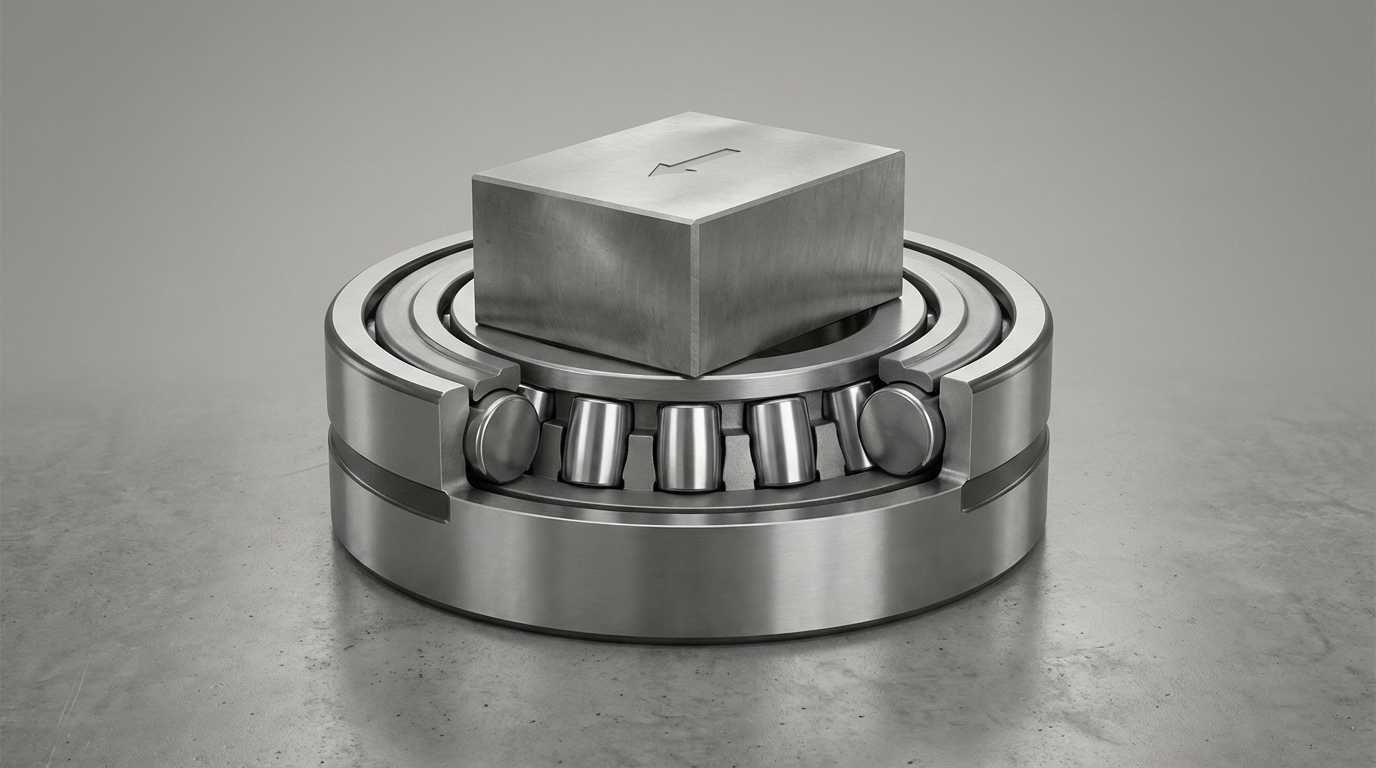
How Ratings Become a Life Prediction
In operation, rolling elements repeatedly load the raceways. Over time, micro-cracks can form and propagate—this is fatigue.
A simplified selection workflow is:
- Define real loads: radial (Fr), axial (Fa), and whether the load is steady or includes shock.
- Convert to equivalent load: compute P using bearing-specific factors (from the catalog).
- Set life target: hours or revolutions (and reliability if specified).
- Check dynamic life: use the bearing life relationship (catalog method) to confirm the bearing meets the target.
- Check static safety: ensure C0 is adequate for peak/shock loads and stationary periods.
Common real-world “capacity reducers” you should account for:
- Misalignment from shafts/housings
- Insufficient lubrication film (wrong grease/oil, wrong viscosity, starvation)
- Contamination (dust, water) increasing wear and stress
- Excess preload or too-tight fits increasing internal load
- Temperature effects on clearance and lubricant viscosity
Haron Bearing Pro Tip: I treat published load ratings as “clean lab values.” If the application is dirty, hot, misaligned, or shocky, I apply a conservative margin early—before we commit to a part number.
What are the three rules for bearings?
The three key bearing rules are: keep loads within rated limits, maintain proper lubrication and cleanliness, and ensure correct mounting/alignment. These control contact stress, heat, and fatigue, helping catalog load capacity perform reliably in real use.
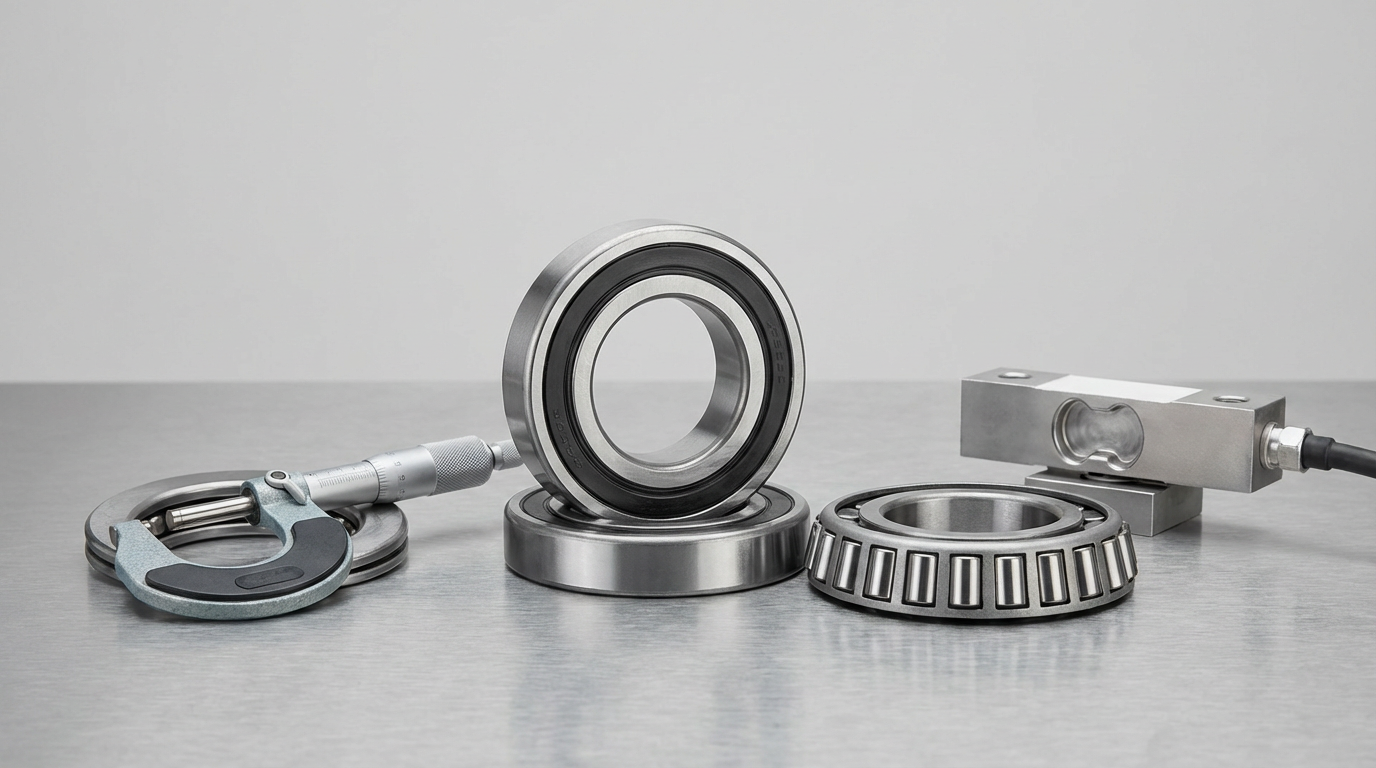
The Three Rules Buyers Should Enforce on Every Order
- Load rule (engineering): Confirm both dynamic life (C vs. P and target life) and static safety (C0 vs. peak load).
- Lubrication & cleanliness rule (tribology): Choose the right lubricant type/viscosity and seal strategy to preserve film thickness and prevent contamination.
- Mounting & alignment rule (mechanics): Correct fits, shaft/housing geometry, and controlled preload/endplay prevent hidden internal loads.
Based on our internal data and market analysis, here is the breakdown:
| Rule | What to Verify | What Fails If Ignored | Quick Buyer Check |
|---|---|---|---|
| Load | P, C, C0, shock peaks, duty cycle | Fatigue spalling, brinelling | Ask supplier for life + static calculation |
| Lubrication/Cleanliness | Lubricant, relube interval, seals | Overheating, wear, early fatigue | Confirm operating temp & contamination level |
| Mounting/Alignment | Fits, runout, housing rigidity | Edge loading, noise, high heat | Request fit tolerances and installation method |
Haron Bearing Pro Tip: If you only do one thing: demand a load-life check and a static check in writing. It forces clarity on the assumptions (speed, reliability, peaks, lubrication) that decide success.
What is the 2 1 bearing rule?
The “2:1 bearing rule” is a design rule of thumb, not a universal standard. It often means keeping static capacity or shock margin about twice the expected peak load, or spacing supports properly to avoid overloading one bearing.
How to Apply the 2:1 Rule Without Misusing It
Because the phrase is used differently across industries, apply it only as a preliminary screening tool, then validate with calculations.
Common interpretations you may encounter:
- Static margin rule-of-thumb: Target C0 / P0 ≥ 2 for applications with shock, clamping, or frequent stops/starts.
- Support load-sharing sanity check: In a two-bearing shaft, avoid layouts where one bearing carries nearly all axial/radial load; aim for more balanced reactions (often guided by geometry).
Practical steps:
- Identify whether the application has shock/impact or long stationary dwell under load.
- If yes, set a preliminary target like static safety factor ≈ 2 (then confirm with the correct P0 method and bearing type).
- Confirm the load distribution with basic statics (or FEA for flexible housings).
- Finalize selection using catalog factors, not the rule-of-thumb alone.
Haron Bearing Pro Tip: I use “2:1” only to catch obvious under-sizing early. For the final order, I always revert to the bearing maker’s P/P0 equations and the customer’s real duty cycle.
What are seven important factors to consider when selecting a bearing?
Seven key factors are load type, load size, speed, service life, misalignment/rigidity, lubrication, sealing, and installation limits such as space, fits, preload, or clearance. These define real bearing load capacity and help prevent heat, noise, and early fatigue.
A Buyer’s 7-Factor Checklist (Order-Ready)
- Load details: radial/axial values, direction, peaks, shock, duty cycle.
- Speed: RPM range, acceleration, and whether heat limits apply.
- Life target: hours/revolutions and reliability expectation.
- Alignment & rigidity: shaft deflection, housing stiffness, misalignment tolerance.
- Lubrication: grease vs. oil, viscosity, replenishment interval, temperature.
- Environment & sealing: dust/water/chemicals, corrosion risk, IP expectations.
- Mounting constraints: available space, shaft/housing fits, internal clearance/preload, assembly method.
Based on our internal data and market analysis, here is the breakdown:
| Factor | What to Specify | Why It Affects Load Capacity |
|---|---|---|
| Load | Fr, Fa, peaks, shock | Drives equivalent load and contact stress |
| Speed | min/max RPM, duty | Raises heat, thins lubricant film |
| Life | L10h (or similar), reliability | Determines required dynamic rating margin |
| Misalignment/rigidity | allowable misalignment, deflection | Causes edge loading and high local stress |
| Lubrication | type, viscosity, interval | Controls film thickness and wear |
| Environment | contaminants, moisture, temp | Contamination accelerates fatigue and wear |
| Installation | fits, clearance/preload | Improper fits can overload internally |
Haron Bearing Pro Tip: If you send Haron Bearing the seven items above, I can usually propose a safer alternative bearing series or sealing/lube option that increases real bearing load capacity without oversizing the whole assembly.
Key Features & Comparison
Bearing load capacity depends on bearing type, contact angle, ball/roller geometry, and combined-load handling. Buyers should compare more than C and C0, including axial load behavior, misalignment tolerance, speed, sealing, and lubrication options.
Comparing Common Bearing Types for Load Capacity Fit
Based on our internal data and market analysis, here is the breakdown:
| Bearing Type | Strength in Load Capacity | Axial vs. Radial Handling | Speed Capability | Misalignment Tolerance | Typical Buyer Use |
|---|---|---|---|---|---|
| Deep groove ball | Moderate | Mostly radial, limited axial | High | Low | Motors, fans, general machinery |
| Angular contact ball | Higher (with angle) | Strong axial (directional) + radial | High | Low | Pumps, spindles, paired arrangements |
| Tapered roller | High | Excellent combined loads | Medium | Low | Gearboxes, wheel hubs, heavy duty |
| Cylindrical roller | Very high radial | Radial-dominant | Medium–high | Low | Heavy radial loads, gear drives |
| Spherical roller | High with robustness | Combined loads | Medium | High | Mining, conveyors, misalignment-prone |
| Thrust ball/roller | Axial-specialized | Axial only (mostly) | Varies | Low | Vertical shafts, turntables (axial) |
Haron Bearing Pro Tip: If your load is truly combined (radial + meaningful axial), I push buyers to validate the axial component early—choosing a radial-strong bearing that “kind of” accepts axial load is one of the fastest ways to miss the real capacity limit.
Cost & Buying Factors
Bearing cost depends on size/series, C and C0 ratings, precision grade, cage/material, sealing, lubrication, and logistics. The cheapest option can cost more through oversizing, relubrication, or early failure. Balance load margin with environment and installation quality.
What Actually Changes the Price—and the Total Cost
Key buying factors that influence both price and performance:
- Capacity vs. footprint: Higher load ratings often mean larger cross-sections or different series (cost and space tradeoff).
- Precision grade (P0/P6/P5…): Higher precision increases cost; only specify when speed/runout demands it.
- Seals/shields: Better sealing reduces contamination failures but can raise friction and temperature.
- Material and heat treatment: Specialty steels or stabilized rings for high temperature add cost.
- Cage design: Brass/engineering polymer options can improve stability at speed or poor lubrication.
- Supply chain: Lead time, MOQ, packaging, and traceability documentation (COC, inspection reports).
A practical procurement process:
- Request dynamic life and static safety calculations with assumptions.
- Confirm sealing and lubrication plan matches environment (dust/water/chemicals).
- Decide the minimum acceptable capacity margin (don’t pay for unused rating).
- Lock down installation details (fits, clearance/preload) before final PO.
Haron Bearing Pro Tip: I’d rather see you spend slightly more on sealing and correct lubricant than oversize the bearing—contamination and poor lubrication kill “capacity” faster than most load increases.
Conclusion
Bearing load capacity is calculated, not just a catalog number. To order confidently, confirm real loads, peak loads, speed, life target, mounting, lubrication, and environment. Haron Bearing can then recommend the right bearing setup for life and safety targets.
A Simple Closeout Checklist Before You Place the PO
- Confirm Fr/Fa, peaks, and duty cycle.
- Specify RPM range and operating temperature.
- State required life (hours) and reliability expectation if applicable.
- Confirm bearing type suits combined loads and misalignment reality.
- Lock in seals + lubricant + relube plan.
- Confirm shaft/housing fits and clearance/preload method.
Haron Bearing Pro Tip: Send your load, speed, life target, and shaft-housing sketch. We’ll help translate them into a bearing selection that matches real bearing load capacity, avoiding hidden assumptions after installation.