
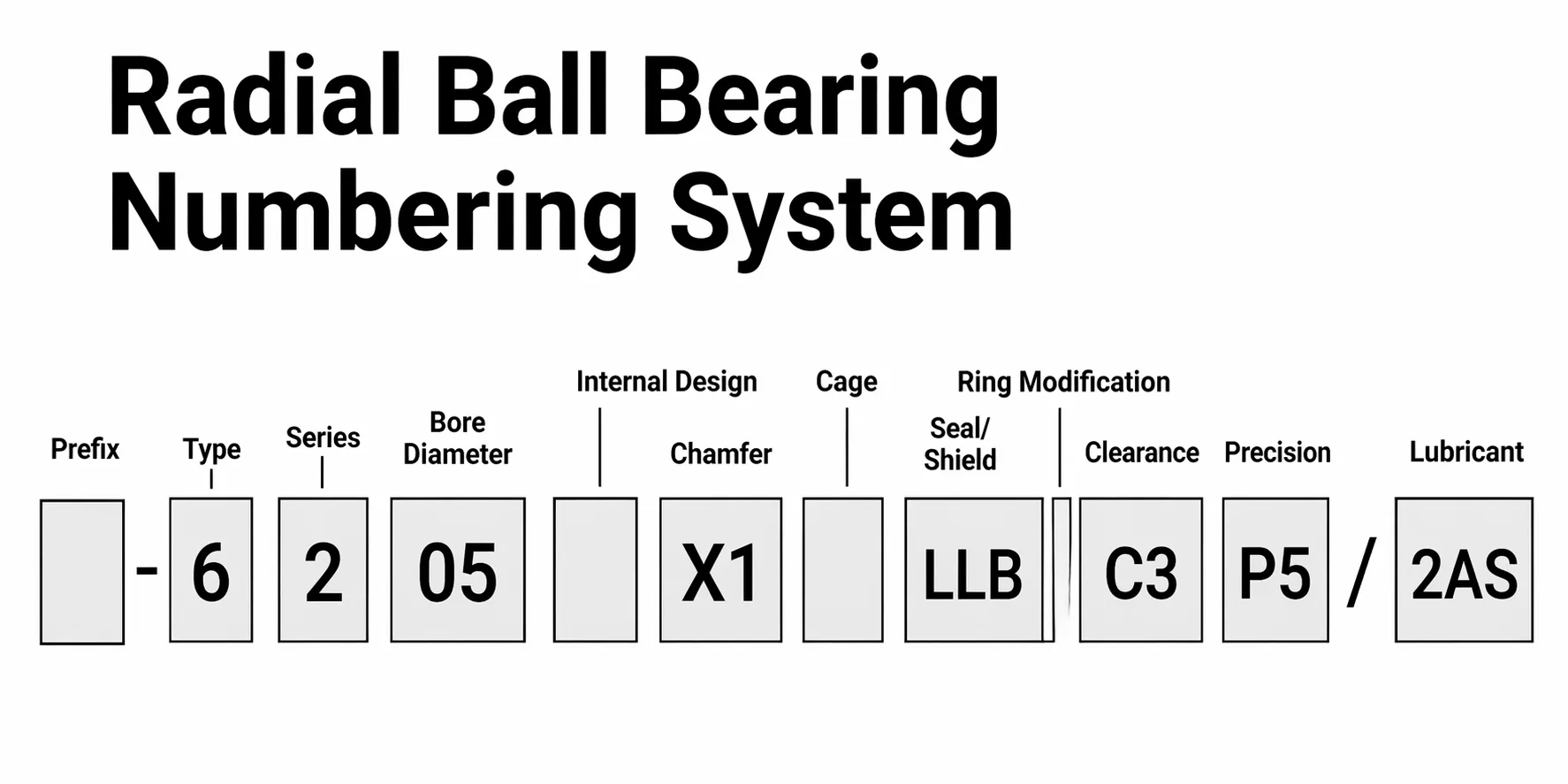
Selecting an equivalent bearing is safest when you treat the bearing number as a starting point, then verify dimensions, internal design, clearance, cage, seals, and load/speed requirements. A reliable bearing cross reference and bearing interchange guide reduces downtime, but only when you confirm the full specification and application conditions before ordering an OEM bearing replacement or substitution.
Video Guide: This walkthrough shows how interchange tools and partial numbers can be used to identify equivalent bearing models and confirm fitment.
What is a bearing cross reference and how does it work?
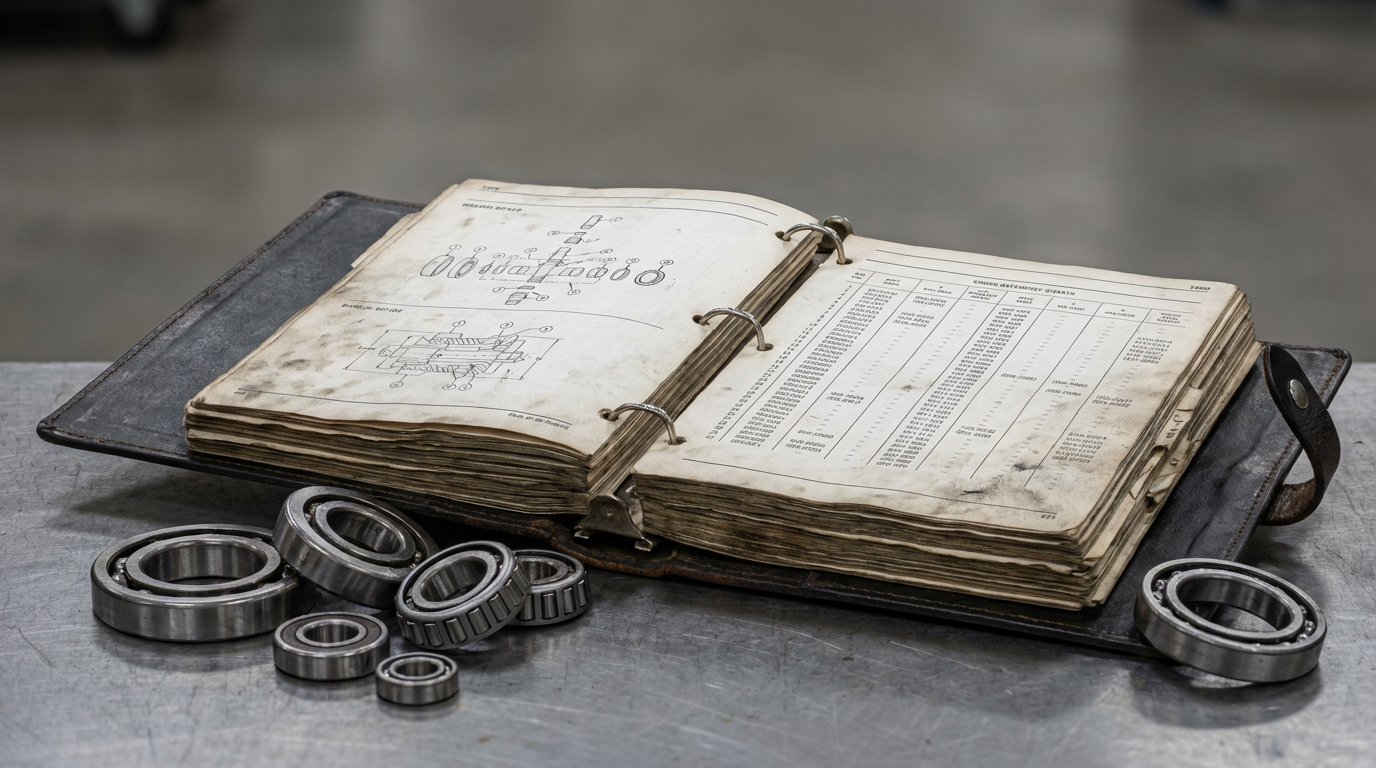
A bearing cross reference (bearing interchange guide) is a method—and often a chart or database—for converting an existing bearing number into bearing interchangeable part numbers from other brands. It supports bearing replacement by matching the original bearing’s key attributes (size, type, sealing, clearance, precision) to equivalent bearing models.
Definition and what a “true equivalent” includes
A bearing number interchange cross reference chart typically maps manufacturer part numbers to alternatives, but a correct bearing equivalent list must go beyond the printed number.
Key elements a proper bearing substitution chart verifies:
- Bearing type (deep groove ball, angular contact, tapered roller, spherical roller, etc.)
- Boundary dimensions: bore (ID), outside diameter (OD), width (W)
- Internal design series (e.g., 62xx vs 63xx families)
- Clearance class (e.g., C3) and preload needs (for certain bearing types)
- Seals/shields (open, ZZ, 2RS, low-friction seals)
- Cage type/material (steel, brass, polyamide)
- Precision class (e.g., P0/P6/P5)
- Lubrication and temperature requirements
Haron Bearing Pro Tip: I treat cross references as “candidates,” not “answers.” Before approving an equivalent, I always verify ID/OD/W and seal/clearance codes from the application side—because the wrong seal drag or clearance can fail even when the bearing “fits.”
How does a bearing cross reference help with bearing replacement?
A bearing interchange guide works by matching your original bearing’s identifiers (number, series, suffixes) and physical requirements (dimensions and performance) to a compatible substitute. The process typically starts with the bearing number interchange, then confirms equivalence through dimensional checks and suffix decoding for seals, clearances, cages, and tolerance class.
Video Guide: This video demonstrates how to identify a replacement bearing when you only have a partial part number—useful when labels are worn or incomplete.
Step-by-step interchange workflow that prevents mismatches
Use this process to replace bearing models correctly—even when converting OEM bearing replacement numbers to another brand.
- Capture the full bearing marking (including suffixes like 2RS, ZZ, C3, TN9, etc.).
- Measure ID/OD/width with a caliper if the marking is unclear.
- Confirm bearing type (ball vs roller, contact angle, thrust capability).
- Decode suffixes for:
- Sealing/shielding
- Clearance class
- Cage material
- Precision grade
- Check application conditions:
- Cross reference across brands using a database/chart.
- Validate availability and packaging authenticity (counterfeit risk control).
- Document the final interchangeable part number for future maintenance.
Haron Bearing Pro Tip: I recommend you standardize on one internal “equivalency checklist” (dimensions + suffixes + application conditions). If you only cross by number, you’ll eventually substitute a C3 where CN is required (or vice versa) and create repeat failures.
What are the benefits of using a bearing cross reference?
Using a bearing cross reference and bearing substitution chart helps you source equivalent bearing models faster, reduce machine downtime, and avoid overpaying for an OEM bearing replacement when a verified interchange exists. It also improves maintenance consistency by standardizing bearing replacement numbers and documenting bearing interchangeable part numbers across fleets and sites.

Operational and procurement advantages
Common benefits for maintenance, MRO, and sourcing teams:
- Reduced downtime: quicker identification of an in-stock alternative.
- Lower total cost: competitive options without sacrificing spec compliance.
- Improved standardization: fewer unique SKUs across similar machines.
- Better serviceability: technicians can replace bearing models confidently.
- Risk control: cross reference bearing chart encourages structured verification rather than guesswork.
- Lifecycle tracking: consistent interchangeable part numbers support trend analysis and predictive maintenance.
Haron Bearing Pro Tip: I’ve seen the biggest savings when teams rationalize inventory: pick one or two proven equivalents per critical bearing size, then lock them into your CMMS with the exact suffix codes to prevent “almost-right” substitutions.
How do you maintain a bearing cross reference system?
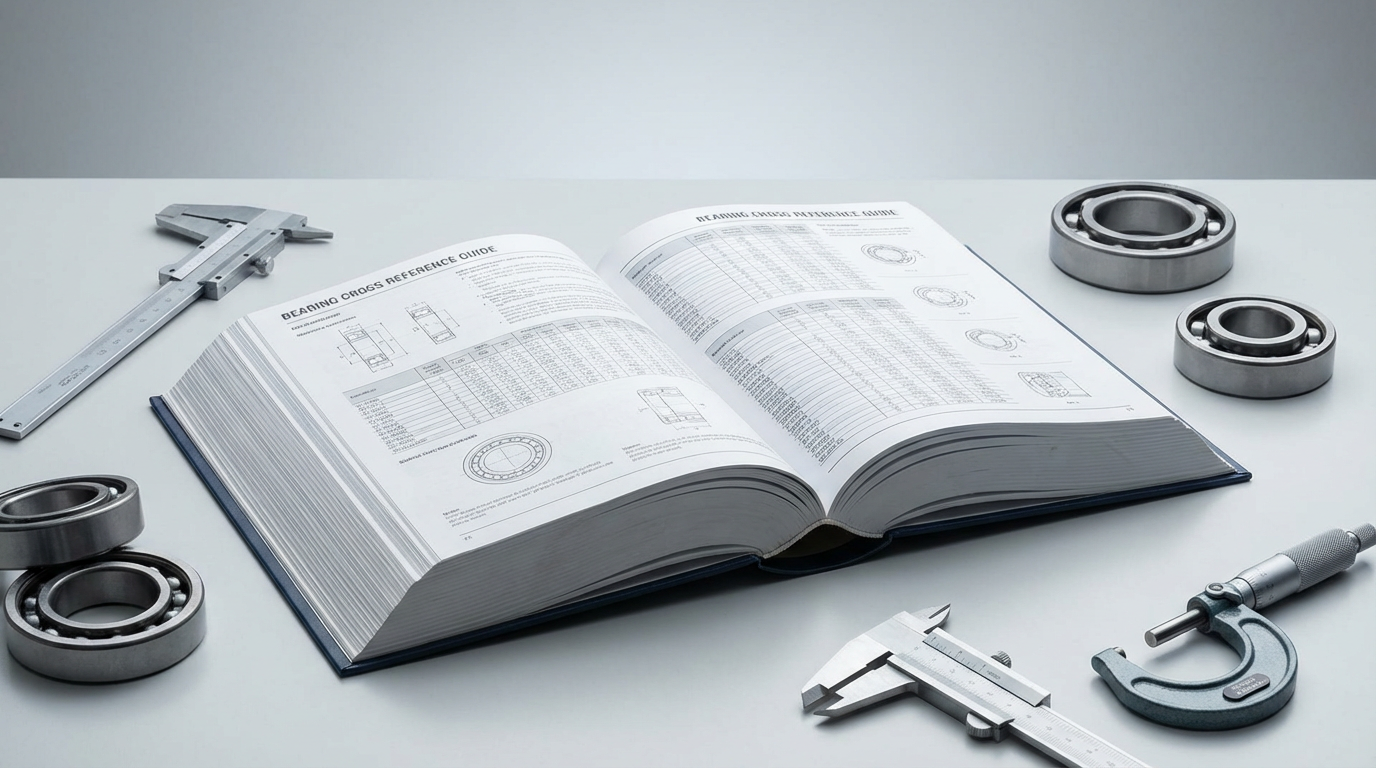
Maintain your bearing interchange guide by continuously validating cross references against real installations, keeping suffix decoding consistent, and controlling data quality (dimensions, clearances, seals, cages, precision). A living cross reference bearing chart should record approved equivalents, failure notes, and application limits so technicians don’t repeat past substitution mistakes.
Governance checklist for a reliable cross reference system
A practical maintenance routine for your bearing equivalent list:
- Create a standardized data schema: brand, part number, bearing type, ID/OD/W, suffix meaning, notes.
- Add an “approved for use” status per application/machine family.
- Log installation outcomes: runtime hours, failure mode, lubrication used, contamination level.
- Control revisions: who edited the record, when, and why.
- Audit quarterly:
- Remove obsolete part numbers
- Confirm supplier availability
- Re-check high-failure items
- Train technicians on suffixes (2RS vs low-friction seals, C3 vs CN, etc.).
Haron Bearing Pro Tip: I always require two fields in the database: “Validated by measurement (Y/N)” and “Validated in service (Y/N).” That one discipline separates a dependable interchange guide from a risky list of guesses.
How much does a bearing cross reference service cost?
The “price” is typically the cost impact of choosing an OEM bearing replacement versus a verified equivalent bearing model. Equivalent bearings may reduce unit cost, but total cost depends on correctness (suffix match), operating conditions, brand tier, precision, sealing, and lead time. The cheapest interchangeable part number can become expensive if it shortens bearing life.
Pricing components that change the real cost
Key factors that commonly drive bearing price differences:
- Bearing type and size (larger OD and higher load ratings cost more)
- Precision class (higher accuracy increases cost)
- Sealing/shielding (2RS and specialty seals can add cost)
- Clearance and internal design (special variants cost more)
- Brand tier and country of origin
- Supply chain: lead time, minimum order quantity, expedited freight
- Authenticity controls: traceability, packaging, authorized channels
Haron Bearing Pro Tip: When comparing an OEM number to an equivalent, I price the “installed outcome,” not the bearing alone: include expected life, downtime risk, and labor. A $10 saving is irrelevant if the replacement doubles change-out frequency.
Key Features & Comparison
Based on our internal data and market analysis, here is the breakdown:
| Feature | What to Check | Why It Matters for Interchange | Common Pitfall |
|---|---|---|---|
| Boundary dimensions | ID / OD / Width | Ensures physical fit | Relying on part number only |
| Bearing type | Ball/roller, contact angle | Determines load direction capability | Swapping deep groove for angular contact (or vice versa) |
| Seals/shields | Open / ZZ / 2RS / specialty | Controls contamination and friction | Higher seal drag causes heat at high speed |
| Clearance | CN, C3, etc. | Controls operating internal clearance under heat/load | Using CN where C3 is required (or the opposite) |
| Cage | Steel/brass/polyamide | Influences speed, temperature, robustness | Polymer cage used beyond temperature limit |
| Precision | P0/P6/P5 | Affects runout, noise, spindle performance | Downgrading precision in sensitive assemblies |
| Lubrication compatibility | Grease type, oil, relube interval | Impacts life and temperature | Mixing incompatible greases during replacement |
| Authenticity/traceability | Supplier channel, markings, packaging | Reduces counterfeit risk | Buying “equivalents” with no traceability |
Cost & Buying Factors
Total purchase success depends on combining the cross reference bearing chart with buying controls that protect fit, life, and authenticity.
Key buying factors to apply:
- Match the full suffix set, not just the base number (seals, clearance, cage, precision).
- Confirm application severity (water ingress, shock load, high rpm) before selecting a “standard” equivalent.
- Prefer traceable supply for critical assets (authorized distribution, lot tracking).
- Set approval rules: which equivalents are allowed per machine, and which require engineering sign-off.
- Balance lead time vs risk: expedited substitutes should still meet the same spec checks.
- Document final bearing replacement numbers in your CMMS to prevent future ambiguity.
Conclusion
A dependable bearing cross reference and bearing interchange guide is a verification process: identify the bearing, decode suffixes, confirm dimensions, and ensure the equivalent bearing model fits the real operating conditions. When you standardize your bearing substitution chart with validated, traceable interchangeable part numbers, you reduce downtime and control total cost.
If you want, Haron Bearing can help you confirm an OEM bearing replacement by dimensions and suffix requirements and recommend a vetted equivalent for your application.