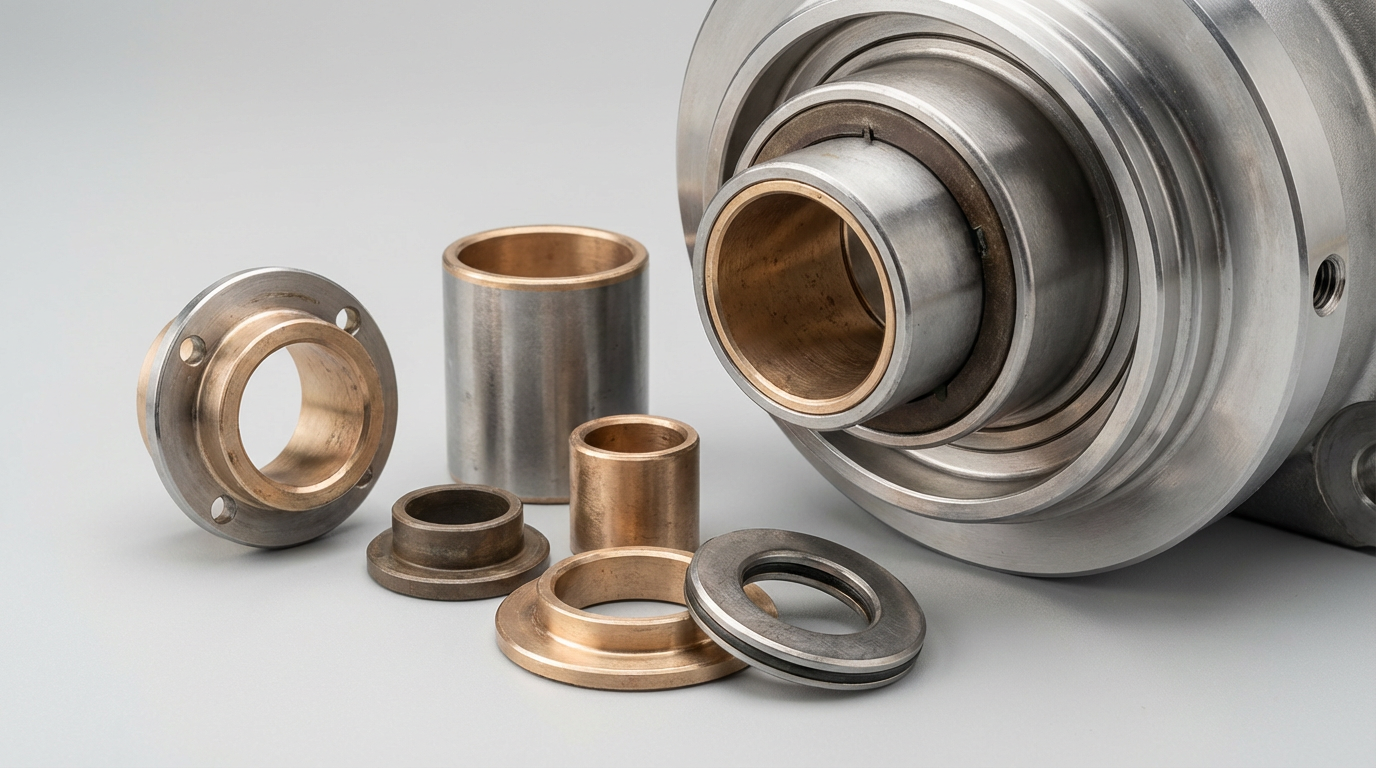
Bushings are simple yet critical components that reduce friction, control movement, and isolate vibration between two mating parts. You’ll find bushings in vehicles (suspension and steering), industrial machinery, pumps, and tools—anywhere a shaft, pin, or joint needs guided motion with controlled noise and wear. Selecting the right bushing material and fit directly impacts lifespan, precision, and maintenance cost.
Video Guide: This overview explains what bushings are, where they’re used, and why they matter in mechanical assemblies.
What is Bushings?
Bushings are cylindrical linings (sleeves) placed between moving parts—typically a shaft and a housing—to reduce friction, prevent metal-to-metal contact, and manage load. Unlike rolling bearings, bushings rely on sliding contact and material properties (or lubrication) to deliver quiet, compact, and cost-effective support.
Video Guide: This video gives a straightforward definition of bushings with practical examples and where they’re commonly installed.
Common Forms and Where You’ll See Them
Bushings are generally designed as sleeves, flanges, or split formats that press into a bore and support a rotating or oscillating shaft/pin.
- Sleeve bushing: Straight cylinder; the most common general-purpose form
- Flanged bushing: Adds a flange to locate parts axially and spread thrust load
- Split bushing: Easier installation/removal; can accommodate minor misalignment
- Self-lubricating bushing: Built-in lubricants (e.g., PTFE layers or oil-impregnated bronze) to reduce maintenance
Haron Bearing Pro Tip: When you’re unsure whether a “bearing” in a bill of materials is actually a bushing, check for rolling elements. If there are no balls/rollers and it’s a sleeve in a bore, treat it as a bushing and size it by load, speed, and PV limits—not by bearing “series.”
How Does Bushings Work?
Bushings work by providing a controlled sliding interface between parts. The bushing’s material (and often a lubricant film) carries the load, minimizes wear, and dampens vibration. In rotating or oscillating joints, the shaft slides against the bushing’s inner surface, while the outer surface stays fixed in the housing.
Video Guide: This explainer focuses on bushing selection and assembly, helping you visualize how a bushing supports motion in a housing.
Sliding Contact, Lubrication, and PV Limits
A bushing’s performance depends on how well it manages frictional heat and surface wear under load and speed—commonly evaluated using PV (Pressure × Velocity) capability.
- Load transfer: Radial load (and sometimes thrust) loads distribute through the bushing wall into the housing
- Friction control: Achieved via grease/oil or self-lubricating layers and compatible shaft finishes
- Wear management: Softer/embedded-lube materials can protect the shaft and tolerate contamination better than rolling bearings
- Heat dissipation: Material and housing conduct heat away; excessive PV accelerates wear
Haron Bearing Pro Tip: If a bushing fails early, don’t only blame material—measure shaft hardness/finish and check alignment. A great bushing on a rough, soft shaft or in a misaligned bracket will wear fast no matter what you install.
What happens if bushings go bad?
When bushings go bad, clearances increase and the joint loses control—leading to vibration, noise, steering/suspension instability (in vehicles), and accelerated wear of nearby parts. You may notice clunks, uneven tire wear, wandering alignment, or a sloppy linkage. Left unaddressed, failing bushings can damage shafts, housings, and mounts.
Video Guide: This video highlights the role of suspension bushings, typical wear indicators, and the symptoms you’ll feel when they deteriorate.
Typical Symptoms and Risk Progression
Bad bushings rarely “fail instantly”; they degrade over time and compound other issues.
- Early stage: Squeaks, minor vibration, slightly loose feel
- Mid stage: Clunks on bumps, braking/acceleration shift, alignment drift
- Late stage: Metal-to-metal contact, elongated mounting holes, cracked brackets, shaft scoring
Common root causes include contamination, wrong lubricant, excessive load, misalignment, and aging (rubber/polymer) or inadequate lubrication (metal bushings).
Haron Bearing Pro Tip: If you can move a joint by hand and feel a “knock” before the mechanism starts moving, you’re already beyond normal clearance. Replace the bushing before the housing bore becomes oval—bore repair costs far more than the bushing.
What is the purpose of a bushing?
The purpose of a bushing is to support and guide motion while controlling friction, noise, and wear between parts. Bushings also help absorb shock and vibration, protect expensive mating components (like shafts and housings), and provide a replaceable wear surface. They’re chosen when compactness, damping, or contamination tolerance is prioritized.
Video Guide: This comparison clarifies when bushings are preferred over rolling bearings and what trade-offs to expect.
Why Engineers Choose Bushings
Bushings are often selected for simplicity and robustness, especially in harsh or dirty environments.
- Cost-effective wear interface: Replace the bushing instead of the shaft/housing
- Vibration isolation: Especially with rubber or composite types
- High shock tolerance: Sliding elements can handle impact better than many rolling bearings
- Space efficiency: Thin-wall designs fit where bearing envelopes are limited
- Low-speed excellence: Oscillation and slow rotation can favor bushings over rolling bearings
Haron Bearing Pro Tip: In oscillating joints (back-and-forth motion), rolling bearings can brinell and micro-slip. I often recommend a self-lubricating composite bushing instead—less noise, better shock tolerance, and longer service life with minimal maintenance.
What does it cost to replace bushings?
Bushing replacement cost depends on location, labor access, and whether the job needs a press, alignment, or associated parts. In vehicles, individual suspension bushings can be inexpensive, but labor can dominate. In industrial equipment, costs vary by downtime, machining needs, and whether the shaft/housing must be repaired.
Video Guide: This suspension-focused guide helps explain why bushing replacement cost often comes down to labor and accessibility.
Cost Drivers You Should Account For
Replacement cost is rarely just the part price; it’s typically the total job scope.
- Part type and material: Rubber vs polyurethane vs bronze vs PTFE-lined
- Quantity and packaging: Single bushing vs complete control arm/module
- Tooling and method: Press-fit removal/installation, heat, or special fixtures
- Collateral work: Alignment, hardware replacement, shaft polishing, bore repair
- Downtime impact: Particularly in production lines or critical machinery
Haron Bearing Pro Tip: If the assembly requires significant labor to reach, treat bushings as “opportunity parts.” Replace paired bushings and inspect mating shafts at the same time—one extra bushing is cheap compared to repeating teardown labor.
Key Features & Comparison
Bushings vary widely by material and construction, which changes friction, load capacity, maintenance needs, and vibration behavior. Comparing options by environment (dirty vs clean), motion type (oscillating vs rotating), and lubrication capability prevents premature wear. The right choice balances durability, noise control, and total lifecycle cost—not just part price.
Material and Application Comparison
Based on our internal data and market analysis, here is the breakdown:
| Bushing Type | Key Strengths | Typical Trade-Offs | Best-Fit Applications |
|---|---|---|---|
| Rubber (bonded) | Excellent vibration isolation, quiet operation | Ages/cracks, softer handling/precision | Automotive mounts, comfort-focused suspension points |
| Polyurethane | Improved stiffness, longer life vs rubber | More NVH (noise/vibration/harshness), may need periodic greasing | Performance suspension, off-road upgrades |
| Bronze (oil-impregnated) | Good load capacity, reliable with proper lubrication | Can wear shafts if misaligned or dry | Motors, pumps, pivots, general industrial rotation |
| PTFE-lined / composite (self-lubricating) | Low friction, low maintenance, good in oscillation | PV limits; needs correct shaft finish | Linkages, robotics, clean/controlled environments |
| Nylon / acetal polymer | Low cost, corrosion resistant | Lower load/temp limits | Light-duty mechanisms, consumer equipment |
| Sintered metal (porous) | Self-lubricating via oil pores | Not ideal for heavy shock; oil depletion possible | Small motors, fans, light machinery |
Haron Bearing Pro Tip: Don’t choose bushing material by “what lasted last time” unless the operating conditions are the same. I always confirm load, speed, temperature, and contamination first—then match material and lubrication strategy to those realities.
Cost & Buying Factors
The best bushing purchase is the one that meets performance targets with the lowest total cost over its service interval. Price alone can be misleading because fit, shaft finish, lubrication method, and environment dictate lifespan. Buying the correct bushing specification up front reduces downtime, prevents shaft/housing damage, and stabilizes maintenance planning.
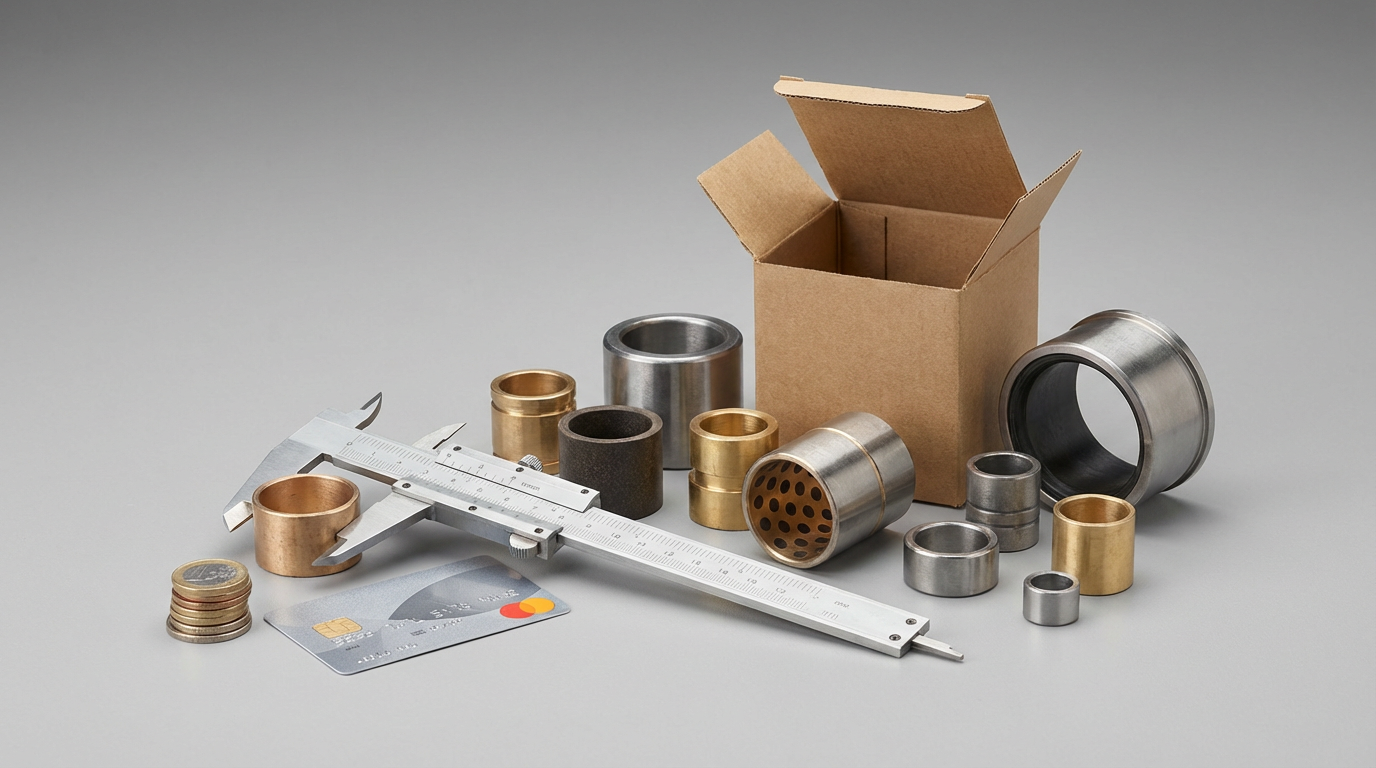
Practical Buying Checklist (What to Verify Before Ordering)
- Dimensions and tolerances: ID/OD/length, press-fit requirements, and running clearance
- Load and motion: Radial/thrust load, oscillation angle, speed, shock loading
- Environment: Dust, water, chemicals, temperature extremes, corrosion risk
- Lubrication plan: Grease/oil intervals vs self-lubricating requirement
- Mating surface requirements: Shaft hardness and surface roughness (finish) expectations
- Installation constraints: Access, press tools, split design needs, replacement frequency
- Compliance requirements (if applicable): Food-grade, low-noise, RoHS/REACH
Haron Bearing Pro Tip: If you’re comparing quotes, ask for the same technical basis: material spec, lining thickness (if composite), tolerance class, and recommended shaft finish. Many “equivalent” bushings aren’t equivalent in the details that determine service life.
Conclusion
Bushings are durable, space-efficient wear components that guide motion, reduce friction, and control vibration across automotive and industrial systems. The right choice comes down to material, lubrication strategy, and correct fit for the real operating conditions. If you’re selecting or replacing bushings and want application-matched guidance, Haron Bearing can help you specify the safest, longest-lasting option for your design.