
Thin-Section Ball Bearings
Compact, lightweight, and high-precision motion solutions for restricted spaces.
Haron thin-section ball bearings deliver exceptional rotational accuracy while significantly reducing overall equipment size and weight. Designed with a constant cross-section, these bearings are the optimal choice for robotics, aerospace, and advanced medical devices where space and weight are critical constraints.
* All buttons open our secure project inquiry form. Fast response guaranteed.
Thin-Section Ball Bearing Types
Haron manufactures a comprehensive range of thin-section bearings to accommodate various load directions and environmental requirements.
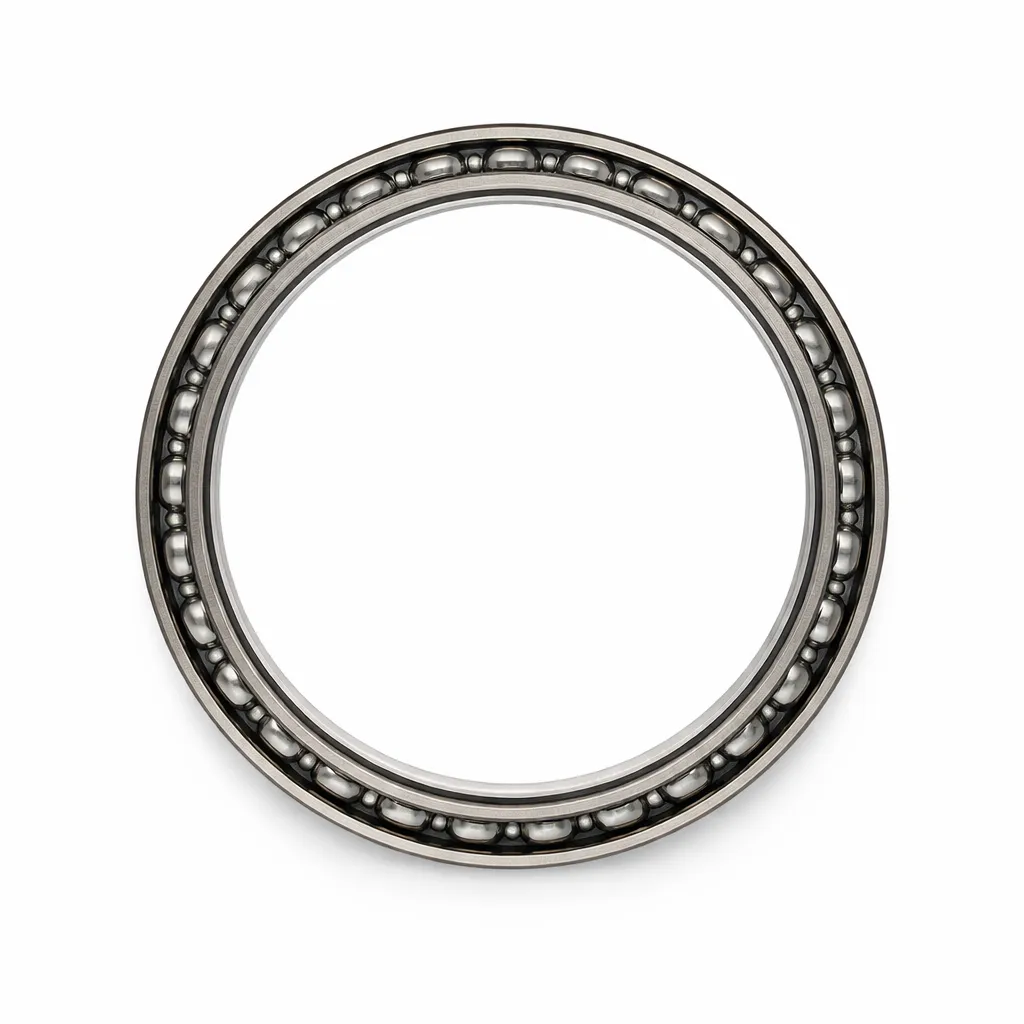
Deep Groove (Type C)
Structure: Single row with deep raceways.
Load: Primarily radial loads, with moderate axial loads in both directions.
Applications: General compact machinery, rotary encoders.
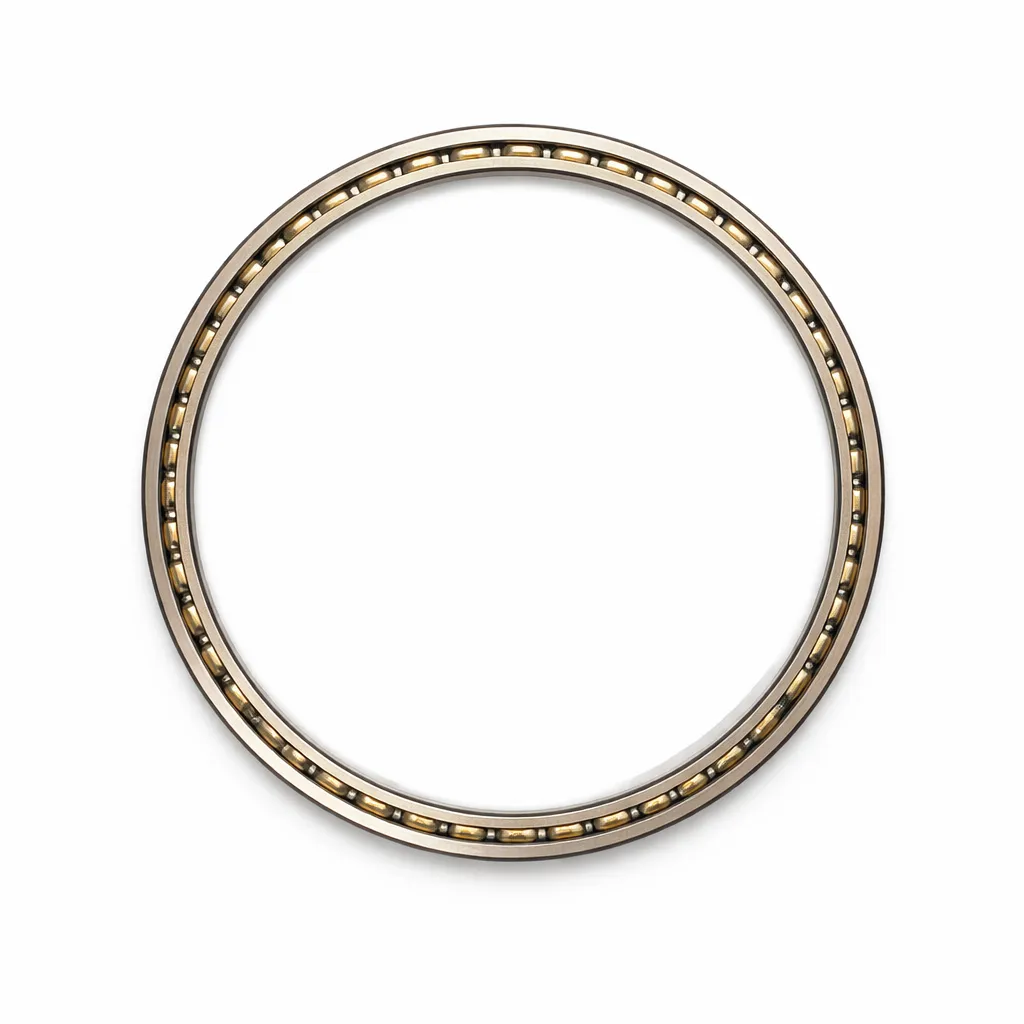
Angular Contact (Type A)
Structure: Asymmetrical raceways creating a contact angle.
Load: High axial loads in one direction and radial loads. Often used in pairs.
Applications: Spindles, precision positioning systems.
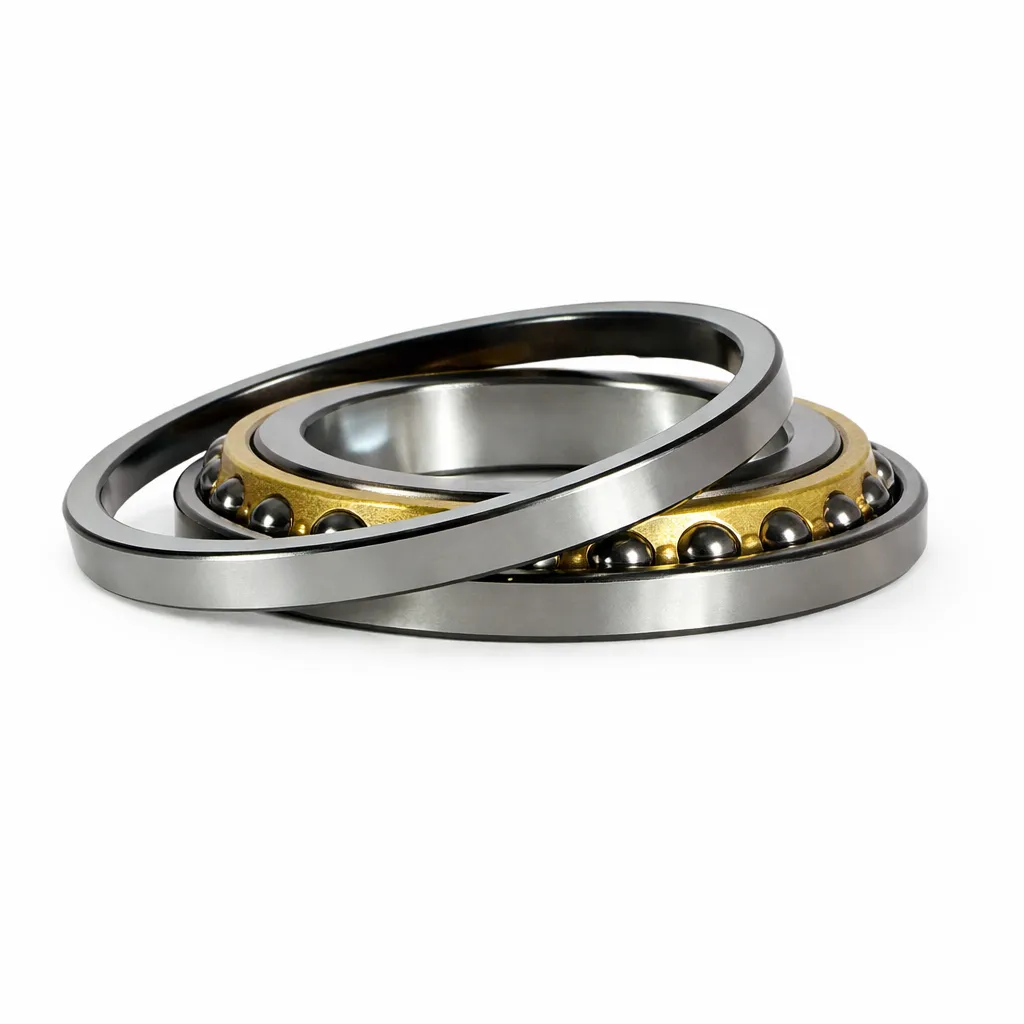
Four-Point Contact (Type X)
Structure: Split inner or outer ring, gothic arch raceway.
Load: Radial, axial (both directions), and moment loads simultaneously.
Applications: Robotic joints, radar mounts (replaces two bearings).
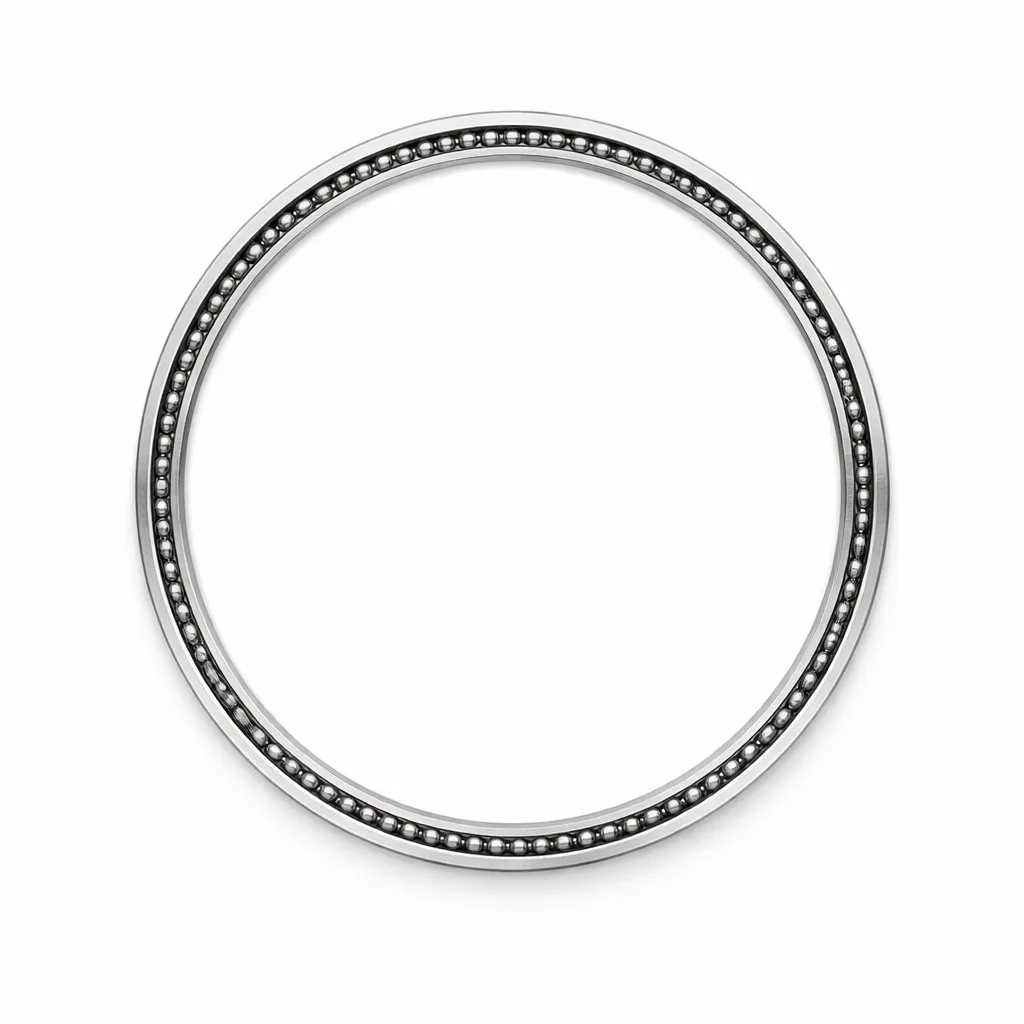
Open / Sealed / Shielded
Structure: Available without seals (open), with metal shields (ZZ), or rubber seals (2RS).
Load: Same as base type.
Applications: Harsh environments requiring contamination protection.
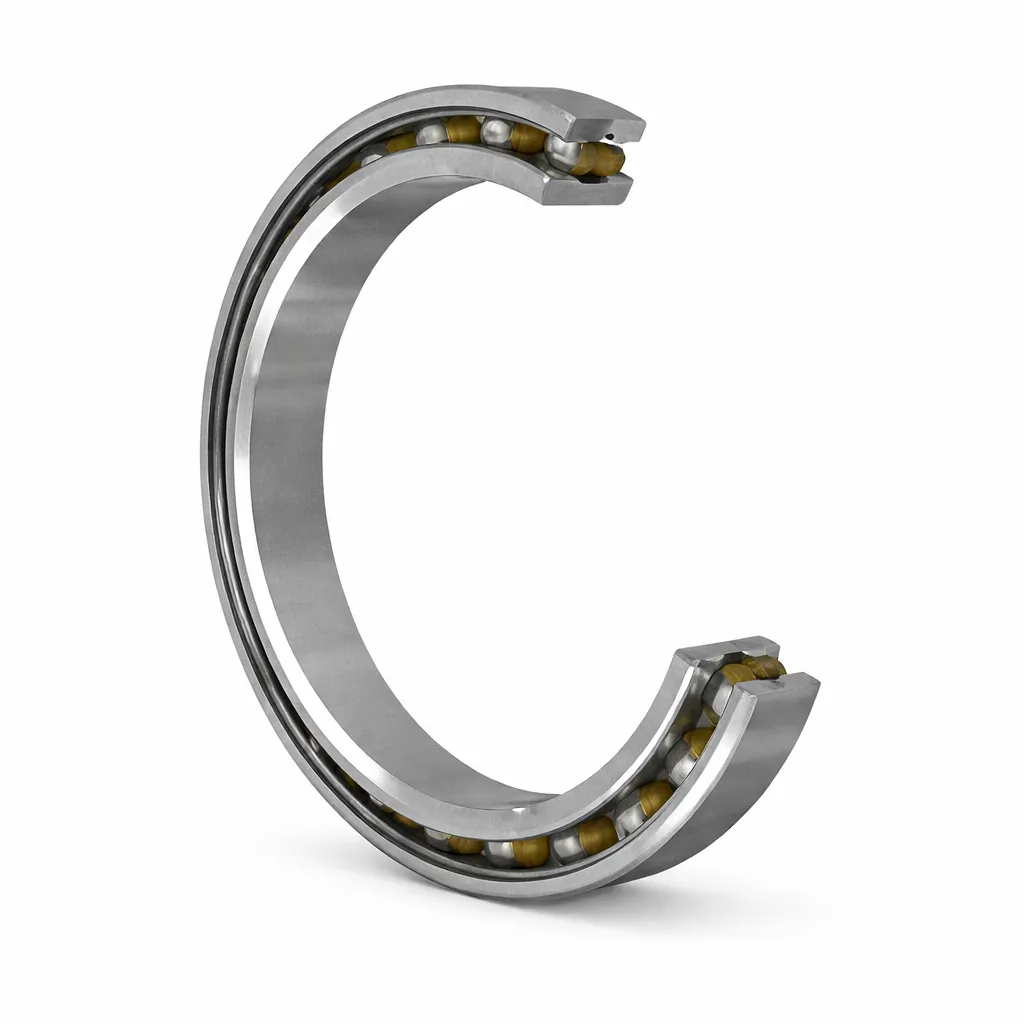
Inch Series
Structure: Standardized imperial dimensions (e.g., Kaydon replacements).
Load: Varies by internal type (C, A, X).
Applications: North American equipment, aerospace legacy systems.
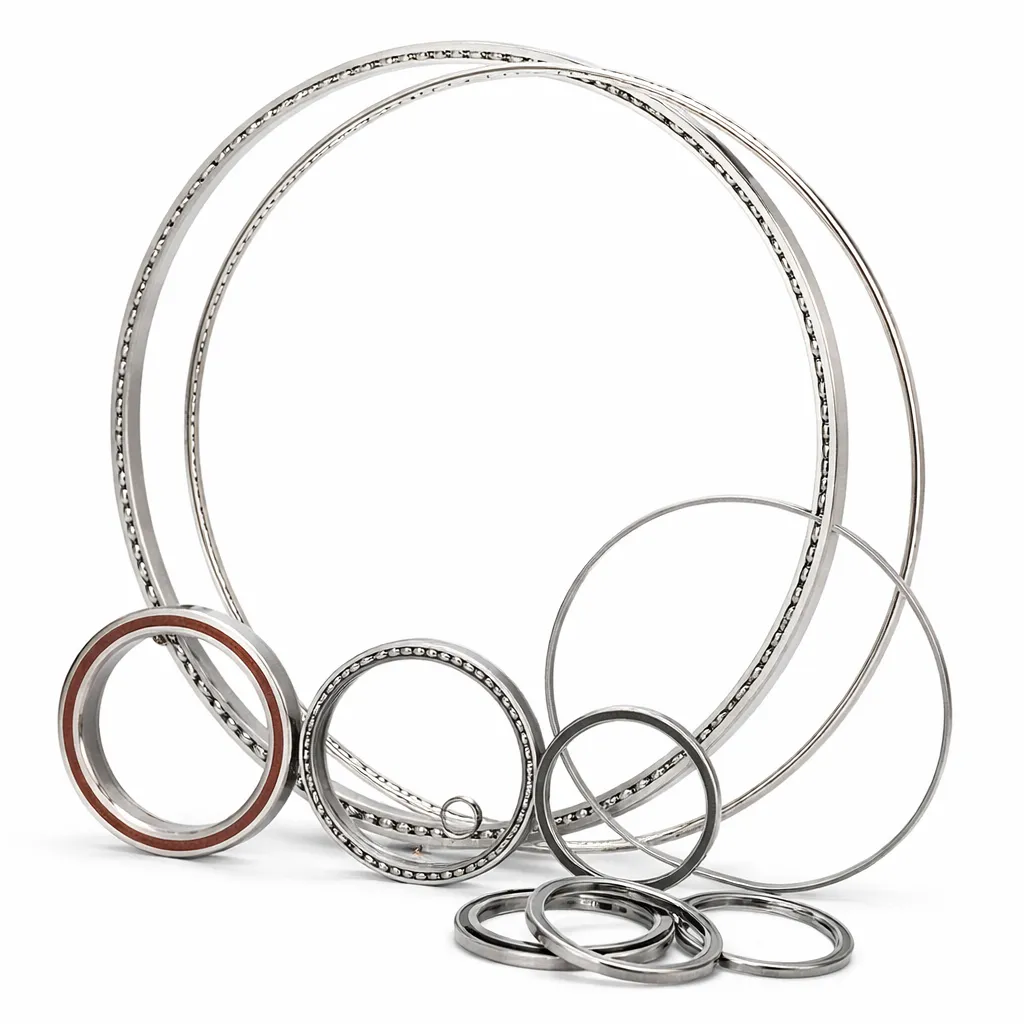
Metric Series
Structure: Standardized metric dimensions (e.g., 6800, 6900, CS series).
Load: Varies by internal type.
Applications: Global industrial machinery, modern automation.
Need a Custom Bearing Solution?
Our engineering team supports OEM, ODM, and non-standard bearing customization to meet your precise application requirements.
Applications of Thin-Section Ball Bearings
Where space is premium and performance is non-negotiable.
Robotics
Enables hollow-shaft robotic joints for internal cable routing while keeping robot arms lightweight.
Automation Equipment
Provides precise positioning in pick-and-place mechanisms with minimal footprint.
Medical Devices
Used in CT scanners and surgical robots for smooth, quiet, and highly accurate rotation.
Optical & Imaging
Ensures vibration-free rotation in camera gimbals and high-end telescoping systems.
Aerospace Systems
Critical for reducing weight in radar mounts, satellite mechanisms, and UAVs.
Semiconductor Equip.
Delivers high precision in vacuum environments for wafer handling robots.
Rotary Tables
Four-point contact types support heavy moment loads in low-profile rotary indexing tables.
Packaging Machinery
Facilitates high-speed, low-friction movement in compact packaging and filling lines.
Technical Specifications
Haron thin-section bearings are engineered to strict international standards. The following table outlines our general manufacturing capabilities. For exact dimensional data, dynamic/static load ratings, and specific part numbers, please request our full catalog.
| Bore Diameter | 10 mm to 1000 mm (1 inch to 40 inches) |
|---|---|
| Outer Diameter | 15 mm to 1050 mm |
| Width (Cross Section) | 2.5 mm to 25.4 mm (0.187" to 1.000") |
| Bearing Type | Deep Groove (C), Angular Contact (A), Four-Point (X) |
| Load Direction | Radial, Axial, Moment (depending on type) |
| Precision Grade | P4, P2 (ABEC 1 to ABEC 9) |
| Material Options | Chrome Steel (GCR15), Stainless Steel (440C), Ceramic Hybrid |
| Cage Type | Brass, Nylon (PA66), PEEK, Steel, Phenolic |
| Sealing Options | Open, Metal Shields (ZZ), Rubber Seals (2RS/2RZ) |
| Clearance / Preload | Standard (CN), C3, C4, Custom Preload available |
| Temperature Range | -40°C to +150°C (High temp options up to 250°C) |
* Both buttons open our inquiry form for direct engineering support.
Materials and Engineering Options
To ensure optimal performance in your specific operating environment, Haron offers extensive material and engineering configurations:
- Ring & Ball Materials: Standard high-carbon chrome steel (GCr15) for high load capacity, 440C stainless steel for corrosion resistance, or ceramic balls (Si3N4) for high-speed, non-conductive hybrid solutions.
- Cage Materials: Brass for durability, Nylon/PEEK for lightweight and low noise, or Phenolic resin for high-speed spindle applications.
- Lubrication: Wide selection of industrial greases, food-grade lubricants, vacuum-compatible greases, or solid lubrication for special environments.
- Surface Treatments: Black oxide, zinc plating, or anti-corrosion coatings available upon request.
OEM Thin-Section Bearing Solutions
As a primary manufacturer, Haron provides comprehensive OEM and ODM services for global equipment manufacturers, brand owners, and industrial distributors.
✓ Custom Sizes: Any bore, OD & width.
✓ Drawing Support: CAD to production.
✓ Brand Replacement: Cost-effective equivalents.
✓ Sample Support: Rapid prototyping.
✓ Custom Packaging: Private label or bulk.


How to Select the Right Thin-Section Ball Bearing
Identify whether your application involves radial loads, axial loads, moment loads, or a combination. Use Deep Groove (C) for primarily radial loads, Angular Contact (A) for uni-directional axial loads, and Four-Point Contact (X) for combined or moment loads.
Measure the maximum allowable outer diameter and required bore size. Choose the cross-section series (e.g., 1/4", 5/16", 1/2" for inch series, or specific metric cross-sections) that fits within your spatial constraints while meeting load requirements.
Higher speeds may require specific cage materials (like phenolic) or ceramic balls. For high accuracy in positioning systems, specify a higher precision grade (P5, P4, or P2) and consider preloaded bearings to eliminate internal clearance.
If exposed to moisture or chemicals, opt for stainless steel (440C). In dusty or contaminated environments, specify sealed (2RS) or shielded (ZZ) structures to protect the internal raceways and retain lubrication.
Why Global Buyers Choose Us
Stable Manufacturing
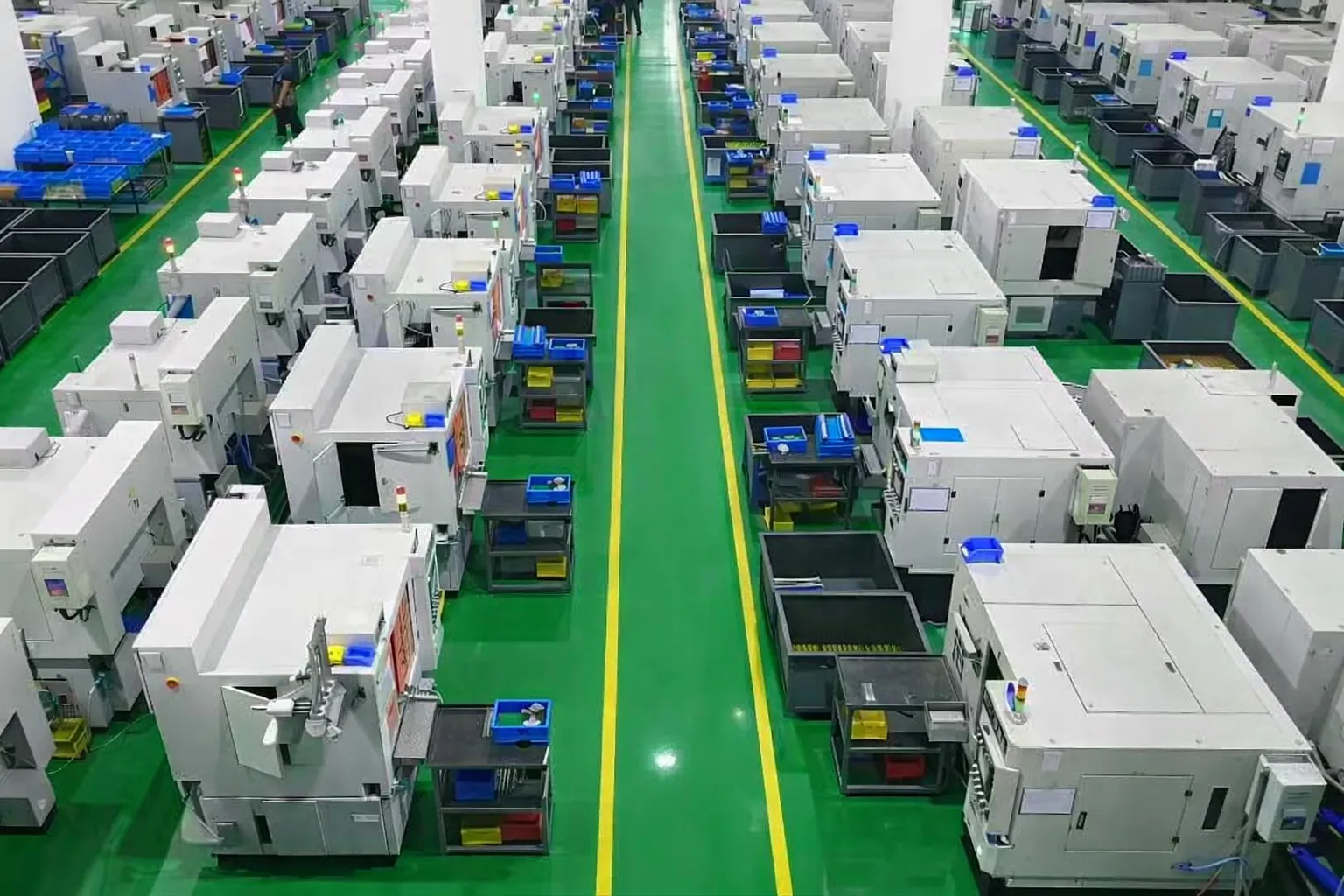
100 advanced production lines ensuring large-scale capacity and consistent on-time delivery.
Strict Quality Control
Rigorous inspection from raw materials to finished products, achieving up to P2 precision.
Technical Support
Direct engineering communication for OEM/custom projects, ensuring exact specifications are met.
Export Expertise
Fast quotation response and seamless export services supporting buyers from inquiry to shipment.
Ready to Optimize Your Equipment Design?
Consult with our engineering team today. We provide CAD drawings, technical datasheets, and custom thin-section bearing solutions tailored to your exact specifications.
Thin-Section Ball Bearings FAQ
They are primarily used in applications where space and weight are strictly limited, but high precision and smooth rotation are required. Common uses include robotics, medical imaging equipment (CT scanners), aerospace mechanisms, semiconductor manufacturing tools, and optical targeting systems.
The main difference is the cross-section. Standard bearings increase in cross-sectional size as the bore diameter increases. Thin-section bearings maintain a constant, minimal cross-section (e.g., 1/4" x 1/4") regardless of how large the bore diameter gets, saving significant space and weight.
Yes. While Deep Groove (Type C) supports primarily radial loads, Angular Contact (Type A) is designed for axial loads in one direction, and Four-Point Contact (Type X) can support axial loads in both directions as well as moment loads.
We offer Deep Groove (C), Angular Contact (A), and Four-Point Contact (X) types. These are available in open, shielded (ZZ), and sealed (2RS) configurations, in both inch and metric dimensions.
Yes, we manufacture both. We offer standard metric thin-section bearings (like the 6800/6900 series and CS series) as well as standardized inch series commonly used in North American and aerospace markets.
Absolutely. We support OEM and ODM customization. We can produce non-standard dimensions, use special materials (stainless steel, ceramics), apply custom surface treatments, and adjust internal clearances based on your engineering drawings.
Yes, they are the ideal choice. Their large bore allows for internal routing of cables and pneumatics in robotic joints, while their lightweight and precise rotation are perfect for sensitive medical devices like surgical robots and scanners.
Yes, our inch series thin-section bearings are dimensionally interchangeable with major international brands, including Kaydon Reali-Slim® bearings, providing a high-quality, cost-effective alternative for equipment maintenance and production.
For an accurate quote and selection, please provide the required bore size, outer diameter, width, expected load (radial/axial/moment), operating speed, environmental conditions (temperature, moisture), and whether you need open or sealed types.
Yes, we provide full product catalogs, technical datasheets, and 2D/3D CAD drawings to assist engineers in the design phase. Simply submit a request through our inquiry form.