
Thin-section bearings—also called thin wall bearings, slim bearings, or thin section ball bearings—solve a common engineering problem: how to support precise rotation when radial space is limited. By keeping the cross-section small while maintaining stiffness and accuracy, they enable compact bearing solutions across robotics, medical devices, aerospace, and semiconductor automation where space saving bearings are critical and performance tolerances are tight.
Video Guide: A practical overview of where thin cross-section bearings fit best and what to consider when selecting them.
What is thin-section bearings thin wall bearings slim bearings thin section ball bearings thin section bearing types thin section bearing applications precision thin section bearings thin section bearing advantages compact bearing solutions space saving bearings reali slim bearings?
Thin-section bearings are precision rolling bearings designed with a very small, nearly constant cross-section relative to bore size, enabling large internal diameters without bulky outer dimensions. They are used when you need slim bearings for tight packaging, low inertia, and accurate rotation in compact bearing solutions.
Video Guide: Explains why thin-section bearings are used and what advantages they deliver in space-constrained designs.
Definition, construction, and common thin section bearing types
Thin-section bearings reduce envelope size by using thinner rings and optimized raceway geometry while preserving running accuracy. Most designs are thin section ball bearings, typically supplied as open, shielded, or sealed units depending on contamination and lubrication needs. Precision thin section bearings are commonly specified by bore/OD/width plus accuracy class (runout) and internal clearance or preload.
Common thin section bearing types used in thin wall bearing packages include:
- Radial contact (deep-groove) thin-section bearings: best for primarily radial loads with moderate axial capability.
- Angular contact thin-section bearings: handle combined loads; often used in matched pairs for stiffness and bidirectional axial load.
- Four-point contact thin-section bearings: support axial load in both directions plus moderate radial load in a single bearing (space saving bearings for simplified stacks).
- Sealed vs. open designs: sealed options trade slightly higher torque for contamination resistance; open designs favor ultra-low torque and custom lubrication.
Haron Bearing Pro Tip: When customers ask for “reali slim bearings,” I first confirm whether they mean a constant cross-section series (for packaging) or a specific stiffness/torque target (for performance). That one clarification prevents most mis-selections.
How Does thin-section bearings thin wall bearings slim bearings thin section ball bearings thin section bearing types thin section bearing applications precision thin section bearings thin section bearing advantages compact bearing solutions space saving bearings reali slim bearings Work?
Thin-section bearings work by rolling balls between hardened inner and outer raceways with minimal ring thickness, converting sliding friction into rolling friction while maintaining alignment. Depending on contact angle, they carry radial loads, axial loads, or both. Preload and precision grinding control runout, stiffness, and torque in slim bearings.
Video Guide: Reviews how ball bearings carry loads and how geometry influences friction and load direction—useful background for thin-section ball bearings.
Load paths, contact angle, and stiffness control
Thin section ball bearings follow the same physics as standard ball bearings, but packaging magnifies design sensitivities: housing roundness, shaft runout, and bolt distortion can all affect raceway geometry and torque. The bearing’s contact angle determines how force is transmitted:
- Radial bearings: load is primarily radial; axial capacity is secondary.
- Angular contact: load transfers along an angled line of action, improving axial capacity and system stiffness.
- Four-point contact: two effective contact angles allow axial loads in both directions in one bearing, often used for space saving bearings in rotary tables.
Key setup elements that influence performance in precision thin section bearings:
- Fits (shaft/housing): too tight increases torque and reduces life; too loose reduces runout control.
- Preload vs. clearance: preload raises stiffness and repeatability but increases torque/heat; clearance lowers torque but can allow axial play.
- Lubrication choice: grease is convenient and sealing-friendly; oil or minimal lube supports ultra-low torque and high-speed duty.
- Mounting distortion: thin rings are more sensitive—use controlled clamping, flat shoulders, and good housing geometry.
Haron Bearing Pro Tip: I treat thin-section rings like “precision structures,” not just components—always review housing wall thickness, shoulder squareness, and bolt pattern distortion before locking in preload. It’s the fastest way to avoid unexplained torque spikes.
What are the benefits of thin-section bearings thin wall bearings slim bearings thin section ball bearings thin section bearing types thin section bearing applications precision thin section bearings thin section bearing advantages compact bearing solutions space saving bearings reali slim bearings?
Thin section bearing advantages center on saving space and weight while maintaining precision. Thin wall bearings enable larger bores in the same envelope, reduce rotating inertia, and support smooth, accurate motion. In compact bearing solutions, they simplify assemblies by removing the need for bulky bearing stacks and allowing tighter mechanical packaging.
Video Guide: Helpful overview of how different bearing types handle loads, supporting selection decisions for thin-section bearing applications.
Practical advantages for design and manufacturing
Thin-section bearings are chosen when the system-level benefits outweigh the added sensitivity to installation and alignment. Typical benefits include:
- Space savings: small cross-section frees radial space for motors, cables, optics, or larger shafts.
- Weight reduction: important for robots, aerospace mechanisms, and moving stages.
- Lower inertia: improves acceleration/deceleration response and servo tuning.
- High positioning accuracy: precision thin section bearings can deliver low runout for repeatability.
- Simplified architecture: four-point contact options can reduce part count versus duplex pairs in some layouts.
- Compatibility with large bores: enables through-holes for wiring, tooling, vacuum lines, or rotating unions.
Typical thin section bearing applications:
- Robotics joints and cobots (compact wrists/axes).
- Medical imaging and surgical robots (smooth motion, tight envelopes).
- Semiconductor and metrology stages (precision and repeatability).
- Aerospace actuators and gimbals (weight and volume constraints).
- Rotary tables, indexers, and automation (space saving bearings for compact platforms).
Haron Bearing Pro Tip: If your primary value is “space,” pick the bearing type last—first confirm load direction, required stiffness, and allowable torque. That order prevents choosing a slim bearing that fits physically but fails functionally.
How to maintain a thin-section bearings thin wall bearings slim bearings thin section ball bearings thin section bearing types thin section bearing applications precision thin section bearings thin section bearing advantages compact bearing solutions space saving bearings reali slim bearings?
Maintaining thin-section bearings focuses on cleanliness, correct lubrication, and controlling installation distortion. Because thin wall bearings have less ring stiffness, contamination and misalignment show up faster as torque rise, noise, or heat. Use appropriate seals, follow fit recommendations, and monitor vibration/temperature to preserve precision and service life.
Video Guide: Covers bearing basics and working principles that support maintenance understanding, including lubrication and failure drivers.
Maintenance checklist for precision thin section bearings
Thin section bearing applications often operate in sensitive environments (cleanrooms, medical, optics) where maintenance practices must match the duty cycle. Use this checklist:
- Keep contamination out: use seals/shields where feasible; protect during assembly; avoid lint-producing wipes.
- Use the right lubricant amount: over-greasing increases torque and heat; under-lubrication increases wear.
- Confirm fits and seating: ensure shoulders are square and surfaces are clean; avoid cocking the ring during press-in.
- Control clamp distortion: use even torque patterns and validated fastener torque; consider spacers or stiffer mounting rings if needed.
- Monitor condition: track baseline torque, noise, temperature, and vibration; trend changes rather than waiting for failure.
- Re-lubrication plan (if applicable): schedule by speed, temperature, environment, and duty cycle; verify compatibility when changing grease/oil types.
Haron Bearing Pro Tip: I recommend recording initial “acceptance torque” after installation for slim bearings. If torque drifts upward, it usually points to mounting distortion or contamination before it becomes a full failure.
What is the price of thin-section bearings thin wall bearings slim bearings thin section ball bearings thin section bearing types thin section bearing applications precision thin section bearings thin section bearing advantages compact bearing solutions space saving bearings reali slim bearings?
Thin-section bearing price depends mainly on size, precision grade, bearing type (radial, angular, four-point), materials, and sealing/lubrication requirements. Precision thin section bearings with tighter runout, matched pairs, special stainless steels, or cleanroom greases cost more. Volume, lead time, and quality documentation also significantly affect total price.
Video Guide: General bearing type discussion that helps link performance requirements (load, speed, accuracy) to cost drivers.
Main cost drivers and how to estimate budget ranges
Thin wall bearings are specialized components; pricing is best confirmed by quotation because tolerances and configurations vary widely. Key price drivers include:
- Geometry and size: larger bores with thin cross-sections require tighter manufacturing control.
- Precision level: lower runout and tighter bore/OD control increases grinding and inspection cost.
- Preload/matching: duplex sets or controlled preload adds processing and traceability.
- Material and heat treatment: stainless, corrosion-resistant steels, or special hardness specs add cost.
- Seals and lubrication: low-outgassing greases, cleanroom packing, or special seals increase cost.
- Documentation: PPAP-like packages, material certs, and inspection reports add non-trivial overhead.
Haron Bearing Pro Tip: When I’m helping a buyer control cost, I ask for the “must-have” specs (runout, torque, life, environment) and strip out “nice-to-have” defaults like ultra-tight clearance or premium seals that don’t match the application. That alone often reduces price without sacrificing performance.
Key Features & Comparison
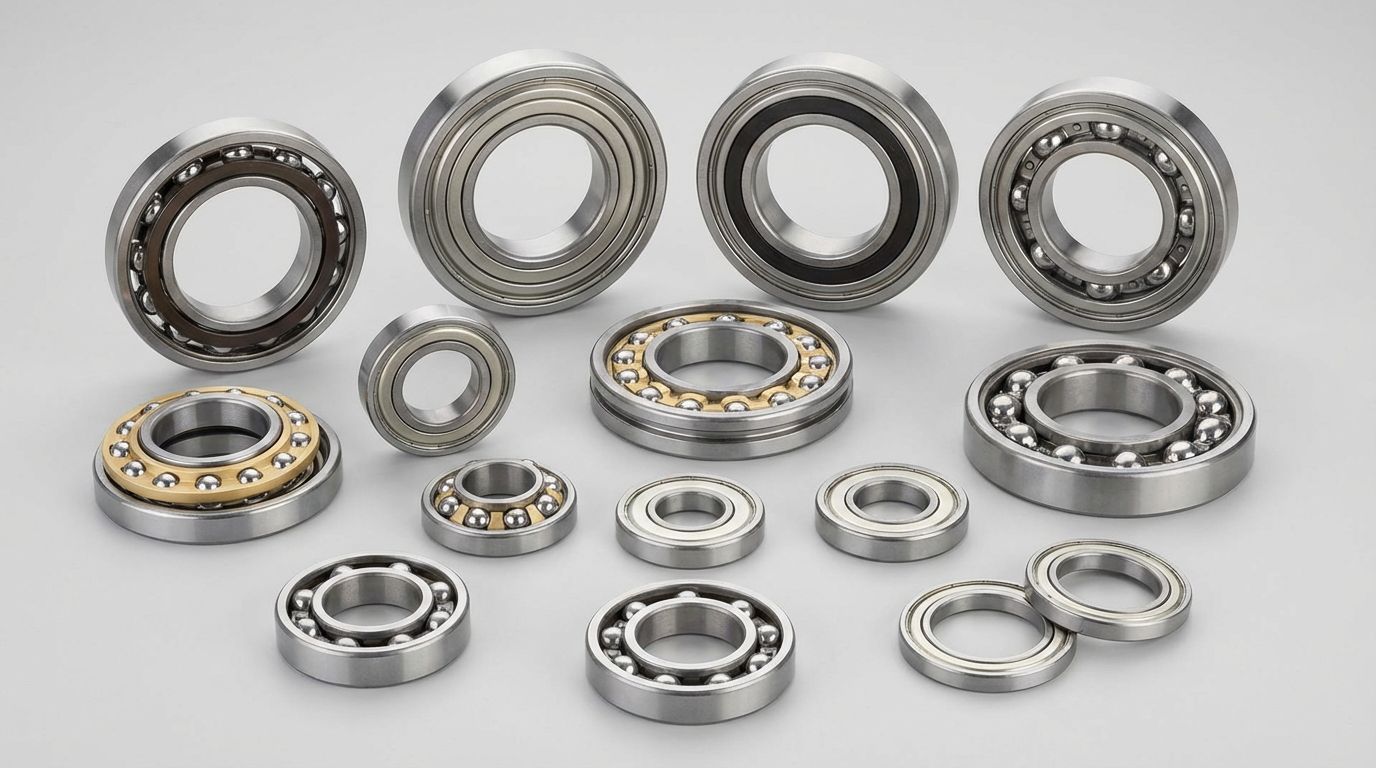
Based on our internal data and market analysis, here is the breakdown:
| Feature | Radial (Deep-Groove) Thin-Section | Angular Contact Thin-Section | Four-Point Contact Thin-Section | Best Fit Use Case |
|---|---|---|---|---|
| Primary load capacity | Radial | Combined (radial + axial) | Axial both directions + moderate radial | Load-direction driven designs |
| Axial load handling | Moderate | High (directional; pair for both directions) | High (both directions) | Rotary tables, gimbals, joints |
| Stiffness potential | Medium | High (with preload) | Medium-High (application dependent) | Precision positioning stages |
| Torque (typical) | Low | Medium (higher with preload) | Medium | Low-torque motion systems |
| Packaging efficiency | High | Medium-High (often needs pairing) | Very high (single bearing solution) | Space saving bearings |
| Common thin section bearing applications | Idlers, light robotics, instruments | Robot joints, machine axes, high accuracy stages | Turntables, indexers, compact axial constraints | Compact bearing solutions |
| Key selection watch-out | Axial load may be underestimated | Requires correct orientation and preload control | Sensitive to moment loading and mounting distortion | Precision thin section bearings |
Cost & Buying Factors
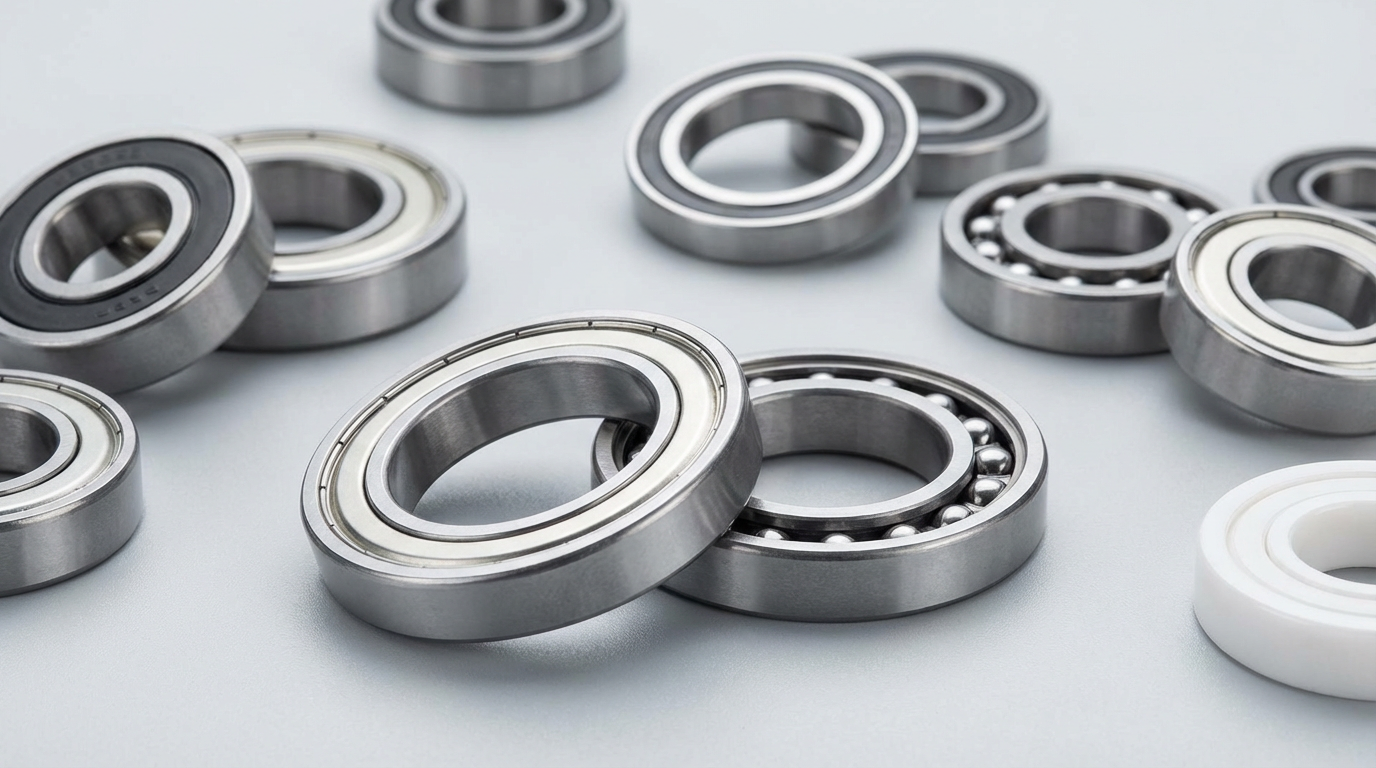
Selecting reali slim bearings (or any slim bearing equivalent) is primarily an engineering fit-and-function decision, then a supply-chain optimization. Focus on the factors that most strongly influence performance and delivered cost:
- Define loads clearly: radial, axial (both directions?), and any overturning moment; include duty cycle and shock loads.
- Confirm accuracy needs: allowable runout, tilt, and repeatability; avoid over-specifying precision “just in case.”
- Decide on clearance/preload: align with stiffness and torque targets; specify measurement conditions to avoid ambiguity.
- Environmental requirements: corrosion resistance, cleanroom compatibility, vacuum suitability, washdown, temperature range.
- Speed and lubrication strategy: grease vs. oil; re-lube capability; seal drag versus contamination risk.
- Mounting design maturity: thin wall bearings are sensitive—validate housing geometry, shoulder design, and fastener torque plans early.
- Supplier capability and documentation: inspection reports, material certificates, serialization/traceability, and lead time stability.
For Haron Bearing sourcing, providing the following up front speeds quotation and improves selection accuracy: bore/OD/width, load cases, speed, accuracy/runout targets, mounting fits, lubrication preference, and environment.
Conclusion
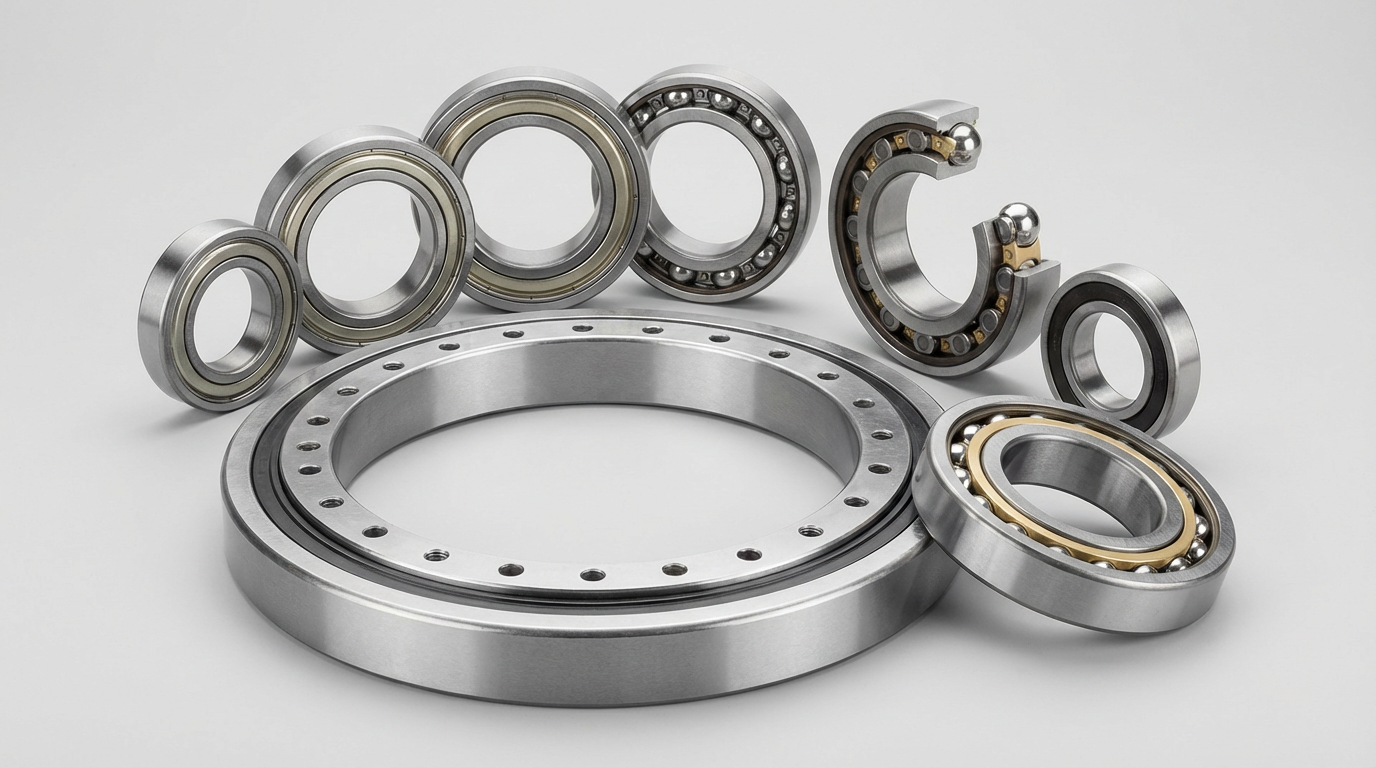
Thin-section bearings deliver precision rotation in tight spaces by minimizing cross-section while preserving accuracy, making them a go-to choice for compact bearing solutions in robotics, medical, aerospace, and automation. The best results come from matching bearing type to load direction, controlling preload, and designing mountings that avoid distortion. For application-specific selection and pricing, Haron Bearing can recommend the right thin section bearing types based on your load, space, and accuracy targets.