
Selecting the right robot bearing manufacturer or robot bearing supplier is a risk-management decision as much as a sourcing decision. The best choice balances application fit, measurable quality systems, and dependable supply. This guide shows what to evaluate—engineering capability, traceability, testing, lead times, and lifecycle support—so you can qualify suppliers confidently and reduce unplanned downtime.
Video Guide: Use this structured, step-by-step selection method to translate your robot’s requirements into bearing specifications and supplier qualification criteria.
What is robot bearing manufacturer / robot bearing supplier?
A robot bearing manufacturer designs and produces bearings optimized for robotic joints, gearboxes, and end-effectors, while a robot bearing supplier sources, stocks, and delivers those bearings with documentation and support. In practice, many companies do both, but capabilities differ in customization, testing, traceability, and lead-time control.
Practical definitions and what you’re really buying
A “robot bearing manufacturer” typically owns (or tightly controls) production processes such as heat treatment, grinding, superfinishing, and inspection. That matters for robotics because bearings often face combined loads, micro-vibration, frequent reversals, low-speed torque ripple, and tight positioning requirements.
A “robot bearing supplier” may be a distributor, an integrator, or a trading company that provides logistics, cross-brand alternatives, and faster local delivery. This can be valuable when you need multi-brand sourcing, buffer inventory, or simplified procurement—provided they can guarantee authenticity and consistent documentation.
Key differences to confirm early:
- Design responsibility: who verifies life, stiffness, and friction/torque performance in your duty cycle
- Quality responsibility: who owns root-cause analysis and corrective actions (8D/CAPA)
- Documentation: who provides lot traceability, material certs, inspection reports, and change control notices
- Spares strategy: who supports long-term availability and form/fit/function consistency
Haron Bearing Pro Tip: I treat “manufacturer vs supplier” as a controllability question—if your robot has tight repeatability targets, prioritize partners who can show process capability (Cp/Cpk), not just a catalog and a quote.
How Does robot bearing manufacturer / robot bearing supplier Work?
A robot bearing manufacturer or supplier works by translating your robot joint requirements into a bearing specification, then controlling materials, geometry, lubrication, and cleanliness to achieve target stiffness, accuracy, and life. The supplier side adds qualification, documentation, packaging, and delivery reliability—often including incoming QC, kitting, and aftersales support.
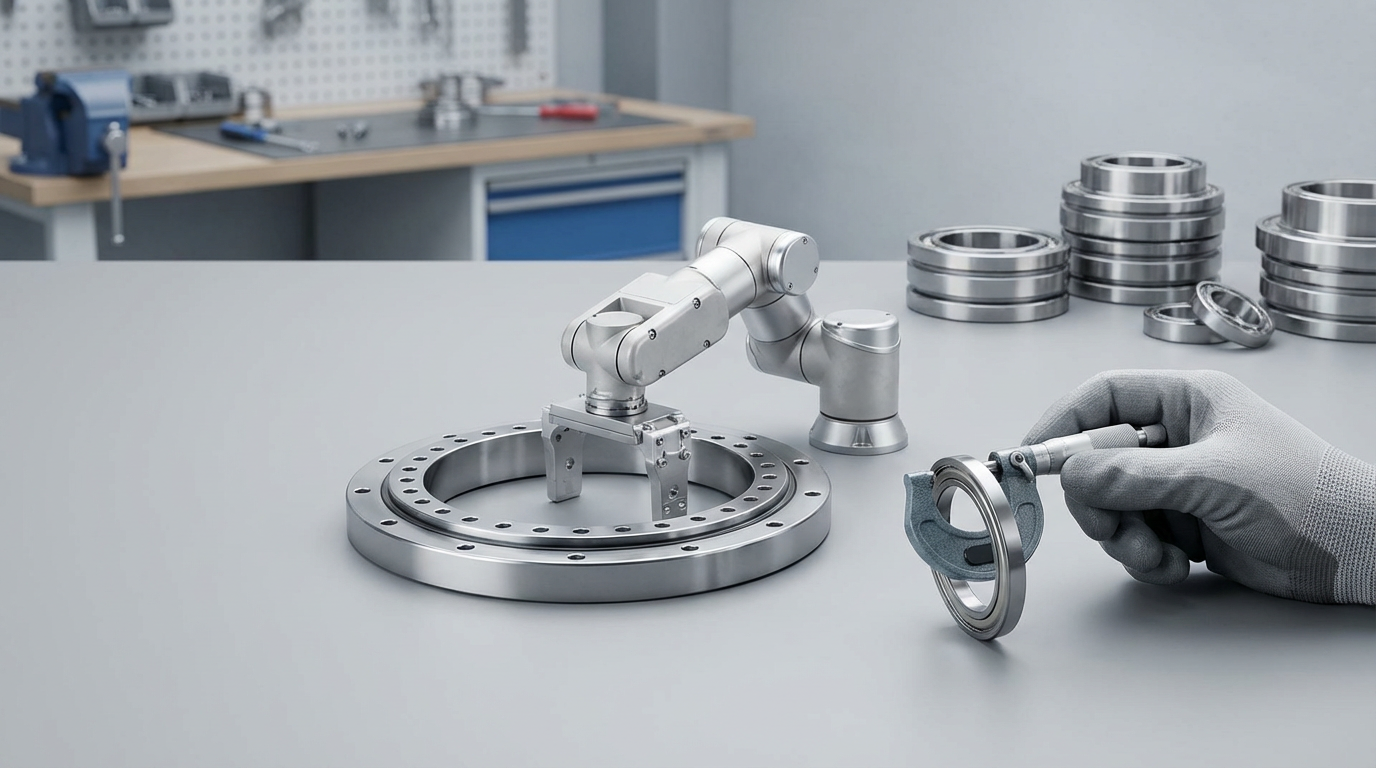
From application data to verified bearing performance
The “work” is a chain of technical and operational steps that should be visible during qualification:
- Requirements capture: loads (radial/axial/moment), speed profile, duty cycle, temperature, contamination, mounting constraints, target accuracy (runout), allowable torque, noise, and backlash/stiffness needs.
- Bearing selection & validation: choose bearing type (crossed roller, thin-section, angular contact, deep groove, etc.), compute rating life, check stiffness, and validate torque behavior under preload.
- Process control (manufacturer): material selection, heat treat, grinding, superfinishing, cage design, lubrication fill, and cleanliness controls.
- Inspection & traceability: dimensional inspection, runout, torque testing, noise/vibration grading, and lot traceability.
- Packaging & logistics (supplier): corrosion protection, clean packaging, shock control, FIFO/lot control, and document pack management.
- Support: installation guidance, failure analysis, and change notifications.
A capable robot bearing supplier should show how they prevent the common robotics issues: torque spikes, micro-pitting, grease starvation, false brinelling, and mounting distortion.
Haron Bearing Pro Tip: I always ask for torque vs. speed data under the intended preload—if a supplier can’t provide it (or won’t test it), you’re buying uncertainty.
What is the 2 1 bearing rule?
The “2:1 bearing rule” commonly refers to sizing and support guidance where the bearing dynamic load rating (and/or the combined load margin) should be at least about twice the application’s equivalent dynamic load, especially for variable or shock-loaded systems. It’s a rule-of-thumb to add robustness when duty cycles are uncertain.
How to use it without over- or under-designing
Robotics often violates steady-state assumptions: accelerations, abrupt reversals, and intermittent dwell can cause peak loads and lubrication challenges. A simple 2:1 heuristic can help early in design, but it should be replaced by duty-cycle calculations once loads are known.
Use the rule as a quick filter:
- Concept stage: eliminate bearings with obviously insufficient capacity
- Prototype stage: verify with measured loads/torque, then refine selection
- Production stage: finalize with calculated equivalent dynamic load and reliability targets
A practical checklist:
- Confirm equivalent dynamic load (P) method fits your load mix (radial/axial/moment).
- Apply service factors for shock, contamination, temperature, and mounting stiffness.
- Validate against life target (L10h) and precision/torque requirements (not just capacity).
- Ensure safety margin doesn’t force a bearing so large it increases inertia or friction.
Haron Bearing Pro Tip: I use 2:1 as a “don’t waste time quoting undersized options” screen—then I switch to duty-cycle life plus torque/stiffness verification before freezing the BOM.
Which bearing manufacturer is best?
There isn’t one universally “best” bearing manufacturer; the best choice is the one that consistently meets your robot’s torque, stiffness, accuracy, cleanliness, and lifecycle targets with documented process control. Evaluate brands on application fit, validation data, change control, traceability, and supply resilience—not only on reputation or unit price.
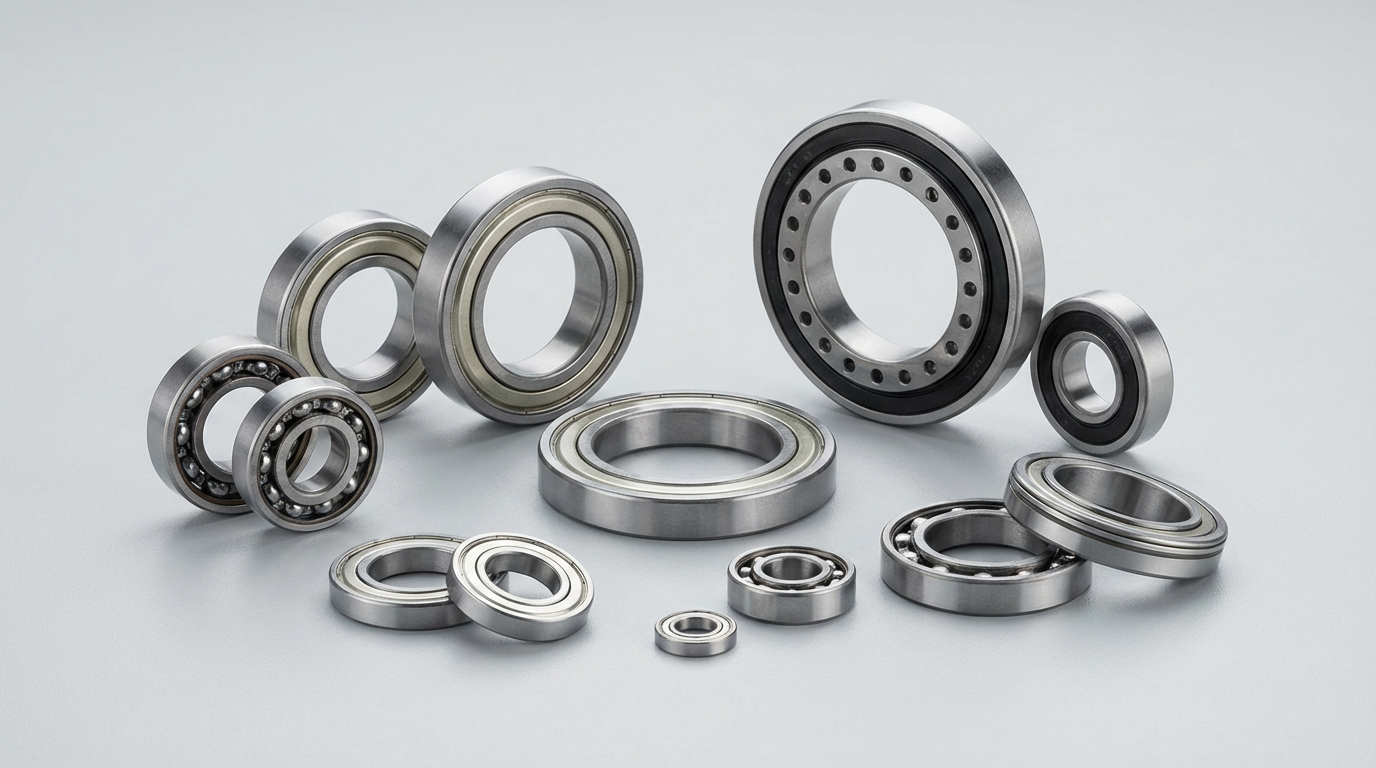
A qualification scorecard that works in real sourcing
Instead of asking “who is best,” define “best for this robot joint.” Use a weighted scorecard so engineering and procurement align.
Suggested evaluation criteria (example):
- Performance fit: torque consistency, stiffness, runout, noise/vibration grades
- Quality system: ISO/IATF practices, PPAP-like discipline, gauge calibration
- Testing capability: torque rigs, runout equipment, grease life tests, contamination control
- Documentation: CoC, material certs, inspection reports, traceability down to heat/lot
- Engineering support: preload guidance, fits/tolerances, failure analysis, iteration speed
- Supply reliability: lead time stability, capacity, dual-site options, EOL/change notifications
When Haron Bearing is evaluated as a robot bearing manufacturer / robot bearing supplier, we recommend requesting sample lots plus a documented control plan to confirm repeatability—not just a single “golden sample.”
Haron Bearing Pro Tip: I’d rather approve a supplier with slightly higher cost but stable torque distribution lot-to-lot than chase the lowest price and spend months debugging inconsistent joint behavior.
Who are the big 4 in robotics?
“Big 4 in robotics” is most often used to describe leading industrial robot OEMs (commonly FANUC, ABB, KUKA, and Yaskawa). They are robot system manufacturers, not bearing manufacturers, but their joint architectures strongly influence bearing requirements—especially for harmonic/planetary gearboxes, crossed-roller bearings, and high-precision angular contact arrangements.
Why robot OEMs matter when choosing a bearing partner
Even if you’re not buying from these OEMs, they set expectations for reliability, repeatability, and serviceability. That affects how you should qualify a robot bearing manufacturer / robot bearing supplier.
What to learn from leading OEM practices:
- Standardization: preferred bearing series and controlled alternates
- Documentation discipline: revision control, long-term spares strategy
- Validation culture: life testing under realistic duty cycles, contamination testing
- Service design: predictable replacement intervals, consistent form/fit/function
If you’re building a robot that competes in industrial settings, align your supplier requirements with the reliability and traceability norms these OEMs expect from their component ecosystems.
Haron Bearing Pro Tip: I ask customers which OEM they benchmark against—then I mirror that OEM’s discipline on traceability and change control when qualifying the bearing source.
Key Features & Comparison
The differentiators between a strong robot bearing manufacturer or robot bearing supplier are measurable: precision capability, torque stability, cleanliness, traceability, and responsiveness to engineering change. Comparing suppliers on the same technical checklist prevents “apples vs oranges” quotes and reduces the risk of inconsistent joint feel, noise, or premature wear in production robots.
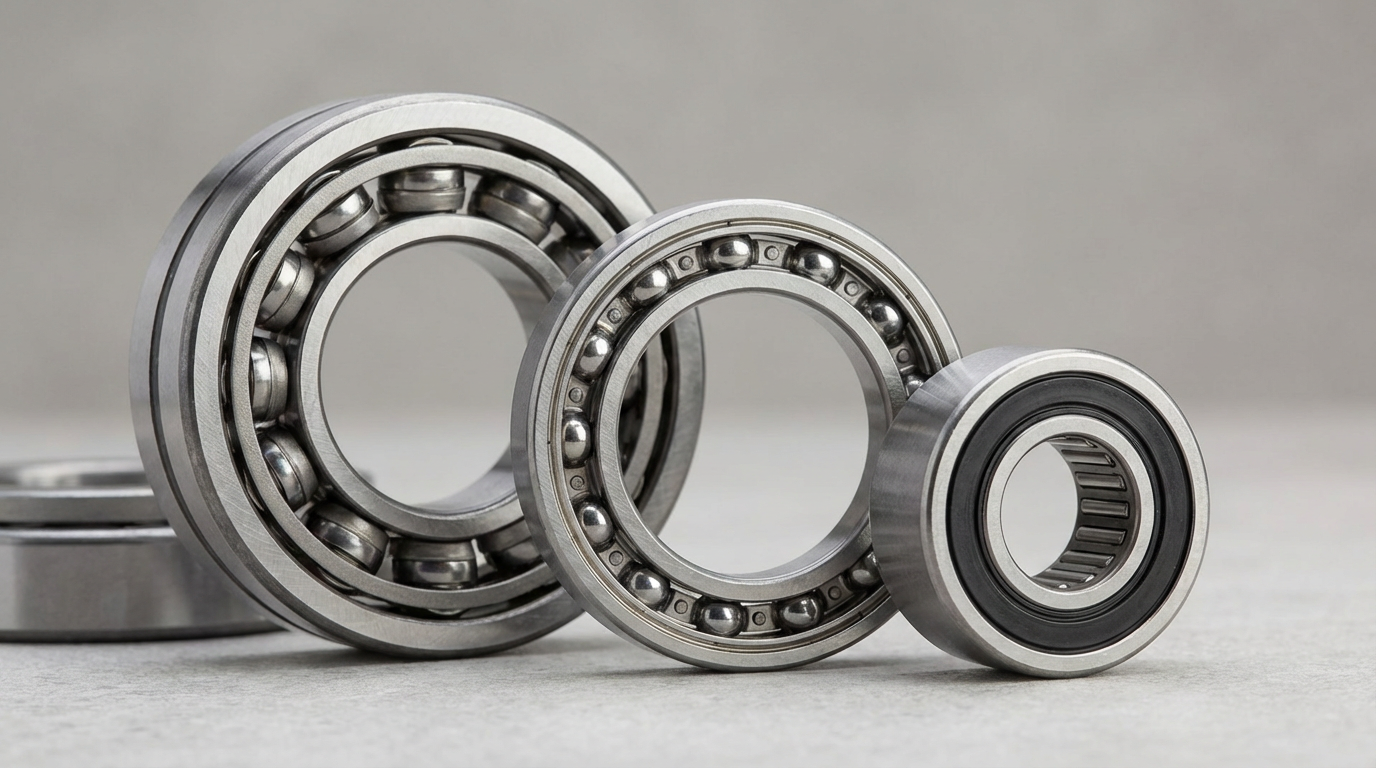
Side-by-side features that impact robot joint performance
Based on our internal data and market analysis, here is the breakdown:
| Evaluation Area | What “Good” Looks Like | Why It Matters in Robotics | What to Request |
|---|---|---|---|
| Precision / runout | Controlled runout grades, consistent geometry | Position accuracy, repeatability, vibration | Runout report, grade definition, sampling plan |
| Torque consistency | Low torque ripple, stable preload behavior | Smooth motion, better control tuning | Torque vs. speed curve, preload method |
| Stiffness | Verified axial/radial/moment stiffness | Deflection affects accuracy and payload control | Stiffness data, mounting assumptions |
| Cleanliness & sealing | Clean assembly, controlled contamination, sealing options | Extends grease life, reduces wear | Cleanliness spec, packaging method |
| Lubrication | Correct grease type/fill, proven life | Prevents micro-pitting and noise | Grease spec, fill %, relube guidance |
| Heat treatment & material | Stable hardness, microstructure control | Fatigue life, wear resistance | Material certs, hardness maps |
| Traceability | Lot/heat traceability, change control | Fast containment, repeatability in production | CoC, lot coding, PCN process |
| Supply resilience | Stable lead times, capacity planning | Avoids line stops and redesigns | Lead time history, MOQ, safety stock plan |
| Engineering support | Fit/preload guidance, failure analysis | Faster development, fewer field failures | Application review, FA examples |
Haron Bearing Pro Tip: I recommend weighting torque consistency and traceability higher than catalog precision—robot joints fail in production when variation shows up, not when a spec sheet looks impressive.
Cost & Buying Factors
Robot bearing cost is driven by precision grade, materials and heat treatment, cleanliness standards, lubrication requirements, testing/documentation depth, and supply commitments. The lowest unit price can become the highest lifecycle cost if torque variation or inconsistent fits cause tuning time, scrap, or field failures. Buy on total cost of ownership and validated performance.
Pricing drivers and a practical buying checklist
Common cost drivers:
- Bearing type and complexity: crossed roller and thin-section precision bearings often cost more than standard deep groove designs.
- Precision and testing: tighter runout/torque requirements increase grinding, inspection, and yield loss.
- Materials: specialty steels, stainless options, and coated components add cost but may reduce corrosion/wear risk.
- Lubrication & cleanliness: clean assembly, specific greases, and sealed packaging matter in robots and add process steps.
- Documentation: traceability packs and enhanced inspection reports cost money but reduce risk.
- Commercial terms: MOQ, tooling/NRE for custom bearings, lead time guarantees, and safety stock.
Buying checklist (use for any robot bearing manufacturer / robot bearing supplier):
- Define duty cycle and peak loads (include acceleration and shock).
- Specify torque limits, runout, stiffness targets, and allowable noise/vibration.
- Require traceability and a PCN/change control process.
- Validate samples across multiple lots, not just one batch.
- Confirm packaging, storage, and handling to prevent corrosion/false brinelling.
- Agree on warranties, failure analysis workflow, and response times.
Haron Bearing Pro Tip: I negotiate on total risk: if a supplier can’t commit to lot-to-lot consistency checks, I budget for incoming torque/runout inspection—or I switch suppliers before ramp.
Conclusion
Choosing a robot bearing manufacturer or robot bearing supplier comes down to provable performance and controllable variation: torque consistency, stiffness, accuracy, cleanliness, traceability, and dependable lead times. If you standardize your requirements and qualify with multi-lot validation, you’ll reduce tuning time and field issues while improving production stability.
If you want a qualification checklist or a joint-specific recommendation, Haron Bearing can help you map your duty cycle to the right bearing specification and documentation package.