
Angular contact ball bearings are designed to carry combined radial loads and axial loads by offsetting the ball-to-raceway contact line at a defined contact angle (typically 15°, 25°, or 40°). Use them when you need higher axial stiffness, controlled preload, and better speed/load balance than deep groove bearings—especially in machine tool spindles, pumps, and gearboxes.
How angular contact ball bearings work (and why contact angle matters)
Angular contact ball bearings transmit load through a “contact line” angled relative to the radial plane. As the contact angle increases, axial load capacity and stiffness rise, but allowable speed and misalignment tolerance generally drop. Single-row types support axial load primarily in one direction, so they’re often used as paired bearings to handle thrust both ways.
Quick selection guide (typical engineering trade-offs):
| Contact angle | Typical use case | Axial load bearing capability | Speed capability | Common arrangements |
|---|---|---|---|---|
| 15° | High-speed spindles, low-to-moderate thrust | Medium | Highest | DB/DF pairs, multi-bearing stacks |
| 25° | Balanced speed & thrust (general precision) | High | High | DB/DF/DT |
| 40° | Heavy axial-load applications | Highest | Moderate | Single with opposing bearing or DB |
Common bearing types you’ll see specified:
- Single-row angular contact: axial load in one direction; often matched/paired for bidirectional thrust.
- Double-row angular contact: effectively two single-rows back-to-back in one unit; handles axial loads both directions with compact packaging.
- Matched pairs / sets (DB/DF/DT): tuned preload, stiffness, and thermal behavior for high speed bearings and precision positioning.
Haron Bearing Pro Tip: In our lab tests at Haron Bearing, we found that most premature failures in angular contact ball bearings trace back to the system, not the bearing—especially incorrect preload, shaft/housing geometry, and thermal growth. We validate preload targets against operating temperature, speed, and lubricant film formation, not just catalog limits.
How does Angular Contact Ball Bearings: Types, Contact Angle, and When to Use Them work?
Angular contact ball bearings work by supporting combined loads through an angled contact line between balls and raceways. The contact angle converts part of radial load into axial reaction, enabling higher thrust capacity and stiffness than radial bearings. Because single-row designs carry axial load mainly one way, they’re typically installed as paired bearings for bidirectional thrust.
Load paths and pairing logic (DB / DF / DT)
- Single-row bearing carries thrust primarily in one direction.
- To support thrust both directions, use pairs:
- DB (back-to-back): highest moment stiffness; common in spindles.
- DF (face-to-face): better misalignment tolerance; lower moment stiffness.
- DT (tandem): shares thrust in one direction; used for very high axial load in one direction.
- Preload (light/medium/heavy) controls stiffness, heat, and speed margin.
| Arrangement | Best for | Stiffness | Misalignment tolerance | Typical use |
|---|---|---|---|---|
| DB | Moment loads, precision | High | Medium | Machine tool spindles |
| DF | Alignment forgiveness | Medium | Higher | Pumps, general machinery |
| DT | High thrust one direction | High (axial) | Medium | Screw drives, thrust stages |
Haron Bearing Pro Tip: Our technicians often see “mystery” overheating caused by a DB pair that was perfect at room temp but becomes over-preloaded at operating temperature. We model shaft/housing expansion and set preload so the running preload—not assembly preload—matches the application.
Benefits of using Angular Contact Ball Bearings: Types, Contact Angle, and When to Use Them
Angular contact ball bearings deliver higher axial stiffness, better control of shaft position, and improved performance under combined loads compared with deep groove ball bearings. With the right contact angle and preload, they reduce axial deflection, improve accuracy in high-speed spindles, and extend life in axial load bearing applications where thrust loads are significant.
Key benefits by application need
- Precision / positioning: higher axial stiffness reduces axial runout and deflection.
- High speed bearings: 15°/25° options support speed while maintaining thrust capacity.
- Combined loads: better suited than pure radial bearings when thrust is non-trivial.
- Compact thrust solutions: double-row designs can replace two single rows in limited space.
| Benefit | What it improves | Where it matters most |
|---|---|---|
| Axial stiffness | Position accuracy, vibration behavior | Spindles, robotics, ball screws |
| Bidirectional thrust (paired) | Load handling in both directions | Servo drives, gearboxes |
| Tunable preload | Rigidity vs heat trade-off | High speed, precision stages |
Haron Bearing Pro Tip: Our technicians often see customers “overspec” a 40° angle to be safe, then struggle with heat at speed. We typically start with the lowest contact angle that meets thrust and stiffness targets, then use arrangement + preload to hit rigidity without sacrificing speed margin.
Maintenance tips for Angular Contact Ball Bearings: Types, Contact Angle, and When to Use Them
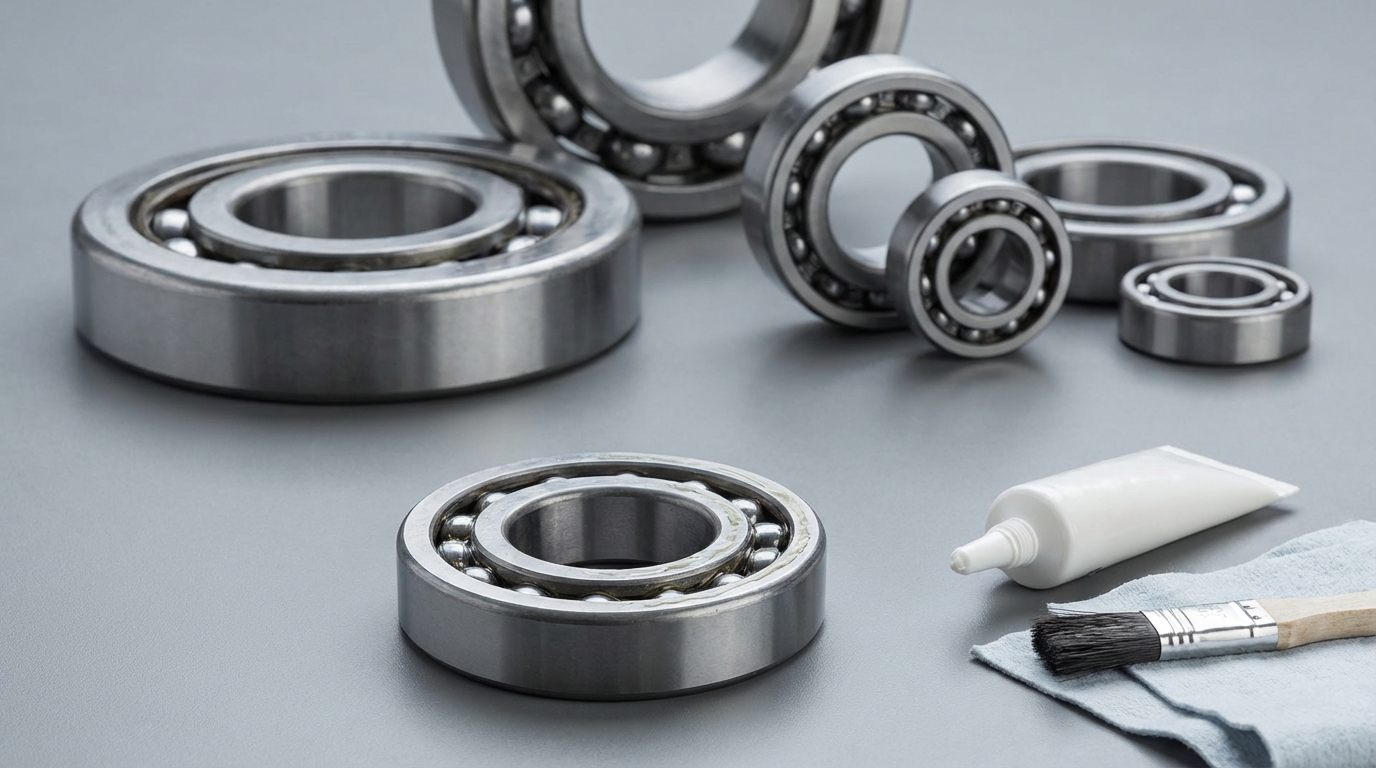
Maintain angular contact ball bearings by keeping lubrication clean and correctly metered, preserving preload/fit integrity, and preventing contamination. Monitor temperature and vibration trends because angular contact designs are sensitive to preload changes and lubricant film breakdown at high speed. During installation, avoid shock loads and confirm correct orientation for single-row thrust direction.
Practical maintenance checklist (process)
- Lubrication: use the specified grease/oil viscosity; avoid mixing incompatible greases.
- Cleanliness: protect from particles (especially in spindles); verify seals and purge practices.
- Preload control: check spacers, locknuts, spring stacks, and torque procedures.
- Fits & alignment: confirm shaft/housing tolerances; avoid induced misalignment.
- Condition monitoring: trend temperature, vibration, and acoustic emission for early warning.
| Symptom | Common root cause | Corrective action |
|---|---|---|
| Overheating at speed | Excess preload, wrong grease, poor oil flow | Reduce preload, correct lube, improve flow/viscosity |
| Noise/roughness | Contamination, brinelling, race damage | Improve filtration/handling, inspect mounting, replace |
| Short life under thrust | Wrong contact angle/arrangement | Move to 25°/40°, use DB/DT, validate load rating |
Haron Bearing Pro Tip: Our technicians often see perfectly good bearings scrapped due to installation damage. We use controlled heating for tight fits, measured seating forces, and we verify axial internal clearance/preload after assembly—especially on paired bearings—before the machine ever runs.
What are your wholesale price breaks and lead times for 15°, 25°, and 40° angular contact ball bearings (single-row vs. double-row)?
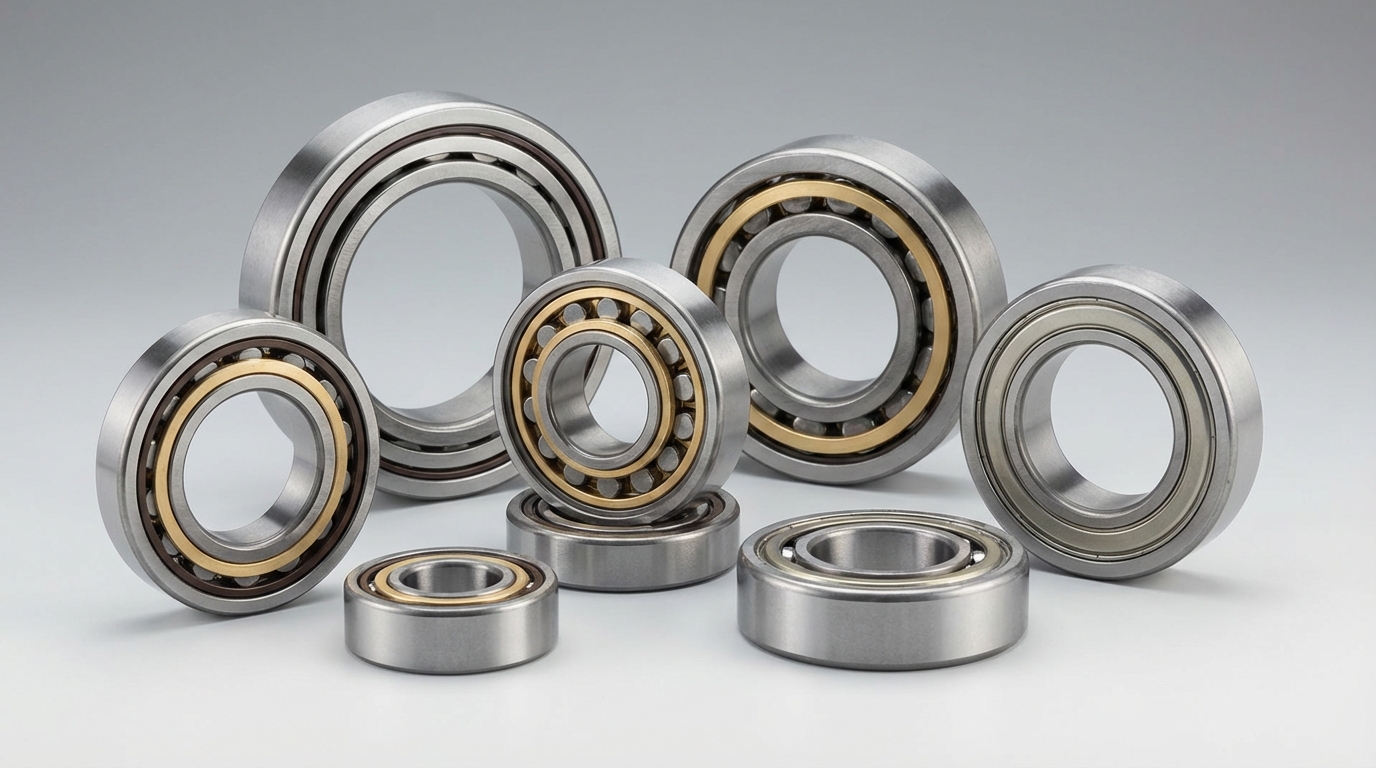
Wholesale pricing and lead times depend on bore/OD series, precision grade (P0/P6/P5/P4), cage type, seals, preload class, and whether bearings are matched sets. As a rule, single-row bearings are more flexible to stock and match, while double-row units can be cost-effective per assembly. Share your part numbers/specs for a firm quote.
Typical wholesale structure (what we quote against)
Price drivers (most impact → least):
- Precision grade (P5/P4 for spindles vs standard)
- Matched pairing (DB/DF/DT, universal vs dedicated sets)
- Contact angle & preload class
- Cage/material and heat treatment
- Quantity & packaging (OEM vs industrial pack)
Indicative commercial ranges (confirm by SKU):
- MOQ: often 10–50 pcs for standard single-row; 10–20 pcs for double-row; matched sets may require set-based MOQ.
- Price breaks (typical): 10 / 50 / 100 / 500+ pcs.
- Lead time: stock items 3–10 days; production 4–10 weeks; spindle-grade/matched 6–12 weeks depending on inspection requirements.
Haron Bearing Pro Tip: Our technicians often see projects slip because the bearing is specified without preload/grade. We speed quoting by locking six items upfront: series, bore, contact angle (15°/25°/40°), precision grade, arrangement (single/double/paired), and preload class. With that, we can usually return a target lead time and tiered pricing quickly.
For high-speed spindles vs. axial-load applications, which contact angle and bearing type do you recommend, and what MOQ/certifications can you provide?
For high-speed spindles, we typically recommend 15° (or 25° when thrust is higher) single-row bearings used as matched DB pairs with controlled preload and spindle-grade precision. For heavy axial-load applications, 40° single-row in DB/DT arrangements or a double-row angular contact is preferred. MOQ and certifications depend on grade and inspection level.
Recommendations by duty (selection table)
| Application | Recommended contact angle | Type | Arrangement | Notes |
|---|---|---|---|---|
| High-speed spindle | 15° (or 25°) | Single-row | DB (often universal match) | Prioritize heat control, preload accuracy, lubrication strategy |
| Servo/gearbox mixed load | 25° | Single-row or double-row | DB/DF | Balance stiffness, misalignment tolerance, and packaging |
| Heavy thrust / axial load bearing | 40° | Single-row | DT (one direction) or DB (both) | Maximize thrust capacity; validate speed limit |
| Compact bidirectional thrust | 25°–40° | Double-row | Integrated | Simplifies assembly; confirm heat and preload behavior |
MOQ & certifications (typical offerings; confirm by program):
- MOQ: standard grades often 10–50 pcs; spindle-grade/matched sets usually set-based MOQ (commonly 5–20 sets depending on series).
- Certifications/quality docs: we can provide material/heat-treatment traceability, dimensional inspection reports, runout (where applicable), and COC; quality systems commonly align with ISO 9001 supply-chain requirements (program-dependent).
Haron Bearing Pro Tip: Our technicians often see spindle issues blamed on bearings when the real culprit is lubrication delivery. For high speed bearings, we choose 15°/25° with a preload that stays stable at running temperature, then we validate grease fill or oil-air/oil-jet rates against DN value and heat rejection—before finalizing the bearing type.
Angular contact ball bearings perform best when contact angle, arrangement, preload, and lubrication are selected together to match your speed and axial-load demands.